Lack of air pollution action now ‘utterly unforgivable’ says MEP

Lack of air pollution action now ‘utterly unforgivable’ says MEP

A Green member of the European Parliament has called for increased urgency in the fight for clean air after the World Health Organization (WHO) labelled polluted air as carcinogenic. This has been endorsed by Wales Green Party’s lead MEP candidate, Andy Chyba.

The International Agency for Research on Cancer (IARC), part of the WHO, pointed to data confirming that 223,000 deaths from lung cancer worldwide in 2010 resulted from air pollution. [1]

Air pollution, which is primarily caused by emissions from vehicles, has already been linked to other lung problems as well as heart failure and premature death. In the UK alone 29,000 people every year die because of air pollution. [2]

Despite air pollution’s impact on people’s health the UK Government has been accused of trying to water down European laws which could reduce the levels of the noxious fumes in the air. [3]

Keith Taylor, the Green Party’s MEP for the South East of England and a leading campaigner for clean air, said:

“The evidence from the WHO suggests that the risk from air pollution is similar to that from second hand tobacco smoke. Surely then we should expect controls on air pollution from transport similar in strength to those brought in to protect the public from passive smoking. With this new evidence being published it’s clear that failing to act on the air pollution problem would be utterly unforgivable.

Try as it might the UK Government can no longer pretend that the air pollution problem can be ignored, not when the World Health Organisation classify it as a group 1 carcinogen.

It’s time for the EU to adopt stronger air pollution laws that fall in line with World Health Organization guidelines and it’s time the UK Government works on behalf of the health of its citizens and stops trying to undermine this vital legislative programme.

I’ll continue to campaign for clean air across and fight against any moves to weaken vital air pollution laws.”

In the Bridgend County context, as Chair Bridgend Green Party, Andy Chyba, is dismayed at BCBC’s apparent complacency on the issue. Bridgend is one of very few local authorities with no Air Quality Management Areas, despite acknowledged concerns at at least five locations [4]. Such is their complacency that there appears to have been no proper review since 2008. [5]

Chyba says: “This is yet another example of Bridgend’s Labour administration not taking environmental issues seriously enough. Complacency on such issues costs lives and they need to be held more accountable”.

NOTES:

  1. “Air pollution is a leading cause of cancer”- http://www.reuters.com/article/2013/10/17/us-cancer-pollution-idUSBRE99G0BB20131017
  2. Government report on deaths in UK linked to air pollution: http://www.hpa.org.uk/ProductsServices/ChemicalsPoisons/Environment/Air/
  3. Blog post by Keith Taylor (with links to government proposals to weaken air pollution laws): http://www.huffingtonpost.co.uk/keith-taylor/air-pollution-kills_b_2457096.html
  4. Concerns have been raised about air pollution near Ewenny Cross, the western end of Cowbridge Road, at Tondu Road on the western end of the Bridgend Cross Valley Link Road, at Kenfig Hill adjacent the opencast coal site, and at Wern Tarw, Pencoed, adjacent to Rockwool Ltd. http://www1.bridgend.gov.uk/media/99179/Jun___2008.pdf
  5. The Pollution Control Team at BCBC published regular reports between 1999 and 2008, but there has been nothing on air quality since. http://www1.bridgend.gov.uk/services/public-protection/environmental-health/air-quality.aspx (this page was last updated in August 2013 so is presumably accurate).

World leaders must renew focus on tackling poverty and inequality, says London MEP

WORLD leaders must focus on providing more decent work for women and young people as well as eradicating poverty and hunger, London MEP Jean Lambert has said.

In a message for International Day for the Elimination of Poverty the Green Euro-MP has called for the UN to step up efforts to meet the Millennium Development Goals – and really make poverty history once and for all.

She said: “The Millennium Development Goals gave us a great framework for reducing global poverty, by adopting the targets of halving the number of people living on less than $1.25 a day, achieving full and productive employment and decent work for all, including women and young people, and halving by 2015, the number of people suffering hunger and malnutrition.

While the first target has been achieved, we have a long way to go if we are to achieve the second and third by 2015: unemployment is rising across much of the world – especially among young people – and there are estimated to be as many as 800 million people going to bed hungry each night: 100 million of them children under the age of five.

Greens have worked tirelessly to promote work designed to meet these targets: here in the EU, for example, we have championed the idea of a Youth Guarantee – a promise that everyone aged under 25 in the EU will have either a job or a training place – and, just today, we are hosting a discussion with the European Anti-Poverty Network on how best to ensure social goals are built in to the EU’s financial regulations.

But eradicating poverty is a matter for all of us – all over the world. Austerity measures following the 2008 financial crisis means poverty is, more than ever, a truly global problem – and not just a development issue – and inequality is growing, dividing societies even further.

Just last week I saw for myself the impact of ongoing poverty on the lives of Londoners during a visit to a community food bank in the capital.

I hope we see a renewed focus on tackling poverty and inequality from world leaders today, in the UK and EU as well as in the developing world.”

Jean Lambert is one of eight MEPs representing London and one of two UK Green representatives in the European Parliament. Jean was first elected Green Party Member of the European Parliament for London in the 1999 European elections and was re-elected in 2004 and 2009.

Response from Derek Vaughan re EIA Directive plenary vote

FROM DEREK VAUGHAN (Labour MEP for Wales)

Dear Andy,

Thank you for your email.

I supportedthe current version of the Zanoni report in the recent vote on this matter.

Thank you also for the detailed information on fracking. It is very important the UK and other countries analyse carefully all the implications it may have for health and the environment. Contacting your local MP and the UK government would also be worthwhile Andy.

Please also find below Labour’s position on shale gas.

Once again thanks for taking the time to write to me on this important issue.

Kind regards,

Derek.

Derek Vaughan MEP

4th Floor, Transport House
1 Cathedral Road
Cardiff
CF11 9SD
Tel: 02920 227660
Email: contact

Labour & Shale Gas

The Shadow DECC Team’s Position:
Gas has a role to play in a future balanced energy mix, along with renewables, nuclear and CCS. However, shale gas is unlikely to be a game changer for consumer bills or energy security and there are important regulatory questions which must be answered before large-scale extraction can begin.

Environmental Regulation and Monitoring
• Concerns about the safety and environmental impact of shale gas extraction are valid. The appropriate response to such concerns is to ensure that we have the right regulatory and monitoring framework in place before large-scale fracking begins.

• It is not just the robustness of the regulation, but the comprehensiveness of the monitoring that is important. Assurances are required from the Environment Agency and the Scottish Environment Protection Agency that they will be able to carry out such monitoring.

• Labour have set out 6 regulatory conditions that must be met before Shale Gas extraction can proceed:

1. Evidence of seismic activity led to the suspension of operations in Lancashire in 2011. As Labour set out in an article for Business Green on 7 March 2012, baseline conditions should be assessed prior to any exploratory work with micro-seismic monitoring, in order to discriminate natural from artificially induced seismic events once the drilling begins. An early warning detection system should also be implemented, similar to that used in the Netherlands and Germany, which would allow measures to be taken before seismic activity has a noticeable impact.

2. There has been a lack of transparency and control in the USA on exactly what is being used to fracture shale rocks and extract the resulting gas. In the UK, the chemicals used must be restricted to those that are proven to be non-hazardous. Further, there should be mandated disclosure of all the chemicals to be used in fracking, including their toxicity levels.

3. The integrity of each shale gas well must be assured to prevent water contamination. An independent assessment of the well design, the cement bond between the casing and well bore, in addition to the composition of the casing to determine its ability to resist corrosion, is essential.

4. The level of methane in groundwater should also be assessed prior to any drilling. Methane can occur naturally in groundwater, but there is concern from the experience in the USA that it may occur as a result of fracking. In each case, that needs to be assessed prior to any activity, so there is robust baseline information to monitor against.

5. All potential shale exploration sites should be subject to screening for an environmental impact assessment – at present, those below one hectare do not need to undertake such an assessment. This assessment should include the level of water used, how much can be recycled and the availability of water in each case.

6. All of the monitoring activity referred to above should take place over a twelve month period, to allow sufficient time to gather all of the evidence required to make an informed decision on whether to proceed with exploration.

• Since Labour announced this position, the Government has conceded on 4 of the 6 points we made last December. They have not included the baseline survey of methane being assessed prior to drilling, and they have not specified that the monitoring activity should take place over a 12 month period. Further, concerns remain, particularly regarding the effectiveness of the monitoring process and the capacity of the relevant bodies to undertake that monitoring if there is further exploration of shale gas.

Time Scale
• To date, only a small number of exploratory licenses have been issued. 3 onshore exploratory wells have been drilled.

• Shale is covered by the normal UK regime for all oil and gas exploration and development. A UK Petroleum Exploration and Development licence (PEDL) allows a company to pursue a range of exploration activities, including exploration and development of unconventional gas, subject to necessary drilling/development consents and planning permission.

• A separate license will be required for full-scale fracking, meaning that it is unlikely that Shale Gas could be extracted in meaningful quantities before the next general election.

Tax Breaks
• George Osborne has announced that has production profits from shale will initially be taxed at just 30%. At present, gas production profits are taxed at 62%, rising to 81% in some North Sea cases when the Supplementary Charge and corporation tax are combined.

• Labour does not believe that announcing tax breaks before properly addressing legitimate environmental concerns is an appropriately proportionate and cautious approach to shale gas.

• The Chancellor argues that these tax incentives are required to stimulate a market dealing with a number of unknowns – size and recoverability of resources, regulatory framework, etc – while Labour argues that it is precisely these issues that need to be clarified before there is any consideration of advantageous tax treatment. The economic cost of extraction of shale is one factor which companies with licences will need to consider. The case for differential allowances for marginal fields, as in the North Sea, may be relevant for atypical fields but should not be the norm.

The Example of the US
• Shale Gas extraction in the US has driven down the cost of energy for consumers and businesses, providing a competitive advantage to some industrial sectors and therefore to the wider economy.

• However, this has in part been the result of the fact that the US is not able to export gas. As supply increases in this closed market the cost correspondingly decreases. By contrast, the UK is well-connected to the European gas network. The cost-reducing benefits of an increase in supply will be shared with the rest of the continent, dissipating the impact, particularly as extra-Europe demand for gas is likely to increase rather than decrease.

• The benefit to the UK is more likely to be in relation to energy security as an indigenous source of energy will make us less reliant on foreign imports, particularly as our own North Sea gas reserves are declining and we now import more gas than we produce – a position which has changed over the last 10 years.

• The geography of the two countries also makes exploration less likely than in the UK. Many of the areas in the US where production does take place are largely deserted, however in the UK we are more densely populated which will impact upon exploration and extraction permissions from local authorities.

• So a simplistic extrapolation of the US experience of shale gas is not an informed contribution to the debate.

Shale Gas and Renewables
• A frequent objection to shale gas is that it will divert investment from renewable energy and lock the UK into a fossil fuel industry.

• The Government have perpetuated this line of thinking by establishing a false opposition between shale gas extraction and renewable investment, suggesting that they back ‘cheap gas’ over ‘expensive green’.

• The Labour Party reject this dichotomy. Gas will continue to play a part of our short and medium term energy mix and meeting this obligation will require some investment. There is no reason why this should preclude heavy investment in renewable generation, which represents the long-term future of our energy sector.

• This is also why it is important that there are other signals from the government towards a low carbon generation mix, and why we are committed to a 2030 decarbonisation target.

• Possible extraction of shale gas is not inconsistent with the binding carbon targets the UK has legislated for – we will continue to need gas for peaking capacity, and as a source for heating.

The Case for Shale Gas
• Despite these concerns, Shale Gas nevertheless remains a positive potential opportunity for the UK, one that we should not dismiss.

• With around 80% of houses using gas for heating, we will continue to need gas in the UK for some years to come.

• Shale gas is not the silver bullet for all of our energy needs as the Chancellor and others seem to suggest. Nor is it likely to be extracted in great volumes in the immediate future. However, while it is right to be cautious and proportionate in our approach to shale gas exploration, we should not rule out the use of an indigenous source of gas to replace the depleted North Sea gas reserves and displace some of the gas we currently import and improve our security of supply, so long as it can be extracted safely.

Dear Derek Vaughan,

RE: October 9 – Plenary vote on the Environmental Impact Assessment (EIA) Directive – amendments on shale gas and other unconventional hydrocarbons
Dear Welsh MEPs ,
On July 11, the Parliament’s Environment, Public Health and Food Safety Committee voted overwhelmingly (49-13) in favour of a report by MEP Zanoni on the European Commission’s proposals for a review of the Environmental Impact Assessment (EIA) Directive.
The Committee notably adopted proposals to adapt the EIA Directive to the arrival of a new type of industrial-size activities in Europe, namely the plans to explore and extract unconventional hydrocarbon such as shale gas in Europe. The negative environmental, health and climate impacts associated with hydraulic fracturing or fracking – the technique used to explore and extract such unconventional hydrocarbons – have been well documented since the shale gas drilling boom started a decade ago in the United States. The proposals in the Zanoni report allow us to take the necessary measures in order not to repeat the same mistakes observed in the US.
Therefore, I respectfully ask you to offer your support to the current version of the Zanoni report and to the unchangedprovisions on shale gas and other unconventional fossil fuels in particular amendments 31, 54 and 79 point (e). I also ask you to reject the amendments 112 and 115, and to vote in favour of deferring the final vote on the report and mandating rapporteur Zanoni to start negotiations with the Council.

These amendments are crucial because the current version of the legislation fails to guarantee a systematic and mandatory EIA before new unconventional fossil fuel projects commence:
· Unconventional fossil fuel projects have a maximum initial production rate of between 115,000 and 250,000 m3/day, which means they cannot meet the 500,000m3/day threshold set in the existing legislation.

· The systematic use of deep drilling and hydraulic fracturing techniques throughout the entire process means that important environmental damage can already occur during the exploration phase. This is why not only the extraction phase but also the exploration phase should be included in Annex I.

The poor environmental record of the unconventional fossil fuel industry in the United States has taught us that:
· It is essential to engage in a systematic gathering of baseline data – with samples of air, water and soil quality – in order to be able to ascertain any air and water contamination that may arise from drilling operations.

· Such industrial developments should not take place without properly consulting the communities living around potential drilling sites.

If large-scale UFF operations are allowed to go ahead in an unregulated way, this industry will repeat the same mistakes as in the United States, with the same dramatic impacts for the climate, environment and public health. I believe it is absolutely vital that this recommendation receives strong support, and I look to you to represent my views in this matter for the good of our constituency and for the rest of Europe.
We in Friends of the Earth and the Green Party will be holding pro-fracking MEPs to account at next May’s elections.
Yours sincerely,
Andy Chyba
8 Min-y-Coed
Brackla
Bridgend
CF31 2AF

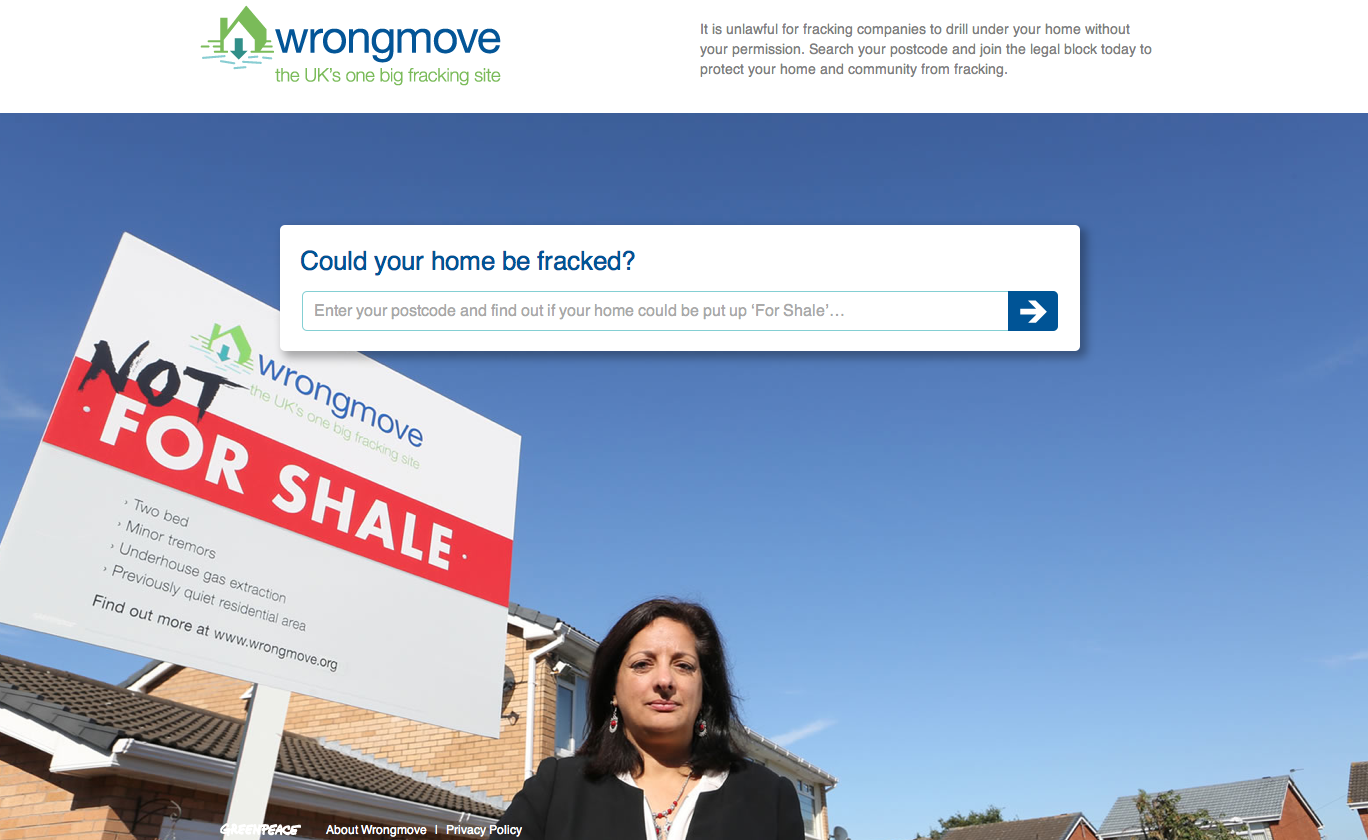
Are you in the frackers firing line? Check here and sign up to an attempted legal block

In theory it is unlawful for fracking companies to drill under your home without your permission. In practice it usually proves hard to enforce unless you can prove some impact, but given the potential impacts everyone now has an awareness of, I think this is worth pursuing.

Search your postcode and join the legal block today to protect your home and community from fracking.

The ‘Not For Shale’ legal block is an interesting development looking to raise awareness and build support for a legal challenge to the trackers going underneath our property .

So, thank you for adding your voice to the growing number of people in Britain who are standing up to protect our neighbourhoods, countryside and climate.

Share this action with your friends, family and neighbours and invite them to join the ‘Not for Shale’ legal block.

http://wrongmove.org

Ecosocialism Conference 2013 – ideas for action

I attended the one day Conference in Manchester that brought together people from a range of ecosocialist backgrounds.Ecosocialism 2013 was supported by the following organisations:
Green Left
Socialist Resistance
Alliance for Green Socialism
Wigan Green Socialists
The Eco-Socialist newspaper
Parti de Gauche (London)
GPEW Trade Union Group

among numerous others.
There were five main themes, supported by workshops, that attempted to produce ideas for action and a sense of priorities. It is fair to say the results are a bit of a mixed bag (ranging from a bit naff and obvious to very pertinent and far-reaching), but nonetheless the whole exercise was very worthwhile, as was the opportunity to meet and discuss/debate issues with people from other organisations.
The assimilated notes from the 5 workshops look like this:

BUILDING AN ECONOMY FOR THE 99%

a)     Recognise the importance of communication and use a range of media, incuding coordinated use of social media.

b)    Create a clear alternative narrative to neoliberal consumerism, based on values and realistic alternatives eg integrated public transport instead of cars.

c)     Promote at national level for one million climate jobs and green new deal, working with other groups.

d)    Endeavour to make people feel empowered so they believe change is possible

e)     Use arts & culture to put our message across and draw people in eg local festivals like Wigan Diggers

f)     Promote a major shift in trade union attitudes towards support for a green economy (eg transport unions) unions tend to be reactive; influence unions from the ground up.

g)     Promote radical change and economic democracy, not just individual lifestyle changes.

h)    Organise local action addressing immediate problems so as to involve people in change: food banks, occupy vacant houses, growing own food

LOCAL ACTIONS IN THE COMMUNIY

a)     Promote sustainable energy: cooperatives (wind, food, solar); fund from Energy Companies Obligation; energy-saving community in derelict houses; promote solar-charged batteries; see communityenergy.org.uk

b)    Grow local food: community farms; dig for victory on waste land; involve people with care budgets; bring communities together; edible environment.

c)     Organise festivals & events: Salford; Bird Walk Barton Moss 20 Oct; tastier greener pie events; low key events (cake, tea, film, bookfair); free festivals.

d)    Organise community services: free or cheap; involve isolated people; involve trade unions; breakfast/lunch clubs; affordable cafes; kids play groups; creative writing; libraries; community transport; therapy; English as 2nd language.

e)     Promote community housing

f)     Seek funding: lottery; trade unions

CLIMATE CHANGE AND EXTREME ENERGY

a)     Live well and differently, consuming less.

b)    Promote local production, reducing shipping – cheap and plentiful energy is gone.

c)     Produce a booklet/other propaganda materials on the economics of energy, making an anti-capitalism case, looking for demands to take local and single issue campaigning towards post capitalist solutions

d)    Initiate a campaign for progressive electricity tariffs – linked to the development of community energy

e)     Resist unsustainable energy.

f)     Campaign nationally (as well as locally) against fracking, creating anti-fracking groups everywhere.

g)     Promote wave power.

h)    Support the 1 million Climate Jobs campaign

i)      Campaign against the meat industry.

DEMOCRACY: WHAT IS IT, HOW SHOULD IT WORK, HOW TO USE IT

a)     Support participation in today’s road blockade protesting against cuts in legal aid.

b)    Campaign against fuel poverty – “Strike a light” – with braziers on the street and local house lights off.

c)     Support national & global day of civil disobedience 5 Nov 13.

d)    Stand candidates in elections.

e)     Hold voter registration drives.

f)     Push for electoral reform.

g)     Get rid of the monarchy.

h)    Explore openly democratic ways of organising society locally, nationally & globally.

i)      Take back the cooperative movement.

j)      Recognise the need for ideology (ideas & language) as well as action.

TOWARDS AN ECOSOCIALIST SOCIETY

a)     Get involved in campaigns: fuel poverty; fracking; new climate jobs; bedroom tax; cuts.

b)    Promote social ownership and cooperative ownership, including for renewable energy.

c)     Learn from ecosocialist projects worldwide; link with developing countries’ campaigns to protect natural resources and challenge international capitalism.

d)    Network among ecosocialists, including using social media.

e)     Set up an ecosocialist think-tank to challenge international capitalism and address the ecological crisis.

f)     Promote “ecosocialist” as a brand; label our involvement in campaigns, etc as ecosocialist.

g)     Explain ecosocialism to trade unions and make links with unions (eg with green reps).

h)    Explain and promote the idea of a “steady state economy”, including its application to developing countries.

i)      Democratise/nationalise banking and financial institutions to ensure investments are directed away from fossil fuel and into renewable energies.

j)      Promote political education, starting where people are at now, making links between local, national and international.

Andy Chyba

Bridgend flash gag – excellent reponse

When? Saturday 12/10/13 from 11.00am to 1.00pm
Where? Outside Oxfam in Bridgend town centre
Who? Andy, John and Trish (behind the camera)
Why? To raise awareness of the the Government’s crude attempts to gag opposition from charities and campaigning groups.
Outcomes: 137 petition signatures in 120 minutes; raised profile for Bridgend Green Party; numerous pledges of support for the work of BGP and the campaigning groups affected, especially re fracking, NHS cuts, the badger cull and zero hours contracts. And hopefully a new member or two.

The sort of education Bridgend Christian School delivers

This really does speak for itself.

https://www.youtube.com/watch?feature=player_embedded&v=3_NKgAaMthA#t=142

What should be done about it?

Post your thoughts, please.

See my fuller article here: https://bridgendgreens.wordpress.com/2012/07/17/bridgend-christian-school-ace-or-crap/

PUBLIC SECTOR PRISONS NOT PRIVATE SECTOR PROFITS

Alongside the PCS union that represents over 5,000 prison staff, Wales Green Party is calling for an independent review of prison privatisation. We would like this review to take into account issues such as:

  • prisoners welfare in a profit driven environment
  • value for money for the public purse
  • the real costs of delivering these services effectively
  • the moral question of whether state punishment should ever be used to make a profit for private sector companies
  • the impact on public sector staff and local communities in these prisons facing privatisation

This comes in the wake of the recent furore over plans for a 2,000 inmate ‘superprison’ in Wrexham. Over and above the concerns listed above, the Wrexham proposals would site the prison on a former factory site close to residential areas. It is the scale and location of the prison that Andy Chyba, Wales Green Party lead candidate for next years Euro elections, takes issue with. He says:

“I recognise that this part of Wales currently has no facilities to house local prisoners, and we support the concept of local prisons, but this proposal is not about what is good for communities, nor is it about providing offenders with the best chance of rehabilitation. This is all about providing huge private companies the chance to profit from economies of scale and the inevitable squeeze on staff costs that always goes with privatisation of services that ought to be in the public sector”.

The Wrexham prison would dwarf Parc Prison in Bridgend, currently the biggest in Wales with around 1200 inmates. It is planned to greatly expand Parc in the near future, but as Wales only private prison to date, it has seen more than its fair share of controversy in its 16 year history.

G4S has always run the prison, and their reputation goes before them. When it opened it was planned to make it a high-tech prison with with computer systems, swipe cards and personalised voice identification equipment. By using computer and surveillance equipment, G4S hoped to cut down the number of staff needed in the prison and make it more difficult for prisoners to escape. The technology repeatedly failed. The inadequate provisions for young offenders led to sky high suicide rates. A 2004 Independent Monitoring Board report rated it the worst-performing prison in England & Wales, with staff morale especially highlighted as cause for concern. [1]

Chyba issues this warning:
“When you turn over this sort of service to private corporations, there is only ever one outcome. It always puts the emphasis on profit before people, and as unpleasant as some of them may be, prisons have to be about the people in them first and foremost.”

He goes on to cite the example of the most successful prisons in Europe – successful in terms of the lowest re-offending rates. He argues that these are the ones that provide the best value for money – as it is hard to actually put a value on salvaged lives. He points out that by far the best re-offending rates in Europe are at Bastoy Prison in Norway, which houses the full spectrum of offenders [2]:

“This place has less than half the re-offending rates of UK prisons, and at more than £40,000 a year per UK prisoner, you do the maths. How does it do this? By giving people trust and responsibility and treating them like the decent human beings that we want them to become. You cannot do this in the human equivalent of a factory farm.”

You can sign the PCS petition calling for an independent review by following this link: http://pcslive.bluestatedigital.com/page/s/public-sector-prisons-not-private-sector-profit

[1] http://en.wikipedia.org/wiki/HM_Prison_Parc
[2] http://www.theguardian.com/society/2013/feb/25/norwegian-prison-inmates-treated-like-people

Does Bridgend CBC have alternatives to implementing Con-Dem cuts?

The revelation that Bridgend CBC is cutting £36million from its spending over the next three years was shocking enough, but hearing that they are already targeting things like home care services for the disabled, nursery education and school transport emphasise just who is being made to pay for the mismanagement of the economy by successive governments.
This isn’t even the end of it. George Osborne’s autumn statement revealed that the cuts will now have to continue until 2018, such has been the failure of the chancellor’s economic strategy. Not surprisingly, the dawning realisation of what this means for some of the most hard-pressed families in the country has brought howls of outrage.
But the situation facing Labour councillors is especially acute, since not only are the funding cuts political, but the burden of current and projected needs in working class communities like Bridgend are enormously greater. People in Bridgend, I am sure, did not elect Labour councillors to merely administer cuts for the Con-Dem government but to represent and protect their interests at the local level. It is all well and good that Cllr Nott, leader of the Council, hollers with outrage that the cuts will cause “extreme pain” but voters are increasingly beginning to ask what he is planning to do to protect the hard-pressed people he represents.

Labour’s approach nationally thus far has been to identify central government as responsible for the painful choices facing Labour councils, but to accept that these savage cuts are effectively a fact of political life, at least this side of a general election. The responsibility of power, we are told, means taking ‘tough choices’ to avoid still worse consequences. But is it true that Labour councillors have no choice but to become the instruments through which Pickles will deliver cuts to deprived communities in Bridgend?

Once upon a time, the Labour Party would have been talking about empowerment, community and decentralisation, echoing its grassroots co-operative traditions, and providing real alternative models of service delivery. No more. Such socialist ideas have been purged in Blairite New labour. Furthermore, those expecting a Labour government to restore local government structures and finances to the status quo are likely to be disappointed. As with so much else, Labour may oppose the scale and pace of the cuts today, but will not make promises to reverse those cuts the Tories have already implemented or set in train.
Of course, many councillors want to demonstrate that they are more than hapless accomplices of Eric Pickles’ cash‑grab from local services. But they are shackled by their blind loyalty to a Party that is no longer the one they joined a few decades ago. A few Labour councils, and the UK’s only Green Council in Brighton, have been seeking ways of implementing some progressive measures. So, for example, they have committed themselves to becoming living wage employers and stipulated minimum pay standards in the course of procurement from contractors. Some have instigated a ‘Fairness Commission’, bringing together academics and social policy experts with councillors in open public deliberation to take evidence on inequality in their boroughs and make practical recommendations for directing what limited resources are available to tackle the problem. None of this will be found in Bridgend.

Shock, horror! A number of Labour councils have even been actively exploring co-operative initiatives around renewable energy. In Preston the local authority has suggested that erecting wind turbines on council-owned land would put £1.5 million a year into the council coffers. No such creative thinking between Cllr Nott’s ears.

The stock response to the argument that Labour councils could refuse point-blank to deliver the coalition cuts is that any alternative, deficit-based ‘needs budget’ would lead directly to Eric Pickles assuming direct control over local budgets and implementing cuts with no thought for those most in need. It is true that no course of locally-determined resistance can ultimately succeed without direct confrontation with central government based on a mobilisation of local communities nationwide. But were Labour to spearhead a national campaign of militant resistance involving local communities in determining their collective needs, the secretary of state wouldn’t find it easy to suspend the entire apparatus of local democracy. And unlike during the epic rate-setting disputes of the 1980s, individual councillors no longer face personal financial ruin, since – although they can be debarred from office – the power to surcharge expelled councillors no longer exists in law. But Labour simply has no stomach for a fight any more.

The Labour left is, of course, an impotent sideshow these days. Even those advocating a militant ‘no cuts’ stance recognise that it would require a strategy for building confidence and extending community support. But there can be no excuse for councillors failing to exhaust every option in their power to delay and contest the implementation of cuts – in the first instance by drawing on reserves and making full use of prudential borrowing powers – to buy time in which the forces of resistance in the community can be consolidated. Bold and determined resistance could inspire levels of popular support that could transform calculations of what is politically possible. Had the people of Bridgend voted for the Green Party instead this Labour group, this is what they would have got. Public resistance, embodied in movements like the People’s Assembly Against Austerity (PAAA) has thus far has not shifted Labour councillors from passing cuts budgets. But then such movements are supported primarily by the Green Party and Plaid Cymru – with hardly a Labour councillor in sight.
There have been some limited local exceptions, such as the two Southampton Labour councillors who refused to vote with the ruling Labour group to close a leisure centre they had explicitly promised to save at elections a few months earlier. Following their decision to form a rival group on the council, Labour Councillors Against the Cuts, they have been formally expelled from the party!!

Grassroots resistance has failed to grab many national headlines thus far. But things may be beginning to change. The decision of Newcastle Labour leader Nick Forbes to announce the total axing of the city’s arts and cultural funding, for example, has brought together a coalition of incensed workers, community activists and high-profile arts figures. Birmingham, meanwhile, is facing the complete destruction of its youth services, with more than 1,000 job losses and further areas of council provision threatened with being ‘decommissioned’ in the future.

The stakes are also about to be raised significantly. Labour councils are going to have to make specific choices as people are thrown into extreme financial hardship due to the latest benefit ‘reforms’. The circumstances might be the result of central government policy, but will they employ bailiffs to evict families who have fallen behind on their rents due to the new benefit cap? Will they prosecute people who fall into arrears due to the removal of council tax benefit?

Anti-cuts councillors could be more imaginative about forms of practical resistance. For example, they could consider technical measures beyond options presented by council officers – such as drawing up a charter of immediate defensive measures to which Labour councils could sign up, in dialogue with tenants and residents associations, unions, community activists, charities, faith groups and others with experience of working with real social needs. This might consist of working with the unions to ensure that services are kept in-house, not privatised; protecting council tenants through a moratorium on all evictions; developing long-term debt repayment schemes for council tax bills or social housing rents; implementing licensing standards, including de facto local rent controls on privately-rented accommodation; and so on. But we have already heard Cllr Nott dismiss some of these ideas out of hand.

Unless Labour can actively demonstrate that it is on the side of working people in actions and not just words, then its councillors will be treated with the same contempt as representatives of the other mainstream parties. If this leads to people turning to truly ecosocialist alternatives like the Green Party, then there could still be a silver lining to this miserable cloud that hangs over us all.

Much of this article is based on the following two reports:
http://www.walesonline.co.uk/news/local-news/council-leader-bridgend-warns-job-6097654
http://www.redpepper.org.uk/labour-and-the-cuts-beyond-the-dented-shield/

IMPORTANT EIA Directive plenary vote – Email action – WE NEED YOU

Begin forwarded message:

Subject: Fwd: [IMPORTANT] EIA Directive plenary vote – Email action – WE NEED YOU

Date: 4 October 2013 13:39:45 GMT+01:00

Dear all,

The European Parliament plenary vote on the review of the Environmental Impact Assessment (EIA) Directive will take place next Wednesday, October 9. You can find more details about the vote and a link to an updated template letter to send to your MEP inAntoine’s email below. Amendments to the report closed today so these are the final voting recommendations.

Aside from a few minor changes, the most important amendment we need support for is AM 79, which guarantees mandatory EIAs at exploration stage. As you may know, there has been intense lobbying against this amendment. I would especially ask you to lobby Liberal MEPs (listed here: http://www.alde.eu/alde-group/alde-meps-list-member-european-parliament/), as some are planning to vote against Amendment 79 and support instead a compromise amendment, which was negotiated in the past few days. We really need as many Liberal MEPs on side to swing the vote in our favour!

Feel free to adapt the letter below as you see fit. I suggest adding a line at the end mentioning that we will hold pro-fracking MEPs to account at next May’s elections. Please also make sure to add your full address so your MEP knows you are a constituent.

​​

Please post any replies you receive in the Facebook event so we can keep track of how each MEP is planning to vote.
https://www.facebook.com/events/395215433934342/?fref=ts

​The Greens/EFA group has requested a roll call so we will have a record how our MEPs vote.

​Many thanks to everyone who has been lobbying their MEPs for this important vote since mid-August! If we don’t get a majority supporting mandatory EIAs, it will be a major victory for the fracking industry, so please keep the pressure on!

Best wishes from Brussels, Geraldine

​​

Dear all,

I know this email is coming a bit late but we are finally able to send you information about the final plenary vote on the Environmental Impact Assessment (EIA) Directive. You may remember that the vote was supposed to take place last month but the European Parliament decided to postpone the vote to October.

Therefore, we need to contact again our MEPs just like we did a month ago, with some very small adjustments as new developments have happened that we need to address.

  • The vote will be on Wednesday 9th of October, at 11.30.
  • We need to call MEPs to support the amendments 31, 54 and 79, but we also need to ask MEPs to reject new amendments (n° 112 and 115) tabled by pro-shale gas MEPs aiming at undermining the amendment 79.

These new really bad amendments (which are taking out the reference to exploration and reintroducing the daily production threshold of 500.000m3 of gas) pushed me and Geert to make slight adjustments to the email action that we suggested last month. You will see that we extended the picture to explain why the reference to exploration and why no reference to a daily production threshold are really needed.

Therefore you can find below links to a template letter, to a list of MEPs, and to pictures translated in 10 different languages. But as usual, you are free to translate and adapt the letter according to your needs, priorities and positions. What we really need is that:

  • You contact your MEPs to share this message and the voting recommendations,
  • You spread the word around you: The more messages MEPs will receive from concerned citizens and groups of mobilisation, the better.

Therefore, here are links to:

If you have any question, remark or feedback from MEPs, please let me and Geert know about it. Please contact us separately in order not to overwhelm the listserves too much.

Many thanks in advance for your crucial help,