Latest interview with Russia Today re Fracking

Below is the transcript of the live TV interview I did for Russia Today’s English language Op-Ed news programme yesterday:

http://rt.com/op-edge/fracking-renewable-energy-policy-116/

While activists across the UK are setting protest camps to force their government to ban shale gas drilling, MEP candidate for the UK’s Green party Andy Chyba told RT that London is too intimate with big business to let that happen. [N.B. They were told I am no longer a MEP candidate – they did not mention that I am on the TV broadcast]

RT:It seems that the UK government is determined to go ahead and boost fracking so do you think you’ll actually be able to turn the tide here?

AC: Well, I remain very optimistic that we will. At the moment there’s relatively few parts of the country directly threatened – it’s mostly to do with testing applications. But everywhere they turn up, local opposition soon gets organized. The local opposition groups are now part of a nationwide network and we are winning the arguments everywhere we go.

RT: What are the basics of your arguments?

AC: The arguments work on different levels – on the local scale there’s the direct threat to water supplies, the health risks , the traffic implications and the water supply issues. At a wider level there’s the whole issue of direction of energy policy. We’re winning that argument comprehensively as well. At the global level, of course, is the implications for global warming. Research coming out of the UK now suggests we need to leave 2/3 of known fossil fuels in the ground if we’re going to stand any chance of avoiding catastrophic climate change, and therefore going down the road of exploring for extreme fossil fuels is the very last thing we need to do.

RT: Talking of fossil fuels, of course, fracking will definitely mean the closure of any coal plants existing in the UK existing – that’s surely got to be a better option hasn’t it?

AC: Some people are trying to paint that gas is the lesser of two evils, but that argument only holds any sway at all if we see gas replacing coal, and there’s no evidence of that happening. In the United States, coal production from the mines is still just as high – they’re just shipping it around the world to other places. So I don’t think there’s any real credibility in that argument at all. And of course, this gas will be used over and above the coal – they’re not going to ignore economic deposits of coal in the long term, so in the long term this is only going to supplement the use of fossil fuels and therefore it’s got to be stopped.

Climate and anti-fracking activists block the road in front of a tanker to delay its arrival to the test drill site operated by British energy firm Cuadrilla Resources in Balcombe, southern England, on August 20, 2013.(AFP Photo / Leon Neal)

RT: Surely a couple of major economic problems facing people in the UK at the moment is high energy bills, and they seem to be going higher, and employment. David Cameron is saying fracking will in fact create more jobs and lower energy bills.

AC: Well, this is the spin that they’re trying to put on it. I’m literally having solar panels put on my roof tomorrow. If everybody went down that route- that’s the way to energy security. My bills are going to go down 30 percent overnight when I get those panels installed tomorrow. If everybody went down that road they could do likewise and we’re not relying on any imports. And even if we did go down the road of exploiting fossil fuels – what are we going to do when they run out? They are fixed resources, they are going to run out, we’re still faced with the imperative to get to grips with renewables sooner or later. And the argument has got to be sooner rather than later. All that’s happening through going down the extreme fossil fuel route is putting off that imperative even longer.

Other countries have taken that initiative already. Denmark is going to be based almost completely on renewable energies in less than 30 years. It takes political will and a political decision to invest in that technology. Now, the technology is there, we just need to make those political decisions. The Tory government is wracked with links to the industry – they’re just feathering each other’s nests at the moment.

Kay Harris – standard bearer for the Bedroom Tax campaign – locally, nationally and internationally!!

Bridgend Greens’ Gareth Harris and his mum Kay have been at the forefront of the Bridgend Against the Bedroom Tax campaign since we launched it alongside our Plaid Cymru friends a few weeks ago. Jamie Insole, of South Wales Against the Bedroom Tax, has been so impressed with Kay’s passion and commitment that when the Guardian came to Cardiff a week or so ago , Jamie wanted them to meet Kay.

The result is a great feature in today’s Guardian:

http://www.theguardian.com/society/2013/nov/20/bedroom-tax-hardest-hit-wales-uk

Her family’s plight is well known to us, but now the whole country knows how this savage policy is biting her:

“Kay Harris is stressed. For 47 years, her entire life, she has lived in Bettws, an ex-mining village in the south Wales valleys. She’s raised her two children here, and her extended family all live nearby. But since the introduction of the bedroom tax in April, she has found herself in arrears for the second time in six months, and is worried she may be forced to leave.

The first visit from her housing association came in August, with a demand for £172. A few months later, when we meet in Cardiff, at a meeting for tenants, landlords and campaigners to discuss the impact of the bedroom tax in Wales, another letter has arrived. “It’s a real struggle. I had a letter just this morning, saying I was £122 in arrears. I can’t afford to pay it,” she says. “I’m supposed to be paying £11.41 a week for this one bedroom, and they’ve put it up to £15.01 a week so that I can clear my arrears. But I just can’t afford it”.

The bedroom is small, and only fits a bed. Harris uses it for her two grandchildren when they stay over occasionally.

Harris’s situation is typical in Wales, where 40,000 tenants have been hit by the cut in housing benefit on any bedroom deemed to be unoccupied, representing 46% of the social rented sector – the highest proportion of anywhere in the UK. Living with her husband in a three-bedroom semi-detached house in an area that was once booming, but now suffers from high unemployment, there is nowhere else for her to go because the Welsh housing stock doesn’t reflect the changing economy.

The personal fallout of Harris’s financial woes grows with each demand for arrears. “I’m depressed. I’m very depressed. It’s even causing rows. The letter this morning, that caused a row. It’s not only me, it’s everyone, everybody is getting these letters,” she says. “I had an interview with the housing association and I told them to downsize me. ‘We can’t’, they told me, ‘We’ve got no one-bed or two-bed houses.’ So there’s nothing I can do. I’ve got absolutely no options.”

Her story is now going international. This evening I had a German TV network ringing me to discuss the campaign in Bridgend and to ask what I knew of Kay Harris. I explain that I have known her family well for quite a few years and that it was their situation that helped prompt me to get involve in the cross-party initiative with Tim Thomas (PC).

They are going to contact Kay and look to feature her in their story, which looks set to savage this Tory class warfare.

Well done Kay! Your courage and determination not to accept this is inspiring people everywhere. I remain optimistic that you will prevail and keep your home of so many years.

Another Labour betrayal as they fail to shoot down the Bedroom Tax

Labour had called on Lib Dem MPs to defy their Conservative coalition partners and vote against the spare room subsidy. It tabled a motion calling for its abolition, but was defeated by 252 votes to 226. A majority of just 26.

But this could so easily have been defeated had Labour got its act together! Although it was a Labour motion, a shameful 47 Labour MPs failed to vote. These include Welsh Labour’s:

  • Geraint Davies (Swansea West)
  • Siân James (Swansea East)
  • Chris Bryant (Rhondda)
  • Paul Flynn (Newport West)
  • Ian Lucas (Wrexham)

So yet again, we are tragically let down by Labour.

Europe for the Common Good

GPEW Deputy Leader, Will Duckworth’s address to the Wales Green Party AGM yesterday:

Bore da Cymru

4 years at University in Bangor and that is as much Welsh as I can manage other than “Dai fish and chips yea” which works wonders for portion size.

It’s a pleasure to be here with you this morning and it’s great to see so many of you here.

I wanted to speak to you today about the Common Good. It’s a phrase we’ll all be hearing a lot more of in the months to come – particularly because we’re just over six months away from EU elections, and then in 2015 we have one of the most important General Elections in living memory: a chance to end the Coalition’s disastrous Austerity experiment once and for all!

But first, the European Elections. As we’re all aware, these elections offer us a great chance to triple the number of MEPs we send to Brussels and Strasbourg. Just a 1.6 per cent national vote swing means we’ll have six MEPs come June 2014. Nor should we stop there. We can do even more.

Earlier this week, a YouGov poll revealed that the British public are far to the Left of the Labour Party – let alone UKIP and the Coalition.

The poll found 80 per cent of people feel they are not benefitting from the so-called ‘economic recovery’ announced by the Coalition. Of course, this could be because the ‘recovery’, as it has been incorrectly labelled, actually amounts to the artificial inflation of house prices in a small area of the South East of England.

The same poll finds people who oppose private enterprise firms in the NHS outnumber those who want them there by 12 to one, that 67 per cent want Royal Mail in public ownership, 66 per cent want the railways delivered back to the people and 68 per cent demanding our energy companies be removed from the clutching fingers of profiteers in the private sector and run by the people, for the benefit of the people!

And who stands for all of these policies? Who has been arguing that these are exactly the measures which must make up part of a decent society, designed and delivered for the good of everyone – for the Common Good?

That’s right: The Green Party of England and Wales.

The fact of the current political climate is that the mood of the people is with the Green Party. That is fact.

But that’s not the end of the story. Because there’s a second fact. The mood of the people is with us. We represent the alternative to the lying, cheating and policy-making for the rich at the expense of the rest of us as practised by the Coalition and Labour. UKIP is not an alternative to that, it’s the same policies, with an irrational fear and hatred of the EU and migrants thrown in.

But the challenge facing us is that although you know this, and I know it, many potential voters – people who have previously supported other Parties and those, like Russell Brand, who feel they cannot support and Party at all – do not know it.

Our challenge, almost uniquely in the history of UK politics, is not in convincing people to agree with us. It’s in making sure voters KNOW that we and them share a common cause: a society designed for the benefit of all. A society designed for the Common Good.

By necessity, political catchphrases can’t explain everything a Party and a movement stands for. But the two words we are campaigning under DO sum up our message. And here’s how:

We need a climate for the common good:

The most recent report from the Intergovernmental Panel on Climate Change highlighted the fact that we are on the brink of runaway climate change. None of us in this room needs to be reminded what this means, with catastrophic impacts likely for all species – including human beings – across the globe.

Nor do we need reminding – as some members of the non-renewable power industry seem to – that although there ARE costs associated with switching to a renewables-powered economy, the costs of NOT doing so, in terms of hard cash and human lives, will be far, far higher.

There used to be a tradition, on the Right wing, that we have to speculate to accumulate – that by making an outlay of cash now, we can reap rewards both in terms of reduced risk and increased benefit to all, in the short, medium and long terms.

When, exactly, did the Tory Party drop this idea and replace it with ‘we do nothing unless it makes us rich immediately’? Because with that single change, they and their contemporaries all over the world are risking the end of global civilisation.

But what we, on the Left, and fighting for the environment, must remember, is that the report also showed us we can fix it if we decide to act now. That is, we can deliver a means of power generation which has no fuel costs, which is not endangered by wars in other states, and we can prevent the destruction of lives – human, plant and animal here and across the world.

Our children and grand children will not forgive us if we don’t start to tackle climate change and tackle it now.  

We must work within Europe to reduce our carbon emissions and we in the Green Party are pushing to tackle climate change on a European and world wide basis. 

We are looking to do this by refocusing our economy towards consuming less, while spending more free time with friends and family, enjoying the earth’s bounty rather than exploiting if for profit. We are looking to create a power generation system, economic system, and altered system of consumption, which is for the Common Good.

We need services for the common good:

Successive governments have sold off the family jewels. They have privatised gas and electricity distribution, our water, the railways and now even the Royal Mail and left them in the hands of profiteering corporations who are paying their bosses millions of pounds a year.

Thatcher’s Tories, and the Coalition’s ‘Monetarism: Mark Two – now with extra teeth and claws’ may be the leaders in the rush to privatise. But Labour did not bring the railways, power companies or water companies back into the ownership of the people, even in the face of ever-rising bills and ever-decreasing service levels.

Labour does not even support those policies now: Miliband may demand a ‘price freeze’ for fuel, but our system does not allow for one! To control power prices, and the ways in which power is generated, we need power generation to be owned by the people, and run for them, rather than owned by a small cartel of profit-hungry businesspeople interested only in further enriching themselves at our expense.

Meanwhile, under the Coalition, private companies are taking over more and more of our services and our Government is signing deals that commit millions if not billions to foreign corporations who will be able to sue us for loss of earnings if we try to change direction. 

But there is something we can do about it. The Green Party is the only political organisation in this country campaigning to bring public services back to the purpose for which they exist: to actually serve the public. For the Common Good.

And we will reform the EU to stop these corporate captures and ensure that these businesses and individuals are properly taxed. We’re the only people who will.

We need clean air for the common good:

I was surprised when I found out that air pollution actually kills more people than cancer;  about 5% of adults throughout Britain. 

And I was surprised because it’s so easy to create an alternative.

We could have town and city centres which are attractive for people to walk and cycle in with clean air and safe streets. 

We can save lives and produce a happier, healthier population if we tackle the pollution problem. 

We can – and will – start by ensuring the European regulations on air pollution are enforced, so that we in the UK stop breaching EU law and have air that we can safely breathe. The air we breathe is shared by us all. It belongs to us all. And the Green Party stands for ensuring we can all enjoy it. Once again, on this vital issue we stand not for corporate interests, or for the prejudices of a minority of climate-change deniers. We stand for the Common Good.


We need farming for the common good:

We are a nation of animal lovers, but we still allow the slaughter of new born male calves in dairy herds.

As a nation, we allow chickens to be reared in tiny wire pens. 

Successive governments have protected a system in which farmers are forced to cast aside care for their animals to save cash, because our supermarkets insist on buying only the cheapest milk and eggs they can get. 

These pressures are not just bad for animals.

They are forcing our farmers to poison the land we all share, and the water we all rely upon, with chemical fertilisers, pesticides and herbicides in order to increase profits for big corporations. 

It doesn’t even stop there. In the relentless chasing of profit at all cost, our farmers – having given up so much, and bent so far to the will of supermarkets’ impossible demands – are being forced out of business.

Because of a system which demands impossibly cheap food, we are at risk of producing no food at all, because no-one can afford to farm any longer.

We will reform farming so that smaller farms can provide us with safe, healthy food – even if we have to eat a little less meat. 

We will implement changes across the EU, to ensure our farmers – now encouraged and helped to change the way they farm –  don’t lose out to less environmentally and animal friendlyfarming methods in nearby countries.

Again, this is a system in which we all benefit: farmers, because they can stay in business and not be forced into practices which make them feel unhappy, and consumers because they get enough to eat, healthy produce and a better standard of food.

Only the Green Party stands for farming for the good of everyone: for the Common Good.


We need education services for the common good:

Education should include: the fact that every single rich person currently making money in the UK has benefitted from free-at-the-point-of-use education. Either they WENT to a state school, or their staff did.

By creating Free Schools, we are creating competition which is not likely to RAISE standards for most children, but DECREASE them: if ONE school is able to ‘poach’ the ‘best’ teaching staff, take and make more money than other schools, whose LA loses money as a result of schools ‘dropping out’ it will still only be able to serve a small percentage of youngsters in its area. Therefore, ‘competition’, far from RAISING standards, actually makes standards WORSE for the majority of students.

A question often asked – a ‘common question’ about the ‘common good’ if you like, is ‘how can we afford this?

And the answer is simple. The money is there. The money has always been there. The only thing which is not there, to deliver a more equal society, one in which everyone benefits and the Common Good is placed ahead of greed as a central part of all our lives, is the system.

As an example: the international argument since 2008 has been one couched in terms of a shortage of cash. We are continually told that we ‘cannot afford’ services. That we ‘cannot afford’ for people to be paid a decent living wage. That, like a medieval doctor, we believe we must cut to make ourselves better.


It’s shaped the whole argument about economics and services: should we – must we – cut or borrow to encourage growth? Must we grow? The latter question is, in fact a vital point for consideration. But the argument itself is a red herring: the money has always been there to improve our power-generation methods, to provide services, to provide an education for our children and healthcare for our sick.

It was there pre-2008, and it’s still here now. It’s just that the system is structured to ensure ever-increasing amounts of money are dropped into the pockets of the already very wealthy, at the direct expense of the rest of us – and of society as a whole.

For example, since 2008, the wages of those paid most in the UK have actually increased by 30 per cent, on average. In the same period, the UK’s average wage has fallen – the first time this has happened in more than 100 years.

In 2012, the richest 100 people in the world received enough extra money – that is, received enough MORE than they had in 2011, to pay off the debt of every nation in the world combined, four times over.

The money is there. It has always been there. And that’s why when it comes down to it, we must restructure the economy.

Because it’s bad for us all if nations containing seven billion people in total are on the verge of bankruptcy, while just 100 people increase their wealth in one year by enough to pay off every nation’s debt four times over.

It’s bad for us all if we allow a power generation system which places immediate profit ahead of preventing global catastrophe.

In the Green Party, we’re not calling for the enforced seizing and redistribution of money. But there are measures we can and will introduce which will help everyone benefit.

For example, an EU-wide Transaction Tax – also known as a Robin Hood tax, would raise 57bn euros each year – a vast sum of money.

And that’s just the start. The money is there. But, like everything, the money is useless if it’s not used for something.

In a Europe in which the worst effects of the last global crash are still being felt , wil be felt until 2030– and hitting the poorest hardest – and in a world which is teetering on the brink of ecological collapse, we need action immediately.

And here in the UK, the Green Party is the only party which recognises this. We are the only party offering the alternative not only Russell Brand, but people across the country, are crying out for.

We are the only Party which IS that alternative, and which will deliver us from poverty and disaster to a situation of shared rewards and environmental safety.

And THAT’s what we mean by the Common Good. It’s a cause worth fighting for. It’s a cause the majority of people believe in and agree with.

Our job, from this moment, is to make sure people know they have a place they can turn to, to deliver the nation, the continent, and the world they want. And that that place is here: the Green Party of England and Wales, where we are fighting for the Common Good.   

The ‘Extreme Energy in South Wales’ microsite, and the upcoming tour of South Wales,

I am happy to forward details of Paul Mobbs’ upcoming tour of South Wales.
Please note the MAESTEG event in particular, on 23rd November:

In advance of my tour of South Wales in a week or so (details
below), I’ve launched the “Extreme Energy in South Wales” microsite.

The purpose of the page is to provide a focus for the unconventional gas
developments that are about to target this area over the next few years.
Note that this is a temporary design — the final page will be uploaded
when the new Free Range Network ‘Extreme Energy in South Wales’ briefing
is launched at the end of the month.

The page contains an extensive collection of videos and official reports
— for people to browse, educate and enlighten themselves — regarding
the impacts of these new “unconventional” fossil fuel technologies, now
being rolled out without any cogent Government analysis in many areas
around the UK. The official position is that provided that these
facilities are “properly run and regulated” there will be now problem;
but what the information from scientific reviews and official reports
tells us, especially (in the content of South Wales) in Australia, is
that these processes are inherently pollution and harmful to ecological
and human health.

The ‘South Wales’ microsite builds upon the two other launched recently:

# Extreme Energy in the Marches —
http://www.fraw.org.uk/extreme_marches/

# Extreme Energy in the South Midlands
http://www.fraw.org.uk/extreme_southmids/

Note the next event in the ‘South Midlands’ is in Banbury next week…
Wednesday 13th November 2013 — Going to Extremes: The project to
develop unconventional gas extraction in Britain, 7.30pm, Friends
Meeting House, Horsefair, Banbury

THE ‘EXTREME ENERGY IN SOUTH WALES’ TOUR PROGRAMME, NOVEMBER 2013

Full details/location maps can be found on the web site —
http://www.fraw.org.uk/extreme_swales/index.shtml#events

# Tuesday 19th November 2013 — Desperate Measures: Unconventional coal
gasification and the failure of energy policy
7.30pm, Swansea Environment Centre, Pier Street, Swansea SA1 1RY

# Wednesday 20th November 2013 — Extreme Energy in South Wales: The
political project for unconventional gas developments in South Wales
7.30pm, The Pick and Shovel, 35 Wind Street, Ammanford SA18 3DT

# Friday 22nd November 2013 — Extreme Energy in South Wales: The
political project for unconventional gas developments in South Wales
7.30pm, St Catherine’s Church Hall, Upper Church Street, Pontypridd CF37
2UF

# Saturday 23rd November 2013 — Going to Extremes: The project to
develop unconventional gas extraction in Britain
2.15pm, Y Llynfi Library, Maesteg Sports Centre, Old Forge Site, Maesteg
CF34 9EB

Note also, coinciding with the tour, there’s also a screening of the
film “Gasland 2”, 7.15pm, Gallery Room, Llandeilo Civic Hall, Thursday
21st November.

Thanks,

Paul Mobbs.
Paul Mobbs, Mobbs’ Environmental Investigations
3 Grosvenor Road, Banbury OX16 5HN, England
tel./fax (+44/0)1295 261864
email – mobbsey@gn.apc.org
website – http://www.fraw.org.uk/mei/index.shtml

A Welsh Ecosocialist Alliance

I was asked to write a piece for the BRIGHT GREEN blog on my views on looking towards a Welsh Ecosocialist alliance with Plaid Cymru. I got a slap on the wrist for one particular word. I have substituted it here. Well done if you spot it.

Andy Chyba

http://brightgreenscotland.org/index.php/2013/11/a-welsh-eco-socialist-alliance/

Being a member of GPEW in Wales is more difficult than in any other region of the Party. Some of those difficulties could be considered self-inflicted, but I don’t want to dwell on those. The main and unavoidable issue is the fundamentally different political landscape to anywhere in England. The Plaid Cymru factor can be seen as a massive additional obstacle, or a massive opportunity.

First a little background. Plaid Cymru translates as ‘The Party of Wales’. It is understandably perceived as ‘nationalist’ party, with all the images that term tends to throw up. It has had a colourful and somewhat chequered history, but started to take shape as a distinctly left-wing, socialist party in the 1980s when it adopted “community socialism” as a constitutional aim. It has evolved into a much more palatable form of nationalism too. Former Green Party member, and my mentor when I joined the Green Party, Keith Ross, puts it thus:
I don’t see Plaid as necessarily nationalist in the generally accepted sense of the word. For me the desire for greater (though perhaps not complete) independence for Wales (and Scotland, and the English Regions) is more about allowing people to take more responsibility for their own lives, so loosening the grip of multi-national corporations; and allowing people to have more of an influence over political decision making, so loosening the grip of the big party machines.

Why I have withdrawn from the Euro election by Andy Chyba

A few events in recent weeks have given me cause to re-evaluate my priorities. The events have been a combination of personal and political ones. The priorities have also been my personal and political ones.

One of the consequences of all this has been to come to the conclusion that my ecosocialist objectives would be better served by not just me withdrawing from true Euro election, but possibly Wales Green Party withdrawing completely as well.

There are two principle reasons for me coming to this rather drastic conclusion.

Firstly, GPEW MEPs sit with the Greens/EFA group in Brussels – as do Plaid Cymru. I define myself, first and foremost, as an ecosocialist and I have to tell you that I recognise far more true and radical ecosocialists in Plaid Cymru than in Wales Green Party. If it were not that I abhor nationalism and, personally, have no time for the Welsh language, I might consider joining them. It is a fact that they have an infinitely greater chance of retaining their current MEP, and indeed have a better chance of adding a second, than Wales Green Party has of getting even a sniff of a seat [1]. I therefore recognise that, on this occasion at least, our ecosocialist goals and objectives could be better served by endorsing Plaid Cymru than getting in their way. It would also be gesture that could usher in a Welsh Ecosocialist Alliance with Plaid Cymru that should benefit both parties in the longer term.

This brings me to my second reason.

I have given a lot of thought to re-engaging with Wales Green Party recently and have even been seriously considering bidding to take or share the leadership of WGP. Many people have urged me to go down this road, such as most of those that voted me to number one on the Euro list, and many people in GPEW outside of Wales .. Many think that Wales should have no special privileges within GPEW, or else it should become completely autonomous like the Green Parties in Scotland and Northern Ireland. I would much rather the former than the latter. ..

When push came to shove, I realised .. that it is actually beyond me, at present at least – and probably beyond anyone else at this time to make WGP a force in Wales.

So what is the way forward?

First and foremost, we need the few activists we have to focus on their local parties. Too many are neglecting to do this .. We need to have properly run, active/vibrant, campaigning local parties – properly engaging the target-to-win strategy on carefully selected target wards – if we .. want to excite and entice people to join us.

Until we start winning Council seats we should abandon thoughts of wasting resources on contesting elections for MPs, AMs and, certainly, MEPs. ..

We need to build ecosocialist alliances at every opportunity – through getting involved with our local PAAA and getting involved in cross-party campaigns like those against the Bedroom Tax and anti-fracking direct action. These are often far more successful ways of achieving our objectives than electoral party politics.

Wales Green Party should refocus itself .. It needs  spokespeople that can cover key issues authoritatively. It needs a treasurer who feeds all regional party income through to local parties that are functioning properly. .. It does not need much else.

Personally, I have worked hard to establish Bridgend Green Party as a respected player in the Bridgend County political scene. I think it would probably sustain itself without me now, but it still has a long way to go before it can say it has achieved anything worthwhile. While I remain in the GPEW, this will be my focus. It would be counter-productive for me to get involved in .. the current WGP.

I would urge everybody involved with WGP to re-evaluate their priorities – to paraphrase David Steele, go back to your constituencies and prepare, if not for power, to achieve something meaningful. In the long run this will be a more assured route to wider success ..

Time for you to draw your own conclusions and work out your way forward.


Andy Chyba

Notes:
[1] Plaid Cymru currently has about 8000 members, to WGP’s 400 or so. It has 3 MPs to GPEW’s one. It has 206 councillors in Wales, compared to WGP’s zero and GPEW’s 139 in the whole of England and Wales.

A league table of shame for Welsh MPs

The following is a league table of the Welsh MPs who see fit to scrounge money out of the public purse to pay the heating bills on their SECOND homes. Not that they can be in two homes at the same time – so why do they get to claim such a perk at all?
They claim it is because their families will be in their first homes. So effing what? Do I get compensation when other members of my family are in my home when I am out to work? And how on earth does Hain spend more than twice as much heating his second home as I do on my one and only home? To think I once respected this man.

This list acts a pretty good league table for the extent of the disdain these people have for the general public.

  • Peter Hain, Neath, Labour, £4,571.74
  • Chris Bryant, Rhondda, Labour, £1,626.30
  • Nick Smith, Blaenau Gwent, Labour, £1,326.61
  • Owen Smith, Pontypridd, Labour, £934.76
  • David Hanson, Delyn, Labour, £848.01
  • Mark Tami, Alyn & Deeside, Labour, £802.66
  • Susan Elan Jones, Clwyd South, Labour, £744.94
  • Hywel Williams, Arfon, Plaid Cymru, £624.71
  • Simon Hart, Carmarthen West & Pembrokeshire South, Conservative, £589.5
  • Elfyn Llwyd, Dwyfor Meirionnydd, Plaid Cymru, £540.08
  • Guto Bebb, Aberconwy, Conservative, £532.93
  • Jenny Willott, Cardiff Central, Liberal Democrats, £490.84
  • Roger Williams, Brecon & Radnorshire, Liberal Democrats, £473.44
  • Huw Irranca-Davies, Ogmore, Labour, £458.63
  • Chris Ruane, Vale of Clwyd, Labour, £375.13
  • Ian Lucas, Wrexham, Labour, £373.40
  • Kevin Brennan, Cardiff West, Labour, £345.92
  • David Davies, Monmouth, Conservative, £328.59
  • Glyn Davies, Montgomeryshire, Conservative, £297.08
  • Paul Flynn, Newport West, Labour, £297.00
  • Stephen Crabb, Preseli Pembrokeshire, Conservative, £286.24
  • Paul Murphy, Torfaen, Labour, £250.08
  • Alun Cairns, Vale of Glamorgan, Conservative, £225.39
  • Chris Evans, Islwyn, Labour, £126.60
  • Jonathan Edwards, Carmarthen East & Dinefwr, Plaid Cymru, £121.48
  • David Jones, Clwyd West, Conservative, £120.11
  • Madeleine Moon, Bridgend, Labour, £116.72
  • Jessica Morden, Newport East, Labour, £116.72
  • Martin Caton, Gower, Labour, £112.00
  • Hywel Francis, Aberavon, Labour, £90.51

Below are the more honourable MPs who have not ripped us off for this unjustifiable ‘perk’ of the job:

  • Caerphilly, Wayne David, Labour
  • Cardiff North, Jonathan Evans, Conservative
  • Cardiff South & Penarth, Stephen Doughty, Labour
  • Ceredigion, Mark Williams, Liberal Democrats
  • Cynon Valley, Ann Clwyd, Labour
  • Llanelli, Nia Griffith, Labour
  • Merthyr Tydfil & Rhymney, Dai Havard, Labour
  • Swansea East, Sian James, Labour
  • Swansea West, Geraint Davies, Labour
  • Ynys Mon, Albert Owen, Labour

So that is 18 out of 26 Labour MPs (including the biggest 7 claimants); 7 out of 8 Tories; 2 out 3 Lib Dems; and all three Plaid Cymru MPs who think it is ok to screw the public for what they can get while the rest of us are told to put on an extra jumper!

Launchpad For A Revolution? Russell Brand, The BBC And Elite Power

…… email_logo

Click here to view it online

30 October 2013

Launchpad For A Revolution? Russell Brand, The BBC And Elite Power

By David Cromwell

When someone with interesting things to say is granted a high-profile media platform, it is wise to listen to what is being said and ask why they have been given such a platform. Comedian and actor Russell Brand’s 10-minute interview by Jeremy Paxman on BBC’s Newsnight last week was given considerable advance publicity and generated enormous reaction on social media and in the press, just as those media gatekeepers who selected Brand to appear would have wished.

The interview was hung on the hook of Brand’s guest-editing of a special edition of New Statesman, the ‘leftwing’ weekly magazine owned by the multimillionaire Mike Danson. In a rambling 4500-word essay mixing political comment, spiritual insight, humour and trademark flowery wordplay, Brand called for a ‘total revolution of consciousness and our entire social, political and economic system.’

‘Apathy’, he said, ‘is a rational reaction to a system that no longer represents, hears or addresses the vast majority of people’. He rightly noted that the public is, however, ‘far from impotent’, adding:

‘I take great courage from the groaning effort required to keep us down, the institutions that have to be fastidiously kept in place to maintain this duplicitous order.’

These were all good points. But one of these institutions, unmentioned even once in his long essay, is the BBC.

Last Wednesday, from the safe confines of the Newsnight studio, Jeremy Paxman introduced his Russell Brand interview in archetypal world-weary mode like some kind of venerable patrician inviting a precocious, innocent upstart to join an exalted circle, just for a few moments. Paxman began by characterising Brand’s New Statesman essay as a ‘combination of distaste for mainstream politics and overweening vanity’. A Newsnight professional then flicked a switch and the prepared interview ran, filmed in an anonymous luxury hotel room. Paxman’s line of attack was that Brand couldn’t ‘even be arsed to vote’. It continued like this:

Jeremy Paxman: ‘Well, how do you have any authority to talk about politics then?’

Russell Brand: ‘Well I don’t get my authority from this pre-existing paradigm which is quite narrow and only serves a few people. I look elsewhere for alternatives that might be of service to humanity. “Alternate” means alternative political systems.’

JP: [Sceptical look] ‘They being?’

RB: ‘Well, I’ve not invented it yet, Jeremy. I had to do a magazine last week. I had a lot on my plate. But here’s the thing it shouldn’t do. Shouldn’t destroy the planet. Shouldn’t create massive economic disparity. Shouldn’t ignore the needs of the people. The burden of proof is on the people with the power, not people doing a magazine.’

JP: ‘How do you imagine that people get power?’

RB: ‘Well, I imagine there are hierarchical systems that have been preserved through generations.’

JP: ‘They get power by being voted in. You can’t even be arsed to vote!’

RB: ‘That’s quite a narrow prescriptive parameter that change is within the…’

JP: ‘In a democracy that’s how it works.’

Of course, Paxman’s establishment-friendly remarks may be attributed to playing devil’s advocate. But it seems clear that Paxman really does believe we live in a functioning democracy. Certainly, the BBC man has an embarrassing faith in the good intentions of our leaders. In 2009 he commented of the Iraq war:

‘As far as I personally was concerned, there came a point with the presentation of the so-called evidence, with the moment when Colin Powell sat down at the UN General Assembly and unveiled what he said was cast-iron evidence of things like mobile, biological weapon facilities and the like…

‘When I saw all of that, I thought, well, “We know that Colin Powell is an intelligent, thoughtful man, and a sceptical man. If he believes all this to be the case, then, you know, he’s seen the evidence; I haven’t.”

‘Now that evidence turned out to be absolutely meaningless, but we only discover that after the event. So, you know, I’m perfectly open to the accusation that we were hoodwinked. Yes, clearly we were.’

It is indeed ironic, then, that the gullible Paxman should cast himself as a hard-bitten realist challenging a well-intentioned but naïve fantasist.

As we’ve noted before, the notion that we live in a proper democracy is a dangerous illusion maintained by a state-corporate media to which Paxman himself is a prominent contributor. Brand confronted Paxman directly about the limited choice of policies and politicians offered to the public:

‘Aren’t you bored? Aren’t you more bored than anyone? You’ve been talking year after year, listening to their lies, their nonsense – then it’s that one getting in, then it’s that one getting in. But the problem continues. Why are we going to continue to contribute to this façade?’

But that was about as far as Brand went. He had nothing to say about the insidious role of the BBC in maintaining support for the crushing economic and political system that is, as Brand stated, destroying the planet, creating massive economic disparity and ignoring the needs of the people. By agreeing to enter the lion’s den of a BBC interview, edited and packaged as a high-profile 10-minute segment on Newsnight, knowing that he would likely boost viewing figures amongst a target younger audience without drawing attention to these parameters, far less criticising them, Brand let a major component of state-corporate power off the hook. He effectively contributed to the illusion that the BBC is a level platform for reasoned, vigorous and wide-ranging debate on the most serious issues affecting people and planet.

This matters because, as we have noted before, the most effective propaganda systems provide opportunities for some dissent while the overwhelming pattern of media coverage strongly supports state-corporate aims. And the BBC, regarded by many people as the epitome of all that is good about Britain, is arguably the most powerful media institution in this equation. After all, the BBC is still the news source for the majority of the public, and thus the establishment-friendly window through which the population views domestic and world affairs. An opinion poll published in May 2013 showed that 58% of the British public regards the BBC as the most trustworthy news source, far higher than its closest rivals: ITV (14%), Sky News (6%), Channel 4 News (2%) and the Guardian (2%).

The irony is that Brand referred in the interview to the safety ‘valves’ that allow steam to be let off, keeping an unjust system in place. But he was only referring to recycling and driving ‘greener’ cars like the Prius which ‘stop us reaching the point where you think it’s enough now’. So when is it ‘enough now’ to draw attention to the destructive role played by powerful elite news media, most especially the BBC?

More than once, Brand backed off from putting Paxman and the BBC in the spotlight:

RB: ‘The planet is being destroyed. We are creating an underclass. We are exploiting poor people all over the world. And the genuine legitimate problems of the people are not being addressed by our political class.’

JP: ‘All of these things may be true…’

RB: [Interjecting] ‘They are true.’

JP: ‘… but you took – I wouldn’t argue with you about many of them.’

RB: ‘Well how come I feel so cross with you. It can’t just be because of that beard. It’s gorgeous!’

The trivial diversion to the topic of Paxman’s beard meant that Brand’s question, ‘Well how come I feel so cross with you?’ was left hanging in mid-air. This is the point where Brand could, and should, have gone on the offensive about Paxman’s privileged position as a supposed fearless interrogator of power, the BBC man’s connection with the British-American Project once describedas a ‘Trojan horse for US foreign policy’, and then extending to a critique of the BBC itself. There is no shortage of examples of BBC propaganda that could have been raised.

None of that happened.

A Menagerie Of Mockers

Brand’s espousal of popular views on Newsnight was sufficiently unsettling, however, that reactionary voices from the media class were quick to mock, denigrate or patronise him. Former Guardian journalist Jonathan Cook explained why this is the case:

‘What indicates to me that Julian Assange, Glenn Greenwald and Russell Brand, whatever their personal or political differences, are part of an important social and ethical trend is the huge irritation they cause to the media class who have spent decades making very good livings being paid by the media corporations to limit our intellectual horizons.’

Tom Chivers, the assistant comment editor of the Daily Telegraph told his readers that Brand is an ‘unnecessary revolutionary’, and that basically the current system of capitalism works fine apart from a few ‘pockets of regression, little eddies in the forward current’.

David Aaronovitch of The Times declared via Twitter:

‘In what way was Russell Brand not an anarchist version of the maddest kind of UKIP supporter?’

and:

‘If you’re angry enough it absolves you from actually thinking anything through. That’s what I got from the Brand interview on #newsnight’

Cook provided other early responses from ‘Britain’s elite journalists in Twitterland’ which ‘illustrated the general rancour they feel towards those who threaten to expose them as the charlatans they are.’

Media commentators continued to spring up to take a pop at Brand. Robin Lustig, who until last year presented The World Tonight on BBC Radio 4, asserted that Brand is ‘not only daft but dangerous’. Lustig said dismissively of Brand:

‘The truth is that he has nothing to contribute, other than the self-satisfied smirk of a man who knows he’ll never go hungry or be without a home.’

Joan Smith exhorted Brand in the oligarch-owned Independent on Sunday:

‘Go back to your lovely home in the Hollywood Hills and leave politics to people who aren’t afraid of difficult ideas and hard work. You’re one celebrity, I’m afraid, who’s more idiot than savant.’

Just last month, Smith was bemoaning the MPs who had voted against a possible war on Syria or, as she called it, ‘intervention on humanitarian grounds’. She had written:

‘We believe in universal human rights; our laws, treaties and political leaders say so.’

To be this openly credulous, to declare a belief in something because ‘our leaders say so’, is a remarkable admission for an ostensible journalist.

Simon Kelner, editor-in-chief of the Independent newspapers, acknowledged that Brand ‘articulates a strain of thinking among a growing number of young people’.

He added:

‘there was just the sense, when Jeremy met Russell, that some of the old certainties may be shifting.’

True enough. But Kelner made sure his readers knew that Brand’s call to overthrow the system of capitalism that is killing the planet is ‘Spartist nonsense’.

In the Observer, pro-war commentator Nick Cohen even went as far as an insidious comparison between comedian Russell Brand and fascist dictator Benito Mussolini, and slyly suggested that Brand was calling for a violent revolution. Not true. Somehow Cohen had mangled Brand’s peaceful call to ‘direct our love indiscriminately.’

Cohen then added:

‘artists have always made a show of being drawn towards fanaticism. Extremism is more exciting and dramatic, more artistic perhaps, than the shabby compromises and small changes of democratic societies.’

For Cohen, the ‘shabby compromises’ include neverending support for Britain’s participation in bloody wars and violent ‘interventions’ in Afghanistan, Iraq, Libya, Yemen, Pakistan…

Back To The 1980s

When the media commentariat have to resort to smears and insults you can be sure that fear of the public is playing a part. Readers may feel, then, that we are being a tad harsh on Brand. Didn’t he make many cogent points, and more than hold his own against Paxman, the BBC’s famed rottweiler? Indeed, yes. Brand rightly pointed out that politicians are not taking the necessary action on pressing issues such as climate:

‘They’re not attempting to solve these problems. They’re not. They’re attempting to placate the population. Their measures that are currently being taken around climate change are indifferent, will not solve the problem.’

Adding later:

‘What I’m saying is that within the existing paradigm, the change is not dramatic enough, not radical enough.’

But is this really any different from what environment and social justice campaigners have been saying for decades? Go back to the 1980s, and weren’t we hearing the same thing from Jonathan Porritt and the Greens, Friends of the Earth, Greenpeace and other campaigners? In many media alerts over the years, such as here and here, we have pointed out that the corporate media has long suppressed, marginalised and diverted any radical challenges to the status quo. Campaigners and activists, of whatever hue and driven by whatever issue, can no longer ignore this crucial issue.

Even in Brand’s 4500-word New Statesman piece, he had very little to say about the corporate media. There were two passing mentions of ‘media’, but no mentions of ‘press’, ‘journalism’ or ‘television’. Perhaps we should not be surprised that the well-intentioned Brand, a former ‘MTV journalist’, presenter of Big Brother’s Big Mouth and an actor in big-budget movies, should have a bit of a blind spot when it comes to the corporate media.

George Monbiot declared on Twitter, perhaps only with part of his tongue in cheek, that:

‘The realisation that Russell Brand (@rustyrockets) is in fact the Messiah is disorienting on so many levels.’

Others applauding Brand on social media included Alain de Botton and Jemima Khan. But few prominent supporters of Brand’s ‘revolution’, if any, have said anything that is genuinely critical of elite power; especially of the corporate media, including the BBC. We have, for example, discussed de Botton’s corporate-sponsored ‘branded conversations’ here.

It is understandable that there was much praise for Russell Brand’s Newsnight interview and New Statesman essay. To a large extent, this signifies the desperation of people to hear any challenge to the power-protecting propaganda that we are force-fed every day. But two crucial factors here are that Brand was selected to appear by media gatekeepers; and that media institutions, notably the BBC, escaped serious scrutiny. If Brand was a serious threat to the broadcaster’s projected image as a beacon of impartiality, he would not have been chosen.

Noam Chomsky has a cautionary note on high-profile exposure in the corporate media:

‘If I started getting public media exposure’, he once said, ‘I’d think I were doing something wrong. Why should any system of power offer opportunities to people who are trying to undermine it? That would be crazy.’

Given all that, how likely is it that the BBC would really provide a launchpad for a revolution?

This Alert is Archived here:

Launchpad For A Revolution? Russell Brand, The BBC And Elite Power

Contact Us:

editor

Share this media alert:

Facebook | Twitter | LinkedIn

Follow us on Twitter, on Youtube and on Facebook

The second Media Lens book, ‘NEWSPEAK in the 21st Century’ by David Edwards and David Cromwell, was published in 2009 by Pluto Press. John Pilger writes of the book:

“Not since Orwell and Chomsky has perceived reality been so skilfully revealed in the cause of truth.” Find it in the Media Lens Bookshop

In September 2012, Zero Books published ‘Why Are We The Good Guys?’ by David Cromwell. Mark Curtis, author of ‘Web of Deceit’ and ‘Unpeople’, says:

‘This book is truly essential reading, focusing on one of the key issues, if not THE issue, of our age: how to recognise the deep, everyday brainwashing to which we are subjected, and how to escape from it. This book brilliantly exposes the extent of media disinformation, and does so in a compelling and engaging way.’

Donate…

In July 2013, we reached our 12th anniversary. We would like to thank all those who have supported and encouraged us along the way. Media Lens relies on donations for its funding. If you currently support the corporate media by paying for their newspapers, why not support Media Lens instead?

The email address we have for you is andy, you can change it here

Would you like to stop receiving our Media Alerts? Unsubscribe here >>

www.medialens.org

……

Bridgend Green Party Meeting 31st October 2013

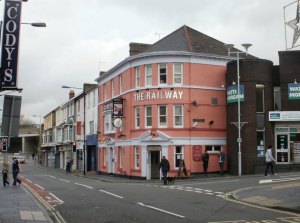
7.00pm Thursday 31st October 2013 at theThe Railway PH at the bottom of Station Hill
ALL WELCOME (Especially new members!)

AGENDA:

  1. Welcome and Introductions
  2. Apologies for Absence
  3. Minutes and matters arising
  4. Officers’ reports (Andy/John/Neil)
  5. Councillor feedback (Kathy)
  6. Elections – Wales GP positions/target ward /Euro campaign
  7. Campaigns update – Fracking (Andy/John/Rozz); PAAA (Andy/John); Bridgend Against the Bedroom Tax (John/Trish/Andy/Gareth/Delyth); Gagging Bill (Andy/John/Trish).
  8. AOB (e.g. End of year social)
  9. DoNM

REMINDER – If anyone needs a lift to any of our meetings, let Andy know (greens) and we will organise it for you.