Let me start by confessing that the nearest I come to being racist is in hating the U.S.A, and about half of its people. Please note I say ‘half’, as the other half are amongst the most welcoming, intelligent, and generous people I have met anywhere, but the obnoxious half …, don’t get me started. Anyway, I am not proud of it and wish it weren’t so …, more than ever!
But having said that, I think I am in one of the biggest growing clubs in the world this week. I think that Trump’s appearances in Davos, Switzerland, over the last two days may go down in the history books as the moment that just about the whole of Europe, if not most of the world decided that enough is enough. I am sure you will have heard all about it, but here it is in its entirety:
Watching it is more than 90 minutes of your life that you will never get back, but while it boring and tedious on the one hand, it is fascinating, bewildering and disturbing on the other. Simultaneously!
Let me fact check a few of his most outrageous and pernicious lies:
“Inflation is defeated”
In December it was 2.7%, on an admittedly slowly reducing trend, as seen worldwide since the sharp price rises seen in the Covid pandemic, but still way above the Federal Reserve target of 2%, and higher than 9 out 10 of the years preceding the pandemic. As far as I am aware the cost-of-living crisis is just as real in the U.S. as it is in the U.K.
“Foreign Investment in the U.S. is surging”
He cited a figure of “$18trillion, maybe $20trillion”. To say these figures are fanciful would be an understatement and a half. In 2025, we have known figures for the first three quarters. These add up to less than a quarter of one trillion at $244billion. Estimates for the full year range from $300 billion to $350 billion at best. Predictions for 2026 range from a fallback to around $250billion (based on worries about geopolitical tensions, mostly created by Trump) to a more optimistic $450 billion or thereabouts. So, a 60-to-80-fold exaggeration by the great gibberer.
It is reasonably safe to assume that the entirety of the economic data he cited is similarly accurate. I do not deny that the U.S. economy is holding up well, with growth greater than the rest of the G7 and inflation and unemployment roughly in line with them. But the longer Trump is in office, the harder it is to get reliable data, as is the case with, for example, rogue states. Just saying!
Once he finished self-fellating himself over his prodigious growth, etc. for half an hour or so, he turned his attention to destroying the NATO alliance and what is left of the special relationship between the USA and Europe.
You will all know about his naked colonialist intent towards Greenland (or was it Iceland?) along with Venezuela, Colombia, Panama, Mexico, Cuba and Canada, but again I feel compelled to clarify a couple of points that may have escaped you regarding his ridiculous suggestion that the U.S. was ‘stupid’ (one of his favourite words) for handing it back to Denmark after WW2.
“We gave Greenland back to Denmark after World II – how stupid were we?”
Firstly, Greenland has been a Danish sovereign territory since 1721, a full 55 years before the U.S.A. Declaration of Independence. In other words, throughout the history of the U.S.A. Greenland has always been Danish. His assertion that just because some Danes landed a ship on it 500 years ago doesn’t give them the right to own it has to be one of the greatest self-owns in history. His lack of self-awareness is staggering.
Secondly, during WW2, once Denmark was invaded and occupied by Germany, the U.S. struck a defence agreement with the Danish ambassador in Washington that allowed the U.S. to station troops and establish military bases and airfields etc. to protect it frompotential German control. This had obvious mutual benefits to all parties.
This agreement was ratified and extended post-war and was renegotiated in 1951 in line with Cold War strategic concerns. The U.S. presence peaked in the 1960s, when there were tens of thousands of personnel scattered around dozens of installations; 10,000 at the Thule Air Base alone at one time. The numbers dwindled after the end of the Cold War because the U.S. decided to withdraw them. Today, only the Pituffik Space Base with a couple of hundred personnel remains. There appears to be no issue with re-instating the U.S. presence to at least its 1960s peak levels.
So, just like most of his bluster about ‘peace’ and ‘security’, you always have to look for the money-making opportunity with Trump. His eyes light up at getting his hands on Gaza, for example, so he can fund its redevelopment and profit from his vision. Hot off the press today, presented by son-in-law Jared Kushner, this!
Just like his Venezuela coup, installing himself as de-facto President, is patently all about stealing oil, Greenland is all about stealing valuable mineral resources. Fuck the Venezuelan people (he’s working with Maduro’s henchmen after all, so it was never about regime change or democracy) and fuck the Greenlanders, a miserable bunch of 50,000 losers in Trump’s eyes.
He may have backed down for the moment, after the rest of NATO finally reined him in and pointed out that his security concerns can easily be addressed by re-instating U.S. bases and presence around Greenland. They’ve called his bluff on this one, so he is having to retreat momentarily while he finds a new angle of attack.
NATO was set up in 1949, at the behest of Clement Attlee’s Labour government, as a way of aligning the efforts of the US and the western European powers at the start of the cold war. In reality it was always a means to ensure US dominance of Europe. It served a number of complementary purposes for the big winner of the second world war. In the words of the British Lord Ismay, its first secretary-general, it was a means “to keep Russia out, the Americans in and Germany down.” Global geopolitics look very different today than they did in 1949.
Russia may have a dangerous sociopathic leader, but it is no longer, if it ever was, an economic powerhouse. It’s economic output (GDP) is only the 9th biggest in the world, less than Germany, U.K., France and Italy, and less than corporations like Apple, Nvidia, Microsoft and Google. It cannot tolerate NATO at its borders only because that brings a malevolent U.S.A. to its borders. Kick NATO into touch and get rid of Putin and the Russian people would love to reap the benefits to living standards seen in the old soviet bloc countries that are now in the E.U. and prospering.
Germany is no longer the pariah state of Europe but the glue that sticks it together. I trust and respect Germany and Germans a lot more than I trust the U.S.A. and Americans.
It is the U.S.A. that has all the hallmarks of a rogue state these days. A “rogue state” is generally understood as one that regularly breaks international rules, destabilises others, represses its own population and media, and resists global accountability. Tell me that this isn’t the U.S.A. today.
Furthermore, don’t let Trump’s absurd rhetoric fool you into thinking it is only American money that funds NATO and ‘protects’ Europe. It is barely the biggest contributor to the NATO budget, despite Trump bleating that the US pays too much, gets little in return and that Europe doesn’t pull its weight. All total nonsense as the data below shows:
If we were to remove the U.S. contribution of €521million and share that out between the remaining population of 639 million people, if works out at €0.80 per person extra. The fact of the matter is that only Turks, Bulgarians and North Macedonians pay less than Americans per head towards the NATO budget.
And would we need this much of a budget if we weren’t supporting U.S. led conflicts all over the planet, especially if the threat from Russia was removed? I don’t think so. NATO has evolved from a defence pact to an imperialist war machine, as Sweta Choudhury eloquently portrays in her article “We need to talk about Nato: an imperialist war machine” in 2019.
This is a key point: Trump may have brought these issues to a head this week, but they are nothing new. The problem isn’t Trump. The problem is the U.S.A. I came across this from a Danish economist, Lars Christensen, this week:
“The problem isn’t Trump. The problem is the U.S. When the outside world observes Trump’s insane behavior and his threats against allies, and we at the same time observe that there is no real action from the U.S. public, Congress, the U.S. Supreme Court, or the U.S. media about this insanity, we will all have to conclude that the U.S. accepts this behavior.”
They voted him twice, FFS! They have taken no meaningful steps to remove him. Before re-electing him, he was found guilty/liable in court of (a) 34 counts of first-degree falsification of business accounts to cover-up hush money paid to Stormy Daniels, (b) sexual assault and defamation of his victim, along with various cases of sexual impropriety, defamation, business malpractice and anti-SLAPP lawsuits that have either been settled out of court or are still mired in the system (probably indefinitely). And who knows what is still lurking in those Epstein files. You are or become what you elect and tolerate. How many times have I invoked the quote: “All that is necessary for evil to prevail is for good people to do nothing”?
So, it is well beyond the time when we should have disbanded NATO and distanced ourselves from the U.S.A. Their influence across Europe (the world even), in the last few decades especially, has been mostly negative. They have led us in the wrong direction not just militarily (Iraq, Israel, Afghanistan, Kosovo, Ukraine) but economically (rampant capitalism allied to protectionism), environmentally (‘drill baby drill’) and socio-politically (fuelling the rise of fascistic right-wing populism around the globe).
We don’t need them. They are a menace. Get lost Trump. Get lost U.S.A.
Just to underline what Trump is all about, we had the launch of his shabby cabal of petro-states and dodgy governments this week in Davos:
Trump has extended invitations to dozens of nations, hinting at a future role as a wider conflict mediator, akin to a pseudo-UN Security Council.
Countries joining the board: Argentina, Albania, Armenia, Azerbaijan, Bahrain, Belarus, Bulgaria, Egypt, Hungary, Indonesia, Jordan, Kazakhstan, Kosovo, Morocco, Mongolia, Pakistan, Qatar, Saudi Arabia, Turkey, United Arab Emirates, Uzbekistan, Vietnam.
Countries that have been invited but remain noncommittal: Cambodia, China, Croatia, Cyprus, Germany, Greece, India, Italy, The European Union’s executive arm, Paraguay, Russia, Singapore, Thailand, Ukraine.
Countries that will not join the board, for now: France, Norway, Slovenia, Sweden, UK (a rare piece of backbone from Starmer).
The ulterior motives of this initiative are barely disguised. The first goal was Trump’s real estate venture in Gaza that I’ve already highlighted. Those first signatories all clearly see an opportunity to suck up to Trump and will no doubt hope to gain contracts for other ventures or some other favours.
Trump is the self-appointed chair for life of this club with a membership fee of a cool $1 billion. I wonder who has stumped that up so far. That it is ‘Trump/U.S.-centric’ is emphasised by its awfully tacky logo:
It is not remotely global. In fact, it brought to mind this map of Trump’s imagined empire doing the rounds recently:
Trump said, in Davos: “Once this board is completely formed, we can do pretty much whatever we want to do, and we’ll do it in conjunction with the United Nations.” He also hinted the board could eventually make the UN “obsolete.” The UN is far from perfect but given the choice of it or this abomination …. !!!
In conclusion, I am hoping that this week’s events in Davos will prove to be a watershed moment in the history of international relations, with the U.S.A. finally reaping what it has sown over many decades. It has all culminated in the monstrous farce embodied in the ludicrous form of the most dangerous clown to walk the Earth. The emperor’s new clothes have finally, it seems, been seen for what they are: nothing but grotesque.
Trump and his administration clearly think they are above and beyond both international law and the U.S. domestic law. Having got away with so much for so long, they don’t even feel the need for pretence about this anymore.
Let me present the basis for me stating this, starting with his current exploits in Venezuela.
US Incursion in Venezuela Legality
The operation in which U.S. forces entered Venezuelan territory and captured President Nicolás Maduro raises serious legal concerns under both international and U.S. domestic law.
International law
The UN Charter prohibits the use of force against the territorial integrity or political independence of another state, except in self‑defence against an armed attack or when authorised by the UN Security Council.
The U.S. operation was conducted without a Security Council resolution and without the consent of the Venezuelan government.
Experts argue that the U.S. could not plausibly claim self‑defence, as there was no imminent armed attack by Venezuela against the United States.
Taken together, these points indicate that the incursion and kidnapping likely violate the prohibition on the use of force in the UN Charter.
U.S. domestic law
The Constitution grants Congress the power to declare war and to authorize the use of military force. Historically, major overseas operations have required a formal declaration or a specific statutory authorization (e.g., the Authorization for Use of Military Force).
In this case, the administration did not seek prior congressional approval for the operation, which legal scholars say breaches the War Powers Resolution and established precedent reuters.com.
Conclusion: Both the lack of UN Security Council authorisation and the absence of congressional approval suggest that the U.S. incursion into Venezuela and the kidnapping of its leader are illegal under prevailing international and U.S. legal frameworks. While the U.S. government may argue that Maduro was an illegitimate leader and a “narco‑terrorist,” such political rationales do not override the legal requirements for the use of force.
Previous offences
Trump’s conduct as a public figure has been the subject of extensive investigation, media scrutiny, and legal proceedings.
Credibly reported crimes and criminal accusations against former President Donald Trump (as of early 2026)
Case / Investigation
Main criminal allegation(s)
Status (early 2026)
Manhattan “hush‑money” case
• Falsifying business records (34 felony counts) to conceal a $130 k payment to adult‑film actress Stormy Daniels during the 2016 campaign.
• Willful retention of national‑defense information (violation of the Espionage Act). • Obstruction of justice and making false statements to federal investigators.
Georgia election‑interference case (state racketeering)
• Conspiracy to commit election fraud (RICO‑style charges) for pressuring state officials to “find” votes. • Solicitation of false statements and illegal procurement of voting equipment.
Federal election‑subversion case (Washington, D.C.)
• Conspiracy to defraud the United States and obstruct an official proceeding (Jan 6, 2021 Capitol attack). • Seditious conspiracy (charges later dismissed, but the core conspiracy charge remains).
Civil defamation suits (e.g., E. Jean Carroll, Summer Zervos)
• While civil, the lawsuits allege sexual assault and harassment; they are not criminal charges, but they reflect serious accusations that have resulted in monetary judgments.
Verdicts rendered in 2024‑2025; not criminal convictions but equivalent to guilty verdicts
Summary of the overall picture
Across the four major criminal prosecutions, Trump faces 88 distinct criminal counts covering the four categories above (business‑record falsification, classified‑document mishandling, election‑interference, and obstruction/conspiracy) citizensforethics.org.
These counts represent the credibly documented accusations that have led to formal indictments and, in the Manhattan case, a conviction.
Note: The list reflects only the criminal matters that have resulted in formal charges or convictions reported by reputable news outlets and official court filings. Other allegations (e.g., personal‑behaviour claims) have not led to criminal charges and therefore are not included here. Who knows what is lurking in the Epstein files?
Understanding why he has not been convicted of many of the other accusations levelled against him involves several factors that intersect law, politics, and the U.S. constitutional system:
1. Presidential Immunities and Legal Timing
Executive‑branch immunity – While a president is in office, the Department of Justice has historically interpreted its policy to prohibit criminal prosecution of a sitting president. This doctrine, articulated in Office of Legal Counsel memos, means that any alleged wrongdoing must wait until after the term ends.
Statutes of limitations – Some alleged offenses fall outside the time window for filing charges, especially when investigations began years after the conduct occurred.
2. Political and Institutional Checks
Congressional oversight – The House of Representatives can launch impeachment inquiries, which are political rather than criminal processes. Trump was impeached twice (first in 2019 for abuse of power and obstruction of Congress, second in 2021 for incitement of insurrection). Both Senate trials ended in acquittal, largely because the required two‑thirds supermajority for conviction was not reached. Surprise, surprise!
Separation of powers – The judiciary operates independently, but judges are appointed by presidents and confirmed by the Senate, creating a system where political considerations can influence the pace and direction of cases.
3. Nature of the Allegations
Allegation
Status (as of early 2024)
Key Points
Financial and tax investigations (e.g., New York Attorney General, Manhattan District Attorney)
Ongoing civil and criminal probes; several subpoenas issued; some financial records sealed.
Prosecutors must prove intent to commit fraud beyond reasonable doubt; many aspects remain under investigation.
Election‑interference (Georgia, Washington, D.C.)
Multiple state and federal investigations; a Georgia grand jury considered charges related to phone calls to election officials.
No indictment has been filed yet; evidence is still being evaluated.
Sexual misconduct allegations
Civil lawsuits (e.g., E. Jean Carroll v. Trump) resulted in a jury finding Trump liable for sexual assault and defamation, awarding damages. Criminal charges have not been pursued at the federal level.
Civil verdicts do not equate to criminal convictions; criminal statutes require higher evidentiary standards.
International law concerns (e.g., sanctions, foreign interference)
Various reports and congressional hearings; no formal charges in international courts.
Enforcement of international law depends on diplomatic mechanisms and treaty obligations, which can be politically contested.
4. Legal Burden of Proof
Criminal law requires proof “beyond a reasonable doubt.” Many of the allegations involve complex financial transactions, communications, or actions taken in the context of political decision‑making, making it difficult for prosecutors to meet that high standard without extensive, corroborated evidence.
5. Political Support and Public Opinion
Base loyalty – A substantial portion of the electorate continues to view Trump favourably, which can affect the willingness of jurors, witnesses, or elected officials to pursue aggressive action.
Partisan dynamics – Congressional committees and some prosecutorial offices are staffed by individuals appointed by politicians from both parties, leading to differing interpretations of the evidence and priorities.
6. Procedural Safeguards
The U.S. legal system includes numerous procedural protections (e.g., discovery rules, plea bargaining, appeals) that can lengthen investigations and delay outcomes. High‑profile cases often encounter additional scrutiny, which can both protect due process and create opportunities for strategic delays.
Bottom line
Trump has faced a range of investigations and civil judgments, but as of early 2024 no comprehensive criminal conviction has been secured for the most serious allegations. This outcome reflects a combination of:
Constitutional doctrines limiting prosecution of a sitting president,
The high evidentiary bar for criminal conviction,
Ongoing, sometimes fragmented investigations,
Political and institutional checks that shape how and when charges are brought, and
Persistent partisan divisions that influence both public perception and the actions of lawmakers and prosecutors.
Because many of these matters remain unresolved, the situation could change if new evidence emerges or if legal actions progress after his presidency. But when will that be if he gets his way and manipulates a third term, as he has explicitly alluded to. It is difficult to have any faith in the U.S. judicial system given how politicised it is.
Non‑Judicial paths that could limit or remove Donald Trump from power or influence:
While the formal criminal‑justice system is the primary mechanism for holding anyone accountable for unlawful conduct, the United States also has, in theory at least, a range of political, institutional, and societal levers that can “bring down” a public figure—even in an environment where the judiciary is perceived as politicised. Below are the most realistic avenues, together with the conditions that make each effective.
1. Congressional Impeachment (or a New Impeachment Attempt)
How it works: The House of Representatives can draft and vote on articles of impeachment. If passed, the Senate conducts a trial; a two‑thirds majority votes to convict and remove the official from office.
Why it matters: Impeachment is a constitutional check that does not rely on a criminal court. Even if the Senate were split along partisan lines, the very act of opening an impeachment inquiry creates a powerful political narrative and can trigger further investigations.
Practical hurdles:
Requires a majority in the House (currently Democratic‑controlled) and a super‑majority in the Senate (currently Republican‑controlled).
Historically, impeachment has been used sparingly against presidents; success depends on shifting Senate dynamics or extraordinary bipartisan pressure.
2. Party Discipline and Internal GOP Dynamics
Censure or Expulsion: The Republican National Committee (RNC) or state party committees can formally censure or even expel a member for violating party rules or damaging the party’s reputation.
Primary Challenges: Encouraging strong primary opponents who can rally anti‑Trump factions within the party can split the base and reduce his leverage.
Funding Controls: Major donors and political action committees (PACs) can withhold financial support, limiting campaign resources.
3. Public Opinion & Media Pressure
Polling Shifts: Sustained negative polling can erode a politician’s legitimacy. Polls that show declining approval among core supporters can prompt party leaders to distance themselves.
Investigative Journalism: In-depth reporting that uncovers new evidence or highlights inconsistencies can sway public sentiment and increase pressure on political allies to act.
Social‑Media Campaigns: Coordinated grassroots movements (e.g., petitions, boycotts, organized calls to representatives) can amplify demands for accountability.
4. Legislative Action Targeted at Specific Conduct
Targeted Laws or Regulations: Congress can pass legislation that narrows loopholes exploited in alleged wrongdoing (e.g., tightening campaign‑finance rules, strengthening corporate‑ownership disclosures).
Sanctions or Restrictions: Federal agencies can impose civil penalties, revoke licenses, or bar individuals from certain government contracts or benefits if statutory thresholds are met.
Benefit Denial: For example, the Office of Government Ethics could block a former president from receiving certain post‑office privileges if conflicts of interest are proven.
5. State‑Level Political Mechanisms
State Elections: Trump could be challenged in state races. State legislatures can also launch investigations or pass resolutions condemning misconduct.
State Courts & Attorney Generals: Even if federal courts are viewed as politicised, many states have independent AG offices that can pursue civil or criminal actions under state law (e.g., fraud, tax evasion).
6. Civil Litigation and Financial Consequences
Mass‑Tort or Class‑Action Suits: Victims of alleged wrongdoing (e.g., fraudulent business practices) can sue for damages. Large verdicts can financially cripple a political operation and deter future misconduct.
Bankruptcy or Asset Seizure: If civil judgments are entered and not satisfied, creditors can seek liens or forced sales of assets, reducing the individual’s capacity to fund political activities.
7. International Pressure
Foreign Governments & NGOs: While the U.S. sovereign legal system is primary, international human‑rights bodies or foreign governments can issue statements, impose travel bans, or limit diplomatic engagements, affecting reputation and mobility.
Sanctions (rare for U.S. citizens): In extreme cases, the Treasury’s Office of Foreign Assets Control (OFAC) could target individuals for illicit activity tied to foreign jurisdictions, though this is uncommon for domestic political figures.
How These Paths Interact
Mechanism
Typical Timeline
Key Actors
Likely Effectiveness (given current political climate)
Impeachment
Months–years (depends on House agenda)
House leadership, Senate leadership, Judiciary Committee
Low to moderate – requires a shift in Senate composition or extraordinary bipartisan consensus.
Party discipline
Immediate to months
RNC, state GOP committees, major donors
Moderate – can isolate the figure but may provoke backlash from loyalist factions.
Public/media pressure
Ongoing
Journalists, activists, social‑media platforms
Variable – can rapidly alter narratives, but impact depends on media reach and audience receptivity.
Legislative reforms
1–2 years (bill passage)
Congress, regulatory agencies
Moderate – can close loopholes but may face partisan gridlock.
State‑level actions
Variable
State AGs, legislatures, courts
Moderate – often less partisan than federal arena, but limited scope.
Civil litigation
1–5 years (case progression)
Plaintiffs, courts, insurers
Moderate – financial penalties can be significant, though enforcement may be protracted.
International pressure
Sporadic
Foreign governments, NGOs
Low – limited direct effect on domestic political standing.
Takeaways
Multi‑Front Approach: Relying on a single avenue is risky. Successful accountability often comes from simultaneous pressure—legal, political, and public.
Leverage Election Cycles: Voter sentiment tends to crystallise around elections; mobilising opposition voters and encouraging strong primary challengers can be decisive.
Focus on Institutional Integrity: Strengthening independent oversight bodies (e.g., ethics commissions, inspector generals) reduces reliance on partisan courts.
Maintain Public Transparency: Transparent investigations and clear communication of findings help sustain momentum and prevent “political fatigue.”
Monitor Shifts in Party Dynamics: Changes in GOP leadership, donor attitudes, or grassroots activism can quickly alter the calculus for supporting or opposing a figure like Trump.
Bottom line: The U.S. judiciary is critically politicised. There remaining constitutionally grounded mechanisms—impeachment, electoral defeat, party discipline, legislative reform, civil litigation, and sustained public pressure—that can curtail or remove a former president’s influence are weaker than ever. The effectiveness of each route depends heavily on the prevailing political landscape, the willingness of institutions to act independently, and the level of civic engagement driving demand for accountability. Trump is working hard to hobble all of these.
Given the above and given the political polarisation and geographical splits in the country, it is hard to see how Trump can be reined in other than by something close to civil war. The MAGA right-wingers are already armed to the teeth and the left are cowered. But at some point, they have to rise and resist or else they will sleepwalk into a fascist nightmare.
How the Trump administration can be interpreted as displaying fascist‑like traits:
Below is a synthesis of the most‑cited scholarly and journalistic analyses (Eco’s “Ur‑Fascism”, Paxton’s fascist checklist, Parenti’s five functions, etc.). Each point notes the evidence that scholars have highlighted, followed by a brief comment on the limits of the comparison.
1. Cult of Personality & Charismatic Leadership
Evidence: Historians cited in the Wikipedia entry on “Donald Trump and fascism” argue that Trump’s post‑2024 assassination‑attempt rhetoric amplified a “cult of personality” that positioned him as a quasi‑mythic figure protecting the nation from an imagined enemy.
Interpretation: Fascist movements traditionally rally around a charismatic leader who claims to embody the nation’s destiny. Trump’s self‑portrayal as the sole defender of “America” mirrors this pattern, though critics note the absence of a formal party‑wide doctrine that typically accompanies classic fascist cults.
2. Ultra‑nationalism & Exclusionary Rhetoric
Evidence: Multiple analyses (e.g., Fair Observer, Parenti) highlight Trump’s repeated framing of immigrants, “the left,” and other groups as existential threats, urging “purity” of the nation and advocating policies that segregate or exclude those deemed outsiders fairobserver.comnewamerica.org.
Interpretation: This aligns with fascist emphasis on a “pure” community and the vilification of “others.” The administration’s family‑separation policy and travel bans are cited as concrete policy manifestations of that rhetoric.
3. “War on Knowledge” – Undermining Independent Truth Sources
Evidence: FactsoverFeelings’ evidence‑based analysis notes a systematic “war on knowledge,” where the administration attacked scientific agencies, academic institutions, and the press, seeking to replace expert authority with partisan narratives factsoverfeelings.org.
Interpretation: Fascist regimes often suppress dissenting intellectual voices to consolidate power. While the U.S. retained a free press, the repeated delegitimization of mainstream media resembles this facet.
4. Reliance on Extra-legal Executive Power & Disregard for Judicial Authority
Evidence: Rolling Stone’s “Guide to Trump’s Fascist Presidency” documents numerous instances where the administration ignored court orders (e.g., deportations to Central America, defying injunctions on immigration policy) and threatened judges who ruled against it rollingstone.com.
Interpretation: Fascist governments typically bypass constitutional checks. The Trump administration’s pattern of flouting judicial decisions suggests an authoritarian tilt, though it never fully abolished judicial review.
5. Mobilisation of Mass Action & Encouragement of Violence
Evidence: The January 6 Capitol attack, framed by Trump as a protest against a “stolen” election, is frequently referenced as an example of encouraging mass confrontation with democratic institutions.
Interpretation: Fascist movements historically employ paramilitary or mass‑mobilised violence to intimidate opponents. The lack of an organized paramilitary wing distinguishes the U.S. case, but the rhetoric that incited the crowd bears resemblance.
6. Economic Nationalism & Protection of Elite Interests
Evidence: Analyses (e.g., New America) point to “natalistic” policies combined with tax cuts favouring corporations and the wealthy, echoing fascist economic strategies that protect entrenched elites while promoting a nationalist agenda.
Interpretation: While not a centrally planned economy, the alignment of fiscal policy with nationalist messaging parallels historic fascist economies.
It might be a stretch to call the Trump administration a fascist regime at the moment, but the direction of travel seems undeniable. This was underlined by a news article I read just yesterday, that partly prompted me to put this blog piece together, that is about experts warning that the U.S. is already preparing for a genocide against transgender Americans. It is well worth reading. https://www.importantcontext.news/p/experts-warn-us-in-early-stages-of
We are living through treacherous times with the world on the brink of numerous inter-connected catastrophes. As throughout history, there are a few global actors that will impact on all our lives if allowed to do so. It is a critical moment in history for global, international, and national institutions (the U.N., N.A.T.O. and western democracies in particular) and we need to realise the importance of each of us in standing up and being counted.
Image inspired by Peter May’s photograph of a statue representing “Die Gute” (Goodness) on Dresden Town Hall which was left overlooking the ruins of the town in 1946. http://www.radicalteatowel.com
Of course, not all Brits hate Donald Trump. I suspect quite a few Reform voters and Farage fans hold him in quite high esteem as he represents all the values they hold dear. There is a huge irony in this because Trump is an affront to many true British values; values you would expect Reform’s faux Christian nationalism (a contradiction in terms as it is) to respect rather than parody.
I’ve been reminded recently of the brilliant profile of Trump written by a British guy, named Nate White, to this question on Twitter/X:
“Why do many British people not like Donald Trump?”
His response is way better than anything I could have come up with:
A few things spring to mind. Trump lacks certain qualities which the British traditionally esteem. For instance, he has no class, no charm, no coolness, no credibility, no compassion, no wit, no warmth, no wisdom, no subtlety, no sensitivity, no self-awareness, no humility, no honour and no grace – all qualities, funnily enough, with which his predecessor Mr. Obama was generously blessed. So for us, the stark contrast does rather throw Trump’s limitations into embarrassingly sharp relief.
Plus, we like a laugh. And while Trump may be laughable, he has never once said anything wry, witty or even faintly amusing – not once, ever. I don’t say that rhetorically, I mean it quite literally: not once, not ever. And that fact is particularly disturbing to the British sensibility – for us, to lack humour is almost inhuman. But with Trump, it’s a fact. He doesn’t even seem to understand what a joke is – his idea of a joke is a crass comment, an illiterate insult, a casual act of cruelty.
Trump is a troll. And like all trolls, he is never funny and he never laughs; he only crows or jeers. And scarily, he doesn’t just talk in crude, witless insults – he actually thinks in them. His mind is a simple bot-like algorithm of petty prejudices and knee-jerk nastiness.
There is never any under-layer of irony, complexity, nuance or depth. It’s all surface. Some Americans might see this as refreshingly upfront. Well, we don’t. We see it as having no inner world, no soul. And in Britain we traditionally side with David, not Goliath. All our heroes are plucky underdogs: Robin Hood, Dick Whittington, Oliver Twist. Trump is neither plucky, nor an underdog. He is the exact opposite of that. He’s not even a spoiled rich-boy, or a greedy fat-cat. He’s more a fat white slug. A Jabba the Hutt of privilege.
And worse, he is that most unforgivable of all things to the British: a bully. That is, except when he is among bullies; then he suddenly transforms into a snivelling sidekick instead. There are unspoken rules to this stuff – the Queensberry rules of basic decency – and he breaks them all. He punches downwards – which a gentleman should, would, could never do – and every blow he aims is below the belt. He particularly likes to kick the vulnerable or voiceless – and he kicks them when they are down.
So the fact that a significant minority – perhaps a third – of Americans look at what he does, listen to what he says, and then think ‘Yeah, he seems like my kind of guy’ is a matter of some confusion and no little distress to British people, given that:
• Americans are supposed to be nicer than us, and mostly are.
• You don’t need a particularly keen eye for detail to spot a few flaws in the man.
This last point is what especially confuses and dismays British people, and many other people too; his faults seem pretty bloody hard to miss. After all, it’s impossible to read a single tweet, or hear him speak a sentence or two, without staring deep into the abyss. He turns being artless into an art form; he is a Picasso of pettiness; a Shakespeare of shit. His faults are fractal: even his flaws have flaws, and so on ad infinitum. God knows there have always been stupid people in the world, and plenty of nasty people too. But rarely has stupidity been so nasty, or nastiness so stupid. He makes Nixon look trustworthy and George W look smart. In fact, if Frankenstein decided to make a monster assembled entirely from human flaws – he would make a Trump.
And a remorseful Doctor Frankenstein would clutch out big clumpfuls of hair and scream in anguish: ‘My God… what… have… I… created?’ If being a twat was a TV show, Trump would be the boxed set.
Bravo!
Most of our right-wing scumbags, as much as they aspire to Trump’s position of power and largely share his values and agenda, are not quite as bad as Trump. Farage is more articulate, Johnson is better read, Truss is no sexual predator, Yaxley-Lennon shows no signs of dementia, Badenoch is not (quite) a white supremacist.
These disgusting people all play the populist tunes. Right‑wing populism is a broad, trans‑national phenomenon, but scholars and observers consistently identify several recurring “threads” that shape its discourse and appeal. While the exact mix varies from country to country, the following elements tend to appear together in most right‑wing populist movements:
1. Anti‑elitist / “People vs. Establishment” Narrative
Core claim: A morally pure, homogeneous “people” is being betrayed by corrupt, out‑of‑touch elites (politicians, bureaucrats, mainstream media, academia, global institutions).
Rhetorical function: Positions the movement as the authentic voice of ordinary citizens, justifying a demand for “real” representation and often for sweeping institutional reforms.
2. Nativism and Cultural Identity
Emphasis on national/ethnic homogeneity: Populists stress a historic, cultural, or linguistic identity that they argue is under threat.
Us‑vs‑them framing: Immigrants, minorities, or culturally distinct groups are portrayed as outsiders who dilute or endanger the nation’s character.
Cultural conservatism: Defence of traditional values (family, religion, language) against perceived liberal or progressive erosion.
3. Opposition to Immigration and Multiculturalism
Security and economic arguments: Migrants are framed as competitors for jobs, welfare resources, or as security risks.
Symbolic dimension: Immigration becomes a proxy for broader anxieties about change, loss of control, and the perceived “globalist” agenda.
4. Scepticism of Globalization and International Institutions
Economic protectionism: Calls for tariffs, trade barriers, or “fair‑trade” policies to protect domestic industries and workers.
Political sovereignty: Critique of supranational bodies (EU, UN, WTO) as eroding national decision‑making power.
Narrative of “global elite”: Global financial or technocratic elites are blamed for economic dislocation and social unrest.
5. Law‑and‑Order Emphasis
Strong‑hand governance: Advocacy for tougher policing, stricter criminal penalties, and decisive executive authority.
Security framing: Links crime, terrorism, or social disorder to immigration or multicultural policies, reinforcing a “protect the people” stance.
6. Charismatic Leadership and Direct Communication
Personalist style: Leaders present themselves as outsiders who bypass traditional party structures and speak directly to the public (often via social media).
Simplified messaging: Slogans, catchphrases, and emotionally charged language replace nuanced policy debate, making the narrative easy to spread.
7. Economic Populism Coupled with Cultural Conservatism
“Left‑right blend”: While socially conservative, many right‑wing populists adopt economically redistributive rhetoric (e.g., “the rich are exploiting the common folk”) to broaden appeal.
Welfare chauvinism: Support for social benefits is conditioned on national belonging—welfare for “the people,” not for immigrants or foreigners.
Hidden agendas: Allegations that hidden forces (global financiers, secret cabals, foreign powers) manipulate events behind the scenes.
Media distrust: Mainstream outlets are dismissed as part of the conspiracy, reinforcing reliance on alternative information channels.
9. Reaction to Perceived Moral Decline
Cultural backlash: Opposition to progressive social changes (e.g., LGBTQ+ rights, gender equality measures) framed as defending “traditional morals.”
Nostalgia for a “golden age”: Idealizing a past era when the nation was supposedly more cohesive, prosperous, and morally upright.
How These Threads Interact
Synergy: Anti‑elitism fuels distrust of both domestic institutions and international bodies, while nativist sentiment provides a clear “other” to blame for societal problems.
Regional variation: In Europe, the immigration/nativist component is often dominant; in Latin America, anti‑globalization and anti‑establishment rhetoric may take precedence; in the United States, a mix of cultural conservatism, law‑and‑order, and economic populism is typical.
Policy outcomes: The combination often leads to proposals for stricter border controls, reduced influence of supranational entities, deregulation of certain economic sectors, and expanded executive powers.
Takeaway
Right‑wing populism is not monolithic, but its most common threads revolve around a people‑versus‑elite narrative, defense of a homogeneous national identity, opposition to immigration and globalization, law‑and‑order emphasis, and charismatic, direct leadership. Understanding these recurring themes helps explain why such movements can adapt to diverse political contexts while maintaining a recognizable ideological core.
And what does this all translate into when they get into power? Taking a closer look at Trump, Orban, Meloni, Modi, Erdogan, Milei, et al, shows us what to expect when they get into power.
Populist Thread
How It Shows Up in Government Action
Illustrative Examples (generic)
Anti‑elitist “people vs establishment”
• Frequent attacks on civil servants, judges, and independent agencies as “out‑of‑touch elites”. • Attempts to centralise decision‑making in the executive or in a charismatic leader’s office. • Use of referenda or “direct democracy” mechanisms to bypass parliamentary debate.
A prime‑minister appoints loyalists to key ministries, dismisses senior career officials, and calls a national vote on a flagship policy.
Nativism & cultural identity
• Tightening citizenship, language, and integration requirements. • Symbolic legislation that foregrounds national symbols (flags, anthems, holidays). • Policies that privilege “native” cultural practices in education and public broadcasting.
Laws mandating that school curricula teach a “national heritage” module and that public broadcasters allocate a minimum percentage of airtime to locally produced content.
Opposition to immigration & multiculturalism
• Rapidly enacted border‑control measures (e.g., visa bans, asylum‑procedure shortcuts). • Reduction or elimination of pathways for family reunification. • Public‑funded campaigns that frame migrants as security/economic threats.
Introduction of a “fast‑track” deportation procedure for undocumented arrivals and a law restricting the number of work permits issued annually.
Scepticism of globalization & supranational bodies
• Withdrawal from or renegotiation of trade agreements, EU‑style treaties, or multinational accords. • Promotion of “economic sovereignty” through tariffs, subsidies for domestic producers, or state‑owned enterprises. • Creation of parallel national regulatory frameworks that override international standards.
Imposing import duties on foreign agricultural products while subsidising local farmers and filing a formal objection to a regional trade bloc’s environmental directive.
Law‑and‑order emphasis
• Expansion of police powers, longer detention periods, and harsher sentencing guidelines. • Creation of special courts or tribunals for “national security” or “public order” cases. • Public‑security rhetoric used to justify emergency decrees.
Passing a law that allows police to conduct searches without a warrant in designated “high‑risk” zones and establishing a “national security court” with expedited procedures.
Charismatic leadership & direct communication
• Centralised decision‑making around a single figure; frequent use of social media, rallies, and televised addresses to set the agenda. • Bypassing traditional party structures or legislative committees in favour of “executive orders”. • Personal loyalty becomes a key criterion for appointments.
The head of state issues a series of executive decrees on economic reform, each announced via a live broadcast rather than parliamentary debate.
Economic populism paired with cultural conservatism
• Welfare programmes targeted specifically at native citizens (“welfare chauvinism”). • Protectionist fiscal policies combined with tax cuts for small‑business owners seen as “the backbone of the nation”. • Subsidies for industries tied to national identity (e.g., agriculture, mining).
Introducing a “citizen benefit” that grants a cash allowance to families with three or more children who are citizens, while cutting benefits for non‑citizen residents.
Conspiracy‑oriented worldview
• Legislative inquiries or investigations aimed at “foreign influence” networks, often lacking transparent evidence. • Restrictions on NGOs, foreign‑funded media, or academic institutions labelled as “agents of the global elite”. • Use of secrecy or classified briefings to reinforce the narrative of hidden threats.
Enacting a law that requires NGOs receiving foreign funding to disclose donors publicly and subjects them to quarterly audits.
Moral‑decline backlash
• Policies that restrict abortion, same‑sex marriage, or gender‑affirming care, framed as protecting “family values”. • Education reforms that limit sex‑education curricula or promote “traditional morality” lessons. • Funding cuts to cultural projects deemed “degenerate” or “non‑national”.
Passing a bill that bans gender‑neutral bathrooms in public buildings and revises school textbooks to remove references to LGBTQ+ histories.
Common Governance Patterns
Centralisation of Power – Decision‑making is concentrated in the executive or in the leader’s inner circle, often justified by the need to act swiftly for the “people”.
Legislative Bypass – Frequent use of referenda, executive orders, or emergency decrees to sidestep parliamentary opposition.
Targeted Welfare – Social safety nets are reshaped to favor native citizens, reinforcing the “us vs. them” narrative.
Regulatory Roll‑backs – Environmental, consumer‑protection, or labor regulations are loosened under the banner of protecting national industry and reducing “bureaucratic overreach”.
Symbolic Nationalism – High‑visibility actions (renaming streets, erecting monuments, emphasizing national holidays) serve to cement a shared identity and signal the government’s commitment to cultural preservation.
Media Control & Narrative Shaping – State‑run outlets receive preferential treatment; independent or foreign media are labeled as “fake news” or “propaganda”, limiting dissenting viewpoints.
Polarising Rhetoric – Policy announcements are framed in stark moral terms (“protect our children”, “defend our sovereignty”), which consolidates the base but can deepen societal divisions.
Why These Behaviours Matter
Policy Stability: Rapid, top‑down changes can create legal uncertainty for businesses and civil society.
Institutional Trust: Persistent attacks on the judiciary, media, and bureaucracy can erode long‑term confidence in democratic institutions.
Social Cohesion: Targeted welfare and anti‑immigration measures may exacerbate ethnic or cultural tensions.
International Relations: Withdrawal from multilateral agreements can strain diplomatic ties and affect trade, security cooperation, and investment flows.
Understanding these patterns helps anticipate how right‑wing populist parties will translate their campaign themes into concrete governmental actions, and it highlights the areas where checks and balances become especially crucial.
It also needs to be understood how such measures are a stepping-stone to outright fascism. Right‑wing populism shares manytraits with fascism—especially the emphasis on a strong, charismatic leader, a “people versus elite” narrative, and a defensive stance toward national identity. However, most contemporary right‑wing populist movements lack the core ideological and structural components that define classical fascism, such as an explicit totalitarian vision, a revolutionary myth of rebirth, systematic suppression of all dissent, and a corporatist economic model directed by the state. But there are clear signs that these are on the future agenda of right-wing populist and/or are being introduced stealthily in small increments.
Core defining elements of fascism:
Feature
What it means in classic fascism (e.g., Mussolini, Nazi Germany)
Ideological myth
A belief in a historic or racial “rebirth” that requires a radical break with the current hegemony.
Totalitarian ambition
The aim to control politics, economics, culture, and private life through a single party/state apparatus.
Cult of the leader
The leader is portrayed as the embodiment of the nation’s destiny, often with quasi‑religious reverence.
Corporatist economy
The state organizes society into corporate groups (industry, labour, etc.) that are subordinated to the regime’s goals.
Militarism & expansionism
Aggressive foreign policy, glorification of war, and territorial conquest are central.
Systematic repression
All opposition—political parties, independent media, civil society—is outlawed or violently crushed.
Mass mobilization
Organized paramilitary squads, mass rallies, and propaganda are used to forge a unified, obedient populace.
All of these are patently evident in Trump’s MAGA America.
MAGA literally embodies the myth that 50’s America was great.
Trump talks openly of dismantling the constitution to give him a third term, along with his threats to manipulate the electoral system.
He fosters his brand image and cult status with followers at every opportunity, even producing his “God Bless the USA Bible”.
The Trump Corporation has grown in reach and wealth substantially during his tenure as President. (More below.)
Far from the being the “Peace President”, he has negotiated deals that benefit him and the USA rather than brokered peace settlements that can endure. He is effectively waging war on Venezuela and has designs on taking over Greenland, Canada and the Panama Canal.
His pressure on and repression of the media and any voices of opposition get bolder and more disturbing.
He has sent troops into numerous USA states controlled by Democrats already and has long used mass rallies and propaganda to cement his support.
That right-wing populist leaders succeed in conning ordinary working people that they have their best interests at heart is one of their most bewildering but undeniable achievements. Witness the vast Tory corruption during Covid as one of the most blatant examples. But it is historically much more discreet in this country. Trump, of course, has no concept of discretion.
Trump appointed one of his real-estate developer mates, Steve Witkoff as Middle-East envoy and a special envoy in the Ukraine War negotiations. They are rubbing their hands with glee at thoughts of re-developing Gaza into the “Middle-East’s Riviera”; Trump’s ‘Project Sunrise’. And Witkoff caused a bit of a stir when it was leaked that he was briefing Russian officials that one of the best ways to get what they want out of Trump is to effectively ‘grease his palms’. Trump’s reaction to this revelation was simply that it was “what a dealmaker does”!
Such abuse of power for personal gain is nothing new of course (witness the personal fortunes accrued by relative lefties like Blair and Kinnock for example), but the sheer scale of Trump’s brazenness is hard to grasp.
Every US president since the 1970s has voluntarily adhered to rules designed to prevent conflicts of interest, typically by placing their businesses into blind trusts and stepping away from direct management. But things have been astonishingly different with Trump, who argues that he is not directly involved with his business because his children manage the Trump Organization. This argument persists even though profits from the family business obviously flow straight back to him.
Respected Lebanese-USA journalist, Mohamad Bazzi, has done a lot of work investigating the Trump families’ dealings in the Middle East. Talking to Aamna Mohdin in the Guardian’s First Edition newsletter, published on 29/12/2025, Bazzi said:
“It’s difficult to keep up with all the ways that Trump and his family have been profiting from the presidency,” Bazzi says. “A lot of the deals that have emerged are with international players – whether they’re companies, billionaires, governments – that want to make nice with the US president. They’ve seen that one quick way to please Donald Trump is by enriching his family business.”
Bazzi pointed to the Trump Organization’s increasing number of real estate deals with companies in Arab countries, including Saudi Arabia, Qatar and the UAE. These companies, he says, have connections to their respective countries’ sovereign wealth funds or, in some cases, to their royal families. Bazzi says that these partnerships involve billions of dollars’ worth of real estate transactions and new golf course developments.
“In many of those cases, the Trump Organization isn’t putting up its own capital. They are branding deals where the Trump Organization leases the Trump name to these developers and they put in all the capital and investment to create these developments. The Trump family gets a licensing fee as well as a 20- or 30-year operating licence to manage these sites,” he adds.
Recent disclosures showed Dar Al Arkan, a publicly traded Saudi real estate developer, paid the Trump Organization $21.9m (£16.4m) in license fees in 2024 for projects in Dubai and Oman.
The Trump family business also ventured into crypto, launching a dollar-sign Trump meme coin days before his second inauguration. According to Bazzi, this coin’s value is purely speculative, but has still proved to be profitable for the family. “Ultimately, Trump and his family are raking in millions of dollars in fees as the coin is being traded back and forth. And so the crypto ventures provided the Trump family with new ways to profit from being in office,” he says.
It goes on and on. Trump rolled out the red carpet for Saudi Arabia’s Crown Prince Mohammed bin Salman (MBS) when the latter visited the White House in November. Shortly after Trump’s re-election, the prince pledged to invest $600bn (£449bn) in the US economy over the next four years. A year later at the White House, he promised to increase that investment to $1tn.
When asked what countries such as Saudi Arabia and other Gulf nations were receiving in return for the eye-watering sums of money they had pledged to the US economy or to the Trump family, Bazzi replied:
“In Saudi Arabia’s case, it’s been this guaranteed defence pact that Trump announced when MBS visited him at the White House. He announced something similar, through executive order, for Qatar last October. Trump has promised the US will come to their defence if attacked, and promised to sell advanced US weaponry,” he says.
Working out exactly how much Trump has profited from the Presidency is very difficult. Forbes estimate his pre-presidency personal net worth at $3.7 billion and his current (December 2025) net worth at around $7 billion. But his greed seems insatiable and he no doubt aspires to achieving dictatorship as that is a means to accumulating much greater wealth. He would start off at number 10 in this historical list of the wealthiest dictators, adjusted to approximate modern USD equivalents where possible (as compiled by ChatGPT):
Profited from oil smuggling and corruption under sanctions.
We need to fear anybody that thinks they can seize control of our government and undermine our hard-won rights and freedoms.
Currently, these are most directly threatened by the right-wing populists gaining traction by the tried and tested strategy of scapegoating vulnerable minorities and suppressing rights to protest. This is the thin edge of a very dangerous wedge that is being driven into our societies to create division and chaos from which they can profit. We need to voice our opposition and take on the misguided fools seduced by these snake oil salesmen. The consequences otherwise are dire and clear enough from history.
As Edmund Burke is paraphrased as saying: “The only thing necessary for the triumph of evil is for good men to do nothing.”
I could equally have cited the famous Niemöller quote, but I think it might need updating in light of the current wave of right-wing authoritarian populism:
First, they attacked the truth, and I did not speak out— because it was confusing, and I trusted authority.
Then they singled out outsiders and dissenters, and I did not speak out— because I was told they were dangerous.
Then they attacked the press, and I did not speak out— because I did not trust the media.
Then they weakened independent institutions, and I did not speak out— because it was done in the name of order.
Then they concentrated power and dismissed accountability, and I did not speak out— because I believed it would never turn on me.
Then they erased ourpersonal freedoms— and there was no one left who was allowed to speak.
The first point to make is that this deal is a carve up between Trump and Putin. It puts Ukraine in an invidious position and makes it hard to accept for its failure to include Ukraine in the negotiations.
With Trump threatening to hang Ukraine out to dry if it doesn’t accept the deal by Thanksgiving (perverse as that is, but what should we expect from a pervert), it is no wonder that Zelensky and European leaders are in a spin.
As details emerge of this deal, we can see Trump’s fingerprints all over it. The key points appear to be:
Territorial concessions: Ukraine would formally recognise Russian control of Crimea and the occupied parts of Donetsk, Luhansk, Zaporizhzhia and Kherson, while Russia would retain de‑facto authority over those regions.
NATO status: Ukraine would be barred from joining NATO, though it would receive “unspecified security guarantees” from the West.
Sanctions and economic ties: Existing sanctions on Russia would be lifted, and the United States would resume cooperation with Russia on energy and other industrial sectors.
Energy arrangement: The United States would take operational control of the Zaporizhzhia nuclear power plant and supply electricity to both Ukraine and Russia.
Security guarantees: Western countries would provide security assurances to Ukraine despite the loss of NATO membership, aiming to prevent further aggression.
Frozen Russian assets: These assets are to be used to help rebuild Ukraine, with the USA overseeing this and taking 50% of any profits made.
This smacks of the same sort of approach as Trump has exhibited towards Gaza. It takes no account of the views of the innocent civilians living in the areas being carved up. It treats the areas as little more than real estate and business opportunities, driven as ever by the greed and profit-motive that seems to be the only thing that motivates Trump to get involved in anything.
Of course, the citizens of Ukraine and Russia will naturally be relieved at the end of a war that has had such dire consequences in terms of loss of lives and damage to property, but it seems they will get very little from this deal.
The causalities to date are truly horrific. I have seen estimates ranging from 800,000 to 1 million dead on the Russian side, with 400,000 to 700,000 dead on the Ukraine side. There are tens of thousands missing and unaccounted for too. Add to this the injuries and long-term disabilities, the displacement of people from their homes leading to a mass exodus of refugees mostly into EU countries and the mental health impacts of all this and conscription, and the human costs are staggering.
And then there is the huge damage to infrastructure, homes, and the environment to consider. And all for what? Answers on a postcard please! It is easy to understand why the majority of Ukrainian and Russian civilians want a negotiated peace desperately.
But Starmer and the EU leaders are opposed. The official line is that this is because they are concerned for the Ukrainian people who should be involved in negotiations and who can’t be allowed to have sacrificed so much in vain. It is nothing to do with (officially) the massive rearmament programme and the convenient excuse to increase military spending while continuing to inflict austerity on their people. European leaders are now committed to getting themselves on a war footing and to continuing the expansion and strengthening of NATO. Ukraine is now the victim of a proxy war between Western Europe and Russia, to all intents and purposes. And Trump is lapping up all involved sucking up to him, metaphorically fellating him even, as he relishes effectively franchising out USA military operations in Europe while extracting great economic and political leverage. If he is to keep USA committed to NATO, it is going to be on his extortionate terms. Otherwise, he’s quite willing and capable of standing by as Europe crashes and burns.
Thus, for the time being at least, it is in the interests of Zelensky, the EU leaders and Starmer to keep the war going. Zelensky is in deep shit when the conflict ends. He has been haemorrhaging popularity across the country and faces a huge corruption scandal. He needs to win the war to survive and can only do that with NATO backing. The European members of NATO are more than happy to provide assistance and weaponry but are rightly wary of allowing it to escalate into full-blown war between them and Russia, mainly for fear of near inevitable nuclear escalation.
Things have reached something of a stalemate and Trump, ever the opportunist, sees now as a time to force the hands of Zelensky and Putin. That it will likely look similar to the terms on the table four years, rendering the immense losses since pointless, is just another layer of tragedy.
There had been violent conflict over the Donbas for years, with legitimate concerns in the Russian speaking population over rights and language. Russian long-standing opposition to the expansion of NATO was never properly acknowledged either. There is no evidence that NATO poses any sort of existential threat to Russia, but independent analyses (e.g., the Quincy Institute) note that NATO’s combined conventional forces, especially airpower and advanced missile systems, far exceed Russia’s current operational capacity. In a hypothetical full‑scale NATO‑Russia war, Russia would likely suffer decisive losses, which underpins its “existential” rhetoric. But it also underlines the USA’s critical role in determining the balance of power. Trump seems intent on maximising the leverage this gives him on both sides for his own benefit and what he perceives as the USA’s benefit.
Zelenskyy addressed the nation, saying Ukraine was faced with a choice of “losing our dignity or the risk of losing our key partner”. He spoke of an extremely difficult week ahead, and of unbearable pressure being put on Kyiv.
Trump, for his part, is in a hurry, reportedly keen to get a deal done before Thanksgiving next Thursday, and perhaps with one eye on the “Fifa peace prize”, apparently created solely as a gift to his ego, which he is expected to be given at the World Cup draw in Washington DC on 5 December.
As the Grauniad’s Shaun Walker put it a few days ago:
“For all the public bravado, there has been a private admission in some parts of the Ukrainian elite that a deal may need to be done sooner rather than later, even if everyone sees Moscow as a bad-faith negotiating partner.”
Thus, this may well prove to be Trump’s crowning achievement, not that he has any interest in the suffering born by the people on the ground or their futures ahead. Given that the region is now awash with weaponry, real long-lasting peace is highly unlikely. And given that the tensions and paranoia across Europe have been cranked up so high, we will continue to welfare budgets sacrificed for warfare spending.
As ever, it is the military-industrial complex and its doyens that are the only ones to gain anything from such conflicts.
The artwork below appeared on the wall of the Royal Courts of Justice after almost 900 demonstrators were arrested last Saturday (in similar fashion the 500 I reported on the week before). Banksy confirmed it was his handiwork on Instagram
Responding to Banksy’s work, a spokesperson for campaign group Defend Our Juries, which organised Saturday’s rally, said it “powerfully depicts the brutality unleashed by Yvette Cooper on protesters by proscribing Palestine Action”.
They said: “When the law is used as a tool to crush civil liberties, it does not extinguish dissent, it strengthens it.”
“As Banksy’s artwork shows, the state can try to strip away our civil liberties, but we are too many in number and our resolve to stand against injustice cannot be beaten – our movement against the ban is unstoppable and growing every day.”
The artwork was scrubbed off within about 48 hours (see above), as it was inevitably going to be, being on a listed building, but the symbolism of its removal, on top of the symbolism of the artwork itself, strongly resonates with people, like myself, concerned about the attempts to quash and silence dissent in this country right now.
Starmer and his ‘starmtrooper’ cabinet colleagues have become prone to misusing legislation to impose an Orwellian agenda of silencing grassroots opinion. They cut their teeth first by thoroughly purging and/or silencing the left wing of his own party through suspension and expulsions on trumped up charges. The extent of this is that once lifelong Labour Party members are now seeking to rehome what were once that party’s core socialist values and defence of the working classes and disadvantaged in an altogether new party of the left (provisionally named ‘Your Party’). This leaves Starmer’s Labour Party with a moral vacuum at its centre which allows it to be complicit in the Zionist atrocities being committed in Gaza and beyond as it prostitutes itself to Zionist and related corporate interests.
Thus, it was able to distort its definition of terrorism to actively support the terrorist state of Israel but proscribe as terrorists UK citizens so appalled at the UK’s complicity in genocide that it dared to damaged RAF property and daub blood red paint on some war planes.
As I’ve reported before, this re-defining of ‘terrorism’ has been criticised and condemned by many, most notably by Volker Turk (UN’s high commissioner on human rights). I would like to believe that Yvette Cooper has subsequently been removed as Home Secretary for growing tired of defending this indefensible authoritarianism.
Starmer’s mob have created a whole raft of new opportunities to silence dissenting voices his Online Safety Act. Superficially, nobody can really argue with an objective of keeping children safe from exploitation and harm online. But is this the only objective of this legislation?
While some will argue that it is “making the internet safer”, it is also destroying hundreds, if not thousands of smaller online communities that simply cannot bear the cost of compliance. This includes registering a “senior person” with Ofcom who will be held accountable should Ofcom decide your site isn’t safe enough. It also means that moderation teams need to be fully staffed with quick response times if bad (loosely defined) content is found on the site. On top of that, sites need to take proactive measures to protect children. Failure to comply can lead to fines of millions of pounds.
Not surprisingly, many law-abiding forum hosts have simply shut down. This from LFGSS, a small one-person passion project for bikers in London:
“We’re done… we fall firmly into scope, and I have no way to dodge it. The act is too broad, and it doesn’t matter that there’s never been an instance of any of the proclaimed things that this act protects adults, children and vulnerable people from… the very broad language and the fact that I’m based in the UK means we’re covered.
The act simply does not care that this site and platform is run by an individual, and that I do so philanthropically without any profit motive (typically losing money), nor that the site exists to reduce social loneliness, reduce suicide rates, help build meaningful communities that enrich life.
The act only cares that is it “linked to the UK” (by me being involved as a UK native and resident, by you being a UK based user), and that users can talk to other users… that’s it, that’s the scope.
I can’t afford what is likely tens of thousands to go through all the legal hoops here over a prolonged period of time, the site itself barely gets a few hundred in donations each month and costs a little more to run… this is not a venture that can afford compliance costs… and if we did, what remains is a disproportionately high personal liability for me, and one that could easily be weaponised by disgruntled people who are banned for their egregious behaviour (in the years running fora I’ve been signed up to porn sites, stalked IRL and online, subject to death threats, had fake copyright takedown notices, an attempt to delete the domain name with ICANN… all from those whom I’ve moderated to protect community members)… I do not see an alternative to shuttering it.”
Of course, the big players can carry these costs and will benefit from losing the competition with myriads of small platforms. And the truly nasty, exploitative operators will either ignore the law or find loopholes. It’s naïve in the extreme to think compulsive, sick abusers will pack it in simply because one channel of operation has become trickier.
But look how easy it is now for government to closedown dissenting voices. Are we safer or in more danger now that vandals can be convicted as terrorists? Is the internet really safer now that any small community can be closed down as a potential refuge for abusers?
I’ve attended a few of the nigh-on-thirty National Marches for Palestine in London and many others in Cardiff. This is the first that has had me welling up in tears.
The first pro-Palestine demo I attended in London, maybe 10 years ago, had somewhere between 20 and 30 thousand marching. The monthly marches over the last 18 months or so have had between 80 and 200 thousand on them. With the news this week that Netanyahu is about to embark on the last phase of his project to ethnic cleanse the Gaza strip, there was the anticipation that there may be well over 200,000 there today from all over the country.
The whole atmosphere was a bit more intense, it seemed to me, as we slowly made our way from Russell Square to Downing Street, via my old stomping ground of Aldwych and the Strand
I suspect I was not alone on reflecting on the mounting horrors being committed in Gaza, with our government’s ongoing complicity, but also that today also marked the 80th anniversary of the bombing of Nagasaki, three days after the bombing of Hiroshima. These war crimes killed 120,000 people instantly and hundreds of thousands more slowly and excruciatingly due to the aftereffects; more than everyone of us on the streets of London today. We didn’t get to see people dying excruciating deaths on our screens in 1945; most didn’t own any screens back then (there were less than 10,000 televisions in the UK in 1945). Now we get to watch genocide, including the starvation of children, in real time on all our many screens.
Hiroshima or Gaza?
The other undercurrent today was that this was the first time many of us had been on such a demo since the proscription of Palestine Action. Most of those attending would be supporters, in principle at least, of Palestine Action’s cause, but all now were wary of falling foul of interpretations of this and facing the prospect, and consequences, of being arrested, labelled a terrorist sympathiser and facing a potential 14-year term of imprisonment. Add all this together and is it any wonder that the mood was even more sombre than usual.
My sign in Russell Square.
Because of concerns about conflating the issues of the Gaza genocide and the UK civil rights oppression, support for Palestine Action was organised in a totally different way, such that those that didn’t want to get caught up with opposing the proscription were in no danger on the main march. Indeed, the policing of this march was very low key and discreet. This was in sharp contrast to the Palestine Action support protest.
While the National March saw perhaps 200,000+ people congregate in Russell Square to commence the March at exactly 1pm, two miles away in Parliament Square 500 briefed and prepared volunteers awaited Big Ben to chime 1pm, sat down on the grass, and unrolled their own hand-written A2 posters, all saying exactly the same thing:
I OPPOSE GENOCIDE, I SUPPORT PALESTINE ACTION
I got to Parliament Square about 2.30pm by which time those sitting in the square and a whole lot more people, including a lot of journalists and camera operators, were effectively kettled by a ring of around 200 police officers. I asked if I could join my friends inside the cordon and was told in no uncertain terms “No”. When asked why not, all I got from the Met officers was that “A section 13 of the Public Order Act is in place.” When I asked what that was the Met officers refused to say and just said “Look it up”.
I wandered around the cordon until I stumbled across a whole section, in front of the Nelson Mandela and Mahatma Gandhi statues, ironically enough, that consisted of officers from Wales! They were very conspicuous due to the HEDDLU labels, but also much chattier (would you believe that!). Chatting to a few of them, I clarified that my placard would likely not get me arrested today as it is ambiguous enough as to whether I was expressing support for Palestine Action, and they had plenty of unambiguous ones to sort out first. I asked her if I verbally removed the ambiguity and told her I supported Palestine Action, would she arrest me. She said that that still would not be a priority today. Oh well, I tried!
Many of you reading this will know how embarrassed I have become over the years at never having been arrested on a demo. Despite the impression I may have given above, I had already determined that I didn’t really want to be arrested today. I had had a long chat with a couple of the legal observers that are present at all such demos about the changing climate around the criminalisation of protest in the UK, specifically the Palestine Action situation.
The implications of being arrested and either accepting a caution or being prosecuted and found guilty of supporting a proscribed organisation can be dire. It was not anticipated that mere supporters, as opposed to members and/or participating activists, were likely to be jailed, but even a mere caution stays on your record for 10 years and could have serious career and other ramifications for many, and also incur travel bans to many countries. I have no career worries anymore, but I do still have plenty of travel plans!!
The legal advice around being arrested has been the same for years. Below is an up-to-date copy of the cards the legal observers hand out on demos. The only thing that has changed is the phone numbers and email addresses, so if, like me, you have been carrying one of these in your wallet/purse for years, you might want to check you have the current contact details.
I’m sure all of those arrested in Parliament Square today will have had them. Because of the consequences outlined above, the 500 volunteers will have all known the possible consequences and how to handle the near-inevitable arrest. Perhaps because of this, the demographics of these 500 people are a bit different to most people I have seen arrested at demos over the years.
The first person I saw being arrested (above) was this smartly dressed gentleman. I was told that he was a solicitor. Apparently, one of the first arrested, before I got there, had been an elderly gentleman in a wheelchair. I was a bit sceptical of this story initially, but then witnessed many elderly people, especially women in (I’m guessing) their 80s being bundled off into police vans. There were university lecturers, vicars, self-employed professionals like dentists and accountants, many retired people from all walks of life and a smattering of smart, articulate young people all prepared to stand up (or be dragged away) and be counted.
89 years old.
It was this spectacle that I was surprised to find had tears rolling down my cheek at one point. These people were guilty of no more than supporting efforts to end a genocide that is occurring before our eyes. They were being labelled as supporters of terrorism by a government arming the genocidal regime and effectively condoning (through Palestine Inaction) the ethnic cleansing and bulldozing of Gaza to enable its annexation and redevelopment as luxury seafront real estate for wealthy Israelis and American tourists. Trump can’t wait to get involved!
Starmer and Cooper may yet be forced to rescind the proscription of Palestine Action, despite Cooper doubling down on it today. On 30 July, a High Court judge ruled that Palestine Action can bring a legal challenge against the UK government over its designation as a terrorist organisation. This followed a hugely damning statement from Volker Türk, High Commissioner for Human Rights at the United Nations that says:
“UK domestic counter-terrorism legislation now defines terrorist acts broadly to include ‘serious damage to property’. But, according to international standards, terrorist acts should be confined to criminal acts intended to cause death or serious injury or to the taking of hostages, for purpose of intimidating a population or to compel a government to take a certain action or not. It misuses the gravity and impact of terrorism to expand it beyond those clear boundaries, to encompass further conduct that is already criminal under the law.”
This Labour Government is not just nauseating, but it almost as embarrassing as the Johnson government.
Just to lighten the mood a tad, let me share two true stories from today of arrests that made me chuckle. These were not in Westminster Square but on the National March. These were people whose placards were deemed less ambiguous than mine in their support for Palestine Action. Both were dismissed when taken for processing with the arresting officers rebuked for their illiteracy, I warrant. The first went something like this:
That’s one officer now aware of the importance of commas!
The second one I heard about and struggled to believe, but then I bumped into the guy and took his picture! Hopefully you’ll spot the issue quicker than the arresting officer!
But my final memories of the day occurred on my journey back home, and again had me welling up.
The first occurred on the tube from Westminster to Paddington. I was sat opposite a lady wearing a hijab and she read my sign and I saw a tear roll down her face. She stood up to get off at the next stop and leaned forward towards me and simply said “Thank you, thank you”.
The second occurred on the train out of Paddington, less than an hour later. There was a lady about my age, travelling alone, sat across the aisle from me but facing me. This was the conversation, initiated by the lady, with an east European accent:
“Excuse me, can I ask you something?”
“Sure.”
“Do you hate the Jews for what they are doing in Gaza?”
“No, not at all! What is happening in Gaza is not the doing of the Jewish people, but of a genocidal rogue state.”
“Thank you. I agree with you.”
We said no more, and she got off at Reading.
What a day.
PS. A guardian article, a week later, about some of the older generation who were arrested:
I am one of the 600,000+ people that have signed up to be kept informed of developments with the launch of Corbyn’s and Sultana’s new party of the Left. It holds out the hope of an anti-austerity, anti-war and anti-racist party that seeks to tackle the cost of living, reduce inequality, and promote public ownership. As such it certainly ticks a lot of boxes for me. However, I am struggling to get very enthusiastic or excited about it personally. But I do hope that it might just galvanise the young into seeing an opportunity to reshape their futures for the better.
In some ways I think I have never quite gotten over the orchestrated failure of the Corbyn project during his time as Labour Party leader. It was crushed by an obscene MSM campaign of libellous attacks, most notably the ridiculous antisemitic slurs, that were also used by his enemies within the Party, to their everlasting shame. The immediate consequence was the disastrous premiership of Boris Johnson, and then everything that has followed that.
Those largely-the-same Labour politicians and liberal commentators appear to have already settled on their main attack line: support for the Left Party will split the Labour vote and allow Reform to win. That they refused to get into line and support the democratically elected leadership of Corbyn, supported by a huge majority of the membership allowed ‘mini-Trump’ Johnson, seems to be a lesson at least partly learned, if way too late! Hypocrisy to the fore!
In fact, many opinion polls have already indicated potential for Reform to win the next general election, while Labour’s parliamentary representation collapses as a consequence of Starmer’s team consciously courting Reform voters and would-be voters while ignoring those who might back the left. That has failed miserably on its own terms, but it has also widened the audience for a new left party. They have only themselves to blame. Where do they think the Left can turn?
For those left-wingers who remain in the Labour Party, there are two main reasons cited for staying; essentially the same ones I was presented with when I quit the Labour Party after Starmer’s duplicitous campaign to usurp the Labour leadership. One is that recent controversies like the Welfare Bill and the recognition of Palestine illustrate how the Labour Party is not monolithic and still be shaped by pressure from the left through the winning of concessions. The other argument is that Labour retains the reluctant loyalty of many trade unions. But this can’t be taken for granted, especially with a new option, a genuinely socialist party, there to embrace them and their values.
If a year or so of a Starmer government doesn’t prove that the Labour Party is no longer fit for the purpose for which it was created, well, nothing surely will. The new party will need an activist base, and I therefore sincerely hope that those activists will stop pissing in the wind that is blowing through the Labour Party and migrate to where their efforts could potentially yield great gains for those abandoned by the Labour Party and tempted by right-wing populist scumbags (like that other mini-Trump sociopath, Farage) offering simplistic, short-sighted, scapegoating solutions that appeal to those most challenged by the crises at hand.
In any case, left wing pressure is being seen to exert pressure on this right-wing Labour administration from without, way better than from within. A genuinely left-wing party can exert pressure on the Labour government over controversial issues, perhaps even more effectively than, but certainly in allegiance with social movements. The main pressure on Starmer and foreign secretary David Lammy over Gaza has come from the mass movement, finding only a faint echo among Labour MPs.
As for the Trade Unions, Ex-Unite boss Len McCluskey has hinted that trade unions might abandon Labour for Jeremy Corbyn’s new party if it proves “credible,” raising concerns on the left of a historic break in relations. McCluskey, 74, comments heap fresh pressure on Labour as internal divisions widen. Just days ago, Corbyn declared “change is coming” and praised Coventry South MP Zarah Sultana for quitting Labour to help “build a real alternative” to the party he once led. McCluskey, one of Corbyn’s staunchest allies, made clear that trade unions are weighing up their options. “If this new party demonstrates its credible, then trade unions will consider their affiliations,” he warned.
The remaining big trade unions of the working classes, such as Unite, UNISON, GMB and ASLEF are known to have had internal discussions and it is clear that, if they continue to support Labour under its current leadership, they risk becoming complicit in the erosion of worker’s and human rights, and the abandonment of progressive values. The participation of union activists can hugely enrich the new left-wing party, in every sense, giving it political substance and helping it develop roots.
I also know, of course, plenty who prefer to argue for Green Party membership, and see Zack Polanski’s leadership bid as a major opening. The Green Party has many left-wing policies but has never been a coherently or consistently left-wing party. It doesn’t ever present a political platform in class terms like Labour’s 2017 manifesto did: the many versus the few, us versus them. It veers in different directions depending on circumstances. It attracts votes from those who would otherwise vote Labour, but also from those who are more naturally Lib Dem voters. It has long had to contend with ‘Torie-on-bikes’ slurs too.
During Corbyn’s leadership of Labour, the Greens made efforts to attract those who were unhappy with Labour’s leftwards direction. For example, they supported overturning the EU referendum result of 2016. While it made some inroads into urban working-class areas, especially when Will Duckworth was around and working the West Midlands hard, the Green Party continues to have a mainly middle-class base. The kind of working-class towns where Reform poses a serious threat are places where the Green Party has little presence or profile. Nonetheless, I can certainly see value in the idea to form an alliance between the two parties to broaden their appeal and enhance their electoral prospects. This is, after all, what I wanted to do with the ecosocialist leanings in the Wales Green Party and Plaid Cymru (but failed).
This probably cannot go far beyond having loose electoral agreements at local level. Most left-wing activists will generally see the sense in avoiding standing Left and Green candidates in the same council wards. Then again, there will be areas in England where the Greens are already in office – either running a council or junior partners in a coalition – and have proved disappointing. It would be a serious mistake for socialists in those areas to align themselves with the Greens, even on the level of an electoral pact.
Pushing for a more formal alliance from the very beginning is liable to have a dampening effect. It dampens the insurgent, anti-establishment spirit that motivates and energises a new party, pulling it in a more conventional direction. The new party needs to establish its own distinctive priorities and demands. It should not be blunted by association with an established electoral vehicle, especially one of such modest success.
The new party will need to root itself in social movements and trade union battles. One of the issues during Corbyn’s leadership of the Labour Party was the inability to separate electoral and internal party politics and develop a broader strategy for social change. Momentum, the left-wing organisation established to support Corbyn, originated with much talk about social movements, but did very little about it. It became, instead, the battle line for the internal warfare within the party. Those divisions are still there, despite Starmer’s intolerant, anti-democratic purge of the Left. The formation of a new, cohesive and coherent party of the left should remove these counter-productive internal divisions and be a whole lot more democratic and representative too, at every level.
The new party will have to be politically bold and audacious if it is to be a meaningful alternative to the prevailing political zeitgeist. We live in crisis-ridden times. Unsustainable economic models, the climate catastrophe, and a resurgence of imperialist rivalries are, perhaps, the biggest factors conditioning politics today. Crises of vast numbers of displaced people (on a scale yet to be imagined, let alone seen) and wars over water and food are just around the corner.
There has been a patent collapse in trust in established institutions and politics. There is a correspondingly an appetite for anti-establishment politics that thinks big (or is it just loud?) and pitches radical (or is it just different?) and in the absence of a coherent and organised left, it is the hard-right forces that flourish.
A critical area for the new party will be international issues. Foreign policy was Corbyn-led Labour’s weakest link: Corbyn’s own anti-war, anti-militarist politics were never matched by official party policy, with major concessions on NATO, nuclear weapons and more. Anti-imperialism needs to be woven into the fabric of the new party. The ‘welfare not warfare’slogan – rallying opposition to higher military spending at the expense of welfare, public spending, and international aid – will have to be politically central. As vital as this is, it is a particularly hard sell while tyrants like Putin are on the warpath.
The new party needs to be shaped by the energy and ideas of the more than 600,000 people who have signed up for it. It will have to be a deeply democratic party with high levels of participation. This is not merely because democracy is a virtue, but because mass involvement will shape it positively and help overcome the many obstacles it will face.
I am too battle-weary to have the energy to do the hard yards anymore. But if enough of those 600,000 do have it, especially the younger generations with the most to gain from a non-violent revolution in our politics and economics, then who knows what is possible.
I’m a gay Jewish man, but how would you know that unless I had told you?
I’m a young black lad from South London, but I can’t hide my black skin from you, can I?
Pointing this out has ridiculously gotten Diane Abbott suspended from Keir Starmer’s Labour Party. It is hard to adequately express the contempt I have for Keir Starmer, who is so far up the alimentary tract of Zionist interests that he deliberately conflates such comments with anti-semitism. This is not only a gross insult to a lifelong equalities campaigner who fights racism in all its guises, but also an insult to Jewish people that suffer genuine anti-semitism and value the support of campaigners like Diane Abbott and Jeremy Corbyn. I would go so far as to suggest that the act of suspending Diane Abbott for differentiating different forms of racism is in itself more ant-semitic than anything Diane Abbott has ever said and done.
The scapegoating of black MP Diane Abbott was another low point last week. As it happens, I listened to her interview with the BBC’s James Naughtie on Thursday morning before she was suspended. I was totally taken aback a few hours later when Labour decided she had been anti-Semitic in her comments. She was nothing of the sort. She did not repeat her claims of two years ago, which got her suspended for the first time. Instead, she clearly said that anti-Semitism and anti-Traveller racism were real but talked about the differences between those and anti-black racism. She did so in terms of visibility. There should be no doubt about this: stop and search for example is targeted at black and to a lesser extent Asian kids. Black and Asian people suffer abuse on public transport, on the streets and from the police because they are visibly black.
I would go further than this important point: you cannot understand anti-black and Asian racism in this country without looking at the racial division of labour at work and the history of slavery and imperialism to which Britain was central. This brings us on to wider definitions of racism where of course many people on the left differ. But we should understand racism as a material reality which is not simply about moral imperatives. Of course racism is morally wrong and should be opposed in all circumstances. But the arguments of Marxists go further: it is deliberately created and recreated in order to divide working-class people and to dehumanise its victims. It is therefore anathema to any idea of collective action or socialism – and why it tends to break down where people do take collective action to change the world, for example on the Palestine demos.
Our rulers are happy to place opposition to racism under the general rubric of diversity. That in itself doesn’t address the bigger questions: why racism is also connected to class, why some racism is much more pervasive and damaging. Any racism is terrible for those who experience it. But the institutional anti-black racism and Islamophobia in Britain go to the heart of education, policing, employment, and much else. Diane has been attacked for daring to imply there is a hierarchy of racism. But in reality the daily oppression of working-class black and Asian people is much more far-reaching, and deliberately so, throughout society than other racial oppressions.
Diane Abbott is right to point to that. As a working-class black woman who has experienced racism all her life she should be supported not sanctioned. And it’s about time we had a serious discussion about racism and how it works in society – not least within the Labour Party – rather than outbursts of moral outrage which end up attacking an MP who has received more racist abuse than any other.
We are living in dark times, but through solidarity and courage we still have Power in the Darkness!
It is hard to believe that this was released in early 1978. I was just 15. The intervening years have seen some progress at times, but we have seen that progress steadily eroded again, and most damningly by this current Labour government!!
Power in the darkness Frightening lies from the other side Power in the darkness Stand up and fight for your rights
Freedom, we’re talking bout your freedom Freedom to choose what you do with your body Freedom to believe what you like Freedom for brothers to love one another Freedom for black and white Freedom from harassment, intimidation Freedom for the mother and wife Freedom from Big Brother’s interrogation Freedom to live your own life, I’m talking ’bout
Power in the darkness Frightening lies from the other side Power in the darkness Stand up and fight for your rights
“Today, institutions fundamental to the British system of Government are under attack the public schools, the house of Lords, the Church of England, the holy institution of Marriage, even our magnificent police force are no longer safe from those who would undermine our society, and it’s about time we said ‘enough is enough’ and saw a return to the traditional British values of discipline, obedience, morality and freedom. What we want is
Freedom from the reds and the blacks and the criminals Prostitutes, pansies and punks Football hooligans, juvenile delinquents Lesbians and left wing scum Freedom from the niggers and the Pakis and the unions Freedom from the Gipsies and the Jews Freedom from leftwing layabouts and liberals Freedom from the likes of you”
Power in the darkness Frightening lies from the other side Power in the darkness Stand up and fight for your rights
First they came for the Communists And I did not speak out Because I was not a Communist Then they came for the Socialists And I did not speak out Because I was not a Socialist Then they came for the trade unionists And I did not speak out Because I was not a trade unionist Then they came for the Jews And I did not speak out Because I was not a Jew Then they came for me And there was no one left To speak out for me
How many of you learned the history of WWII in history at school and wondered how the people of Germany could be fooled into voting for a genocidal maniac like Hitler and then stand by as the biggest genocide in history was perpetrated under their noses?
I know I did, and it probably explains why I have always taken an interest in what our politicians are up to and why I am prepared to take to the streets when they do things I cannot support. But we are living in very dark times again and most of us are simply not doing enough. Most of us are simply doing what most of the German people did in the 1930s and are just getting on with our very comfortable lives while bleating about the ‘cost of living’ and saying nothing about the cost of other people dying and truly suffering.
Evil is a subjective thing, but if we open our eyes and truly witness what is going on around us, all too often in our names, then we will be forced to do something, even if that is a conscious and deliberate choice to do nothing and thereby condone what is going on.
Many people excuse themselves by saying they have ‘democratically’ elected representatives that they are happy to deal with these issues on their behalf. That’s what the German people in the 1930s did. Things have changed very little. We still allow ourselves to tolerate our politicians’ blatant propaganda, lies, corruption and hypocrisy.
Take our duly elected PM Sir Keir Starmer, for example.
Starmer was knighted in 2014 ostensibly for his work as a human rights lawyer.
In the Fairford Five case, in 2003, his client had intended greater damage than Palestine Action did at RAF Brize Norton: Josh Richards was apparently planning to burn the wheels of American bombers slated to fly from an RAF base to Iraq. Keir argued while his client’s acts were illegal, they were morally justified, and the jury rightly – in my view, and presumably his – refused to convict.
The day that Starmer decided to proscribe Palestine Action was the day I first thought to join them. It’s counterproductive as well as disgraceful! But in theory at least, this would make me a terrorist and could get me 14 years in prison. As it happens, their website appears disabled. I would defy our democratically elected PM in order to support a group of people trying their damnedest to stop a genocide, a genocide being acted out in front of our eyes and with the support of that same democratically elected PM, i.e., in your name!
Thankfully, we have decent people, including lawyers with more moral fibre than Starmer, doing their best to hold government and power to account. This is why I am a supporter of Amnesty International and the Good Law Project. If and when I’m arrested, I’ll be contacting them both! (Please join them both if you haven’t already, before it is too late for you too!)
A recent newsletter from the Good Law Project contained these words from civil rights lawyer, Clive Stafford Smith (who worked on behalf of Guantanamo Bay detainees, many of whom had been sold to the US for bounties by a corrupt – but ‘democratically-elected’ Pakistani government):
“Hypocrisy is sometimes spelled with a capital H. Hypocrisy breeds hatred, as it did when the US set up a law-free prison in Guantánamo Bay, purportedly established to protect Democracy and the rule of law. If you are a Labour government, committed to the Human Rights Act, you cannot expect to win votes away from Reform UK or even Suella Braverman by playing the hate card yourself. The Act is designed to protect people – including the children of Palestine – from vilification and even murder. I’d like my colleagues to remember why they became politicians and judges in the first place. As human rights advocates, we should be proud to stand up for those who most need us. It’s our job.”
As humans, we all need to be human rights advocates. They are our rights. But I suspect many of us don’t actually value them enough until ours are tangibly threatened. But we can sit back and watch while others have theirs stripped away, and worse.
And so, to that “must watch” video I promised you. I guess that if you have read this far, there is a chance that you might just watch it. But I am also guessing some of you won’t or will give up on it quickly as it makes you uncomfortable.
One last quote for the benefit of those still ‘uncomfortable’ with criticising Israel for fear of being accused of being antisemitic (as has been done to lifelong campaigners against any form of of discrimination, like Jeremy Corbyn and Diane Abbott). This comes from the son of holocaust survivors, Norman Finkelstein:
“The biggest insult to the memory of the Holocaust is not denying it, but using it as an excuse to justify the genocide of the Palestinian people.”
I’ll leave you with these links (click on the logos). I hope to see some of you on the streets some time soon, but supporting those fighting on our behalf is the least we can do, isn’t it?
As a student in the early 1980s, I remember being hugely impressed by the astonishing bravery of Lech Wałęsa, who headed up the Solidarity Union that led the Gdansk ship workers out on strike against the then communist regime in Poland. He became an icon and a hero. He, of course, went on to be President of the country.
Last week Lech Wałęsa wrote an open letter to Donald Trump. In case you didn’t see it, the full text of that letter is below.
There is so much I could say about the contempt I hold Donald Trump in, but I hope that all reading this would share that contempt so let me just share Lech Wałęsa’s words and be done, rather than risk my blood pressure.
“Your Excellency, Mr. President,
We watched your conversation with President Volodymyr Zelensky with fear and distaste. It is insulting that you expect Ukraine to show gratitude for U.S. material aid in its fight against Russia. Gratitude is owed to the heroic Ukrainian soldiers who have been shedding their blood for over 11 years to defend the free world’s values and their homeland, attacked by Putin’s Russia.
How can the leader of a country symbolizing the free world fail to recognize this?
The Oval Office atmosphere during this conversation reminded us of interrogations by the Security Services and Communist court debates. Back then, prosecutors and judges, acting on behalf of the communist political police, told us they held all the power while we had none. They demanded we stop our activities, arguing that innocent people suffered because of us. They stripped us of our freedoms for refusing to cooperate or express gratitude for our oppression. We are shocked that President Zelensky was treated similarly.
History shows that when the U.S. distanced itself from democratic values and its European allies, it ultimately endangered itself. President Wilson understood this in 1917 when the U.S. joined World War I. President Roosevelt knew it after Pearl Harbour in 1941, realizing that defending America meant fighting in both the Pacific and Europe alongside nations attacked by the Third Reich.
Without President Reagan and U.S. financial support, the Soviet empire’s collapse would not have been possible. Reagan recognized the suffering of millions in Soviet Russia and its conquered nations, including thousands of political prisoners. His greatness lay in his unwavering stance, calling the USSR an “Empire of Evil” and confronting it decisively. We won, and today, his statue stands in Warsaw, facing the U.S. Embassy.
Mr. President, military and financial aid cannot be equated with the blood shed for Ukraine’s independence and the freedom of Europe and the world. Human life is priceless. Gratitude is due to those who sacrifice their blood and freedom—something self-evident to us, former political prisoners of the communist regime under Soviet Russia.
We urge the U.S. to uphold the 1994 Budapest Memorandum, which established a direct obligation to defend Ukraine’s borders in exchange for giving up nuclear weapons. These guarantees are unconditional—nowhere do they suggest such aid is a mere economic transaction.
Signed, Lech Wałęsa, former political prisoner, President of Poland “
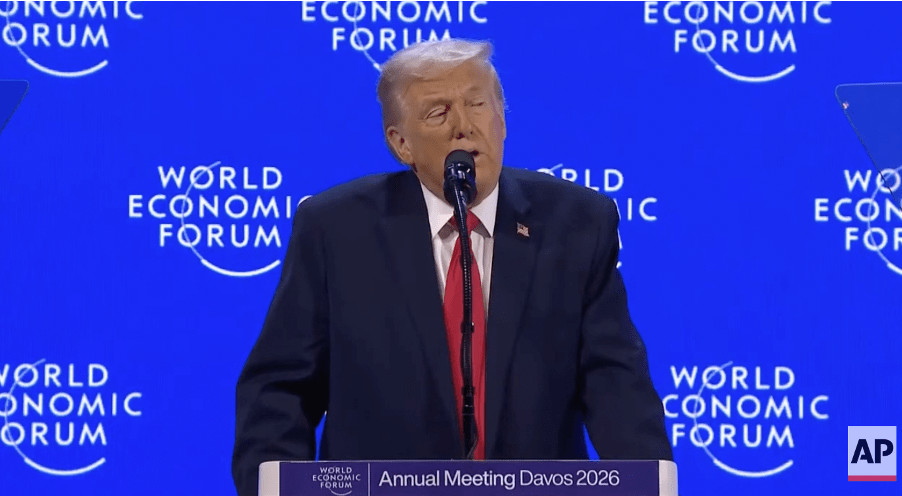
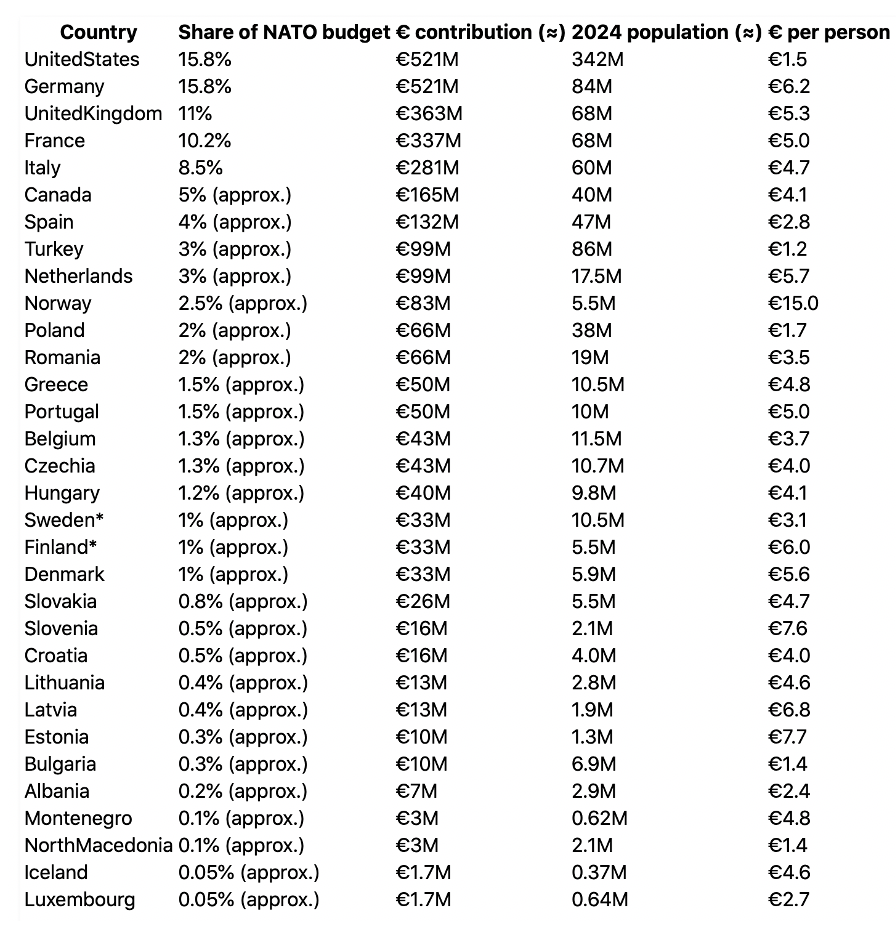
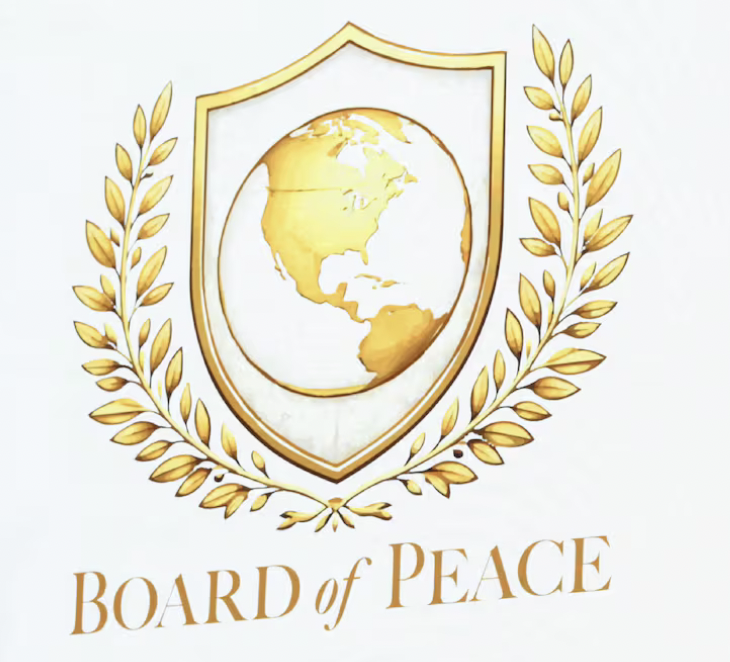
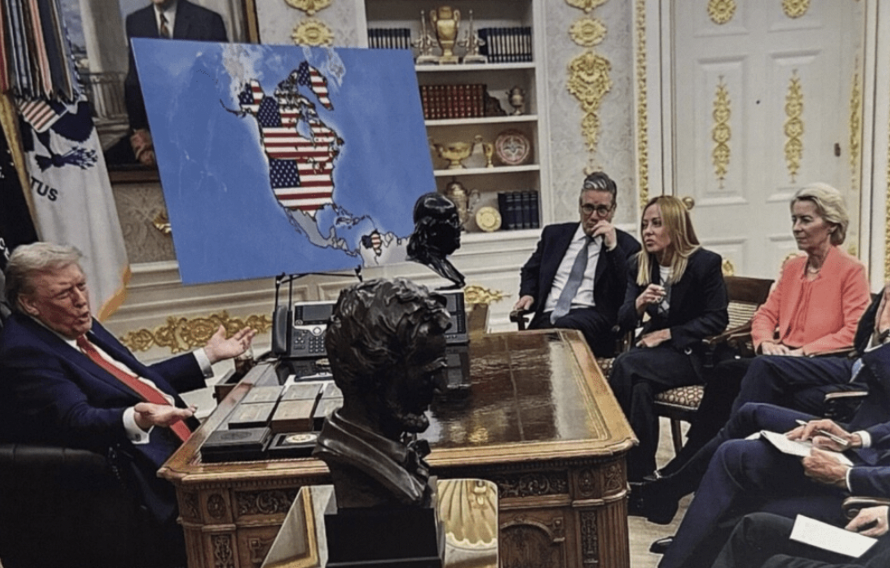
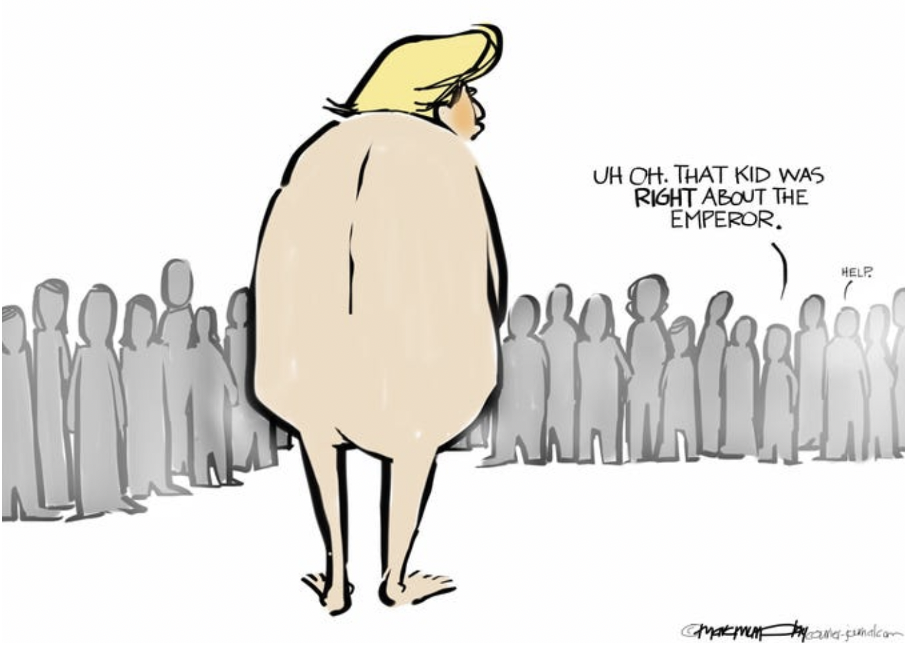
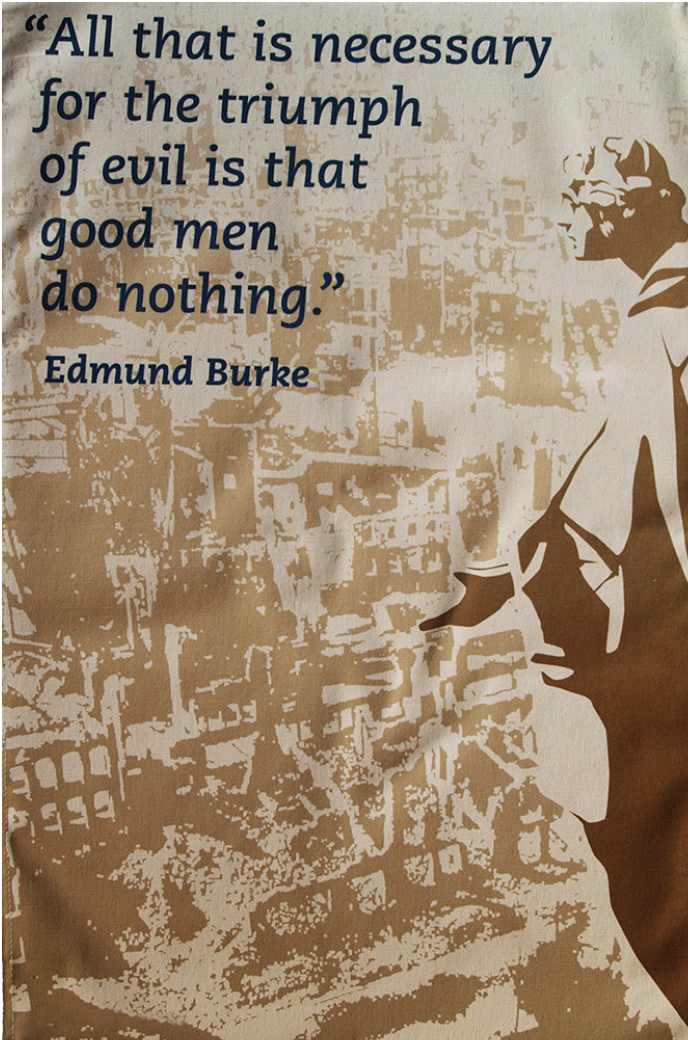


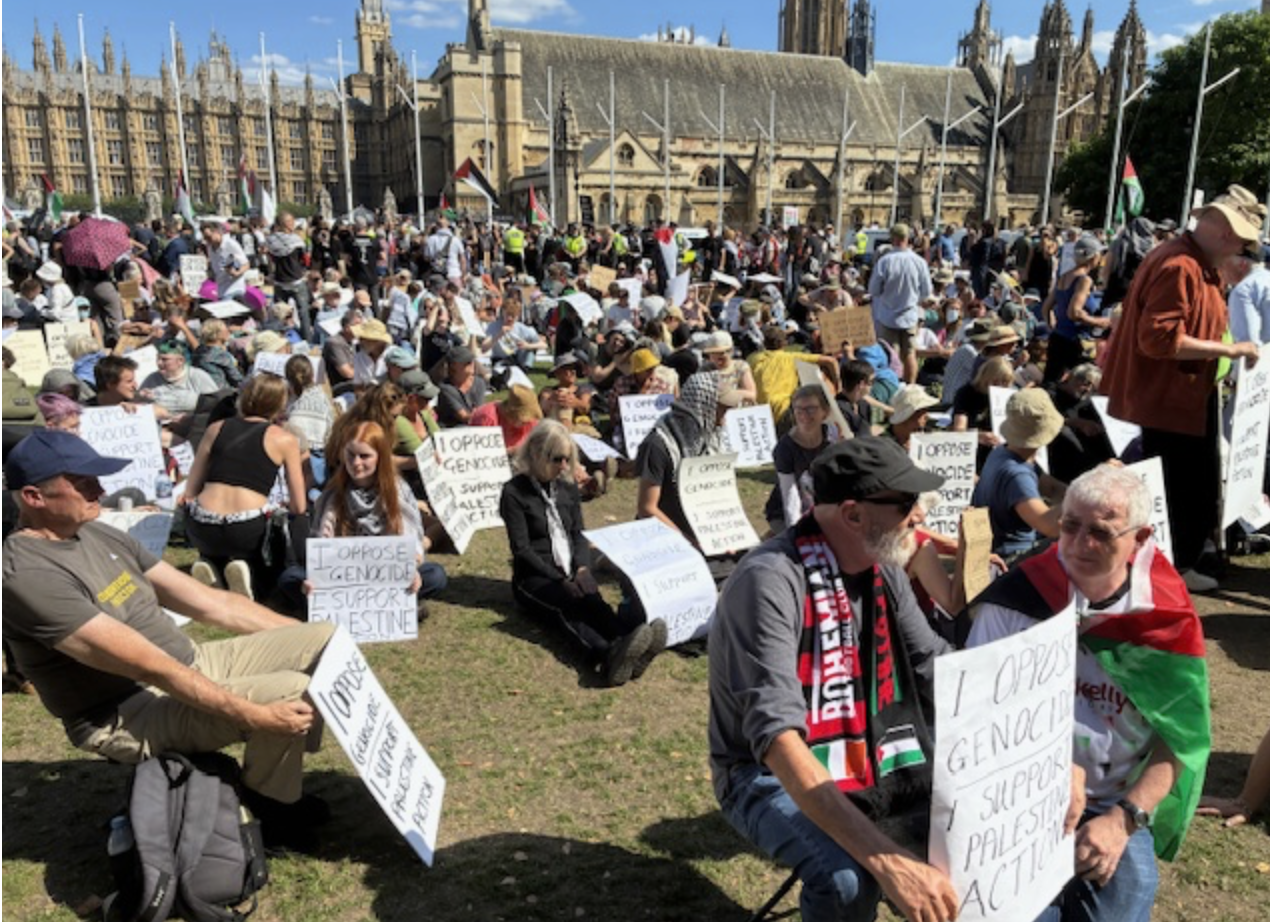
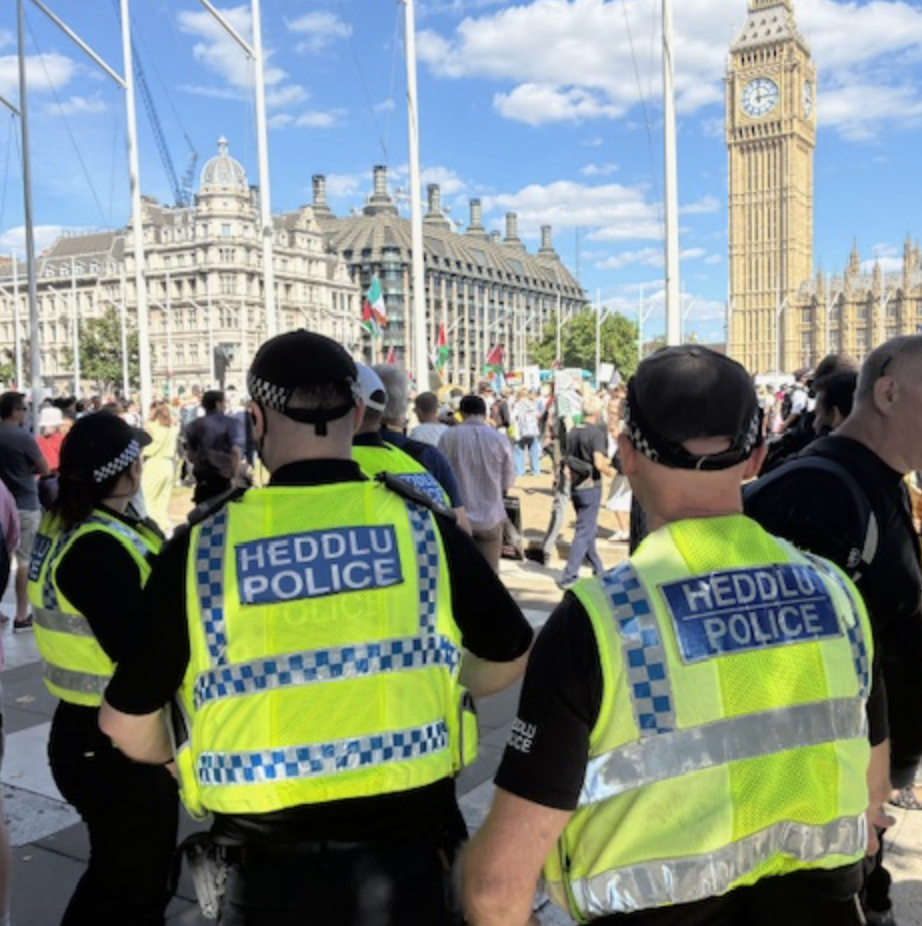
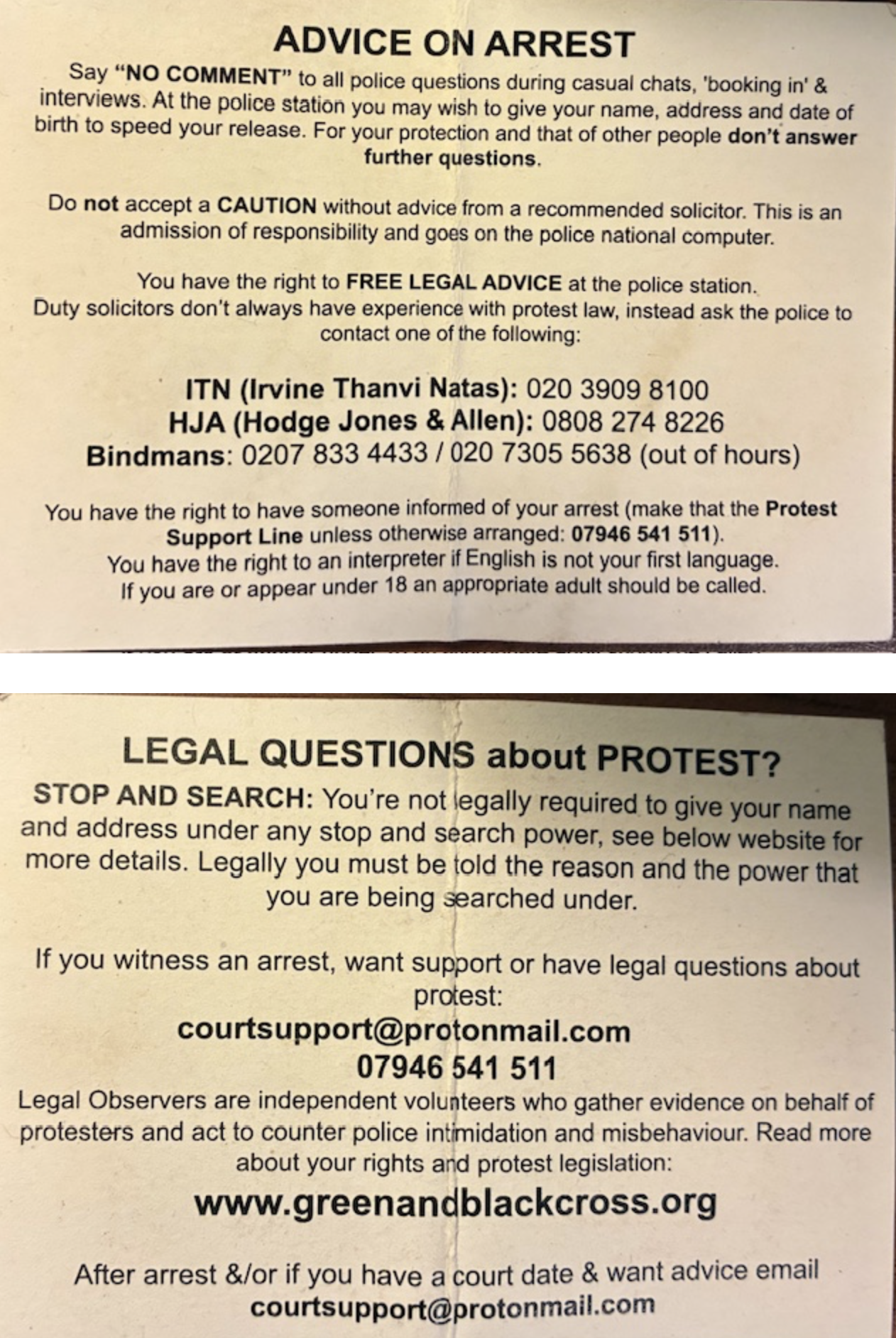
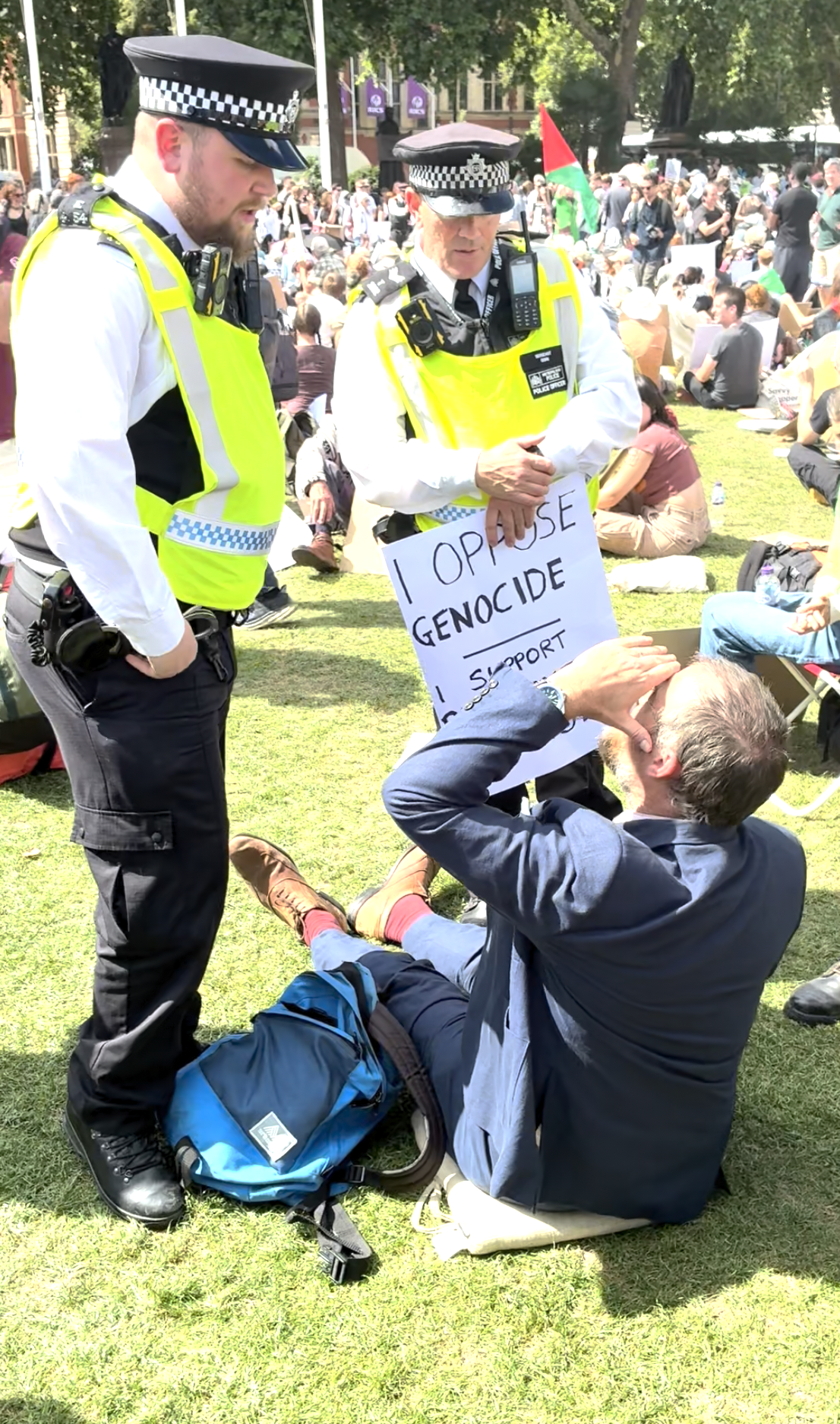
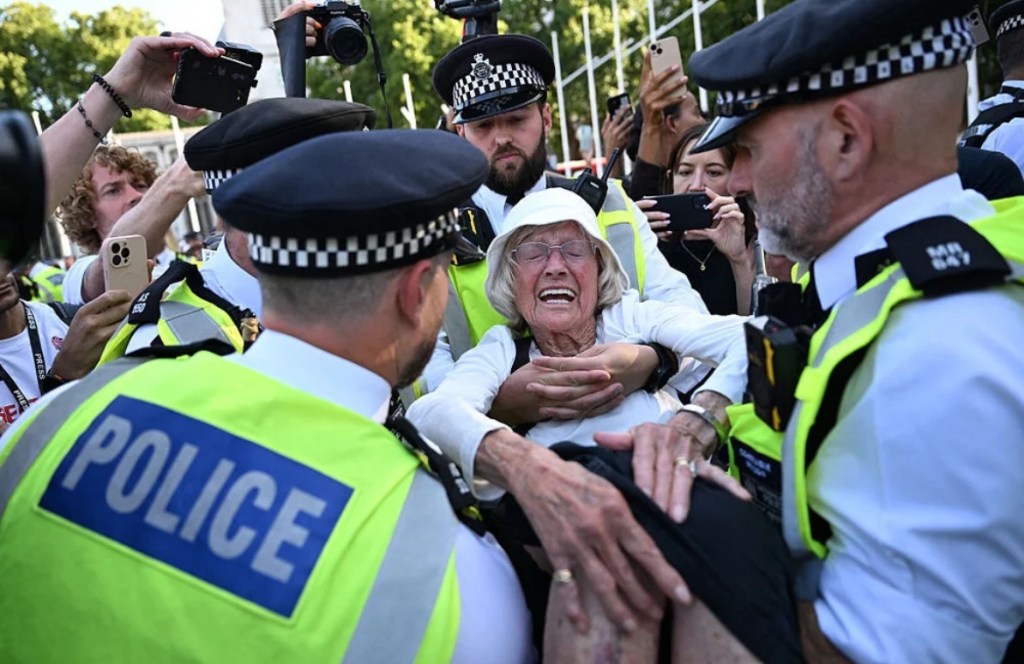

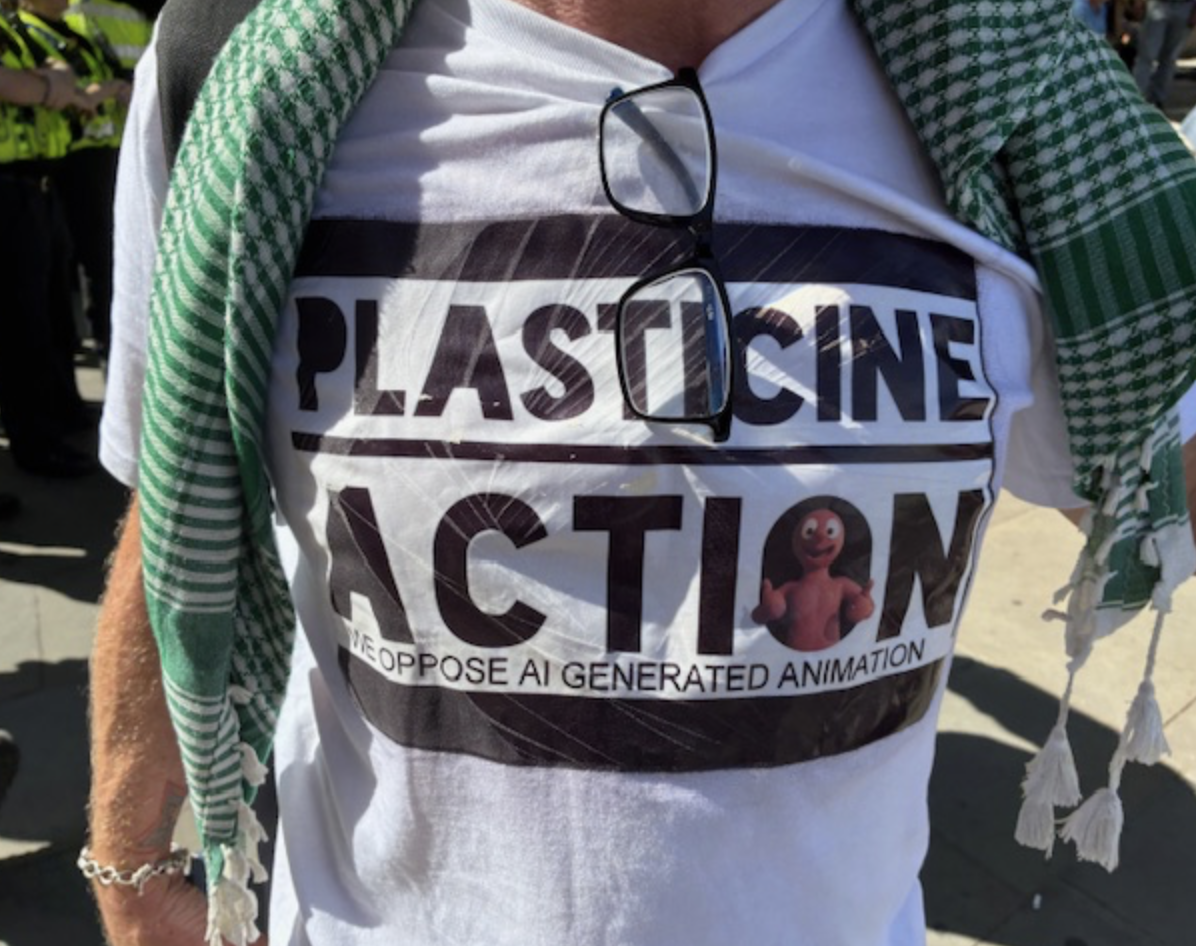
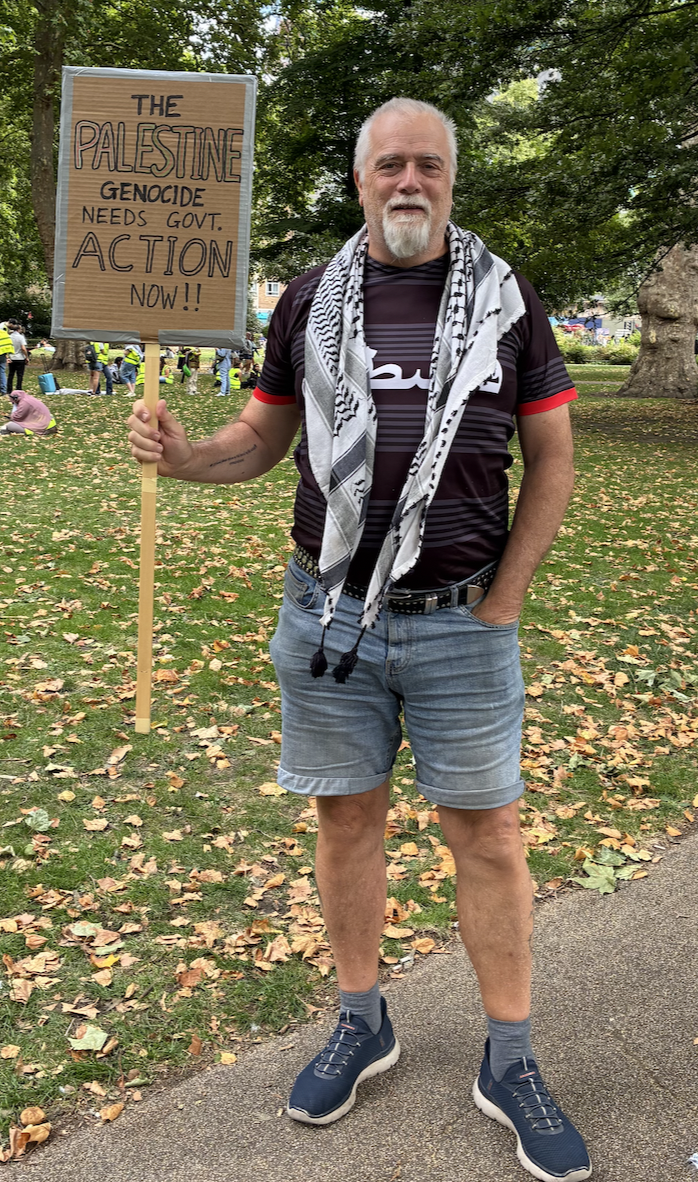
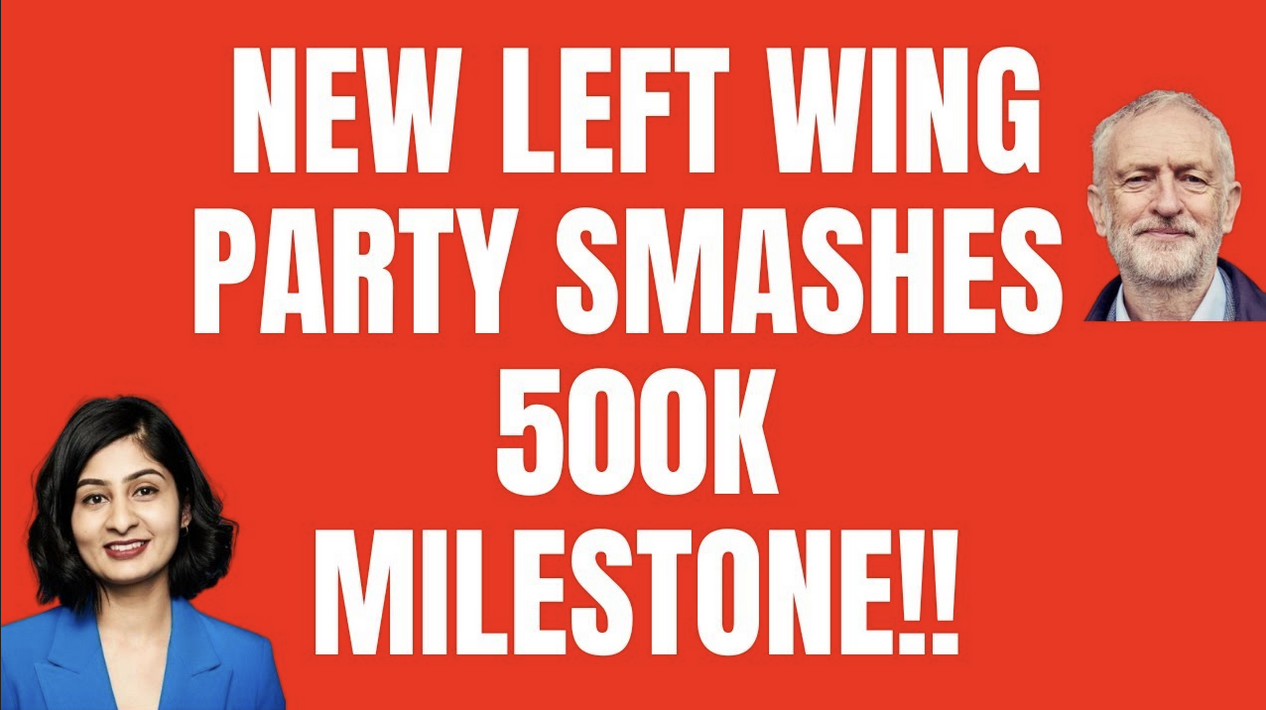


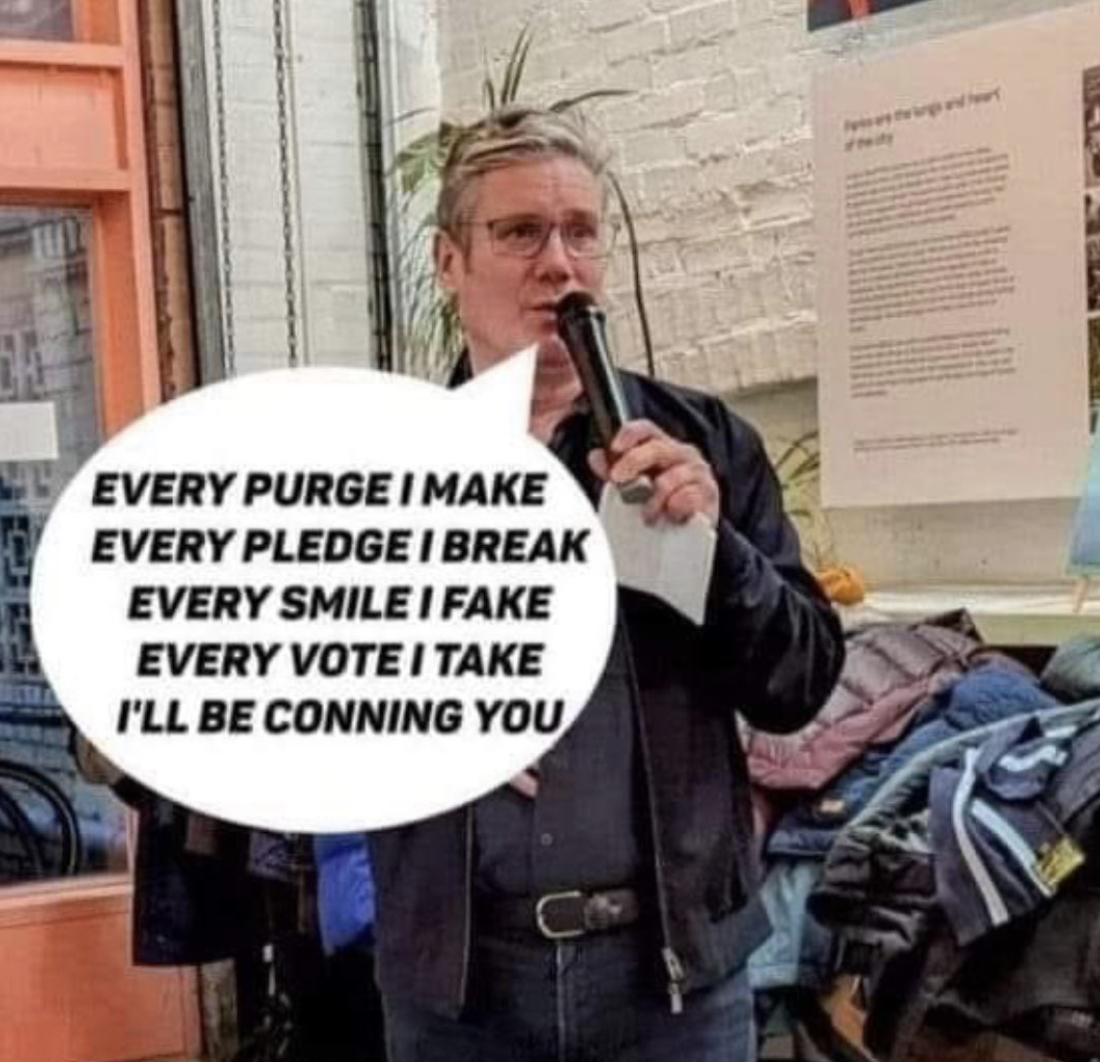






 Bridgend's Green Leftie