Can Corbyn Truly Resurrect the Left?

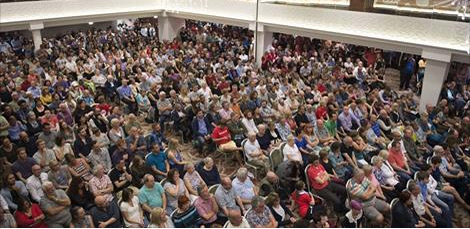
Screen Shot 2015-08-12 at 09.12.10Steve Belcher, UNISON official, captured the mood at the Cardiff Rally perfectly last night.

He stood up and pronounced, loud and proud to a packed audience, ” I’m Steve, and I am a socialist!”

He went on to say it had been a long time since he had felt able to say that confidently in Labour gathering. It embodied the new found, long lost, confidence that we lefties have been suffering from for so long, certainly since Blair and New Labour. Steve also pointed out that we have now reached a point that every time Blair or Campbell stand up and slate Corbyn and what he stands for, all it achieves is driving thousands more to rallying behind Corbyn’s campaign.

Among these thousands are lefties of all affiliations and none. At the Cardiff rally last night I bumped into comrades from Left Unity, the SWP, the Socialist Party, TUSC, the Lib Dems, Plaid Cymru and various campaign groups. I guess there were a few more Greens there than just me and John, but I didn’t see them there. I also didn’t see anyone I recognised from Bridgend Labour Party, but they appear to be backing the wrong horse and favouring Andy Burnham, from the few that have spoken to me.

What I did see was a true cross-section of demographics present. There were some wizened old-stagers for sure, but far more encouraging was the high proportion of young people, a close to even male:female ratio, a noticeable number of people from various minority groups and the general air of optimism.

So what does all this lead me to conclude?

Firstly, it is refreshing to see the left being emboldened and refreshed. Corbyn’s greatest achievement to date in this campaign is have largely dispelled the New Labour Blairite mantra that socialism is a dirty word and that electability depends on buying into the neoliberal hegemony. There is a real sense that people are regaining the confidence to promote socialist ideas again, and, crucially, that the wider public are beginning to be prepared to listen.

This last point is the critical one for me. Socialist ideas have had little traction with the general public for a long time now because no credible party of government has been espousing them. They have become minority views for minority parties. Corbyn is beginning to change that, and people are beginning to sit up and take notice.

In his address to the rally, Corbyn stressed just how dysfunctional our democracy has become with over 50% of young voters not taking part along with despair setting in among the oppressed minorities, the poor and the vulnerable, such that they too have given up on politics and, especially, the Labour Party. The result is Hobson’s choice of the barely distinguishable Thatcherite Tories or Blairite New Labour.

At last, Corbyn offers something different. To the young, he offers a fresh, new, previously unseen (in their lifetimes) alternative based on fairness, equality and human decency. That has to be hugely attractive, doesn’t it? To the poor and vulnerable, he offers real hope that there can be empathy and a desire to change their lives for the better. Isn’t that worth a cross on a ballot paper?

The biggest challenge in Corbyn’s way is, of course, his own party. Despite their roots and their inner convictions, too may Labour councillors and Labour MPs have convinced themselves that they have only been elected because of their Tory-lite policies of the last few decades. In Wales, at least, that has translated into pretty much jobs for life on the back of an electorate that keep voting them in out of deeply ingrained hope, rather than any real expectation any more, that they may do something to improve their lives.
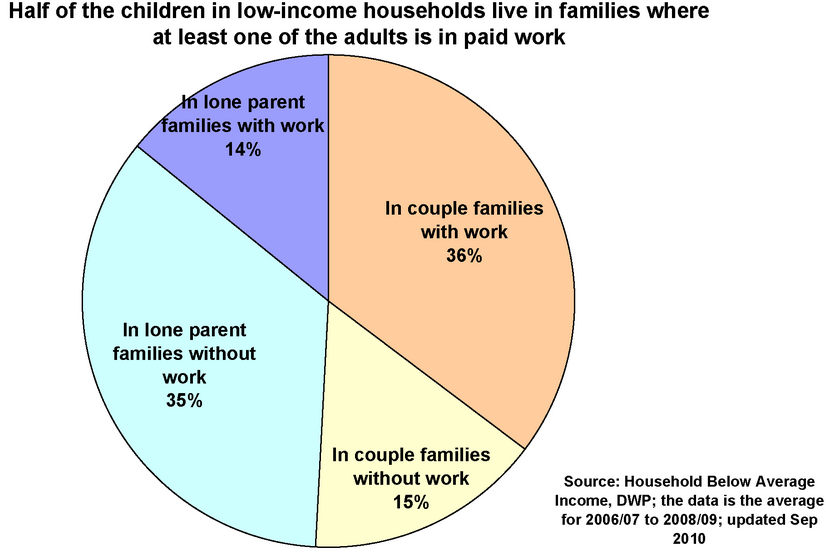
The disgrace of child poverty in Wales

The disgrace of child poverty in Wales

Wales is in desperate need of a truly socialist agenda. There can be little doubt about that. This is why Plaid Cymru, with its raison d’etre of doing the best for Wales, has become an avowedly ecosocialist party over the last few decades. It is why committed socialists also find themselves in the Green Party, SWP, Left Unity, TUSC, Socialist Party, etc. rather than in the Labour Party, because socialism has become a dirty word to Welsh Labour.

One of the big achievements of last night’s rally was in bringing people from across the left spectrum together in one room in a spirit comradeship and hope. It is something I have been dreaming of and trying to engineer, and utterly failing, for years now. So where do we go from here?

I see two ways forward for socialists in Wales:

  1. If you are in a political party, Labour or otherwise, push the socialist agenda, loud and proud, and ensure that your leadership, at all levels buy into it (more of a challenge in some parties than others). Encourage dialogue and co-operation across and between parties and recognise common objectives. Learn from the good things achieved by Syriza in terms of unifying the voice of an even more splintered left in Greece.
  2. If that is not possible, or you are not currently in a party, wait and see that Corbyn is elected first and then join the Labour Party and work to ensure that it recognises the opportunity for the Labour Party to rediscover its raison d’être.

Screen Shot 2015-08-12 at 10.40.38Given that 1 seems beyond the Green Party in Wales, I am therefore looking at following my own advice and joining the Labour Party if Corbyn wins the leadership. Whether I can actually bring myself to do that, given my deep-seated loathing of everything represented by New Labour, remains to be seen. And given that I am probably not the only one thinking like this, this may well be what fatally derails the Corbyn bandwagon ultimately.

Nonetheless, I have no reservations about taking Steve Belcher’s inspiration and saying:

I’m Andy, and I am a Socialist.

Nagasaki – the greatest war crime in history?

Screen Shot 2015-08-09 at 17.00.26

Byth Eto = Never Again

Seventy years ago today, the Unites States dropped the second atomic bomb “Fat Man” on the Japanese city of Nagasaki. Three days earlier, a first nuclear weapon, “Little Boy”, was dropped on Hiroshima. To date, these are the only nuclear attacks in the history of human warfare. Disappointingly few were present at the commemoration event in Roath Park today. Surely we dare not forget!

There have been a variety of articles and programmes tucked away in the schedules, but not enough in my opinion. Among the better articles I have read was by Dr Akil N. Awan is associate professor in Modern History, Political Violence and Terrorism at Royal Holloway, University of London. He wrote an excellent piece in New Statesman recently in which he said:

It is difficult to survey the carnage and devastation, even in the cold light of day 70 years later, and not be appalled at this flagrant crime against humanity. The key justifications for the bombings still rest on the fallacy that they were necessary to end the war in the Pacific, representing the lesser of the evils. Apologists for the bombs claim the only alternative would have involved a protracted ground offensive that would have proved too costly for the Allies.

Screen Shot 2015-08-09 at 17.09.51The somewhat racialised argument goes that the Japanese adhered to a “bushido” warrior ethic of sacrifice, considered surrender to be dishonourable, and were committed to the notion of “total war”, in which every man, woman and child would be mobilised for war, armed with rudimentary bamboo spears if need be. In other words, the Japanese, having rejected all opportunities to surrender, had vowed to fight to the bitter end. Consequently the planned invasion of Japan, Operation Downfall, would have resulted in much higher casualty figures. The US anticipated losing up to 1m US soldiers during the invasion, alongside another 10m Japanese deaths.

However, none of this cold calculation detracts from the fact that the bombings were indisputably heinous acts of state terrorism, fitting the standard definition almost perfectly: the use or threat of violence against civilians, to instil fear and achieve a political goal. Indeed, the Secret Target Committee in Los Alamos proposed that the large population centres of Kyoto or Hiroshima should be deliberately targeted for the “greatest psychological effect,” and to ensure the bombs’ “initial use was sufficiently spectacular for the importance of the weapon to be internationally recognised”.

Incidentally, this curious phrasing also points to the true targets of the bombs – the Soviet Union. This atomic diplomacy was effectively a display of strength and a warning to Stalin, representing the opening salvos of the Cold War.

Screen Shot 2015-08-09 at 17.12.53The selection of the cities to be bombed was also more akin to a scientific experiment, rather than a purely strategic military calculation. The nominated cities had thus far been left deliberately untouched during the regular nightly bombing raids, in order to accurately assess the full capacity and damage inflicted by the atomic bombs.

Screen Shot 2015-08-09 at 17.16.30The decision to use the bombs was also predicated on racist and dehumanising attitudes towards the Japanese. The Japanese were frequently depicted as “yellow vermin”, “living snarling rats” or “monkeys”. Indeed, the dehumanisation was such that the mutilation of Japanese soldiers became widespread. US servicemen frequently removed ears, teeth and skulls as grisly war trophies. Even President Roosevelt was infamously sent a letter opener carved from a Japanese bone by a US congressman. It was easier to drop inhumane weapons on those who were not really human to begin with.

But perhaps the greatest condemnation of the bombings is that they were unnecessary on the eve of the inevitable Allied victory, as the 1946 United States Strategic Bombing Survey later concluded. The Japanese were militarily exhausted and on the verge of defeat at this stage. In addition to staggering casualty figures, and extensive devastation of infrastructure through the aerial bombardment and firebombing campaigns, the naval blockade codenamed Operation starvation had also completely crippled the wartime economy. 

Yes, unconditional surrender was publicly rejected by Japan’s leaders. However, privately, they were also making desperate entreaties to the then neutral Soviet Union, to mediate peace on more favourable terms. The Japanese would also have been keenly aware that the collapse of Nazi Germany had worrying implications for the redeployment of Allied forces.

The “betrayal” by the Soviets, who declared war on Japan on 9 August, just before Nagasaki was bombed, was the final straw. The Soviet army quickly defeated the Japanese in Chinese Manchukuo, crushing any vestige of hope that Japan might survive the conflict intact.

There is little disagreement that the atomic bombings constituted war crimes, even amongst its architects. As the US Secretary of Defence, Robert S. McNamara, famously reflected: “If we’d lost the war, we’d all have been prosecuted as war criminals.”

Surely 70 years is long enough for us to put to rest the tired canard of the lesser of the two evils, and recognise the true gravity of this crime against humanity.

It has to be acknowledged that many dispute Dr Awan’s analysis above. But I would contend that, even if one accepts the bomb apologists arguments for the initial bombing of Hiroshima, it is impossible to apply the same thinking to Nagasaki. It is the details of the Nagasaki bombing that really endorse Dr Awan’s analysis, especially the contention that what we have here is a scientific trial that puts Dr Mengele’s crude experiments utterly in the shade.

So, in conclusion:

  Little Boy was a uranium fuelled bomb; Fat Man was a plutonium fuelled bomb. The previously, and otherwise unaccountably, untouched cities of Hiroshima and Nagasaki were the baseline tests. Which would prove most ‘effective’?

  That the Soviet Union was the intended audience has been extensively researched by Professor David Holloway. He summarised his view in an interview by sayinghttp://www.pbs.org/wgbh/amex/bomb/filmmore/reference/interview/holloway05.htmlSo [bombing Hiroshima] was seen as something unnecessary because…it was clear that Japan would be defeated. And secondly, it was seen as a kind of anti-Soviet, a kind of sly, or cunning anti-Soviet political move. So yes, it was seen very much as directed against the Soviet Union and directed against the Soviet Union, not only in order to deprive the Soviet Union of gains in the Far East, but generally to intimidate the Soviet Union. You know, look what we have. We have this bomb which is so powerful that with one detonation, we can destroy a city. And you better behave yourselves. You better be more tractable, more amenable in the dealing with the post-war settlement in Europe. And I think that’s very much how Stalin interpreted Hiroshima. 

  The military case was not being made by many in the military: 

  • o   “It always appeared to us that, atomic bomb or no atomic bomb, the Japanese were already on the verge of collapse.” – General Henry H. “Hap” ArnoldCommanding General of the U.S. ArmyAir Forces Under President Truman
  • o   “I had been conscious of depression and so I voiced to (Sec. Of War Stimson) my grave misgivings, first on the basis of my belief that Japan was already defeated and that dropping the bomb was completely unnecessary, and secondly because I thought that our country should avoid shocking world opinion by the use of a weapon whose employment was, I thought, no longer mandatory as a measure to save American lives. It was my belief that Japan was, at this very moment, seeking a way to surrender with a minimum loss of ‘face.’ ” – General Dwight D. Eisenhower
  • o   “Japan was at the moment seeking some way to surrender with minimum loss of ‘face’. It wasn’t necessary to hit them with that awful thing.”  – General Dwight D. Eisenhower
  • o   “It is my opinion that the use of this barbarous weapon at Hiroshima and Nagasaki was of no material assistance in our war against Japan. The Japanese were already defeated and ready to surrender. My own feeling was that in being the first to use it, we had adopted an ethical standard common to the barbarians of the Dark Ages. I was taught not to make war in that fashion, and wars cannot be won by destroying women and children.”  – Admiral William D. Leahy, former Chair of the Joint Chiefs of Staff

Thus, Harry Truman stands accused of perpetrating one of the greatest “war crimes”, if not for dropping “Little Boy”, most definitely for his failure to pause after the Hiroshima bombing.  Hiroshima remains, at the most generous, a highly questionable act, but failing to wait to see if it, along with the Soviet declaration of war, would produce a swift Japanese surrender is indefensible. So when, on August 9, the second atomic bomb was dropped over Nagasaki, killing another 90,000, the vast majority women and children, the evidence becomes pretty much incontrovertible.

Daily Post headline: “De Facto Ban on Fracking in Wales” – a tad misleading!

Tory Energy Minister Andrea Leadsom has said today: “We’re now confirming that no new licences will be awarded in Scotland or Wales, including as part of the 14th onshore licensing round. “Devolved administrations already have significant control of onshore oil and gas activities through planning and environmental systems, but as we have previously announced in the Queen’s Speech, we are giving the Welsh and Scottish Governments more decision-making powers when it comes to licensing.”

So, in essence:

  • The UK Government will no longer issue licences for gas extraction in Wales, at the request of the Welsh Government.

  • This appears too give Welsh Government the power over granting such licences, if it sees fit.
  • It also would appear to give them the power to impose a moratorium or ban if it so decided.

Notice the big “ifs” in these statements.

Screen Shot 2015-08-07 at 19.09.08Despite what you might read in some papers (e.g. The Daily Post) this news does not represent a ‘de facto fracking ban’ at all.

In fact this news only goes to underline the fact that until these powers are transferred, the supposed moratorium on fracking in Wales simply does not exist – despite the misreporting of the vote in February, tabled by Plaid Cymru, to agree to the principle of a moratorium. Labour’s Planning Minister, Carl Sargent, was shamelessly spinning these events in claiming the powers to impose a moratorium, called out by Gareth Clubb from Friends of the Earth Cymru.

First Minister Carwyn Jones has never said more than he would ‘consider a moratorium’ if he ever had the powers to impose one. Well, the Welsh Labour government no longer has the option of sitting on the fence and using its default “It’s all Westminster’s fault” position.

We should be able to expect an unambiguous statement of policy and intent regarding fracking and dirty fossil fuel technologies, from all the Parties aspiring to have a say in government in Wales after next year’s Assembly elections.

Does today signify an outbreak of sanity and the true beginning of the end for the the dirty fossil fuel industries?

Two news stories today offer genuine cause for celebration and hope in the long and arduous battles against the multi-faceted ravages of the dirty fossil-fuel industries.

STORY ONE
Caerphilly councillors stick to their guns and reject the application for the opencast mining on Nant Llesg, despite the bully boy tactics of the mining company, Miller Argent, who were threatening to sue the council if it dared turn them down.

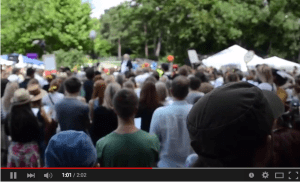
I was among the several hundred protestors outside the council offices before the the crucial meeting (see photo). There were representatives from many parts of the country and messages from around the world in support, as the message was repeatedly put out that these sorts of development have enormous negative impacts at every scale for the local to the global.

Screen Shot 2015-08-05 at 22.09.45BBC coverage of today’s events: HERE

Miller Argent’s disgusting attempts to overthrow local democracy : HERE
(A preview of what will happen routinely if TTIP is ever brought into force)

The moment of triumph:  https://www.youtube.com/watch?v=7ZzdS6KzoYo

STORY TWO
DECC Public Attitudes Tracker, latest edition published this week, has found the following:
Screen Shot 2015-08-05 at 22.32.58Three quarters of the public were aware of fracking (75%). Awareness of fracking has remained stable over the last 18 months, following a significant increase between wave 2 (42%) and wave 8 (70%). However, only 14% claimed to know a lot about it, compared to 42% saying they knew a little. Just under one in five (19%) were aware of it but didn’t really know what it was. Awareness of fracking was higher for over 45s (upwards of 85%), social grade AB (90%), and people in rural areas (83%).

When asked whether they support or oppose extracting shale gas, almost half of the public neither supported nor opposed it (46%). Amongst those that did offer an opinion, slightly more opposed (28%) extraction of shale than supported it (21%). This is a reversal of the findings when these questions were first asked at wave 8, when 27% supported it against 21% that opposed. This shift towards more opposition has happened gradually over the last 18 months, with support currently at its lowest since the survey began.

Support for fracking appears to be linked to awareness. Amongst those that were only aware of fracking but did not really know what it was, and those that hadn’t heard of it, over 60% selected the neutral option and therefore didn’t give an opinion. There is more opposition than support amongst those who know a lot about it (54% vs. 32%), know a little about it (35% vs. 27%), and those who are aware of it but don’t really know what it is (23% vs. 13%). The only group to be more supportive are those that haven’t heard of fracking, of whom 12% support it and 7% oppose it.

Support for fracking differs by gender, with men (27%) more likely than women (16%) to support it. Older people also tend to support fracking the most, as 30% of over 65s are supportive.

That third paragraph really is huge, and a thorough vindication of all the hard work that we fractivists have been putting in over the last 5 years. There is still much to do, of course, and there are some good indicators here for demographics that we possibly need to spend more time addressing, but it uplifting to see a government source providing positive proof that we keep winning the battles for hearts and minds, even if the war is not yet won.

More detailed analysis of the survey:
Business Green
BT.com/news 
Edie.net 

Remove the curse of the bedroom tax – letter in SW Echo

There was a strong Bridgend presence at the South Wales Against the Bedroom Tax meeting on Monday that endorsed this letter

Joh, Kay, Andy on the left; Gareth third right

John, Kay, Andy on the left; Gareth third right

Remove the curse of bedroom tax
Since its introduction in 2013 the ‘bedroom tax’ has wrought misery and desperation across Welsh communities. In a nation where 23% of citizens experience poverty and suffering, the practice of forcing social tenants to pay money that they do not have or downsize to properties that do not exist flies in the face of social decency.

Against this dark background, we note the publication of the Assembly’s Public Accounts Committee third report on the impact of welfare reform in Wales in the same week that witnessed the first reported bedroom tax eviction in Cardiff. Alongside other proposals, the committee recommends “a cost/benefit analysis of mitigating the full impact of the removal of the spare room subsidy through discretionary housing payments, as the Scottish Government chose to do.”

This is vital!

The perfect storm of welfare reform and uncertainty surrounding the implementation of universal credit combines to paralyse the sector. For two years, the discretionary housing fund has been used to square the circle for the most vulnerable. Topped up by Welsh Government in 2014, many of the 33,000 tenants forced to pay the charge would be unable to sustain their homes in its absence. For this reason, Westminster’s plan to cut this budget and share it equally between the social and private sector portends a cruel train wreck.

Over the course of 2013 and 2014 social tenants in Wales were made subject to 5,136 suspended possession orders. Whereas we cannot discern how many of these were affected by the bedroom tax, we can say that all of these tenancies are highly vulnerable – the court has already granted possession to the landlord and it will require a very small infraction to trigger repossession.

Can we imagine the human and material cost of even 513 evictions across Welsh communities? What of 1,500 or 2,500?

Welsh Government spends a lower percentage of its expenditure on housing than either Scotland or Northern Ireland. It is essential that the housing budget is expanded so that the DHP top-up does not come at the expense of other vital housing services. In Scotland, no tenant pays the bedroom tax. We call upon Welsh Government to show the same leadership, act upon the committee’s recommendation and take tens of thousands of Welsh tenants out of poverty and misery.

Jamie Insole, Cardiff & South Wales Against the Bedroom Tax

The Most Reverend Barry Morgan, Archbishop of Wales

John Puzey, Director, Shelter Cymru

Steve Clarke, CEO Welsh Tenants

David Lloyd – Director, TPAS Cymru

Sue Leader, Unite Community

FRACK FREE WALES T-SHIRTS

fabrily-logo-orange.png
If you have any questions about Fabrily, click here or access our support portal through a contact button on the bottom right of the linked page.Office 34, 67-68 Hatton Garden, London EC1N 8JY, United Kingdom

Phew!

Frack Free Wales campaign t-shirts is still available but not for long.

Campaign Image

Frack Free Wales campaign t-shirts

It seems like you were interested in this campaign and we want to make sure you don’t miss out! The good news are that you can still order it until Sat, August 15.

Check It Out

PS – I believe something in the order of 80p per order goes to bolster FFW funds.

Hiroshima and Nagasaki Remembered

I made something of a pilgrimage to Hiroshima and Nagasaki in 2003. It had a profound affect on me. Every world leader should have to visit these places (and Auschwitz) as part of their induction.

I will certainly be at at least one of these memorial events detailed below. The photos have been added by me.

AC

Begin forwarded message:

From: marie

Subject: Hiroshima and Nagasaki Remembered

Subject: Hiroshima Day, August 6th, and Nagasaki Day, August 9th 2015

This year is the 70th anniversary of the atomic bombings of Hiroshima and Nagasaki which took place in August 1945. 2015/2016 is also the year when the UK Government will decide whether or not to replace Trident, with all that means for our future.

Accordingly, you are invited to the following two commemorations to mark the events of 70 years ago.

Thursday 6th August 6:30 pm at Tredegar House Lake, Newport
and Sunday 9th August 2pm at Roath Park Lake, Cardiff

Please publicise widely, especially in this 70th Anniversary year of the bombings. Further details below:

You are invited to the Hiroshima commemoration on Thurs. 6 August at 6:30 pm at the Lakeside at Tredegar House in Newport. This is an annual event originally organised by the local (now disbanded) branch of the Women’s International League for Peace and Freedom

Paul Flynn, MP for Newport West, is the key speaker and one or two others from Newport Interfaith Group and elsewhere also say a few words before strewing flowers people bring onto the Lake.

For the Nagasaki commemoration on Sun. 9th August Cor Cochion Caerdydd and Cardiff CND invite you to meet at 2pm, by the cafe on the lakeside, in Roath Park, Cardiff. We will remember Nagasaki and the human impact of nuclear warfare in poems, readings and song.

To both events, please bring friends, flowers, poems etc.

We hope to see you there.
In peace,

Ingrid and Marie

Note: WILPF developed out of an International Women’s Congress against WW1 that took place in The Hague in April,1915. The name WILPF was chosen in 1919. Several UK branches are still active a century later, working for social, economic and political equality for all, including the abolition of the war system, total and universal disarmament and the elimination of racism and sexism. See www.ukwilpf.org.uk. Ingrid Wilson 15 Bryngwyn Road Newport NP20 4JS 01633 267367 07976 267367

Screen Shot 2015-07-27 at 21.33.28P.S. I would like to suggest that as well as the things listed in bold above, the more creative among you might consider taking a paper origami crane to float on the lake. To understand why and see how to make one, check out these links:
The Story of the Peace Crane
Instructions for making an origami crane 

TTIP in Bridgend

I won’t be around on 22nd August – but hopefully someone out there (Bridgend Greens??) may get involved with this

Begin forwarded message:

From: “volunteer” <volunteer>

Subject: TTIP in Bridgend

Date: 27 July 2015 14:46:02 GMT+01:00

To: Andrew Chyba <andy.chyba>

Reply-To: action

38 Degrees

38 Degrees Logo
Dear Andrew,

Politicians in Europe have just voted to keep working on TTIP. [1] That’s the shady trade deal between the EU and the US that puts companies’ profits before ordinary people. [2] Most people still don’t know what TTIP is – or how much is at stake. Together, we urgently need to change that, because the shady deal has just been given a boost.

So let’s keep making sure that people are talking about why it’s bad for all of us. TTIP is negotiated in the interests of the mega rich – and it’ll give corporations the right to sue our government for billions if they don’t like their policies. Talking about this deal is the last thing politicians will want us to do this summer.

Here’s the plan. On Saturday 22nd August, thousands of us will join together in high streets and town centres across the UK. We’ll be collecting signatures for the massive EU-wide petition against TTIP. [3] If each of us collects 10 signatures, imagine how many more people we’ll have joining the campaign! Before long, the public will start to turn against TTIP – that’s when politicians and officials will lose.

Will you join the team in Bridgend? We’ll be coming together on Saturday 22nd August, meeting up at 11am on our high streets, nationwide. Click below to join the team in Bridgend:

JOIN THE TEAM

I CAN’T MAKE IT BUT I’LL DONATE

People need to know about this dangerous deal. It’s a risk to the future of the NHS, and our other treasured public services. It’ll weaken laws that protect our environment, and undermine international efforts to combat climate change. [4] But most people aren’t going to find out unless we tell them: TTIP is being negotiated behind closed doors and most media are staying well clear.

38 Degrees members have already made huge progress lifting the secrecy this deal is shrouded in, through events like these in the past. This time last year, around 150,000 38 Degrees members had taken action against TTIP – now over 400,000 of us are involved in the campaign! [5]

So, are you in? Just click the link below to sign-up to the team in Bridgend – it’s on Saturday 22nd August at 11am. You’ll be asked to pop in some details, and then you can join an existing meeting, or set the venue for another one. Then the office team will invite other 38 Degrees members along. You can also chat online with other 38 Degrees members to get to know each other before the day.

Click here to join in:

JOIN THE TEAM

I CAN’T MAKE IT BUT I’LL DONATE

Thanks for being involved,

Amy, Megan, James, Nat, Blanche and the 38 Degrees team

PS: In a few weeks time, you’ll get a parcel in the post: leaflets, t-shirt, badges, petition sheets – and some top tips to help you on the day. It’ll give you everything you need to take along on the day. And here are some handy FAQs if you’ve got any questions now:
https://home.38degrees.org.uk/ttip-day-action-help-page/

Even if you can’t make your local meet-up, you could go door-to-door flyering leaflets or ask your local community centre if you could leave the leaflets on a table there. Click here to sign-up for a pack:
https://secure.38degrees.org.uk/ttip-day-of-action

PPS: Not everyone can make it out onto the streets – and that’s totally understandable. There will be many more things that 38 Degrees members will do together over the summer, so look out!

NOTES:
[1] War on Want: Divided: MEPs pass controversial TTIP resolution:
http://www.waronwant.org/media/divided-meps-pass-controversial-ttip-resolution
Global Justice Now: Pro-TTIP report passes European Parliament after “dirty tricks” from President Schulz:
http://www.globaljustice.org.uk/news/2015/jul/8/pro-ttip-report-passes-european-parliament-after-dirty-tricks-president-schulz
You can find our how your MEP voted here:
38 Degrees: TTIP: Who voted for what?
https://home.38degrees.org.uk/2015/07/08/ttip-who-voted-for-what/
MEPs voted on a set of recommendations about TTIP. It’s not a legally binding vote, but gives a clear signal to the European Commission who are negotiating the deal with the US that they can keep going.
[2] Here’s some information about TTIP (but the staff team will give you a simple fact sheet if you’d like more easy-to-digest information before the day!):
38 Degrees: Information on TTIP:
https://home.38degrees.org.uk/2014/10/12/information-on-ttip/
The Telegraph: What is TTIP and why is it so controversial?:
http://www.telegraph.co.uk/finance/11664750/What-is-TTIP-and-why-is-it-so-controversial.html
[3] 38 Degrees members will be encouraging other people to add their names to the EU-wide petition against TTIP. It’s already got over 2.3 million signatures!:
https://secure.38degrees.org.uk/page/s/eu-ttip-petition#petition
[4] Friends of the Earth: What is TTIP? And why worry about it?:
https://www.foe.co.uk/page/what-ttip-why-worry-about-it
[5] Read more about what 38 Degrees members are doing to stop TTIP here:
https://home.38degrees.org.uk/?s=ttip
And have a read about previous Days of Action that 38 Degrees members have taken part in here:
38 Degrees: TTIP: Day of Action:
https://home.38degrees.org.uk/2014/09/02/ttip-day-of-action-2/
38 Degrees: Day of Action against TTIP in Scotland:
https://home.38degrees.org.uk/2015/03/28/day-of-action-against-ttip-in-scotland-come-rain-or-shine/
38 Degrees: Save our NHS – what a day!:
https://home.38degrees.org.uk/2015/04/27/save-our-nhs-3/

Major tar sands pipeline leak – lessons to learn, especially about regulators?

Tucked away in the business pages of Friday’s i newspaper was the following three-sentence piece: A major oil pipeline leak detected in the Canadian province of Alberta dates back to late June, the tar sands operator Nexen Energy has admitted. The company said about 5 million litres of bitumen, sand and produced water was spilt near its Long Lake oilsands site in a leak that has affected 16,000 sq metres, The pipeline was installed last year.

I guess you didn’t see the coverage on the BBC. I didn’t. There wasn’t any. The Canadian media had a few bits on it though. Most telling, in my eyes was this typical statement by a company executive, Ron Bailey: VIDEO

Let me develop his words for him. (What he says in quote marks; what he could/should have added after this):

No human impacts here immediately – but there probably will be in due course, most likely of the nasty health consequences variety.

We are deeply concerned – at the adverse publicity and impact on profits.

We sincerely apologise – to our shareholders.

We will take every step that we see reasonable … to respond to this – at least possible cost and to get back to full operations as quickly as possible so that we can carry on as if nothing really happened.

“… the regulators help us decide what to do – as we sure ain’t going to do more than the absolute minimum they will let us get away with.

To be fair to poor old Ron, clearly a bit embarrassed at being thrust before the cameras, these are exactly the same old platitudes trotted out after every oil & gas industry foul up. It might just as easily have been Mark Miller or Francis Egan talking about the induced earthquakes in Lancashire, mightn’t it? (Check this 38 degrees video out)

Nexen’s CEO is Fang Zhi – yes Nexen is a Chinese company – and he utters similar meaningless platitudes as a PR gambit here: ARTICLE/VIDEO

Setting aside the the issues about foreign ownership of companies, especially in this sector, I think the biggest message from all this is about the role of regulators.

Alberta’s energy and environment ministers say they’re troubled by a huge pipeline spill in the oilsands region, but they have confidence the provincial regulator will get to the bottom of what went wrong. Fair enough. But getting to the bottom of what went wrong is surely just the first step of what should be expected from them, is it not?

For years I laboured under the illusion that regulators were there to stop things going wrong. I thought they were there to determine what could go wrong and ensure that, as far as humanly possible, they would not go wrong. I believe far too many people labour under similar illusions to this day.

Screen Shot 2015-07-26 at 14.09.10

Report from the OGP (International Oil & Gas Producers)

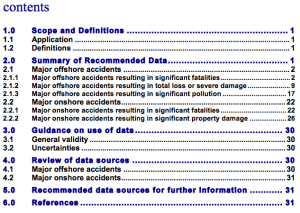
As the never-ending catalogue of calamities in the oil & gas industries (data 1970-2007) continue to mount up unabated, it is clear that regulation and regulators are inadequate. Why is this?

One obvious answer, especially in the current political climate of austerity, is that their resources to do the job properly are being relentlessly cut. Doing the job properly involves a hell of a lot of costly research and and a lot of human resources in monitoring effectiveness and trying to enforce the regulations. It is very expensive.

The truth is, they never have been funded adequately to do the job as well as they themselves would like, let alone as well as environmentalists would aspire to. Thus we are left with the unavoidable conclusion, supported by the collective experience and observations of years of environmental activism, that the whole regulatory regime is little more than a PR initiative on behalf of the government agencies that are pursuing their economic growth agenda. This is as true in Canada, it would appear, as it is here in theUK.

It is the way of the neoliberal capitalists calling the shots. And if you don’t believe this – just wait and see what TTIP delivers!!!

Screen Shot 2015-07-26 at 14.21.45

The Cultural Impacts of Fracking

This is the approximate content of a talk I delivered at the Festival of the Celts on 24th July.
Screen Shot 2015-07-24 at 21.19.20
Fracking has become one of those issues that gets under your skin (quite literally in some cases – more of which soon) and really energises communities of all sorts. This is symbolised in no uncertain way by this symbol on my t-shirt:
Screen Shot 2015-07-24 at 20.58.58

Does any body recognise it? For those that don’t it is a symbol designed specifically for a pagan ritual held a couple of years ago called “Albion (or the Earth) Will Not Be Fracked”. It has however been widely adopted by fractivist groups and individuals around the world. Let me share with you some thoughts of the designer:

“This is the magickal sigil that will unite all our efforts……. Everyone involved across the world will focus their energies through this symbol to form a unified, magickal web of protection around Albion. ……. as the power of thousands of people flow through it, the Warrior’s Sigil (as it is named) will become fully energised and active in both the apparent and unapparent worlds.

Everyone should now prepare this sigil for the globe spanning work …….. Bless it with love and truth, honour and right-action, bravery and strength. Ingrain it into your subconscious. Becomes its friend and ally.

It has been designed to protect against ‘fracking’ – both fracking’s physical destruction to the land, and the violence and intimidation the state will use to protect its interests.

It is not a sigil of attack. It is defensive in nature. It is a shield, not a spear.

It can be used anywhere in the world to assist in protecting land, water and air from fracking, as well as all the peoples (both human and non-human) that call that land home. In particular, it can be worn as a protective talisman by those of you who physically stand against fracking’s fell greed. All those who wear it with good intent will be granted luck and protection as they fight against the bullying, violence and suffering that fracking companies, corrupt politicians, police and security firms unleash against them and their communities. Be of no doubt that, over here in Albion, Balcombe is only the start. State repression WILL increase. We must be ready. Our shield-wall must not crumble.

So when you go on demonstrations, or visit protest camps, or undertake more direct forms of resistance against the scourge of fracking, wear the Warrior’s Sigil to bring you luck and protection. Place it on t-shirts, on wristbands, on necklaces and rings, put up posters of it around where you live (especially if you reside upon a protest camp), hang it over your alters, carry it in your wallets or your pockets, you can even have it inked (either permanently or non permanently) directly upon your skin!

And as proof of that latter point, here’s mine (left), Screen Shot 2015-07-24 at 21.17.13

and here’s Melanie Dawn’s (SWAFF organiser): 11780116_525431947615597_451942840_o

This is how strongly the issue grips and inspires people. It resonates with those that feel an affinity with the ground beneath their feet – not just pagans and environmentalists but artists of all types too.

Take Sarah Woods, for example. She is one of Wales leading current playwrights. She was inspired through her connections with the Co-operative Social Goals Campaigning department to set up the Co-ops Frack Free Futures campaign. She was also inspired to write a radio play for the BBC entitled The State of Water, not directly about fracking, but focussing on the need to guard this precious commodity, set in a Welsh context.

Screen Shot 2015-07-24 at 21.46.02Then there is painting. An internet search reveals a few eminent artists that have found inspiration from the fracking issue, mostly in North America it has to be said. My favourite is Barbara McPhail. She has a whole ‘Hydrofracking Series’ of 40 or more canvases, available as prints online. My personal favourite is this one entitled ‘Toxic Plume’ (left).

Of course, this image of fugitive emissions bubbling from a river bed has become a familiar one. It attracts interest as it is a rare (but not rare enough) situation in which the fugitive gases are in a sense visible to us. We must not be misled by such images. There is nothing special about river beds. Fugitive emissions can come up through the ground just about anywhere, completely invisibly to the human eye. This gives the lie to the industry claims to be able to monior and prevent fugitive emissions. They struggle enough with this at their well-heads, let alone anywhere else.

It seems to be that this human dimension of claim and counter claim, subterfuge and conflict that inspires many of the poets. Again, there is no shortage of fracking inspired poetry out there – much of it of dubious quality, but all of it from the heart.

This is certainly true of a American blog entitled FRACKING POEMS but I do like the message of this short verse inspired by news of New York State’s fracking moratorium:

Frackenstein Has Been Vanquished!

Our Joy Is Without Equal!

But Don’t Most Horror Movies

Spin Off a Sequel?

We certainly don’t ever want to get complacent at a achieving moratoriums – as the poem eloquently emphasises, they are prone to being lifted and the nightmare resuming.

I have also been attracted to this effort (by Nick Strong) that I came across on the Hello Poetry website , perhaps because it has a celtic dimension to it:

Well, what a week, full of revelation

Enough to stir this talk of revolution

Makes your hackles turn on end

Then send you round the bend

The English southern gentry have found oil

Right beneath their derriere boil

Now most of us on this golden isle

Need not worry about this pile

Those who wear weekend country tweed,

Built their fortunes from housing greed

Have already decided

That it will be one sided

They’ll say it’s theirs, by rights

And if we argue, will read our last rites

The South will declare independence

In certainty of their full ascendance

Over the outer reaches of this nation

They pounded into servitude, by taxation

And if we have the nerve to debate, I’ll be bound

They’ll leave it horded in the ground, 

Then blame the anti frackin’ hound

Now I may need a political re – education 

In a 1984 establishment for rehabilitation

But I can see it coming a five-nation island

Southland, Wales, Scotland, N. Ireland, 

And the Detritus

Not to be outdone, I had a go myself, not so long ago. It is called What does fracking stand for? Check it out here.

Wherever there is poetry, there is likely to be song. Something about the fracking issue really inspires the musicians among us. Indeed, Frack Free Wales was founded my musician Frances Jenkins, and alongside Justin Preece, performing at this festival, they were the only Welsh people arrested at Balcombe, prosecuted but acquitted.

Eighteen months ago I put together a Top 20 of YouTube fracking musical hits. There is genuinely something for everybody, in terms of musical tastes. Among the highlights were:

  • Leo Sayer (remember him?) performing with Aussies Against Fracking
  • The hip-hop classic “My water’s on fire tonight
  • Cuadrilla Killer, to the tune of Talking Head’s Psycho Killer
  • Cardiff’s Cor Cochion in harmony with Canton Community Choir singing ‘This Land is All
  • Top Celt, Frank Molloy, with a great song, great video and great lyrics
  • Sean Lennon and Yoko Ono with Artists Against Fracking
  • The Hydro Fracking Song by LRevolution – a Linkin Park style anthem
  • The heavy vibe of ‘Freakin Frackin‘ by Op-Critical
  • Lock the Gate by Laura Doe and the Chaps – off theAustralian  ‘Whole Lotta Fracking Going On’ fundraising album
  • Fracking Gasholes‘ – dodgy title, but a great song with an excellent video, including lyrics

and last, but not least:

  • The Fracking Anthem (to Blake’s Jerusalem) with words by Balcombe resident, and professional poet, Simon Welsh.

Altogether now: (click image, and then click ‘Show more’ for the lyrics)

Screen Shot 2015-07-24 at 23.31.12

Balcombe was, of course, the biggest and the best Community Protection Camp to date. These camps have become a cultural phenomenon in their own right. Barton Moss, Upton, Crawberry Hill, Dudleston, and Wales’s very own Borras, near Wrexham are all successful and mostly ongoing camps. It is hard to express just how inspirational these places are. Get and visit one, or at least support the first one in South Wales, which may well be with us before the end of the year.

Currently there are three sites identified as being most likely to see the drilling rigs turning up. These are near Bridgend, just outside the iconic village of Merthyr Mawr; Dyffryn, in the heart of the Vale of Glamorgan; and Llandow, near Llantwit Major. Subscribe to the Frack Free Wales newsletter to be kept abreast of all that is happening – via our website: http://www.frackfreewales.org/

All this community activism has also given rise to a lot of film making, both amateur and professional. The big releases have included the now iconic Gasland and Gasland 2 by Josh Fox. How many have seen Gasland? (Not many) Well, it is available on Netflix and youtube – so check it out!

The industry’s response to Gasland 2 was to give the notorious Celt, Phelim McAleer a pot of money to go and make ‘Frack Nation’. Do not watch this without watching at least one of the the other movies I am flagging up! McAleer has previous. He made “Not Evil, Just Wrong” on behalf of the climate change deniers, along with “Mine Your Own Business” in which he describes nasty environmentalists keeping a community impoverished by opposing a mine development. I’ll say no more!

The opposite side of that story is told in Promised Land, the Matt Damon / Gus Van Sant Hollywood movie, that shows an impoverished farming area ultimately rejecting the big bucks offered by the industry as the result of an heroic grassroots campaign!

Finally I would like to flag up ‘Split Estate‘, a film that predates all the others, from 2009. Narrated by Ali MacGraw, it is very similar to Gasland in content, but with one key difference – highlighted in the title. Split Estate is a reference to the situation found in many western states such as Colorado and New Mexico, whereby the state never gave mineral rights to the landowners, as happened in many of the eastern states such Pennsylvania and New York (that feature in Gasland), when they kicked the British out after the War of Independence. During British rule, the norm was what we have in the UK – mineral rights being held by the crown. Hence the split estate; landowners own the surface land, but the state effectively owns the minerals beneath the surface. The film examines the consequences of this in pretty chilling terms. I watched it for the first time this week here(I think the subtitles are Russian!)

Viewed in this post-colonial context, I think it adds weight to the case for Celtic independence from the English colonisers. It may be the only way to wrest the mineral rights from the Crown and give Wales, and the other Celtic nations, true control over its destiny and its land.

I would therefore like to end by inflicting a bit more of my singing on you. I have written alternative ‘frack off’ lyrics to Land of My Fathers’, and it goes a bit like this:

Our land and our water, are vital to us,
We’ll always protect them, whatever the fuss.
The frackers can ‘frack off’, get off of our land,
Our future must be in our hands.

Frack! Frack! Oh no you don’t, it’s not on!
Keep our water clear,
And the land we hold dear,
Pack up all your rigs and be gone!

Thank you!

Screen Shot 2015-07-24 at 21.11.34

(Can you name all six?)