Wales Green Party Strategy 2015-17 – “My gast has never been so flabbered!”

Apologies for quoting from Carry On Up the Jungle, but this really is quite a carry on!

I have never seen eye-to-eye with Royston North, aka Jac O’ the North, who describes himself as a right-wing nationalist. A lot of his sources are suspect at best. He once wrote of me thus: “Chyba has a background in the military or the police, and may be operating as a spy.” But hey, he is never less than entertaining and sometimes he gets hold of interesting things.

Today he has published another attack on the ‘mythical’ Wales Green Party that does at least have some substantive sources. Having left the Party after the General Election, I have had no real interest in following their activities. I am told that they, including the usually publicity-seeking Pippa Bartolotti, have been keeping a very low profile since the election anyway, no doubt licking their wounds after another poor performance at the polls. But it seems that they have been regrouping behind the scenes, devising some cunning plans for success in the Assembly elections. Thanks to Royston, those plans are now in the public domain. They are entitled: Wales Green Party Strategy 2015-17. As it is a staggering 28 pages long, I will not reproduce it, but it can be found here  and as an attachment at the end of this piece.

The entire document is written anonymously except for the the last “Annex”, so let me dismiss that first of all.

Annex 2 takes up the last 12 pages and is written by Peter Varley, Elections Co-ordinator subordinaire. It his ‘number crunching’ analysis of election data that starts, as it indeed goes on, with: “I’ll start with some wild guesses about how other parties will do”. He goes to conclude from these wild guesses that: ‘Some of the implications are downright weird – for example, in MWW (Mid and West Wales), if the Corbyn bubble continues to expand, we should target Plaid Cymru, but if it bursts, we should target the Lib Dems’. Weird is the word!

He then proceeds to have a series of self-confessed ‘wild guesses’ about the Greens prospects, based on a series of highly suspect scenarios of his own devising. The statistics invariably show huge gaps that need scaling to get anywhere near to a list seat. The best he can come up with is in MWW, where he postulates that an increase from 8660 of an extra 5000 ish votes will do it. That’s as good as it gets. Yet he sees fit to conclude at the end of it all: “Based on these figures, we would probably gain two AMs, in MWW and SWC, and miss out by about 1000 votes in SWE and SWW.” Well, if “Wild Guess Pete” says it is so, that is good enough for me!

As for the rest of the document, I guess it is reasonable to conclude that a strategy document is the collective effort of the Strategy Group set up to supposedly ‘learn lessons from the General Election campaign’. The members of this ‘task force’ are listed in ‘Annex 1’, along with the group’s remit. The relatively coherent structure and vaguely academic style of the document would appear to eliminate Bartolotti and Slaughter as the main authors, but their perspectives are evident enough, and the fact that the rest of the group (bar the aforementioned Varley) are all relative newcomers with little grasp of the historical context, let alone the current realities, explains why the whole thing is so hopelessly misguided.

It shoots itself in the foot (and that may as well have been the head) right from the very outset. Key point number one states:
“Whilst the 2017 local elections are important, the current objective must be to win at least one seat in the Assembly elections. The reputation of Wales Green Party will be damaged, possibly irreparably, if we fail to do so, so all efforts must be concentrated on this.

First and foremost, I explained just yesterday, in the PS footnote to the Compass piece, just why the 2017 local elections are all-important, and why devoting time, effort, resources, finance and members goodwill to chasing success anywhere else first is futile. But the second italicised sentence has Bartolotti’s fingerprints all over it. Substitute her name where it says Wales Green Party, and it all of a sudden becomes spot on (perhaps with the addition of ‘even more’ before the word damaged) and the thrust of the whole ‘strategy’ becomes evident. It is a last gasp attempt to salvage her reputation.

I am not going to go through it all with a fine tooth comb (the Jac O’ the North blog does a lot of this), but there are a few other things that need pointing out for their sheer blatant inaccuracy and/or stupidity.

I quote:

“We will demonstrate that Labour aren’t the party people want them to be by promoting a positive Green vision, with policies and achievements at local and regional levels, is at the heart of our strategy.” (pg3)

Apart from being grammatically nonsensical, promoting a positive Green vision does NOT demonstrate anything about the Labour Party – it is a non-sequitur – especially when framed around non-existent achievements, certainly at regional level.
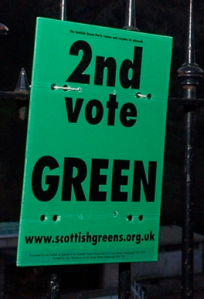
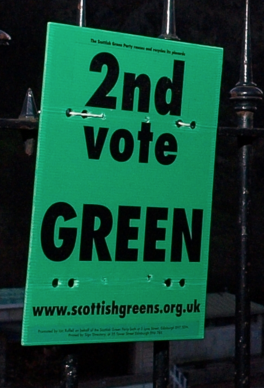
Screen Shot 2015-11-13 at 10.21.08The very next point on page three bins the ‘Second Vote Green’ strategy that very nearly landed a list seat for Jake Griffiths in SWC in 2011 and has been successful in Scotland. It might ‘seem like a sensible tactic’ because it is a sensible tactic. Expecting strategies to yield success at the first time of asking, and binning them immediately when they don’t just emphasises the conviction that they do not have any idea what they are doing.

Stating that the Climate Change issue is their USP and then quoting stats that state only 1.9% of the Wales population has the Environment as their main issue of concern simply doesn’t stack up as part of an election strategy designed to win anything.

Suggesting Cardiff and Gwent are examples of strong local parties shows, perhaps, how quickly things can change in the few months since I left the party , but it is strength that certainly has no track record. (Cardiff went into meltdown after the 2011 campaign, and Gwent is a far flung collection of individual members that had to rely on occasional telephone conferences not so long ago.)

In the list of 2016 Assembly Election strategies (pg5), it states:

“We do not advocate a targeting strategy as this has been unsuccessful in the past, and the nature of the Assembly regional top-up system means that all regions stand some chance of success. “
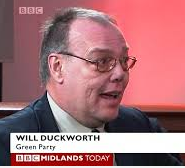
Former GPEW Deputy Leader and architect of the successful TTW strategy refined in the West Midlands.

Former GPEW Deputy Leader and architect of the successful TTW strategy refined in the West Midlands.

Target-to-Win (TTW) is the tried and tested, almost foolproof strategy of achieving secure electoral success in the medium-to-long term. It has been successful in just about every part of England. It has not yielded results in Wales for the very simple reason that it has not been implemented anywhere consistently enough. It takes years of consistent effort. As for ‘all regions having some chance of success‘, that ranges from slim to negligible, at best. Spreading resources thinly never, ever works.

Section 4.3
Regional Campaign Teams will seek to improve Green vote share amongst postal voters by encouraging Green voters to register for a postal vote

Since when did a Green postal vote count for more the Green ballot box vote? What a complete waste of time.

Just about all the money comes from members' pockets.

Just about all the money comes from members’ pockets.

Section 4.4 – they are looking spend/waste another £56,000 + on this vanity exercise. What happened to learning the lessons of the General Election? Imagine what could be done with this by the few local parties capable of pursuing a meaningful TTW strategy. Successes in 2017 would be virtually assured.
£34,000 of this is being blown on three short-term appointments of people, with half of that going to a Campaign Manager just off the ferry from Ireland, with a return ticket booked in 6 months time and who is not even committing to stay here for the full duration of that 6 months. He must be feckin’ brilliant!

5.1.4 “A sick society makes people sick” – there’s catchy! Which parts of our sick society is that going to appeal to?
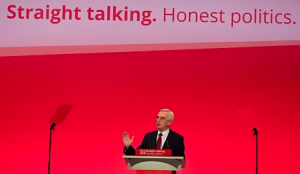
Screen Shot 2015-11-13 at 10.33.055.2 “We should be radical, honest and evidence-based. We should not be controversial for the sake of it, but if something comes up which we disagree with, we stick to our beliefs. This approach will set us apart from other parties.” The problem here is with the second part. I have already seen virtually the same statements in the materials of both Welsh Labour and Plaid Cymru. I wouldn’t mind betting it is in all the others. Best not talk about Brighton Council then. As for Moral Foundations Theory ……

5.3. Other Parties (or more specifically Plaid Cymru, as it is the only one mentioned!).
Where to start here! At least it confirms that the sectarian attitudes that drove me away from the party are still there – in black and white. I quote:
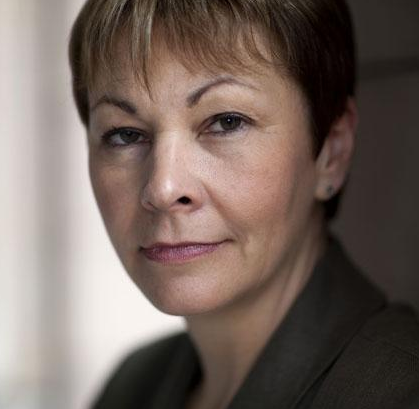
Screen Shot 2015-11-13 at 10.41.42“Plaid Cymru does not want a relationship with the Greens, though we have previously tried for a joint strategy” Simply wrong! Plaid have long been open to working with the Green Party. Witness the strong relationship between Leanne Wood and Natalie Bennett at the GE. Leanne goes way back with Caroline Lucas too. It is Bartolotti and Slaughter that are the problem, not the Greens in general! I had secured a good working relationship with Leanne this time last year. It was my main platform in last year’s leadership election. It is therefore not just Bartolotti and Slaughter’s fault. I wrote this exactly 12 months ago today. Nothing has changed, so enough here.

As for Greens being consistent – Pippa is certainly renowned enough for that, but again I have to raise Brighton Council as undermining the the claim that Greens have never compromised their principles. (And please don’t look too closely at the records of Greens elsewhere e.g. Ireland, Australia etc.) The staggering thing here is that Bartolotti’s track record has been laid bare repeatedly, but because a lot of the revelations have been maliciously motivated, she has been excused accounting for them by her cronies on the WGP Council. Hypocrisy upon hypocrisy.

The rest of the document is largely aspirational ideas for how to run a better party. It is mostly reasonable but will mostly go undone.

So full marks for such a thorough and detailed strategy document. It is no doubt the ‘best’ strategy document, in terms of quantity if not quality’ of any party contesting next year’s Assembly elections. Sadly, documents do not win elections. It is the successful application of sound strategy that does this. It is therefore of no consequence that this document will not be enacted upon to any great extent as it is so thoroughly misguided and naive that it truly beggars belief. Throwing money at a few paid ‘officers’ is a major cop out and a tragic waste of money. They may be excellent people but they are not magicians capable of doing anything with the proverbial pig’s ear.

It is all so desperately sad. I once held high hopes for the Green Party. I still hold most of its underlying ideology close to my heart. Caroline Lucas’ success drew me into the Party and offered real hope. I am still one of her biggest fans, but she remains the only truly bright beacon of hope. GPEW is progressing meaningfully (painfully slowly but reasonably surely), in all regions bar Wales, where growth in membership numbers cannot hide the stench of stagnation in terms of political influence and electoral progress.

The imminent change of leadership, like it did for the Labour Party, offers the chance for a change of direction and a change of ethos. I know two of the candidates well enough to know that they are no Corbyn. One will offer no change whatsoever, the other will complete the destruction of the party in Wales by tearing it apart and being found to be an even bigger egotistical attention seeker than dear old Pippa. That leaves the hopes for a brighter future in the hands of the mystery candidate from Mid Wales. She has some encouraging credentials and some strong supporters. I look forward to seeing how she shapes up at the hustings on Saturday. But it is all such a perilous predicament for the party.

Despite what many will say, I wish the party well and hope to see it become the respected contributor to the left of centre alliance we need to see built in Wales. Its potential contribution would be welcomed, and only then can it even aspire to to being it’s own strapline of ‘For People, For Planet, For Wales’, rather than ‘for its own amusement’ which is what it largely is right now. It has a long, long way to go and it is to hoped that all those new members of the last 12 months do not melt away again, as quickly as they arrived, when they realise what they have signed into. The steady growth in ‘Grace’ members is a sure sign that this is already beginning to happen.

Can it turn things around? I sincerely hope so but that has to start immediately and be in evidence at its AGM on Saturday and in its choice of new leader in the next few weeks. I shall be watching with interest and just the faintest glimmer of hope.
Click image

Click image

Green Party Strategy 2015 – 2017

Gerwyn Williams’ Grand Designs or Blot on the landscape?

Having been alerted to the fact that some significant sums of money have passed through Gerwyn Williams companies quite quickly recently (I hope the taxman is watching him!), I thought I had better check on what he is up to. All his test drilling sites are being monitored regularly and there is negligible evidence of anything going on at them, but what of his luxury retirement home?
photo

New hospital on the right. Bus station on the left.

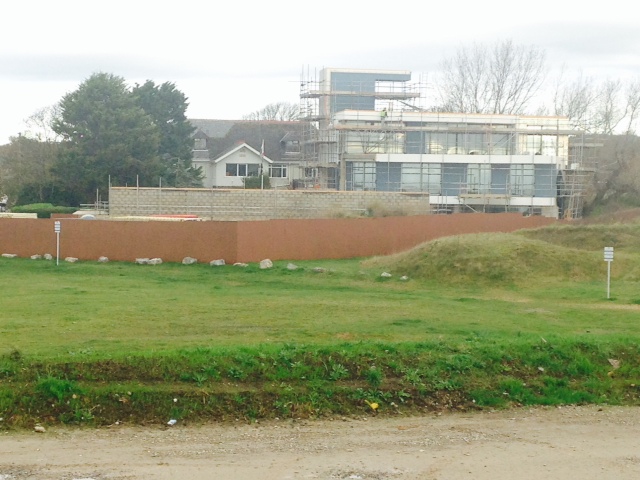
As previously reported, progress has been painfully slow this year, but having popped down there today, there is evidence of activity that would probably equate to the sums of money passing through his company accounts. For a start the lift installers were on site today, and one of them commented that it is the biggest lift they have ever installed in a residential property. You can gauge this from the installation on the roof. Secondly, there is a sizeable indoor pool being installed in the ground floor. Thirdly, the workman on the scaffold is fitting the white polystyrene insulation to the outside of the building jutting features, and the more expensive kingspan insulation to the external walls of the rooms.

photo copy 2

“Darling, the QE2 has docked in next door’s garden!”

This suggests that the finishing cladding will follow quite quickly – and let’s hope he’s ordered something attractive to help reduce the visual impact of this municipal-looking edifice. It has gone through its ‘car-park’ and ‘shopping mall’ phases and now resembles a hospital. What the next-door neighbours must think, with this the only thing between them and the beach, is anyone’s guess, because, it has to be said, that the views are truly magnificent.

photo copy

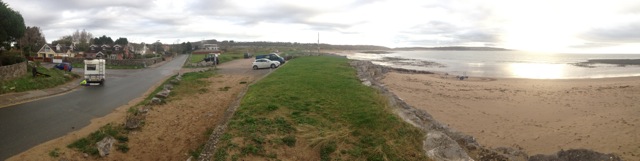
Newton beach, with sun carressing Nash Point on the right.

photo copy 3

Gerwyn’s place in background to the right

So, it is easy to see what the six-figure sum could have been spent on, and it would still leave much more needed. For example, I wonder if Gerwyn is going to have to protect this hugely expensive asset with flood defence measures. The sea wall has recently been upgraded, but that has obviously not been enough to satisfy one of Gerwyn’s near neighbours.  They have gone to the significant cost and trouble of having flood barriers installed on their property. They are designed to be erected quickly when a flood alert is issued, but they either know something I don’t about the risk today, or are simply not taking any chances and leaving part of it up all the time.

Wouldn’t that be ironic though? The filthy frackers tip us over the edge of disastrous climate change, and one of ‘their own’ sees his dreams washed away as the seas rise and the storms gather. Poetic.

After the Corbyn Surge: What next for social democracy?’ (Abridged)

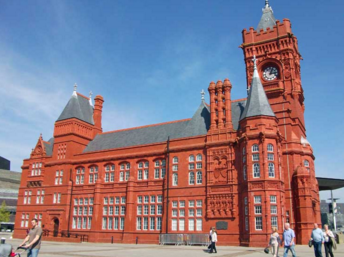
The title refers to today’s Compass organised, Leanne Wood sponsored talk and discussion held at the Pierhead Building in Cardiff Bay.

 The panel is what attracted me to go and have a listen and take part:

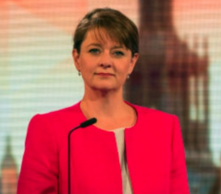
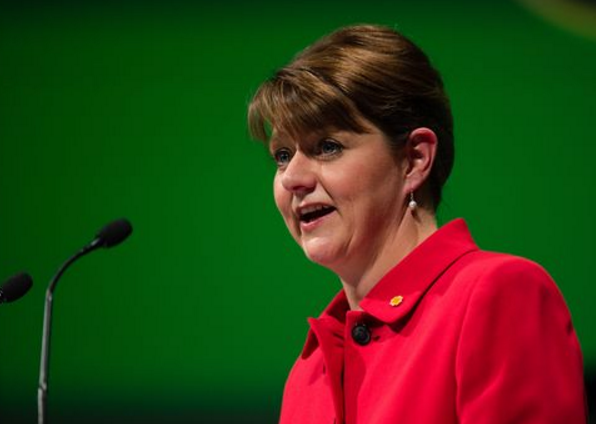
    Leanne Wood, Leader of Plaid Cymru https://en.wikipedia.org/wiki/Leanne_Wood. Needs no further introduction, I am sure.

    Professor David Marquand http://davidmarquand.com/, historian and political writer who I have been aware of since his involvement in the formation of the SDP when I was at university. (His 2004 book Decline of the Public: The Hollowing Out of Citizenship http://www.polity.co.uk/book.asp?ref=9780745629094 had a big impact on me – I was a teacher in charge of the Citizenship part of the PSE programme at the time, but quit teaching later that year)

    Neal Lawsonhttps://en.wikipedia.org/wiki/Neal_Lawson, Chair of Compass, http://www.compassonline.org.uk/ideas/good-society/ the prominent left-wing think tank that emerged from the Labour party to embrace progressive left-wingers from all parties and none.

David Marquand addressed the invited audience (of 30ish) first.

 He started with the confession that the Corbyn surge had led to both he and his wife rejoining the Labour Party after a long absence. Nonetheless, he is also clearly a big fan of the SNP and Plaid Cymru. He made the point that Labour always tends to veer off to the left for a while after a big election defeat, but recognised that there is more at play this time.

He suggested that there was a kind of revulsion with the ‘old politics’ of New Labour machine – with its top down modus operandi and manipulative, rather than participative, practices. This, he suggested gave Jeremy Corbyn huge appeal, with his old-fashioned virtues of humanity, honesty and integrity appearing refreshingly new and radical to young and old alike.

Added to all this is the very clear trend, right now, for social democracy to be in varying degrees of crisis, right across Europe, including in its traditional bastions of Scandinavia, coinciding with the establishment and entrenching of a neoliberal hegemony, represented by Osbornism in this country.

The way forward? He pretty much endorsed the position I have taken for a while now. We need the disparate groups of the left, in party politics and other campaigning arena, to develop and promote an alternative hegemonic vision. He quite explicitly saw both the SNP and PC having to be a part of this, with their potential to tap into people’s sense of identity being crucial. Indeed, he finished by comparing the prevailing values of Wales, with those of the rest of the UK (England especially, by implication).

The UK values: Choice/Customer/Competition

Welsh values: Voice/Citizens/Collaboration

Leanne Woods then responded.

 She pointed out that in the run-up to the election, there had been just the three progressive voices (PC/SNP/Greens) to romote the anti-austerity agenda. She therefore welcomed the rise of another strong, similar voice in the shape of Jeremy Corbyn; pointing out that his voting record in Parliament was much closer to that of Plaid MPs that the vast majority of Labour MPs. She therefore questioned whether Corbyn will be able to turn the Labour Party around to his way of thinking. Not that She is very impressed with his attitude to Scotland and Welsh devolution to date.

She then went on to highlight the lack of any progressive elements being evident in Welsh Labour, with their being more regressive than progressive features to their their unbroken run in power in the Senedd. Her frustration with Welsh Labour’s blocking of progressive proposals from PC was palpable.

One of the key ways she claimed PC is promoting progress is through the championing of decentralising decision-making, promoting community ownership and pushing for local procurement in public services.

She finished by pointing out that Scotland was bucking the Europe-wide trend by successfully achieving progressive social democracy, clearly hoping for something similar here in Wales.

Neal Lawson concluded the opening addresses.

 He opened by admitted to being somewhat bemused by what had happened since the General Election. He saw it as symptomatic of not just a crisis in social democracy, but also of the the growing crisis in capitalism. Essentially, it simply is not delivering, and this is most clear with young adults who are being saddled with monstrous debt for having a higher education, a lack of opportunity to utilise those costly qualifications when they graduate, and the nigh-impossibility of ever being able to get on the ‘housing ladder’ on their own. He therefore recognised that Corbyn has rode in on a progressive wave, but that we need to focus ‘on the wave, not the surfer’.

He seemed to share Leanne Wood’s scepticism about Labour being able to look outward and embrace kindred spirits. He pointed to their history of progressive milestones, like the setting up of the NHS in 1948, always being dictated from on high, in a top-down way. He suggested that this way of doing things simply won’t cut it in the modern world.

He suggested that we need to build on the opportunities presented by things like social media, and other technological innovations, to bold a more horizontal, flatter model of decision-making. He recognised that this also has the potential to reduce the need for people to work, requiring societal paradigm shifts and innovations like the Citizen’s Income. He is clearly hoping that our increased interconnectedness can be a positive factor in improving our democracy.

There follow an interesting Q&A session, offering much more food for thought.

 A common theme that kept recurring was the need for alliance building, again something I have been banging on about for a long time. Neal rather slapped Leanne down for suggesting that PC can form a Government in Wales next year, when the reality was that she needs to get her head around forming a coalition with Labour. There was, however, general consensus for Leanne’s response to this that, if Wales is to have a truly progressive future, Welsh Labour has to be removed from controlling Welsh Government.

Anthony Slaughter (Wales Green Party Deputy Leader) piped up about the the problem of building a consensus when all that happens is that Labour wants PC to step aside and PC wants the Greens to step aside and ‘the little guys are just expected to shut up’. He didn’t really get any response to this contribution. This kinda made the point in itself – if the little guys talk nonsense, they will just get ignored [I’ll explain what I mean by this in a PS at the end of this article, as it was not part of the meeting].

What was acknowledged, however, was that point that I made about the importance of electoral reform if the ‘little guys’ are ever going to get properly represented, and the fact that even when FPTP delivers like it did for the SNP, with it founded on a lot of marginal results, this surge of success can just as quickly be reversed. Neal pointed out that one of the sad consequences of FPTP is that when left parties compete against each other, it is parties like UKIP that reap the greatest reward from this.

 So all-in-all, a very interesting and thought provoking hour and a half. I confirmed my thoughts that I really do need to read more of David Marquand’s books (Neal gave his latest look, ‘Mammon’s Kingdom: An Essay On Britain, Now’, a rave review http://www.theguardian.com/books/2014/jun/02/mammons-kingdom-essay-britain-now-review-david-marquand-cry-of-despair). The session also served to emphasise what a class act Leanne Wood has become. None of the panel and few of the audience were Plaid Cymru members, yet she commanded everyone’s respect and recognition for achievements to date. She is intelligent, articulate and passionate in a way that gives weight and conviction to what she says. I look at the other party leaders in Wales and recognise that she needs to become First Minister of Wales at the earliest opportunity. Sadly, I share Neal Lawson’s conviction that it ain’t gonna happen next year.

‘After the Corbyn Surge: What next for social democracy?’ (and Wales Green Party)

Screen Shot 2015-11-11 at 20.22.20The title refers to today’s Compass organised, Leanne Wood sponsored talk and discussion held at the Pierhead Building in Cardiff Bay. The bit in brackets is a postscript (see end).

The panel is what attracted me to go and have a listen and take part:

  • Leanne Wood, Leader of Plaid Cymru. Needs no further introduction, I am sure.
  • Professor David Marquand , historian and political writer who I have been aware of since his involvement in the formation of the SDP when I was at university. (His 2004 book Decline of the Public: The Hollowing Out of Citizenship had a big impact on me – I was a teacher in charge of the Citizenship part of the PSE programme at the time, but quit teaching later that year.)
  • Screen Shot 2015-08-20 at 16.41.33Neal Lawson, Chair of Compass, the prominent left-wing think tank that emerged from the Labour party to embrace progressive left-wingers from all parties and none.

David Marquand addressed the invited audience (of 30ish) first.

Screen Shot 2015-11-11 at 20.24.41He started with the confession that the Corbyn surge had led to both he and his wife rejoining the Labour Party after a long absence. Nonetheless, he is also clearly a big fan of the SNP and Plaid Cymru. He made the point that Labour always tends to veer off to the left for a while after a big election defeat, but recognised that there is more at play this time.
He suggested that there was a kind of revulsion with the ‘old politics’ of New Labour machine – with its top down modus operandi and manipulative, rather than participative, practices. This, he suggested gave Jeremy Corbyn huge appeal, with his old-fashioned virtues of humanity, honesty and integrity appearing refreshingly new and radical to young and old alike.
Added to all this is the very clear trend, right now, for social democracy to be in varying degrees of crisis, right across Europe, including in its traditional bastions of Scandinavia, coinciding with the establishment and entrenching of a neoliberal hegemony, represented by Osbornism in this country.
The way forward? He pretty much endorsed the position I have taken for a while now. We need the disparate groups of the left, in party politics and other campaigning arena, to develop and promote an alternative hegemonic vision. He quite explicitly saw both the SNP and PC having to be a part of this, with their potential to tap into people’s sense of identity being crucial. Indeed, he finished by comparing the prevailing values of Wales, with those of the rest of the UK (England especially, by implication).

The UK values: Choice/Customer/Competition

Welsh values: Voice/Citizens/Collaboration

Screen Shot 2015-11-11 at 20.23.29Leanne Woods then responded.

She pointed out that in the run-up to the election, there had been just the three progressive voices (PC/SNP/Greens) to romote the anti-austerity agenda. She therefore welcomed the rise of another strong, similar voice in the shape of Jeremy Corbyn; pointing out that his voting record in Parliament was much closer to that of Plaid MPs that the vast majority of Labour MPs. She therefore questioned whether Corbyn will be able to turn the Labour Party around to his way of thinking. Not that she is very impressed with his attitude to Scotland and Welsh devolution to date.
She then went on to highlight the lack of any progressive elements being evident in Welsh Labour, with their being more regressive than progressive features to their their unbroken run in power in the Senedd. Her frustration with Welsh Labour’s blocking of progressive proposals from PC was palpable.
One of the key ways she claimed PC is promoting progress is through the championing of decentralising decision-making, promoting community ownership and pushing for local procurement in public services.
She finished by pointing out that Scotland was bucking the Europe-wide trend by successfully achieving progressive social democracy, clearly hoping for something similar here in Wales.

Neal Lawson concluded the opening addresses.

Screen Shot 2015-11-11 at 20.25.37He opened by admitted to being somewhat bemused by what had happened since the General Election. He saw it as symptomatic of not just a crisis in social democracy, but also of the growing crisis in capitalism. Essentially, it simply is not delivering, and this is most clear with young adults who are being saddled with monstrous debt for having a higher education, a lack of opportunity to utilise those costly qualifications when they graduate, and the nigh-impossibility of ever being able to get on the ‘housing ladder’ on their own. He therefore recognised that Corbyn has rode in on a progressive wave, but that we need to focus ‘on the wave, not the surfer’.
He seemed to share Leanne Wood’s scepticism about Labour being able to look outward and embrace kindred spirits. He pointed to their history of progressive milestones, like the setting up of the NHS in 1948, always being dictated from on high, in a top-down way. He suggested that this way of doing things simply won’t cut it in the modern world.
He suggested that we need to build on the opportunities presented by things like social media, and other technological innovations, to bold a more horizontal, flatter model of decision-making. He recognised that this also has the potential to reduce the need for people to work, requiring societal paradigm shifts and innovations like the Citizen’s Income. He is clearly hoping that our increased interconnectedness can be a positive factor in improving our democracy.

Screen Shot 2015-11-11 at 20.57.22There follow an interesting Q&A session, offering much more food for thought.

A common theme that kept recurring was the need for alliance building, again something I have been banging on about for a long time. Neal rather slapped Leanne down for suggesting that PC can form a Government in Wales next year, when the reality was that she needs to get her head around forming a coalition with Labour. There was, however, general consensus for Leanne’s response to this that, if Wales is to have a truly progressive future, Welsh Labour has to be removed from controlling Welsh Government.
Anthony Slaughter (Wales Green Party Deputy Leader) piped up about the the problem of building a consensus when all that happens is that Labour wants PC to step aside and PC wants the Greens to step aside and ‘the little guys are just expected to shut up’. He didn’t really get any response to this contribution. This kinda made the point in itself – if the little guys talk nonsense, they will just get ignored [I’ll explain what I mean by this in a PS at the end of this article, as it was not part of the meeting].
What was acknowledged, however, was that point that I made about the importance of electoral reform if the ‘little guys’ are ever going to get properly represented, and the fact that even when FPTP delivers like it did for the SNP, with it founded on a lot of marginal results, this surge of success can just as quickly be reversed. Neal pointed out that one of the sad consequences of FPTP is that when left parties compete against each other, it is parties like UKIP that reap the greatest reward from this.

Screen Shot 2015-11-11 at 20.58.02So all-in-all, a very interesting and thought provoking hour and a half. I confirmed my thoughts that I really do need to read more of David Marquand’s books (Neal gave his latest look, ‘Mammon’s Kingdom: An Essay On Britain, Now’, a rave review). The session also served to emphasise what a class act Leanne Wood has become. None of the panel and few of the audience were Plaid Cymru members, yet she commanded everyone’s respect and recognition for achievements to date. She is intelligent, articulate and passionate in a way that gives weight and conviction to what she says. I look at the other party leaders in Wales and recognise that she needs to become First Minister of Wales at the earliest opportunity. Sadly, I share Neal Lawson’s conviction that it ain’t gonna happen next year.

PS – How the ‘little guys’ get credibility and the right to be listened to and invited to take part.

Not always for the common good!

Not always for the common good!

At this point in time, I don’t know if Anthony Slaughter is standing for re-election as Wales Green Party Deputy Leader, or whether he is tempted to stand for the Leadership being vacated by Pippa Bartolotti, but whatever, his contribution today smacks, yet again, of a failure to grasp how to build credibility and a voice people will listen to.
I have said this before, so I’ll try to be brief here. It always has to start at the grass roots. You have to pound the streets and talk to people on the doorstep. You have to persuade enough people to give you an opportunity in the lower leagues of politics first – Community Councils and County Councils. You build a record of delivering on your promises and thereby build up support across neighbouring areas to a point where you can aspire to success at higher levels: Welsh Government, Westminster, EU.
Once you establish that you are a competent, serious and credible opponent, you will have the attention of other parties, even where your numbers are low (singular even, in Caroline Lucas’ case). You then have to exercise diplomacy skills in dealing with these rivals. Do you build alliances, or do you distance yourself? That will depend how much common ground you have and whether you have any prospect of getting at least part of your objectives achieved. This, after all, is the only real point in being involved in politics, is it not?
Plaid Cymru have learned most, but not all of this. Wales Green Party have learned none of it. This is inexcusable when the template for success (Target to Win) has been given to them on a plate and where success in parts of England has followed the same pattern consistently. The story of Brighton Green Party and its phenomenal success has been founded on dogged hard work over decades. Pete West was their first and only councillor in 1996. That took a decade to achieve. It was the crucial breakthrough that enabled everything else to follow.
Wales Green Party has not got a clue. It pretended it had a chance of getting an MEP in 2014. It fooled nobody in putting up a full-ish slate of candidates in 2015, losing all bar three deposits. It reckons it has a chance of three seats in 2016. It will get none. Most tragic of all, all the party’s time and money has been frittered away in chasing pipe dreams and distracting its activists from the real hard work that Brighton did back in the late 80s and early 90s, and which has been revised and formulated in the West Midlands as the Target-to-Win strategy. It is still not, to my knowledge, being implemented properly by any branch of Wales Green Party. If it was implemented today, it would not have time to yield results in 2017. I therefore predict another embarrassing blank in the County Council elections of 2017, and thereby the conclusion of a shamefully fruitless 5 year cycle.
In essence, it has got ideas well above its station, deluded no doubt the glimmer of success elsewhere and the ego of its leadership. It has not earned the right to be listened to in terms of making demands from others. All it is, at the moment, is a bloody nuisance. Arrogant pipsqueaks are hard to do anything with other than ignore and hope they go away. The way forward for Wales Green Party is for it to learn and understand its place, and develop a little humility. It will find that attitudes towards it will change very quickly and enable it to make more, rather than less progress.
In order to make the all important breakthroughs at County Council level, Wales Green party should be seeking all the help in can get. In most areas, Plaid Cymru are rivals that are competing for at least some of the same votes. They could do with building Councillor numbers too in most areas. Screen Shot 2015-11-11 at 21.19.22Electoral pacts, if not formal alliances, are the way forward. So say Caroline Lucas, Rupert Read et al.
There is nothing wrong with building up favours in the bank too. Greens cannot yet win AMs/MPs/MEPs in Wales. But they can get in the way of success for PC in a very few places. Any Green who thinks that letting in UKIP, or anyone else for that matter, is no worse than having a PC winner is a traitor to the cause of progressive politics. What goes around comes around. Won’t winning those first AMs/MPs/MEPs be that much easier for Greens with PC owing them some favours.

Here endeth the sermon. Solidarity!

Fracking: Crucial MP vote

Hi Andy,

Important news: David Cameron’s government is trying to sneak through weaker regulations that will allow fracking under national parks and important wildlife sites. This is despite previous promises to protect these areas.

The government has denied MPs a full debate on this issue, because they know how much of a backlash it will create. But MPs will still get to vote on the regulations — and already a large number support a ban on fracking in these fragile sites.

If we can get more MPs to act, it might be enough to keep the safeguards in place. It looks like the government will try to rush through weaker regulations at any moment, so please email your MP now:
https://secure.greenpeace.org.uk/fracking-email-MP

Earlier this year, the government promised a total ban on fracking under key wildlife sites and national parks. Then in a shocking u-turn, ministers rolled back on this promise — meaning that important spaces for rare and threatened plants and animals were put back on the list of places exposed to the fossil fuel industry.

Though the government now says that extra safeguards for nature and wildlife areas aren’t necessary, we’ve uncovered evidence that the fracking industry has been pushing for weaker regulations. Just last week, a Greenpeace investigation found that one fracking firm boss wrote to ministers to express his “concern and confusion” that his company could be blocked from drilling [1].

So it’s clear that if the fracking industry gets its way, some of the UK’s most beautiful countryside could end up circled by rigs as firms seek to extract gas and oil beneath. That’s why it’s vital we email our MPs now, before the weaker regulations are pushed through:

Ask your MP to protect national parks and key wildlife sites from fracking:
https://secure.greenpeace.org.uk/fracking-email-MP

If we’re going to play our part in tackling global climate change, we need to leave fossil fuels like shale gas and oil in the ground. And while we’re still campaigning for an all-out ban on fracking across the UK, we must act fast to protect these fragile areas. Please email your MP — and let’s keep working together and pushing back against fracking at every opportunity we have.

Thanks for all you do,

Richard
Greenpeace UK

NOTES
1. Fracking company expressed concern over national park drilling ban months before it was repealed
http://energydesk.greenpeace.org/2015/10/27/energy-files-fracking-company-expressed-concern-over-national-park-drilling-ban-months-before-it-was-repealed/

We don’t accept any money from companies or governments so we can be independent and challenge anyone who threatens the planet or peace. To help us keep fighting climate change, defending our oceans and protecting ancient forests, you can make a regular donation by direct debit. Thank you!

The ‘poppy’ problem

Screen Shot 2015-10-31 at 14.14.17

The poppy has become a symbol of respectful remembrance, and as such has become a conundrum.

I was brought up to believe that the red poppy was a symbol of remembrance for the fallen of the two world wars. My father was a survivor of a Nazi concentration camps and so it was always a time of poignancy in our household. But as time goes on, these things get manipulated, and I have learned a lot of history along the way too. My perspective has changed.

The history of the now traditional remembrance ceremonies is in itself enlightening. On the first Armistice anniversary, Tuesday November 11, 1919, the country did indeed fall silent for two minutes. At the signal – church bells, flares, even gunfire – traffic stopped, people stood still in the street or stepped away from their work, machinery (and every telephone exchange) was turned off, nobody spoke. In some schools there were special assemblies for the Silence, in others people just sat quietly at their desks. The impact of ‘the Silence’ on the people was enormous. The whole of everyday life could be halted simply by everyone joining together to do it. Most people found that very impressive and moving. Many thought it felt like a religious ceremony.

Screen Shot 2015-10-31 at 14.17.15The government almost immediately decided to make it an annual event. In the years that followed a spiritual element was encouraged as an important part of Remembrance ritual. So were ideas of ‘victory’ and ‘glory’ and ‘sacrifice’. All these were ways of trying to make sense of so many needless deaths, which had filled people with horror. The fate of ‘our glorious dead’ was desperately sad, but the word ‘glorious’ gave it false grandeur. The idea that these British soldiers had ‘given’ their lives was misleading, considering the reality of conscription and the use of propaganda that led them to their fate; the word ‘sacrifice’ gave the idea nobility, while it should have reflected that they were innocent lambs to the slaughter. There is nothing grand or noble about war. War makes everybody victims. War makes people bring needless death upon themselves and those around them, friend, foe, or anywhere in between. So, right from the outset, remembrance was used by the establishment, that had caused and inflicted war on everyone, to manipulate our reflections on the horrors.

The origin of the poppies we see worn today is also interesting. Everyone seems to be aware of the fact that those who fought in Belgium and northern France commented on the extraordinary persistence and profusion of an apparently fragile flower: the cornfield poppy, which splashed its blood-red blooms over the fields every summer. It was American ex-servicemen that first adopted the red poppy as their emblem, perhaps prompted in part by the poem of Canadian doctor, John McRae (he was killed in battle in 1915). His poem begins:

In Flanders fields the poppies blow
Between the crosses, row on row,
That mark our place; and in the sky
The larks, still bravely singing, fly
Scarce heard amid the guns below….

Screen Shot 2015-10-31 at 14.21.35So the Americans arranged for artificial poppies to be made by women in war-ravaged northern France. The funds raised from selling the poppies were for children who had suffered because of the war.

In Britain, the weary soldiers came back from the grimness of war to find that life was hard at home too, though in a different way. Many of the men were wounded or disabled or suffering the effects of gas and shell-shock. Many were physically or mentally unable to work; many others found that there were no jobs anyway. The provision made for them by the state was less than adequate. They certainly didn’t get the heroes’ homecoming that they had been led to expect. So ex-servicemen’s societies united in 1921 to form the British Legion. Its purpose was to provide support to ex-servicemen, especially the disabled, and their families, and it was to become one of the most successful British charities ever.

Screen Shot 2015-10-31 at 14.23.07A Frenchwoman, who was helping to organise the production of artificial poppies in France, suggested that the British Legion might like to sell them to raise money. The British Legion approved of this idea, and ordered at least 1.5 million for November 11, 1921. They sold out almost at once. The first Poppy Appeal made £106,000, a huge sum in those days. The British Legion then decided to set up its own poppy factory, with disabled ex-servicemen making up the workforce. The Remembrance red poppy rapidly became an established part of British life. Unquestioningly so for the vast majority (as ever)!

For those of a more questioning disposition, however, there have been issues and problems as it has been politicised and even became a cause of stigmatisation. Some people who have chosen not to wear it have faced anger and abuse. In Northern Ireland, for example, it became regarded as a Protestant Loyalist symbol because of its connection with British patriotism. This perspective has been eloquently presented for a few years now by an unlikely source – a Premier League footballer. Derry-born James McClean, of West Brom, may well be the only Premier League player again this year not to wear the special edition shirts with red poppies on them. He explains why he has taken this stance since 2012 here. 

A growing number of people have been concerned about the poppy’s association with military power and the justification of war. The official line these days is that the British Legion poppy is not in recognition of the fallen in the two world wars, but about caring for all British soldiers that have died or fallen in the line of ‘duty’, past and present. But why, with a state welfare system, are the services of the British Legion (slogan: ‘Honour the dead, care for the living’) still needed; some say it’s disgraceful that they were ever needed at all. In fact, rather than not be needed, Screen Shot 2015-10-31 at 14.28.04Help for Heroes has come along (in 2007) to crank up the help for servicemen severely hurt, doing the government’s current dirty work for them, and redoubling the the propaganda of glorious, heroic sacrifice.

To be honest, I have no time for this at all. Heroes? What heroes? Perhaps the RAF pilot who recently declared he would have refused the order to bomb the MSF hospital in Kunduz. Perhaps Chelsea Manning, for making clear the extent to which we are lied to and have despicable acts done in our names.

This is why a growing number of people have become uneasy about what the red poppy has come to represent. It has become jingoistic and nationalistic. Remember the ‘glorious’ soldiers defending British (government) interests. Let us not dwell on the ‘enemy’ combatants killed; and we better not mention the multitude of innocent civilians killed and harmed by our ‘heroes’ in far off lands.

Thus the growing appeal of the ‘rival’ white poppy. Again, a history lesson is worthwhile. The Women’s Co-operative Guild, founded in 1883, began its life preoccupied with the problems and issues of home and family, but by 1914 attention had turned to the bigger picture: the Guild’s Congress declared that ‘civilised nations should never again resort to the terrible and ineffectual method of war for the settlement of international disputes’. By the end of the war the guildswomen had learned first hand the extent to which war could profoundly affect and harm their lives. Many of them were the wives, mothers and sisters of men who had been killed. They embarked on an active campaign for peace. By 1933 they were searching for a symbol which could be worn by guildswomen who wanted to show publicly that they were against war and for nonviolence. Someone came up with the idea of a white poppy. Workers from the Co-operative Wholesale Society began making the poppies almost at once. Money from selling them, after the production costs had been paid for, was sent to help war-resisters and conscientious objectors in Europe.

Screen Shot 2015-10-31 at 14.31.31The wearing of a white poppy on Armistice Day became a focus for the peace movement, and the Peace Pledge Union took it up in 1936 as ‘a definite pledge to peace that war must not happen again‘. In 1938 ‘Alternative Remembrance’ events began: a pacifist religious service was held in London’s Regent’s Park, followed by a march to Westminster and the laying of a wreath of white poppies at the Cenotaph. 85,000 white poppies, by then an acknowledged symbol of peace, were sold that year. Many people wore them alone, others wore a red poppy as well.

Screen Shot 2015-10-31 at 14.33.05Given my upbringing and my father’s story, if I wear a poppy at all, my first choice is a white one, but I feel most comfortable with a red one alongside it to acknowledge the tragedy of young men on all sides duped into combat for reasons they didn’t understand by an establishment that had (and has) no respect for humanity. That the red poppy has been highjacked by those same establishment interests is a pity, but at the end of the day can we ever be surprised by that anymore? This in itself is progress of a sort.

The obstacles Plaid Cymru have to overcome to emulate the SNP

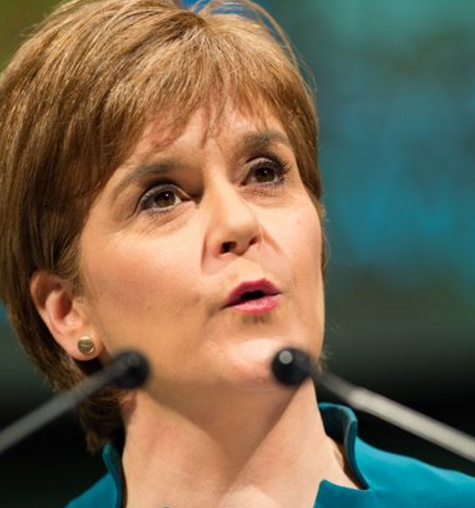
Listening to both Leanne Wood and Nicola Sturgeon address this weekend’s Plaid Cymru Conference in Aberystwyth has helped consolidate my view that Plaid Cymru are up against it in achieving SNP levels of success next May, but has given me reason to think that they may get there one day.

Screen Shot 2015-10-24 at 15.48.07Leanne’s speech was, to my mind, a lot better than the headlines made me think it was. The Guardian’s headline was:
“Plaid Cymru leader opens party conference with attack on Labour”

This was the one that appeared to be going around the twittersphere too, even among the PC supporters. This made me sigh with frustration. It is exactly the sort of negative campaigning I have been complaining about for months. And for sure, there was far too much of it in Leanne’s speech. But there was a lot of good stuff in it too that I was pleased to see some of the Welsh media latch onto instead.

Wales Online (the website that aggregates the coverage of Western Mail, South Wales Echo, Wales On Sunday and many local titles) ran with the much more positive headline: ”

The nine key pledges from Leanne Wood’s Plaid conference speech – as she outlines her priorities for government

Most of these pledges were much more along the lines of what we need to hear:

  1. Reversing cuts to NHS services
  2. New cancer diagnostic centres to ensure a maximum 4 week wait for cancer tests
  3. Free personal care for the over 65s
  4. Reform of school inspection system and rewarding improvement in schools
  5. Banning fracking
  6. More renewable energy
  7. £100 million for most promising new businesses
  8. Achieving devolution equality with Scotland
  9. Achieving at least an involvement in government.

I am not going to dissect these individually, except to say the first seven are all major steps in the right direction that a PC government should be able to deliver. We need a lot more detail on how they would achieve them, within the current budgetary constraints in existence, before the wider public will see them as attainable rather than aspirational. I have little doubt that they are achievable, but they would need funding and we need some honesty about how that would be achieved. If they are serious about coming into government, they must have done those sums. Presenting this analysis will help give them credibility. The last two pledges, on the other hand, are outside their ability to deliver alone. Such things are therefore dangerous, indeed I would say foolish, things to pledge. Taken as a whole, I would agree with Adam Johannes’ assessment: “The problem with the 9 key pledges that Leanne W made is that they are all okay, but taken as a whole seem a jumbled shopping list and are not demands that present …….. something that will inspire people. Pretty timid. For example, it could include – Housing Justice – ending the bedroom tax in Wales; introducing rent controls in private rental sector;  making letting agency fees illegal;
opposing trident, nuclear power and foreign military intervention….”  

But I am digressing from the main points I wish to make here.

Screen Shot 2015-10-24 at 15.49.48Nicola Sturgeon’s speech contained within it a very sound analysis of where Plaid Cymru are and set out how the SNP went from a very similar position a few years ago, to its current position. It strongly stated that Leanne Wood is the right person to lead Plaid Cymru and take them forward. This I agree with wholeheartedly, not just because Leanne is a very accomplished performer, but perhaps even more because of the lack of alternatives. For the SNP to have Nicola Sturgeon lined up to seamlessly takeover and advance the SNP after Alex Salmond is a luxury that the SNP simply do not have. Nicola also tried to make the case for PC being able to advance as rapidly in Wales and the SNP did in Scotland. But here I do not share her conviction. There are key aspects of the political landscape in Wales that make it much tougher for PC than the SNP. I believe three things are particularly significant in this respect.

Screen Shot 2015-10-24 at 16.02.29Firstly, the make up of the media scene in Wales is not as conducive to getting PC’s message across. As I point out above, the Welsh papers gave a much more positive spin on Leanne’s speech that the the UK national peers like the Guardian. The Welsh papers have a much lower market penetration than the the Scotland only papers. On top of which the Scottish editions of the big ‘red tops’ have Glasgow based editorial control; something that does not happen in Wales. Wales may have stronger Welsh Language broadcasting provision than Scotland in S4C and Radio Cymru, but these achieve pitifully low penetration figures and little political impact on voting intentions I would suggest. Overall, however, this may well be the weakest of the three factors.

Screen Shot 2015-10-24 at 16.04.51Secondly, and most certainly a key factor, is the nature of the Labour brand in Wales. Welsh Labour, and Carwyn Jones in particular, have been relatively successful in carving out a separate identity for Welsh Labour and differentiating themselves the UK Labour Party. This is truer now than it ever has been with Carwyn making it very clear that he does not buy into the Corbyn ‘revolution’ and that whoever is labour leader in Westminster does not alter the fact the he is Labour leader in Wales. Thus labour in Wales was never quite as Blairite as Milliband Labour, but are now being seen to be a lot more Blairite than Corbyn Labour. Red Tories, they most certainly seem to want to remain. This may prove to be an opportunity for PC and Leanne Wood. Historically, with more of a Welsh identity, being a bit to the left of the national party and voting Labour in the people’s DNA, PC were a resistible force against an immoveable object.

Screen Shot 2015-10-24 at 16.06.01Labour were always seen as little more than a branch office of UK Labour in Scotland and all its big players shunned the Scottish Parliament to head of to Westminster. The SNP have very successfully shone a light on this with the help of the independence referendum showing just how close to the Tories UK Labour, and thereby Scottish labour too, had become. The PC focus insofar as attacking Welsh Labour, needs to be less on Welsh Labour’s record in office. Quite frankly, that speaks for itself. It needs to be on Welsh Labour’s refusal to sign up to the leftward march of popular politics – the ant-austrerity agenda – that speaks to values of old Labour and which are being renewed and re-invented for the new century by people like the SNP in Scotland and other popular movements in Europe (e.g. Syriza and Podemos). This is a gift to PC that they need to take advantage of, but requires a subtle change of messaging from the off-putting negativity of purely bashing their record in office. Focus instead on highlighting the differences in approach going forward. This will, of course, be much easier once the manifestoes are available. Carwyn promises something fresh and radical. It will be a surprise if he even knows what that means.

Thirdly, and of more significance than PC seem prepared to acknowledge and address, are key differences in demographics between Wales and Scotland. In Wales, 20% of the current population were born in England, with an additional 5% born outside the UK. In Scotland, 8% were born in England, with a similar number born outside the UK. Figures for second generation immigrants are hard to find, but must be hugely higher in Wales than Scotland, especially those with at least one parent born in England. This creates issues of identity and conflict at all sorts of levels, from the individual (am I Welsh, English, British?), to community levels (reflected in attitudes to the Welsh language for example), through to the whole country’s attitude to devolution and possible independence.

Simple branding

Simple branding

The SNP have successfully managed to establish itself as the party of Scotland with high levels of support across all parts of the country and among people of all backgrounds and origins. It has built support by successfully arguing that Scotland can be better off when it has control of its own economy (be it in or out of the union).

Screen Shot 2015-10-24 at 16.19.18

Not so easy for graffiti artists!

Plaid Cymru calls itself the Party of Wales, when it patently isn’t in any popular sense. Welsh Labour has long been the party of Wales in terms in terms of support. It struggles to appeal to people in sufficiently high numbers to win seats outside of its heartland areas of West/North West Wales. It can alienate people with little interest in the Welsh language. It is identified as the guardians of the culture, but not as managers of the country’s wider wealth. It struggles to paint a credible vision of a Wales that would be better off standing on its own two feet.

None of this is insurmountable. But it is certainly too much to overcome between now and next May. But Plaid Cymru needs to get on the right path sooner rather than later. Nicola Sturgeon set out the key to this in one small part of her speech – I’ll get the exact words to quote as soon as I can track them down – where she essentially said that the secret of SNP success was essentially down to stopping simply denigrating the opposition and by laying down a positive vision and explaining how it could be achieved.

I want Plaid Cymru to succeed. They are without doubt the most realistic prospect of positive change in Wales. They have become a party that I can relate to in so many ways. I will almost certainly vote for them in May and probably encourage others to do so too. But there are still too many reservations that they really know where they are going and have the ability within their ranks to deliver. Leanne cannot do it on her own and she is not getting sufficient support or the right advice from those around her. All this has been graphically demonstrated with the Wylfa B issue.

Screen Shot 2015-10-24 at 16.31.09So as their Conference continues, I hope the right people are asking the right questions and getting the right answers so as to give them the right direction and impetus to make significant progress next year. It is vital that they do. If they don’t, it is easy to imagine the knives coming out for their greatest asset, Leanne Wood, and things completely unravelling again from there. They desperately need to build momentum after a disappointing General Election. Most of what I have said here I said before that election. I can see little evidence to date that anything much is changing. You really do not need to be Einstein to recognise that doing the same things and expecting different results is madness.

Screen Shot 2015-10-24 at 16.30.30

So, is there actually a moratorium on fracking in Wales or not? Yes; well actually no; well kind of! Adds up to NO!

As with most things involving Welsh Labour, even when they make their position crystal clear, the end result remains as clear as mud!!

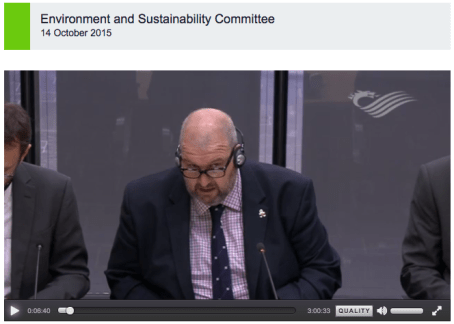
The Environment and Sustainability Committee met last Wednesday with the number one item on the agenda designed to establish the actual position regarding whether or not a moratorium exists in Wales on fracking. You can watch it for yourself below (click on image). Thankfully, you just need to watch the first 13 minutes.

Screen Shot 2015-10-19 at 13.16.56

To summarise:

AJ = Chair Alun Jones (PC Arfon)
WP = William Powell (LD Mid & West Wales)
CS = Carl Sargeant (Lab Minister for Natural Resources, Alyn & Deeside)
LG = Llyr Gruffyydd (PC North Wales)
SM = Sandy Mewies (Lab Delyn)

N.B. I may be paraphrasing to an extent, so check the video for precise words

WP – Do you think a moratorium is in fact in place in Wales?

CS – Yes, I do.

WP – Do you not see any legal difficulties with this?

CS – The directions to the 25 welsh planning authorities are clear that we do not hold the same position as the UK government in wanting to move ahead quickly with fracking and that we continue to hold to the moratorium position.

WP – Do you think extending this include UCG is appropriate given the different technology and licensing arrangements, and given the decision taken in Scotland [to ban it too]?

CS – We are considering this and will make a decision shortly

SM – Do we not need much more publicity to highlight the different position here in Wales compared to Engalnd as there is a lot of confusion about these differing technologies and the WG position?

CS – Lobby groups on both sides have produced lots of information and I believe a lot of the science behind it is not well founded and this is why we are taking the precautionary approach whereby positive outcomes cannot be made for applications to local [planning authorities – they have to be referred to WG.

 
LG – I would like to question this as the direction to local authorities would prevent it being approved would it?
 
CS – Yes it would.
 

LG – But that decision [by WG] would be subject to legal challenge and likely to be overturned if not on planning grounds.

CS – Everything is open to legal challenge in planning, but it is clear they cannot make the decision local level and that the application would be called in by WG.

LG – So unless you are telling us that you will reject that application, which presumably you can’t, you cannot tell us that the application will not go ahead.

CS – That particular line of questioning is unlawful. I cannot presume any decision and you are therefore playing politics as you know my legal position on this. I can’t understand your argument as we are actually on the same side here. The fact is that you are trying to create a loophole when in fact we have been very clear on the moratorium and I think you are trying to undermine the system.

LG – I am quite taken aback by that attitude. My job is to make sure the decisions you take are robust and scrutinised and I have had a great deal of correspondence from organisations and individuals who are concerned that word moratorium is being bandied about when, in fact, really it is not a moratorium.

CS – I disagree with you.

AJ – If you are not prejudging an application coming to you, you cannot say you would not approve it.

CS – Absolutely Chair, I am not allowed to prejudge any application, therefore the line of questioning led by the member is unreasonable.

AJ – But if you are not prejudging it, how can you say it is a moratorium?

CS – I am saying that the local planning authority are not allowed to pass an application.

LG – So we can agree that it is a moratorium on local planning authorities making the decision.

CS – Absolutely

LG – But that we cannot go further than that because of legal reasons.

CS – I cannot prejudge any application.

LG – I understand that.

There follows a two-three minute discussion as to why CS considers it impractical to extend whatever ‘moratorium’ exists to test drilling applications.

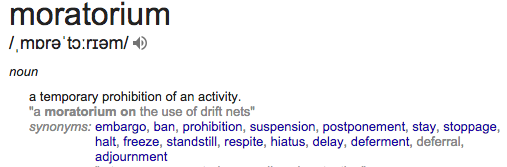
Labour are playing games here, if we look at what a moratorium actually is:

Screen Shot 2015-10-19 at 13.20.34

This all adds up to exactly what I and others, like Gareth Clubb at FoTEC, have long been saying. Clearly the only moratorium actually in place is on local authorities making decisions on fracking applications.

There are is no legally enforceable way of WG turning down fracking decisions brought before it on anything other than planning grounds. There are plenty of such grounds and there may well be the intention by Carl Sergeant and co. to do what they can to prevent it happening, BUT ……..

By his own admission, as things stand (and they may well change with the next devolution bill), he simply cannot say that there will be no fracking approvals granted. By any reasonable understanding of the word moratorium, I therefore (and regrettably) have no hesitation in declaring:

THERE IS NO MORATORIUM ON FRACKING
IN PLACE IN WALES

P.S. Carwyn Jones made it clear today (20/10/15) that even though the new Wales Bill will, finally, give Welsh Government the powers to put a proper moratorium or ban in place, it would still need ratifying by Westminster, and could easily be vetoed at the stroke of a pen, rendering it meaningless all the time we have a Westminster government intent on feathering its sponsors and donors nests with fracked gas when the time is right for profits to be made – the only criteria they live by.

Cardiff & South Wales Against the Bedroom Tax: October briefing notes

Beyond Mitigation – Beating the Crisis

 (Written by Jamie Insole)

Introduction

Screen Shot 2015-10-18 at 23.55.42Cardiff & South Wales Against the Bedroom Tax (C&SWABT) is a tenant led, grassroots campaign committed to fighting the ‘bedroom tax’.

Our experience indicates that the financial burden of the bedroom tax continues to fall predominantly upon the sick, disabled and most financially vulnerable members of our community.

Currently, approximately 33,000 households face the impossible choice of finding extra-money they do not have or ‘downsizing’ to smaller homes that do not exist.

C&SWABT has previously called for the Welsh Government to follow Scotland and Northern Ireland’s lead by providing the additional £17 million necessary to effectively cover the cost of the bedroom tax in Wales.

On July 24th, the Welsh Assembly’s own Public Accounts Committee recommended “a cost/benefit analysis of mitigating the full impact of the removal of the spare room subsidy through discretionary housing payments, as the Scottish Government chose to do.”

Following publication, a coalition of sector agencies and high-profile individuals, including, the Archbishop of Wales called upon Welsh Government to find the funds to take tenants out of this charge.

 Achievements to date:

1. Over 1000 tenants taken out of the bedroom tax

2. Established local authority exemptions for overnight care

3. Made law at tribunal – over 300 cases taken forward

4. Partnering with social landlords to take forward pilots and brokering agreements in Cardiff, Merthyr, Bridgend and Caerphilly.

5. Working with Welsh Government to secure an additional £1.3 million DHP

6. Successful press and media campaigns targeting Westminster, poor practise and highlighting social impacts

7. Nine local groups established. Skilling and education through campaigning activity. Tenants brought closer to the process of power!


Bridgend Against the Bedroom Tax Steering Committee (bottom right(

Bridgend Against the Bedroom Tax Steering Committee (bottom right(

“The cost of not intervening will

be measured both in terms of

thousands of evictions and the

irreversible toxification of

the Welsh social housing sector.”

Core argument

Approximately 33,000 households face the impossible choice of finding extra-money they do not have or ‘downsizing’ to smaller homes that do not exist.

Over the course of 2013 and 2014, social tenants in wales were made subject to 5136 suspended possession orders. Dramatic cuts in discretionary housing payment, combined with the perfect storm of further welfare reform can only see more people facing insurmountable debt and eviction threats.

Currently, discretionary housing payments constitute the single means whereby many tenants who cannot objectively downsize cover the cost of remaining in their homes. Perversely, the Local Authority Duty of Care introduced by the Housing Act will mean that a decreasing pot will need to be spread across a wider catchment.

Meanwhile, following the outcome of the May General election, there are strong indications that some social landlords are adopting a more aggressive approach to arrears. This is swiftly giving rise to a postcode lottery in which some seek to transfer the risk to tenants whilst others despair of settling a unified approach.

 A tree is best measured when it’s down – a warning!

Following on from work with the WLGA, our campaign is stunned by the lack of disaggregated data covering; 1: the number and profile of bedroom tax affected tenants in receipt of DHP and, 2: the number of bedroom tax tenants subject either to suspended possession orders or pre-action protocol.

Traditionally, arrears have been cited as the best means of measuring risk. However, and in combination with hidden debt, there is convincing evidence to indicate that ‘tenant resilience’ has been degraded beyond endurance. Welsh Tenants have carried out important work around the growth of local food bank usage. Similarly, Oxfam Cymru, in partnership with the Trussel Trust, sought to map the immediate factors driving the rise of extreme poverty.

C&SWABT suggests the existence of a developing crisis not unlike that experienced in 2007. In essence, whilst Welsh Government, agencies and the sector are measuring the wrong thing, true indicators (to the best of our knowledge) have neither been captured nor collated. Consequently, when the tree falls, it will do so both abruptly and in such a manner as to inflict maximum pressure on overstretched support services.

Screen Shot 2015-10-18 at 23.57.10The backlog at law will be measured in months, if not years. Social landlords will be forced to transform their business models doing irrevocable vandalism to the sectors ethos. Homelessness will spike beyond the capacity of the private rented sectors local ability to accommodate. Estates will fight back. The majority of evictions will be bitterly contested and communities, faith groups and other constituencies will be brought into direct conflict with bailiffs and local decision makers. In short, we will see a pattern currently emerging in London replicated throughout Wales.

Beyond Mitigation

We are fully aware of the budgetary challenges posed by central government underfunding. However, in our view the cost of not intervening will be measured both in terms of thousands of evictions and the irreversible toxification of the Welsh social housing sector.

Welsh Government spends a lower percentage of its expenditure on housing than either Scotland or Northern Ireland. It is essential that the housing budget is expanded so that the DHP top-up does not come at the expense of other vital housing services. In Scotland, no tenant pay’s the Bedroom Tax. We call upon Welsh Government to show the same leadership, act upon the Committees recommendation and take tens of thousands of Welsh tenants out of poverty and misery.

Costings

In total it is costing Scotland £50.2m annually to offset the tax, including £15.2m from the DWP and the rest (£35m) coming from Scottish Gov.

If Welsh Government topped up at the same ratio, this would make the whole cost of ending the Bedroom Tax in Wales £26,071,644 (based on 2014/15 figs). BUT this is the total cost of ending the tax, including the money that DWP allocates to Wales via DHP, (£7,984,203 in 2014/15.)

So, the additional contribution from Welsh Government would be in the region of £18/17m. In budgetary terms this is in no way unachievable.

Next Steps

1. Bi-monthly briefings and regular info updates covering trends, case studies, best practise and further options

2. National Assembly of Wales petition launch

3. Sector-wide event – Cardiff – Transport House – December or January

4. National partnership to develop Upper Tribunal appeals strategy

5. Key note demonstrations and pilot ‘citadel neighbourhoods’ (a community-wide support and ‘no eviction’ net)

6. Developing engagement with RSL’s, CHC and the WLGA. Robust press campaigns designed to address bad practise and highlight Central Government failures.

7. Collaboration and support around Welsh Tenant and Shelter Cymru initiatives.

C&SWABT is eager to engage. We work to empower hundreds of bedroom tax affected tenants across South Wales. For further information, please contact cardiffagainstthebedroomtax@gmail.com or call Jamie on 07717779819, or for Bridgend enquiries, you can call Andy on 078 1066 3241.

Screen Shot 2015-10-18 at 23.58.04

Why I simply can’t bring myself to join my local Labour Party

It was the Ogmore and Bridgend Constituency Labour Party annual dinner this week. Their very own Carwyn Jones turned up and members were keen to share on Facebook his declaration thus:

“we will have a manifesto that is radical, fresh and shaped by Party members”

I have to admit that this was like a red flag to a bull (apologies for the kinda mixed metaphor!).

Having been steadily sipping away at a bottle of Johnnie Walker all evening, I responded like this:

It will be radical and fresh if shaped by the new Corbynite members. It is great news that Carwyn’s stale old blairite, red Tory drivel is being binned at last. Bring it on!!

I guess this deserved the following riposte:

Love the comradely language that Jeremy requests of us. Suppose a real pity we have a Welsh Labour GOVERNMENT. dear me….

Nonetheless, the following conversation that followed, I think, is very telling:

  • ME: I am not on board yet, as I don’t believe a word of the radical and fresh claims. Proof will be in the pudding. Labour’s legacy in government is hardly cause for pride, being the product if years of complacency. Interesting times are upon us. It will be interesting to see if Welsh Labour can rise to the challenge. I sincerely hope so, but I really do think a change of leadership is vital to presentating a fresh, new, radical face with any credibility at all.
  • Reply: We will get out to fight and beat the Welsh Tories. Over and out.
  • ME: Hardly ambitious, let alone fresh and radical. I think I can rest my case too!
  • Reply: Not sure what greater ambition we should have than defeating Tories. They are the enemy after all!
  • ME: Seriously? That says it all and pretty much confirms all my worst fears.

So there you have it. Beating the Tories is their sole ambition. No challenge to the charge of complacency. No interest in being fresh or radical so long as the Tories are not in charge. Tory-lite will presumably continue to be acceptable enough and continue to meet Carwyn’s understanding of radical and fresh. No view on whether Carwyn is the right person to take them forward.

Of course, I may be proved wrong. The Labour Manifesto for next year’s Assembly elections may well prove ‘fresh and radical’. The influence of the massive influx of new Corbynite members, and the presumably renewed confidence of the long-quiet lefties that always hid away within the party during the Blairite years (with one or two exceptions), will surely have a profound impact if Carwyn is right about policy and the manifesto being ‘shaped by members’. But that is, of course, only half the battle with Carwyn’s administration. They blatantly lie, even in the Senedd itself, and their promises are worthless. One straightforward but huge example emphasises this point – the NHS hospital downgrading.

Here are some actual quotes from Labour ministers in the Senedd:

No-one is suggesting the downgrading of any district general hospital (Labour First Minister, National Assembly, November 29th 2011)

No hospital is under threat, and no hospital was ever under threat in Wales (Labour First Minister, National Assembly, May 1st 2012).

I do not want to see any downgrading. We want to see improved services. To talk about downgrading is absolute nonsense. (Labour Health Minister, November 1st 2011)

We have no plans to downgrade any district general hospital (Labour Health Minister, December 7th 2011)

I do not want to hear any talk about downgrading. No services will be downgraded (Labour Health Minister, May 23rd 2012)

Tally these pledges with the reality of what has happened in terms of hospital downgrades:

  • Closure of at least five community hospitals: Blaenau Ffestiniog, Flint, Llangollen, Prestatyn and Mynydd Mawr
  • Closure of the special care baby unit at Withybush hospital
  • Level 3 neonatal care scheduled to move from Ysbyty Glan Clwyd and Wrexham’s Maelor Hospital to Arrowe Park Hospital on the Wirral (i.e. out of Wales)
  • X-ray services to cease in Tywyn, Ruthin and Blaenau Ffestiniog
  • Closure of Minor Injuries Units at Flint, Ruthin, Llangollen, Chirk, Colwyn Bay, Blaenau Ffestiniog, Tenby and South Pembrokeshire
  • Permanent closure of inpatient beds at Hafan Ward (Bryn Beryl Hospital) and Uned Meirion (Dolgellau Hospital)
  • A and E downgrading at Prince Philip Hospital in Llanelli
  • A and E downgrading at the Royal Glamorgan in Llantrisant

And this is not necessarily a complete list, and certainly not the end of the issues with NHS service provision in Wales.

So perhaps when Carwyn says he has some radical and fresh ideas lined up, perhaps this simply means he has some actual intention to deliver on his promises. That really would be fresh and radical for him!!

P.S. This picture from the Annual Dinner is doing the rounds on Facebook, and is begging for a caption competition re Carwyn Jones as a Tom Jones tribute act!

Screen Shot 2015-10-10 at 12.15.53

It’s not unusual to break promises in politics

What’s new pussycat? Is it really fresh and radical?

Burning down the house when Labour lose their grip on the Senedd

Mama told me not to come and get photographed standing in front of that damn sign!