Category Archives: Uncategorized

Will ‘Your Party’ become my party?

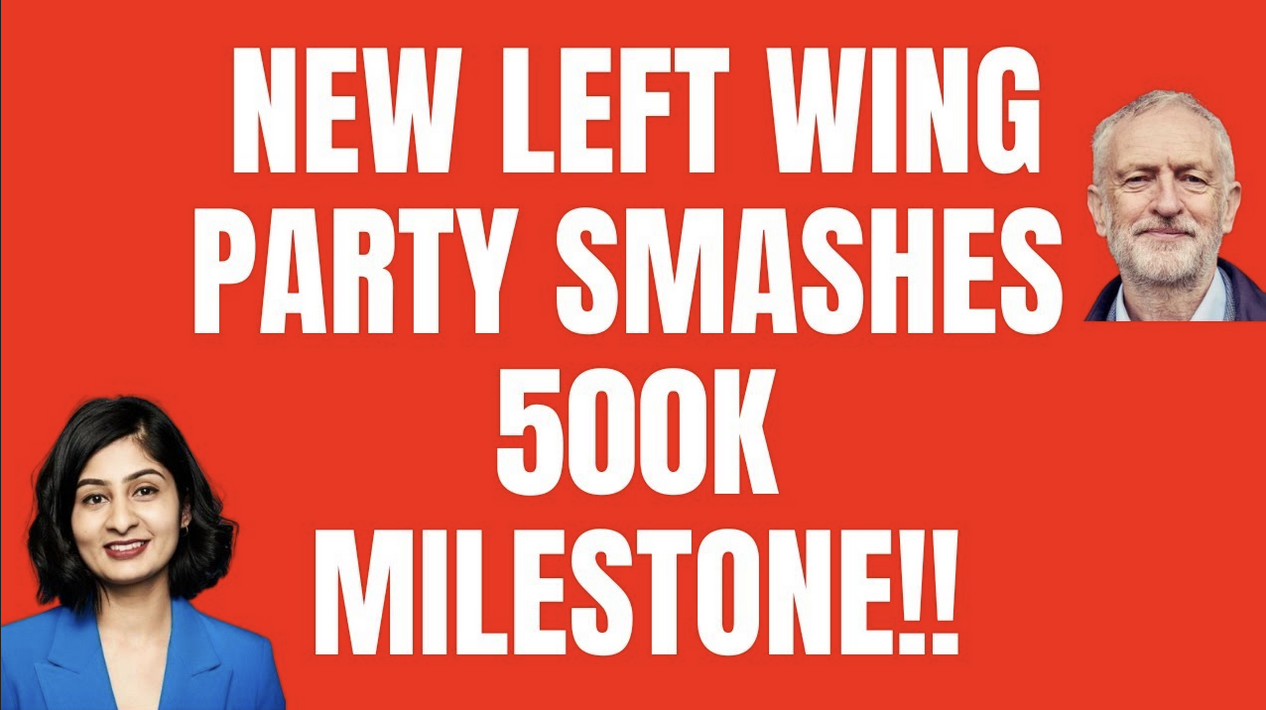
I am one of the 600,000+ people that have signed up to be kept informed of developments with the launch of Corbyn’s and Sultana’s new party of the Left. It holds out the hope of an anti-austerity, anti-war and anti-racist party that seeks to tackle the cost of living, reduce inequality, and promote public ownership. As such it certainly ticks a lot of boxes for me. However, I am struggling to get very enthusiastic or excited about it personally. But I do hope that it might just galvanise the young into seeing an opportunity to reshape their futures for the better.

In some ways I think I have never quite gotten over the orchestrated failure of the Corbyn project during his time as Labour Party leader. It was crushed by an obscene MSM campaign of libellous attacks, most notably the ridiculous antisemitic slurs, that were also used by his enemies within the Party, to their everlasting shame. The immediate consequence was the disastrous premiership of Boris Johnson, and then everything that has followed that.

Those largely-the-same Labour politicians and liberal commentators appear to have already settled on their main attack line: support for the Left Party will split the Labour vote and allow Reform to win. That they refused to get into line and support the democratically elected leadership of Corbyn, supported by a huge majority of the membership allowed ‘mini-Trump’ Johnson, seems to be a lesson at least partly learned, if way too late! Hypocrisy to the fore!

In fact, many opinion polls have already indicated potential for Reform to win the next general election, while Labour’s parliamentary representation collapses as a consequence of Starmer’s team consciously courting Reform voters and would-be voters while ignoring those who might back the left. That has failed miserably on its own terms, but it has also widened the audience for a new left party. They have only themselves to blame. Where do they think the Left can turn?

For those left-wingers who remain in the Labour Party, there are two main reasons cited for staying; essentially the same ones I was presented with when I quit the Labour Party after Starmer’s duplicitous campaign to usurp the Labour leadership. One is that recent controversies like the Welfare Bill and the recognition of Palestine illustrate how the Labour Party is not monolithic and still be shaped by pressure from the left through the winning of concessions. The other argument is that Labour retains the reluctant loyalty of many trade unions. But this can’t be taken for granted, especially with a new option, a genuinely socialist party, there to embrace them and their values.

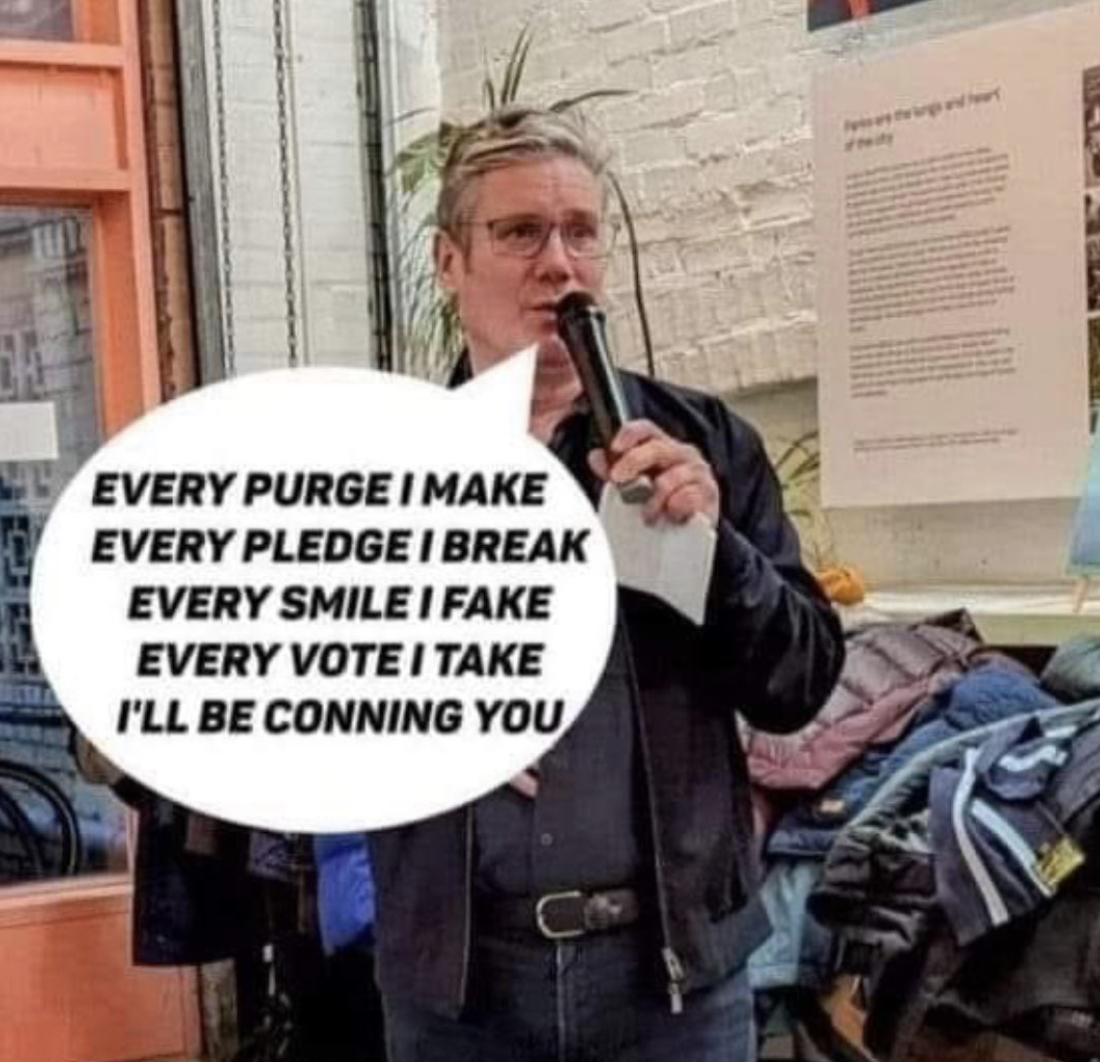
If a year or so of a Starmer government doesn’t prove that the Labour Party is no longer fit for the purpose for which it was created, well, nothing surely will. The new party will need an activist base, and I therefore sincerely hope that those activists will stop pissing in the wind that is blowing through the Labour Party and migrate to where their efforts could potentially yield great gains for those abandoned by the Labour Party and tempted by right-wing populist scumbags (like that other mini-Trump sociopath, Farage) offering simplistic, short-sighted, scapegoating solutions that appeal to those most challenged by the crises at hand.

In any case, left wing pressure is being seen to exert pressure on this right-wing Labour administration from without, way better than from within. A genuinely left-wing party can exert pressure on the Labour government over controversial issues, perhaps even more effectively than, but certainly in allegiance with social movements. The main pressure on Starmer and foreign secretary David Lammy over Gaza has come from the mass movement, finding only a faint echo among Labour MPs.

As for the Trade Unions, Ex-Unite boss Len McCluskey has hinted that trade unions might abandon Labour for Jeremy Corbyn’s new party if it proves “credible,” raising concerns on the left of a historic break in relations. McCluskey, 74, comments heap fresh pressure on Labour as internal divisions widen. Just days ago, Corbyn declared “change is coming” and praised Coventry South MP Zarah Sultana for quitting Labour to help “build a real alternative” to the party he once led. McCluskey, one of Corbyn’s staunchest allies, made clear that trade unions are weighing up their options. “If this new party demonstrates its credible, then trade unions will consider their affiliations,” he warned.

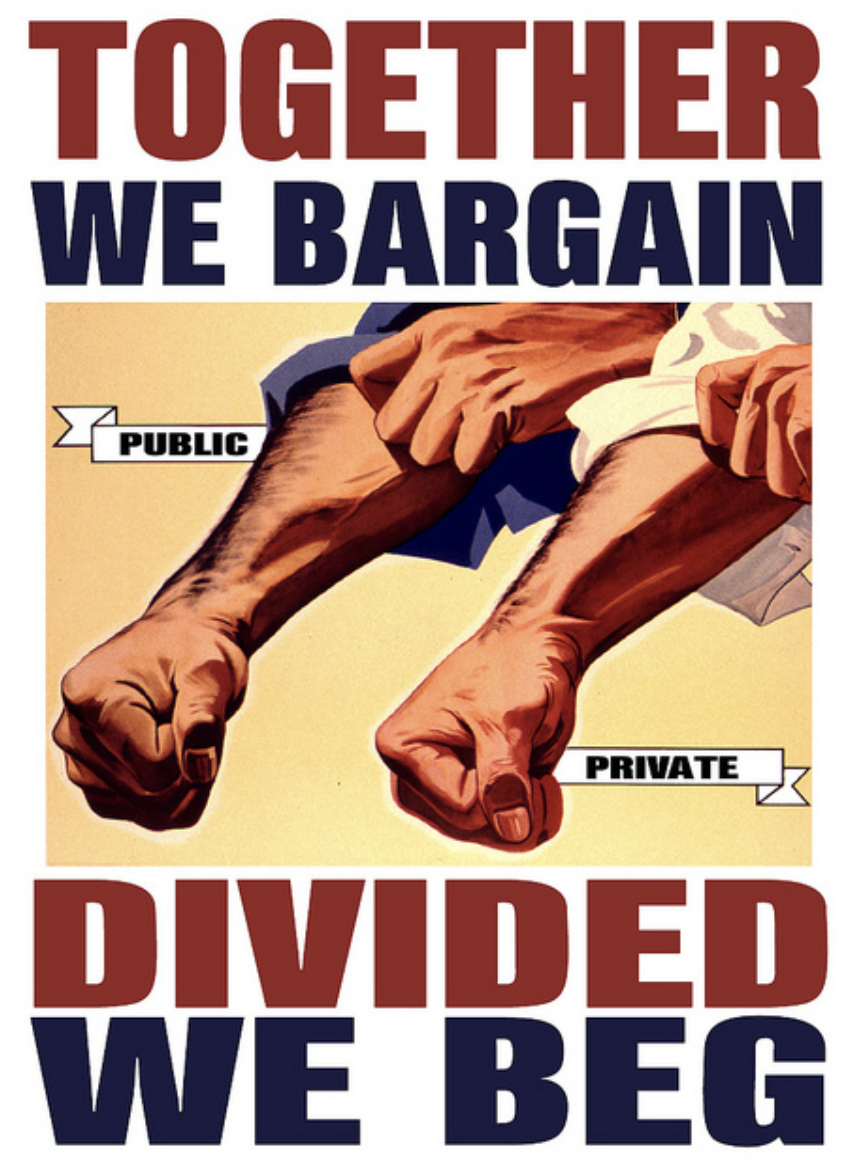
The remaining big trade unions of the working classes, such as Unite, UNISON, GMB and ASLEF are known to have had internal discussions and it is clear that, if they continue to support Labour under its current leadership, they risk becoming complicit in the erosion of worker’s and human rights, and the abandonment of progressive values. The participation of union activists can hugely enrich the new left-wing party, in every sense, giving it political substance and helping it develop roots.

I also know, of course, plenty who prefer to argue for Green Party membership, and see Zack Polanski’s leadership bid as a major opening. The Green Party has many left-wing policies but has never been a coherently or consistently left-wing party. It doesn’t ever present a political platform in class terms like Labour’s 2017 manifesto did: the many versus the few, us versus them. It veers in different directions depending on circumstances. It attracts votes from those who would otherwise vote Labour, but also from those who are more naturally Lib Dem voters. It has long had to contend with ‘Torie-on-bikes’ slurs too.

During Corbyn’s leadership of Labour, the Greens made efforts to attract those who were unhappy with Labour’s leftwards direction. For example, they supported overturning the EU referendum result of 2016. While it made some inroads into urban working-class areas, especially when Will Duckworth was around and working the West Midlands hard, the Green Party continues to have a mainly middle-class base. The kind of working-class towns where Reform poses a serious threat are places where the Green Party has little presence or profile. Nonetheless, I can certainly see value in the idea to form an alliance between the two parties to broaden their appeal and enhance their electoral prospects. This is, after all, what I wanted to do with the ecosocialist leanings in the Wales Green Party and Plaid Cymru (but failed).

This probably cannot go far beyond having loose electoral agreements at local level. Most left-wing activists will generally see the sense in avoiding standing Left and Green candidates in the same council wards. Then again, there will be areas in England where the Greens are already in office – either running a council or junior partners in a coalition – and have proved disappointing. It would be a serious mistake for socialists in those areas to align themselves with the Greens, even on the level of an electoral pact.

Pushing for a more formal alliance from the very beginning is liable to have a dampening effect. It dampens the insurgent, anti-establishment spirit that motivates and energises a new party, pulling it in a more conventional direction. The new party needs to establish its own distinctive priorities and demands. It should not be blunted by association with an established electoral vehicle, especially one of such modest success.

The new party will need to root itself in social movements and trade union battles. One of the issues during Corbyn’s leadership of the Labour Party was the inability to separate electoral and internal party politics and develop a broader strategy for social change. Momentum, the left-wing organisation established to support Corbyn, originated with much talk about social movements, but did very little about it. It became, instead, the battle line for the internal warfare within the party. Those divisions are still there, despite Starmer’s intolerant, anti-democratic purge of the Left. The formation of a new, cohesive and coherent party of the left should remove these counter-productive internal divisions and be a whole lot more democratic and representative too, at every level.

The new party will have to be politically bold and audacious if it is to be a meaningful alternative to the prevailing political zeitgeist. We live in crisis-ridden times. Unsustainable economic models, the climate catastrophe, and a resurgence of imperialist rivalries are, perhaps, the biggest factors conditioning politics today. Crises of vast numbers of displaced people (on a scale yet to be imagined, let alone seen) and wars over water and food are just around the corner.

There has been a patent collapse in trust in established institutions and politics. There is a correspondingly an appetite for anti-establishment politics that thinks big (or is it just loud?) and pitches radical (or is it just different?) and in the absence of a coherent and organised left, it is the hard-right forces that flourish.

A critical area for the new party will be international issues. Foreign policy was Corbyn-led Labour’s weakest link: Corbyn’s own anti-war, anti-militarist politics were never matched by official party policy, with major concessions on NATO, nuclear weapons and more. Anti-imperialism needs to be woven into the fabric of the new party. The ‘welfare not warfare’slogan – rallying opposition to higher military spending at the expense of welfare, public spending, and international aid – will have to be politically central. As vital as this is, it is a particularly hard sell while tyrants like Putin are on the warpath.

The new party needs to be shaped by the energy and ideas of the more than 600,000 people who have signed up for it. It will have to be a deeply democratic party with high levels of participation. This is not merely because democracy is a virtue, but because mass involvement will shape it positively and help overcome the many obstacles it will face.

I am too battle-weary to have the energy to do the hard yards anymore. But if enough of those 600,000 do have it, especially the younger generations with the most to gain from a non-violent revolution in our politics and economics, then who knows what is possible.

Here’s hoping: HERE COME THE YOUNG

I’m a gay Jewish man.

I’m a gay Jewish man, but how would you know that unless I had told you?

I’m a young black lad from South London, but I can’t hide my black skin from you, can I?

Pointing this out has ridiculously gotten Diane Abbott suspended from Keir Starmer’s Labour Party. It is hard to adequately express the contempt I have for Keir Starmer, who is so far up the alimentary tract of Zionist interests that he deliberately conflates such comments with anti-semitism. This is not only a gross insult to a lifelong equalities campaigner who fights racism in all its guises, but also an insult to Jewish people that suffer genuine anti-semitism and value the support of campaigners like Diane Abbott and Jeremy Corbyn. I would go so far as to suggest that the act of suspending Diane Abbott for differentiating different forms of racism is in itself more ant-semitic than anything Diane Abbott has ever said and done.

It is well worth listening to the whole of this 30 minute Reflections episode: https://www.bbc.co.uk/sounds/play/m002fwpv

The supposedly controversial segment starts around the 18 minute mark.

Lindsey German adds additional context, in her weekly Counterfire briefing:

The scapegoating of black MP Diane Abbott was another low point last week. As it happens, I listened to her interview with the BBC’s James Naughtie on Thursday morning before she was suspended. I was totally taken aback a few hours later when Labour decided she had been anti-Semitic in her comments. She was nothing of the sort. She did not repeat her claims of two years ago, which got her suspended for the first time. Instead, she clearly said that anti-Semitism and anti-Traveller racism were real but talked about the differences between those and anti-black racism. She did so in terms of visibility. There should be no doubt about this: stop and search for example is targeted at black and to a lesser extent Asian kids. Black and Asian people suffer abuse on public transport, on the streets and from the police because they are visibly black.

I would go further than this important point: you cannot understand anti-black and Asian racism in this country without looking at the racial division of labour at work and the history of slavery and imperialism to which Britain was central. This brings us on to wider definitions of racism where of course many people on the left differ. But we should understand racism as a material reality which is not simply about moral imperatives. Of course racism is morally wrong and should be opposed in all circumstances. But the arguments of Marxists go further: it is deliberately created and recreated in order to divide working-class people and to dehumanise its victims. It is therefore anathema to any idea of collective action or socialism – and why it tends to break down where people do take collective action to change the world, for example on the Palestine demos.

Our rulers are happy to place opposition to racism under the general rubric of diversity. That in itself doesn’t address the bigger questions: why racism is also connected to class, why some racism is much more pervasive and damaging. Any racism is terrible for those who experience it. But the institutional anti-black racism and Islamophobia in Britain go to the heart of education, policing, employment, and much else. Diane has been attacked for daring to imply there is a hierarchy of racism. But in reality the daily oppression of working-class black and Asian people is much more far-reaching, and deliberately so, throughout society than other racial oppressions.

Diane Abbott is right to point to that.  As a working-class black woman who has experienced racism all her life she should be supported not sanctioned. And it’s about time we had a serious discussion about racism and how it works in society – not least within the Labour Party – rather than outbursts of moral outrage which end up attacking an MP who has received more racist abuse than any other.

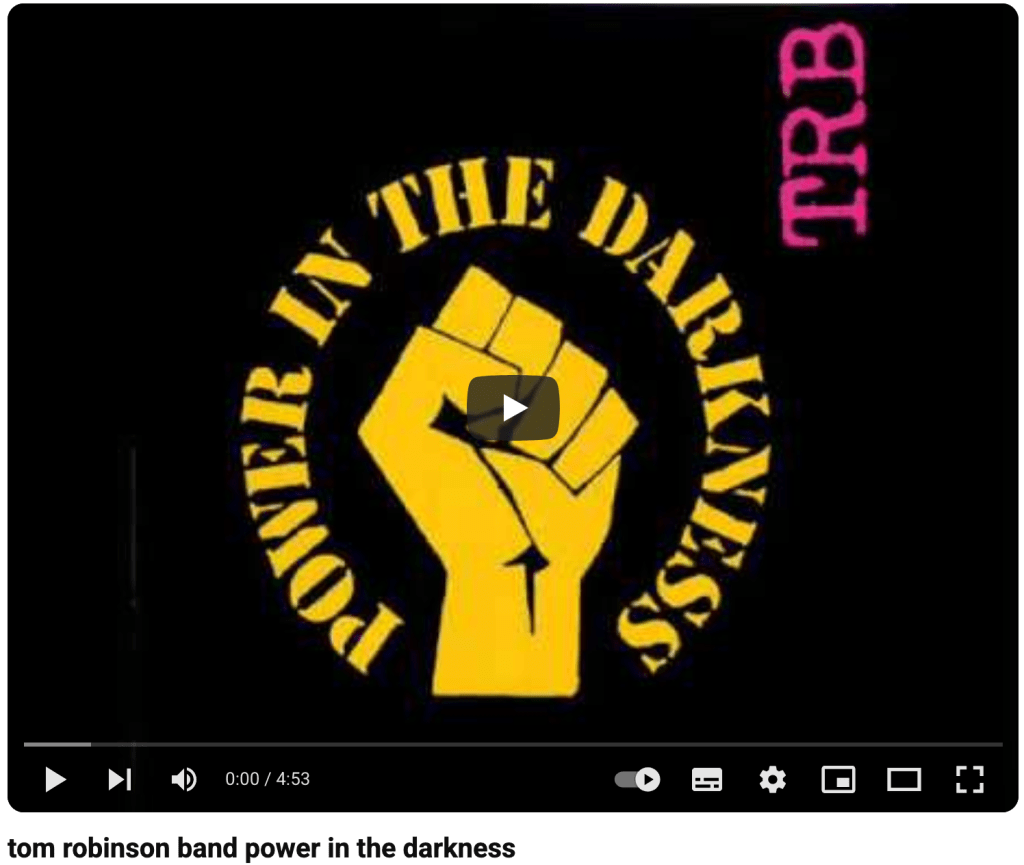
We are living in dark times, but through solidarity and courage we still have Power in the Darkness!

It is hard to believe that this was released in early 1978. I was just 15. The intervening years have seen some progress at times, but we have seen that progress steadily eroded again, and most damningly by this current Labour government!!

Power in the darkness
Frightening lies from the other side
Power in the darkness
Stand up and fight for your rights

Freedom, we’re talking bout your freedom
Freedom to choose what you do with your body
Freedom to believe what you like
Freedom for brothers to love one another
Freedom for black and white
Freedom from harassment, intimidation
Freedom for the mother and wife
Freedom from Big Brother’s interrogation
Freedom to live your own life, I’m talking ’bout

Power in the darkness
Frightening lies from the other side
Power in the darkness
Stand up and fight for your rights

“Today, institutions fundamental to the British system of Government are under attack
the public schools, the house of Lords, the Church of England, the holy institution of Marriage, even our magnificent police force are no longer safe from those who would undermine our society, and it’s about time we said ‘enough is enough’ and saw a return to the traditional British values of discipline, obedience, morality and freedom.
What we want is

Freedom from the reds and the blacks and the criminals
Prostitutes, pansies and punks
Football hooligans, juvenile delinquents
Lesbians and left wing scum
Freedom from the niggers and the Pakis and the unions
Freedom from the Gipsies and the Jews
Freedom from leftwing layabouts and liberals
Freedom from the likes of you”

Power in the darkness
Frightening lies from the other side
Power in the darkness
Stand up and fight for your rights

Hypocrisy breeds hatred – and endangers us all (incl. ‘must see’ video)

First they came for the Communists
And I did not speak out
Because I was not a Communist
Then they came for the Socialists
And I did not speak out
Because I was not a Socialist
Then they came for the trade unionists
And I did not speak out
Because I was not a trade unionist
Then they came for the Jews
And I did not speak out
Because I was not a Jew
Then they came for me
And there was no one left
To speak out for me

Martin Niemöller (1946)

How many of you learned the history of WWII in history at school and wondered how the people of Germany could be fooled into voting for a genocidal maniac like Hitler and then stand by as the biggest genocide in history was perpetrated under their noses?

I know I did, and it probably explains why I have always taken an interest in what our politicians are up to and why I am prepared to take to the streets when they do things I cannot support. But we are living in very dark times again and most of us are simply not doing enough. Most of us are simply doing what most of the German people did in the 1930s and are just getting on with our very comfortable lives while bleating about the ‘cost of living’ and saying nothing about the cost of other people dying and truly suffering.

Evil is a subjective thing, but if we open our eyes and truly witness what is going on around us, all too often in our names, then we will be forced to do something, even if that is a conscious and deliberate choice to do nothing and thereby condone what is going on.

Many people excuse themselves by saying they have ‘democratically’ elected representatives that they are happy to deal with these issues on their behalf. That’s what the German people in the 1930s did.  Things have changed very little. We still allow ourselves to tolerate our politicians’ blatant propaganda, lies, corruption and hypocrisy.

Take our duly elected PM Sir Keir Starmer, for example.

Starmer was knighted in 2014 ostensibly for his work as a human rights lawyer.

In the Fairford Five case, in 2003, his client had intended greater damage than Palestine Action did at RAF Brize Norton: Josh Richards was apparently planning to burn the wheels of American bombers slated to fly from an RAF base to Iraq. Keir argued while his client’s acts were illegal, they were morally justified, and the jury rightly – in my view, and presumably his – refused to convict.

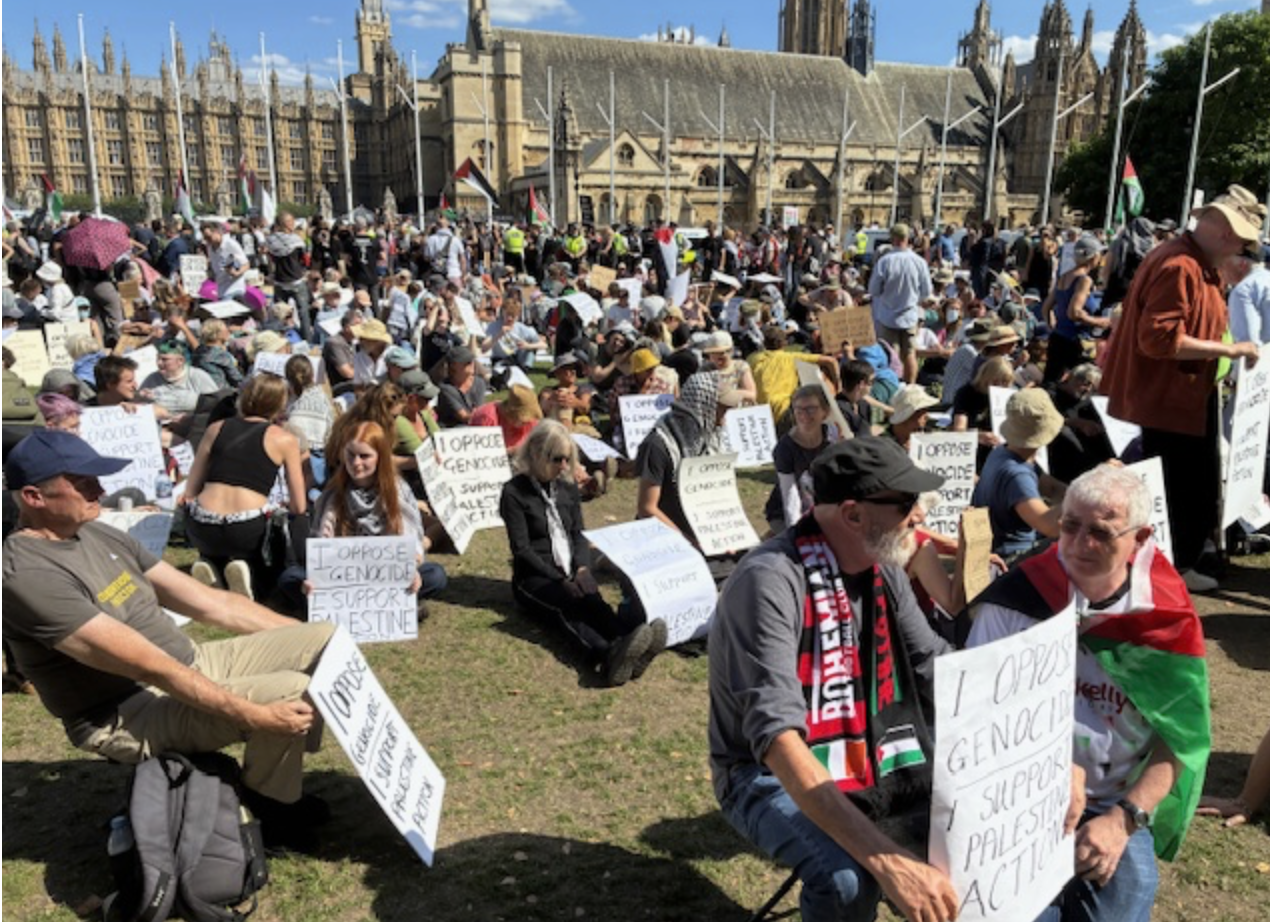
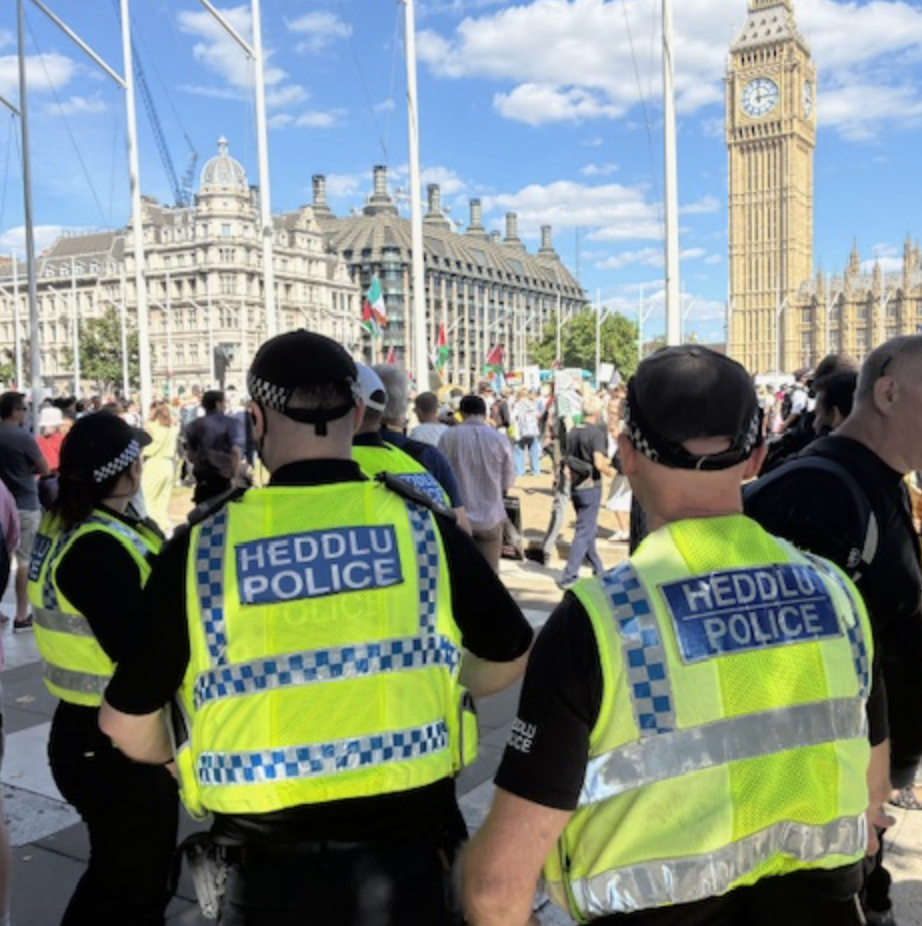
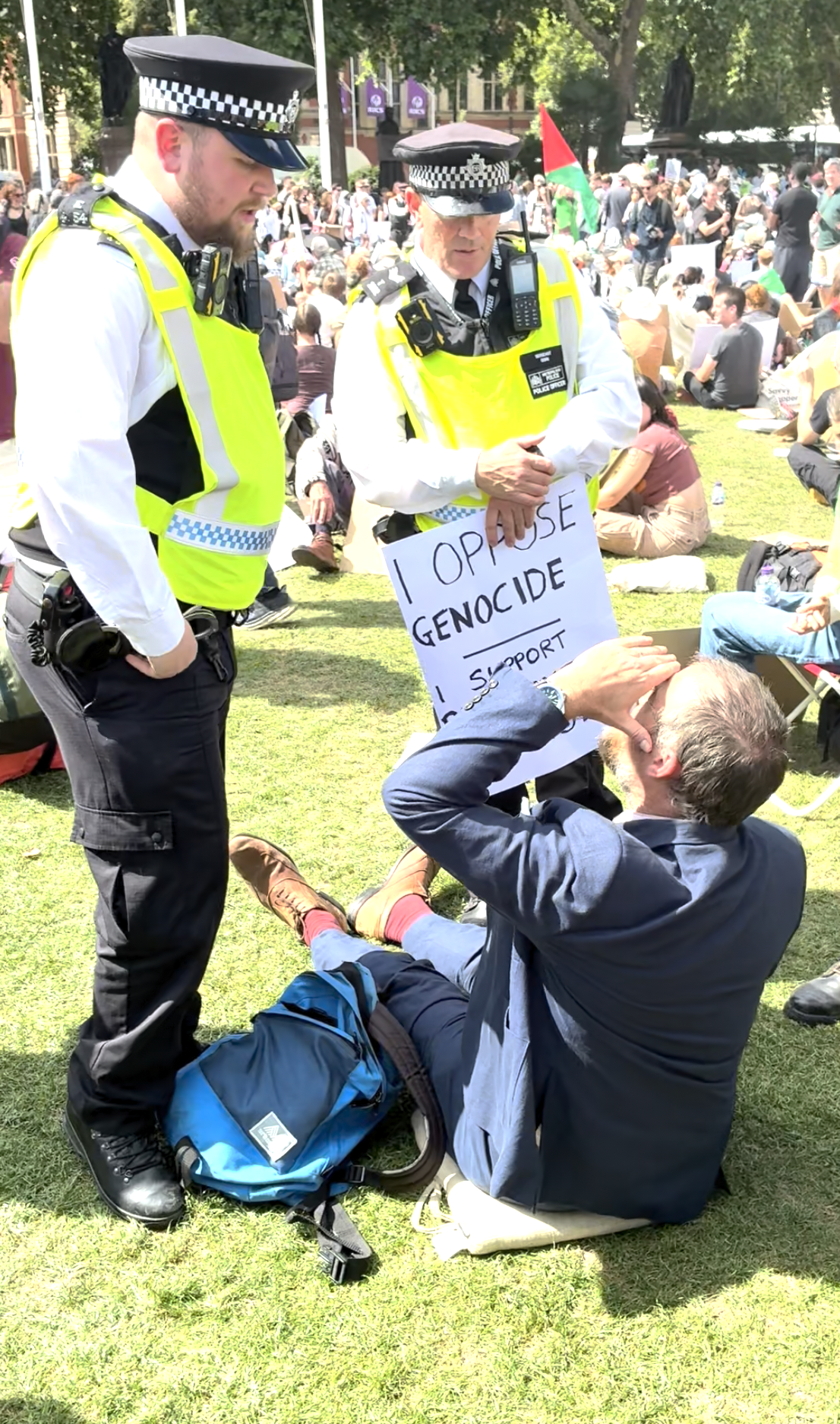
The day that Starmer decided to proscribe Palestine Action was the day I first thought to join them. It’s counterproductive as well as disgraceful! But in theory at least, this would make me a terrorist and could get me 14 years in prison. As it happens, their website appears disabled. I would defy our democratically elected PM in order to support a group of people trying their damnedest to stop a genocide, a genocide being acted out in front of our eyes and with the support of that same democratically elected PM, i.e., in your name!

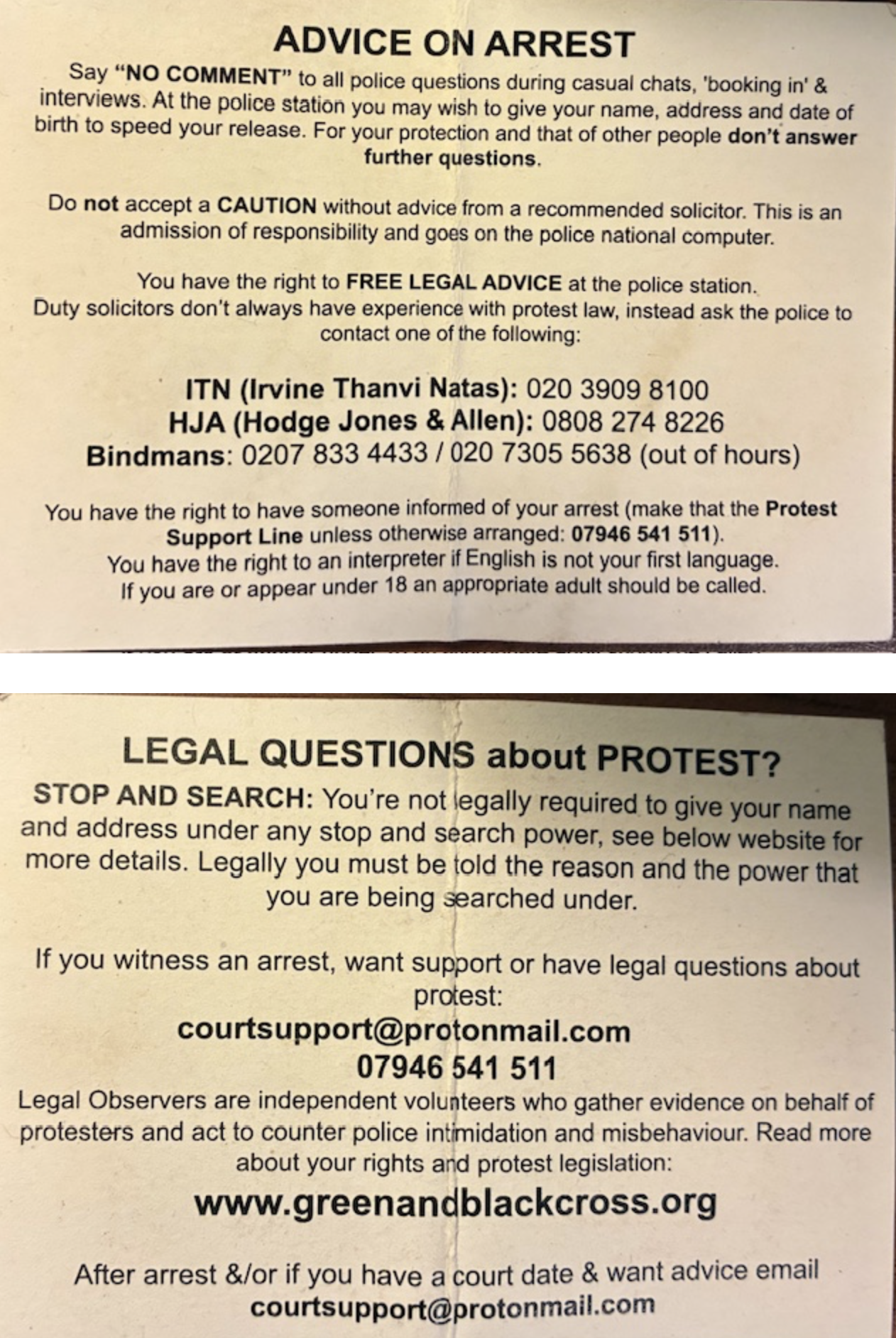
Thankfully, we have decent people, including lawyers with more moral fibre than Starmer, doing their best to hold government and power to account. This is why I am a supporter of Amnesty International and the Good Law Project. If and when I’m arrested, I’ll be contacting them both! (Please join them both if you haven’t already, before it is too late for you too!)

A recent newsletter from the Good Law Project contained these words from civil rights lawyer, Clive Stafford Smith (who worked on behalf of Guantanamo Bay detainees, many of whom had been sold to the US for bounties by a corrupt – but ‘democratically-elected’ Pakistani government):

“Hypocrisy is sometimes spelled with a capital H. Hypocrisy breeds hatred, as it did when the US set up a law-free prison in Guantánamo Bay, purportedly established to protect Democracy and the rule of law. If you are a Labour government, committed to the Human Rights Act, you cannot expect to win votes away from Reform UK or even Suella Braverman by playing the hate card yourself. The Act is designed to protect people – including the children of Palestine – from vilification and even murder. I’d like my colleagues to remember why they became politicians and judges in the first place. As human rights advocates, we should be proud to stand up for those who most need us. It’s our job.”

As humans, we all need to be human rights advocates. They are our rights. But I suspect many of us don’t actually value them enough until ours are tangibly threatened. But we can sit back and watch while others have theirs stripped away, and worse.

And so, to that “must watch” video I promised you. I guess that if you have read this far, there is a chance that you might just watch it. But I am also guessing some of you won’t or will give up on it quickly as it makes you uncomfortable.

It’s a DDN presentation by Chris Gunness, the former chief spokesperson for the United Nations Relief and Works Agency for Palestine Refugees in the Near East (UNRWA). He is a reliable witness. Watch and listen, please.

One last quote for the benefit of those still ‘uncomfortable’ with criticising Israel for fear of being accused of being antisemitic (as has been done to lifelong campaigners against any form of of discrimination, like Jeremy Corbyn and Diane Abbott). This comes from the son of holocaust survivors, Norman Finkelstein:

“The biggest insult to the memory of the Holocaust is not denying it, but using it as an excuse to justify the genocide of the Palestinian people.”

I’ll leave you with these links (click on the logos). I hope to see some of you on the streets some time soon, but supporting those fighting on our behalf is the least we can do, isn’t it?

Why I no longer use AirBnB

After I built Noddfa, my cabin in the woods at Coed Hills, in 2020, I wanted to ensure it was well used and also wanted to earn back some of the cost of building it. AirBnB was the obvious way to go, although I had no idea how popular the cabin would prove to be.

The AirBnB platform proved very easy to use and brought a steady stream of visitors to Noddfa and Coed Hills. Everybody was happy.

It’s funny, isn’t it, that when something makes our lives easier and/or puts money in our pockets, it makes us happy, and to maintain that happiness we turn a blind eye to things that we know are not right.

I was vaguely aware that in 2018 AirBnB had taken a strong ethical stance by delisting about 200 Israeli properties located in the occupied Palestinian West Bank territories. I was therefore happy that I was working with an ethical company prepared to take a stand. No need, I told myself, to do any further due diligence.

What I wasn’t aware of was that AirBnB had subsequently been sued in a class action (on behalf of the delisted property owners) by a law firm in Jerusalem, with the backing of the Israeli government. The essence of the case was that it accused AirBnB of “grave and outrageous” discrimination against Israelis because it still lists homes in some other geopolitical hotspots, such as Tibet and Northern Cyprus.

AirBnB appears to have crumbled under the pressure and reversed its decision to de-list these properties in April 2019. Its attempted compromise was to say that it would now donate all proceeds from rentals in the West Bank to humanitarian organisations. Airbnb released a statement that said:

“We understand the complexity of the issue that was addressed in our previous policy announcement. Airbnb has never boycotted Israel, Israeli businesses, or the more than 20,000 Israeli hosts who are active on the Airbnb platform. We have always sought to bring people together and will continue to work with our community to achieve this goal.”

Less than 6 months earlier it had said it had removed 200 listings because the settlements were at the “core of the dispute between Israelis and Palestinians“. It further stated:

“US law permits companies like Airbnb to engage in business in these territories. At the same time, many in the global community have stated that companies should not do business here because they believe companies should not profit on lands where people have been displaced.”

So, why the decision to backtrack on the ban?

Israeli lawyers filed a class action suit that sought 15,000 shekels (about £3,200) for each host of the 200-ish homes that were due to be deleted from Airbnb’s listings.

Airbnb said that under the terms of a settlement it would “not move forward with implementing the removal of listings in the West Bank from the platform“.

The San Francisco-based company said it would allow listings throughout the West Bank but donate any profit it generated to “organisations dedicated to humanitarian aid that serve people in different parts of the world“.

Airbnb said the same approach would be implemented in the disputed regions of South Ossetia and Abkhazia in the Caucasus.

The announcement was made days after Israel’s Prime Minister, Benjamin Netanyahu, promised to annex West Bank settlements, if he was re-elected. He was.

Credit to AirBnB for its initial stance, I suppose, but it had shown itself to have insufficient backbone to resist the pressure. Meanwhile I continued to profit very nicely from AirBnB, blissfully unaware of what I was tacitly supporting, even while attending numerous pro-Palestine demos and rallies in Cardiff and London, and welcoming guests wearing my West Bank-made keffiyeh and considering joining the now-proscribed Palestine Action group.

It was not until somebody that had booked Noddfa a while ago for later this summer contacted me that I was prompted to wake up. She was asking if she could preserve her booking with me once she deleted her AirBnB account as a result of becoming aware of its complicity in Israeli-occupied West Bank territories. This was because of seeing details of the recent report by Francesca Albanese, UN Special Rapporteur on human rights in Palestine. Click here to read that report.

And here is Frances Albanese talking about it on DDN (Double Down News) just a couple of days ago from me writing this. Click on the image.

It is absolutely appalling that our governments are not holding Israel to account for this blatant genocide being enacted before our eyes. So, it falls to all of us to do what we can, lest we are all complicit too. In a capitalist, neoliberal world with little effective democracy left, our only real way of exerting pressure is in how we choose to spend (and earn) our money.

I try to support the BDS (Boycott Divestment Sanctions) movement as best I can, and have a long list of companies I avoid dealing with lodged in my mind, and do take heed of priority targets when publicised.

Thus, I have now unlisted Noddfa and listed it on Vrbo instead. I’ll get it on FairBnB too once their website stops messing me around! I wasn’t even aware of these alternative platforms until I started actively looking for AirBnB alternatives. I doubt they will generate as much business, but hey, time will tell. They will catch up if AirBnB don’t get their house in order, I hope.

I’ve also tried to use BDS apps like ‘No Thanks’ and ‘No Thank You’ but it sure slows down shopping and it is quite shocking just how vast the connections to Israel are in the business world. I have given up on this to be honest, but my list of big companies to avoid has certainly grown substantially.

The aim of this post is not to preach, not to shame, not to bully anyone into supporting BDS or any other ‘boycotting of companies’ campaign. All I want to highlight is that it is down to all of us to realise that just about every purchase we ever make is a political decision in some way. We support and endorse one choice, at the expense of all the other alternatives, every time we buy anything. That is just as political as choosing who to vote for.

We vote in ignorance and we, of course, buy things in ignorance of all the implications. And then we pretend there was nothing we could do to alleviate the problems and misery in the world. I am as guilty of this and guilty of my consequent hypocrisy. I fully acknowledge this.

But my conscience does get pricked and I do then do some due diligence from time to time. It is a lot better than doing nothing. I’m especially fortunate in that I can afford to make some ethical choices that cost more money. I understand that not everybody can in these ideologically austere times (I did try to warn everybody about Starmer, but Labour members voted for him and the public duly elected him).

Thus, for the foreseeable future, it is no more AirBnB! They have promised me a response to my concerns and passed it up to someone ‘trained to deal with such issues’. Watch this space!

P.S. With the shameful suggestion that Trump could be nominated for the Nobel Peace Prize, there is growing momentum behind the nomination of Francesca Albanese, including from previous winners of the prize.  (Meanwhile Trump sanctions her!).

You can back this nomination by adding your name to this Avaaz petition.

Baltic Lessons – for Wales (part 2) – historical and political lessons

I have recently returned from a lap of the countries surrounding the Baltic Sea; the Scandinavian countries of Denmark, Sweden, Åland Islands and Finland, plus the former USSR Baltic States of Estonia, Latvia and Lithuania (and the Baltic coast of Poland, for good measure).

Perhaps surprisingly, most of these countries I had never visited before, but I had learned quite a bit about them in various contexts over the years. I had developed the impression that these were countries we could, indeed should all learn more from, but was keen to visit and witness life there to challenge my views and see how valid they are.

The lessons to be learned are many and varied, so I am dividing them into 2 blog pieces; the first one was on socioeconomic lessons, especially those pertinent to the Welsh Independence campaign, and this one is on the historical and political lessons especially pertinent to the political situation we are all living in right now.

I will focus this one primarily on the Baltic States of Estonia, Latvia and Lithuania, although their stories are intertwined with those of their Scandinavian/Nordic neighbours.

A BRIEF HISTORICAL SYNOPSIS

As with most nations today, the emergence of their identity goes back to the Middle Ages when tribal groups began to coalesce and settle down in recognisable territories. Thus, the Finno-Ugrians settled in what would become Finland and Estonia; The Livs settled in what is now northern Latvia; and the Samogitians and Aukstaiciai settled in what is most of present-day Lithuania.

 They all shared a collection of Pagan beliefs, worshipping the forces of nature personified as divinities. Their religious and cultural life centred on a large body of folk song, known as the dainos, many of which have survived. They encompass the whole of human life’s connectedness with nature and incorporate a strong sense of ethics.

From the 9th century, the area saw a series of Scandinavian Viking incursions, along with Slavic incursions from the south and east that saw the first attempts to bring Roman Christianity into the region. Around the turn of the 13th Century, the Danes conquered much of Estonia while Germans took the rest along with Latvia and Lithuanian.

Lithuania re-asserted itself successfully in the latter-13th and 14th centuries and became something of an imperial power itself, rejecting Christianity in the process, and taking land that is now Belarus and north-western Ukraine, and reached east as far as Moscow, under Great Prince Algirdas (whose name is prominent around Vilnius and beyond to this day).

One of the consequences of this expansion was the strategic intermarrying with neighbouring nobility that led to the reassertion of Christianity across the region. It led eventually to political union between Lithuania and Poland in the 16th century. Meanwhile Latvia and southern Estonia succumbed to Russian tsar Ivan IV (‘the Terrible’ one) and Sweden took northern Estonia and Finland.

The 17th century saw the region succumb to Russian expansionism, taking Estonia, Finland, Latvia and eating into the Polish-Lithuanian commonwealth, which saw itself partitioned between Russia and Germany and disappearing off the map completely as the result of three partitions in the 18th century.

This situation persisted throughout the 19th century, with attempted Polish and Lithuanian uprisings quashed and met with the intense russification of all the Baltic lands.

The Russian Revolution of 1905 and the arrival of Marxist values led to the peoples of the Baltics regaining confidence to reassert themselves. The three nations started by demanding national autonomy and Lithuania went so far as to demanding an autonomous Lithuanian state based on ethnic boundaries. Russia conceded that Baltic peoples could elect their representatives to the imperial parliament (the Duma) and allowed the consolidation of the national societies and use of the indigenous language in public life and schools again.

The collapse of the German and Russian empires during WWI allowed the Baltic peoples to finally establish independent states in 1918. It was far from plain sailing though. There was a power vacuum that led to fractured politics, the rise of extremism and political violence. Within 10 years all three countries had developed authoritarian systems. Lithuania saw a violently repressive nationalist regime, led by Smetona, eliminate all opposition to become a one-party state. Estonia and Latvia meanwhile were destabilised by exactly the opposite; a multiplicity of parties forming a ceaselessly changing series of weak coalitions.

Thus, when the Russian occupation arrived in 1940, the countries were in no shape to resist at all. There was probably some initial relief in Lithuania when Smetona fled to Germany. But any such relief would soon disappear as the region found itself in the violent grip of Stalin’s sovietisation of the three countries. The Soviet regime imposed manipulated elections that ensured the countries ‘voted’ to join the U.S.S.R.

By the 1970s the Baltic area had emerged as a hotbed of anti-Soviet dissent, with demonstrations and riots beginning to occur. The writing was on the wall (literally at times) and Mikhail Gorbachev understood the zeitgeist. He allowed increasing autonomy, which was especially relished in the Baltic states as they had never reconciled themselves to the loss of their independence, even though it had been politically difficult. It was driven by the strong sense of cultural identity among the indigenous populations. Diplomatic pressure was strong too, as virtually no country in ‘the West’ had ever recognised the incorporation of Estonia, Latvia and Lithuania into the U.S.S.R.

Elections in early 1990 clearly established pro-independence majorities in all three countries. Lithuania declared U.D.I. in March, followed by Estonia in April and Latvia in May. Moscow declared these illegal and asserted pressure in terms of economic sanctions designed to weaken the resolve of the people. There were sporadic outbreaks of violence where Soviet military tried to interfere with or control infrastructure. However, tensions within the corridors of power in Moscow culminated in the disintegration of the U.S.S.R in August 1991, facilitating the acknowledged implementation of the independence of the three Baltic States. By November, the Russians acknowledged the illegality of Stalin’s incorporation of the Baltic states in 1940.

Thus, we enter the short history of these proud nation’s growth as independent nations in the modern world. The 1990s saw the development of new constitutions, new currencies, and new foreign markets for each of the Baltic states. The immediate post-Soviet period, however, was marked by economic instability, and in 1998 a financial crisis in Russia had repercussions throughout the region. Nevertheless, at the beginning of the 21st century, the Baltic states experienced sustained economic growth and closer integration with the nations of the European Union and the North Atlantic Treaty Organization—two groups that all three countries joined in 2004. Their socio-economic success in this period is examined in Part 1 of this two-part blog.

The success of these newly independent nations

Compared to the chaotic nations that had independence in the 1920s and 30s, the Baltic states of today have been shining examples of what can be achieved by small nations gaining freedom and complete independence from much bigger oppressive neighbours. They should inspire and give confidence to nations like Wales, Scotland, Catalonia etc.

One of the keys to their current and ongoing success has been them learning lessons from their Nordic neighbours from the outset of gaining their independence. They set up their constitutions and legislatures along similar lines to them to try and ensure a strong and stable democracy and an economy that could develop mutually beneficial trade links with them and the rest of Western Europe, facilitating entry into the EU and the Eurozone.

There was therefore a strong desire to foster and build upon strategic links between the Nordic and Baltic states, both economically and politically. It has become known as the NB8 and is, in effect, a pact of co-operation between the Baltic Council, that was created by the three Baltic countries in the immediate aftermath of gaining independence on 1990, and the Nordic Council that has existed since 1952. A similar confederation was proposed in the 1920s during the previous period of independence for the three Baltic states, but political instability prevented it happening then. Lithuania was a prime mover for this new pact in the 1990s, recognising the importance of strength in numbers before securing membership of the EU and NATO.

As tensions within the EU (the U.K. has left and others may well follow) and NATO (with Trumpian USA not committed and many others, including me, unhappy with its destabilising expansionism and interventionist approach), it makes sense for nations to foster even greater co-operation, trade and sharing of resources and expertise elsewhere and closer to home.

Thus, the NB8 has developed and become a stronger entity since its inception in 1992. Indeed, a meeting of all the Ministers of Foreign Affairs met in Middelfart in 2000 to reassert the strength of the co-operation programmes (as well as formally adopting the NB8 moniker). A programme of regular conferences for a range of ministers was put in place:

This is backed up with a comprehensive and cohesive network of cooperation activities in political, military, economic, environmental, cultural, and other aspects. Landmark achievements include the 2004 establishment of the ‘NB8 Task Force Against Trafficking in Human Beings’, the 2010 ‘Cross-border Financial Stability Agreement’, and the 2012 ‘NB8 Wise Men Report’ that strengthened co-operation in foreign policy, cyber security, joint energy ventures, and defence.

Were it not for the spectre of Putin’s growing imperialism, the future would look secure and bright for all these countries. But however this pans out, there is a lot of inspiration to be had for other small nations aspiring to independence.

WHAT CAN WALES LEARN?

  • First and foremost, small nations can and do thrive when achieving independence.
  • Once achieved, independence becomes precious and worth fighting to retain. Indeed, countries that achieve independence very rarely ever want to reverse it.
  • On gaining independence, ensure you set up your constitution and legislature properly in order to preserve democracy and maintain stability.
  • It is important to have good friends and neighbours, preferably that you have things in common with.

The dissolution of the U.K. should not be acrimonious and there should be no reason for friendship and co-operation with England to not continue in most things. The Baltic States didn’t have this; it was gaining independence from a violently oppressive entity. It should therefore be easier for Wales and Scotland to make a success of independence.

Even if relations with England were to deteriorate, there is plenty of scope for other alliances, akin to the Nordic Council and Baltic Assembly.

The Celtic League already exists (founded in 1961) to promote and foster a modern Celtic identity and culture across the 6 Celtic Nations of Wales, Ireland, Scotland, Isle of Man, Cornwall, and Brittany. It is primarily focussed on promoting the Celtic languages, buy does also advocate for further self-governance in these nations and ultimately for each to become an independent state it its own right.

The common design features of the Orkney and Shetland flags serves to illustrate the overlapping histories they share with the Nordic countries. Given the fact that Orcadians and Shetlanders are fully aware of this history and have even been agitating about seeing a brighter future in realigning themselves with their Nordic neighbours (Lerwick is much nearer Oslo (@425 miles) than London (@600 miles) after all), it is entirely possible that we could see further overlaps develop in the diagram above.

The overwhelmingly strong message that I have received from both studying and visiting these nations is that there is so much potential to improve our lives in Wales by pursuing independence than from sticking with the status quo. Nothing ventured, nothing gained. Doing the same thing repeatedly and expecting a different outcome is madness (are you still voting Labour in the Assembly elections?).

I may have only spent a very short time in each country on my recent trip, but the places and the people all presented a sense of calm assurance and self-confidence that, despite the challenges of the modern world, they are on the right track.

I saw nobody homeless on the streets, no mindless vandalism, very little litter (other than that created by seagulls), no fly-tipping. You can’t say any of that around our cities, especially Cardiff. I spoke to people paying high taxes but not moaning about it because they feel they are getting good services for their money. Paying a lot doesn’t guarantee quality, but you can’t get quality in the bargain basement.

I spoke to polite, articulate, confident, multi-lingual young people everywhere I went. They are few and far between in Bridgend.

The people of these nations are proudly independent people in proudly independent nations, working together for a better future for everyone.

We can be the same, can’t we?

Baltic Lessons – for Wales (part 1) – Socio-economic lessons

I have recently returned from a lap of the countries surrounding the Baltic Sea; the Scandinavian countries of Denmark, Sweden, Åland Islands and Finland (and Norway recently too), plus the former USSR Baltic States of Estonia, Latvia, and Lithuania (and the Baltic coast of Poland, for good measure).

Perhaps surprisingly, most of these countries I had never visited before, but I had learned quite a bit about them in various contexts over the years. I had developed the impression that these were countries we could, indeed should all learn more from, but was keen to visit and witness life there to challenge my views and see how valid they are.

The lessons to be learned are many and varied, so I am dividing them into 2 blog pieces: this one on socioeconomic lessons, especially those pertinent to the Welsh Independence campaign, and another on the historical and political lessons of small European nations gaining independence.

I am going to divide these nations into two groups:

The Nordic Group = Denmark, Norway, Sweden, Finland (to which can be added Iceland, which I visited not so long ago too)

The Baltic Group = Estonia, Latvia, and Lithuania.

Let me start by presenting some data to give some evidence-based context.

Firstly, let us just acknowledge that these are all small countries in terms of population. The Nordic countries are mostly about twice the size of Wales (Sweden x3, Iceland the size of Cardiff), while the Baltic states are all significantly smaller, with Estonia less than half the size of Wales. The oft heard claims that Wales is too small to thrive as an independent country is patent, nay ridiculous nonsense. (Altogether, there are more than 20 European countries smaller than Wales’ population.)

Right from my earliest days as a geography student, I have always been fascinated by the Nordic countries consistently impressive scores across all sorts of metrics, be it wealth, equality, health, education, happiness etc. Stretching from the same latitudes as Scotland, up into the Arctic Circle and with no major resource advantages over the U.K., I was intrigued as to how they achieved so much. The answer is very straightforward, as it turns out. It is the ‘Nordic Model’.

The Nordic model comprises the  economic and social policies as well as typical cultural practices common in the Nordic countries (Denmark, Finland, Iceland, Norway, and Sweden). This includes a comprehensive welfare state and multi-level collective bargaining based on the economic foundations of social corporatism, and a commitment to private ownership within a market-based economy.

Norway is a partial exception due to it sharing a huge resource advantage with the U.K. in the shape of North Sea oil and gas. Unlike the U.K. though, it hasn’t allowed capitalists to largely piss it up the wall but has nurtured it by creating the world’s largest sovereign wealth fund that secures the country’s wealth and well-being indefinitely. It underpins the large number of state-owned enterprises and state ownership in publicly listed firms.

Although there are significant differences among the Nordic countries, they all have some common traits. All the Nordic countries are highly democratic and all have single chamber legislature and use proportional representation in their electoral systems. They all support a universalist welfare state aimed specifically at enhancing individual autonomy and promoting social mobility, with a sizable percentage of the population employed by the public sector (roughly 30% of the work force in areas such as healthcare, education, and government), and a corporatist system with a high percentage of the workforce unionised and involving a tripartite arrangement, where representatives of labour and employers negotiate wages and labour market policy is mediated by the government. As of 2020, all of the Nordic countries rank highly on the inequality-adjusted Human Development Index, the Global Peace Index, as well as being ranked in the top 10 on the World Happiness Report

Doesn’t it sound wonderful? Yet we have suffered and endured 45 years of unremitting neoliberal capitalism selling off our public assets and services, hollowing out remaining public services and non-stop ‘austerity’ for the poor while the rich accumulate obscene wealth. Is it any wonder that the Shetland and Orkney Islands  have considered abandoning the U.K. and returning to Norway (they were gifted to Scotland by King Christian of Norway in 1472).  An independent Wales could never join Norway, but it could certainly adopt the Nordic Model if it elected the right people.

The Nordic model was originally developed in the 1930s under the leadership of social democrats, although centrist and right-wing political parties, as well as labour unions, also contributed to the Nordic model’s development. The neoliberal zeitgeist across Europe and beyond in the last 45 years has impacted the Nordic countries to an extent, with increased deregulation and expanding privatisation of public services. However, it remains a distinctive approach retaining strong emphasis on public services and social investment.

The Baltic Nations have a very different history, of course.  As any Pole knows, the boundaries of countries in central Europe have been fluid throughout much of history, but the underlying nations have survived and, debatably, the current borders match the national identities of the peoples of Europe as well now as ever. (There remain some nations subsumed into larger states, of course, such as Wales and Catalonia.) The Baltic nations achieved independence from tsarist Russia as part of the violent fall-out of the Russian Revolution around 1917-18. They remained independent until the German occupation in 1940, followed by the Soviet occupation up until 1991.

With the dissolution of the Soviet Union in 1991, the Baltic states looked primarily towards their Nordic neighbours for inspiration as to how to set up their legislatures. They also warmly embraced a Scandinavian initiative to create a Council of Baltic Sea States (CBSS) in 1992. This consisted of all the Nordic group countries (once Iceland joined in 1995), all the Baltic group countries, plus Poland, Germany, and Russia (until it was kicked out after its invasion of Ukraine). There is scope for the largely cultural focus of the Celtic League of Celtic nations to evolve similarly with Welsh and Scottish independence.

Integration with the rest of Western Europe became a major strategic goal for the newly-indepndent Baltic states and all three were in NATO and the EU by 2004.

The statistics reveal that the Baltic states have made rapid progress across most metrics, but still have quite a way to go to emulate the Nordic states. But they seem to remain focussed on achieving this, and surely will if Putin doesn’t throw an enormous spanner in the works.

The Baltic countries have built their economies on innovation and trade. Small and highly connected to global markets, they have developed industries that excel in technology, manufacturing, and services. This focus has allowed them to remain competitive in an ever-changing economic landscape.

Investment in education and infrastructure has played a key part in their growth. Skilled workforces and modern transport systems attract businesses and encourage local entrepreneurship. Governments in the region have supported these efforts through policies that promote transparency and efficiency.

Tourism also contributes to the economic success of the Baltics. Visitors are drawn to the region’s cultural heritage, natural beauty, and vibrant cities. This steady flow of international visitors supports local businesses and boosts national revenues, helping to strengthen their economies further.

The Baltic countries are expected to continue their economic growth in the coming years. According to the European Commission, Estonia’s GDP is projected to grow by 3.5% in 2024, while Latvia and Lithuania are forecasted to grow by 3.3% and 3.8%, respectively. These figures are driven by a combination of export growth and domestic consumption.

Renewable energy is a key area of focus for future development. Lithuania aims to generate 50% of its electricity from renewable sources by 2030, compared to 38% in 2022. Estonia is also expanding its wind energy capacity, with plans to install over 1,000 megawatts of new wind farms by 2025. Investments in green energy are expected to attract funding and create jobs, boosting regional economies.

Technology and innovation are also driving forward-looking initiatives. Latvia’s IT sector grew by 10% in 2022, with exports of IT services reaching €2 billion. Estonia’s start-ups are thriving, with over 1,300 start-ups contributing €1.4 billion to the economy in 2022. These sectors are seen as key to maintaining competitiveness and ensuring steady growth in a rapidly changing global market.

There is nothing here that Wales could not emulate, given the freedom to fully capitalise on its natural and human resources. Independence is not a silver bullet that ensures any sort of success in and of itself. But it is a golden opportunity; a golden opportunity to fulfil a people’s potential that is rarely afforded when subservient to a dominant paymaster.

History can provide us with lessons we can learn as to how to best optimise the opportunities that independence can afford.

URGENT: Ban Israel from Eurovision

This petition is being organised by AVAAZ, and organisation I have long supported. I’ve mixed feelings about petitioning, but it is better than doing nothing and. Avaaz have a decent record of influencing things.

Eurovision banned Russia from taking part in the contest when they attacked Ukraine, but Israel is still participating!

Eurovision starts in just a few days – join me calling on organisers to ban Israel now – sign this urgent petition and share widely: https://secure.avaaz.org/campaign/en/eurovision_no_stage_for_war_crimes_loc/?&utm_source=email&utm_medium=social_share&utm_campaign=54118&share_location=post_action

Children in Gaza are dying of hunger. Now, Israeli officials want to take over all of Gaza, displacing millions. Yet Eurovision is getting ready to give Israel a global stage.

Russia was banned from Eurovision one day after invading Ukraine, but Israel’s participation continues despite the war crimes in Gaza. Now countries like Spain, Iceland and Slovenia are challenging this hypocrisy – and they are not alone. Artists, broadcasters and thousands of people worldwide are speaking out.

We only have days to make our voices impossible to ignore. Join the call to ban Israel from Eurovision while its attacks continue. Add your name now and spread the word!
Over 50,000 people have been killed in Gaza, mostly women and children. The remaining population of Gaza is facing starvation and daily bombardment.

Eurovision officially changed its slogan to “United by Music” and must show that this slogan is more than words. It must mean unity against all forms of violence and oppression against anyone, anywhere.

How many Palestinians will die either from bombing or starvation before Israel’s song airs? That’s why we must make sure Eurovision sends a message to Israel that they cannot commit war crimes and then be welcomed on stage as if nothing happened. Eurovision should be a joyful celebration where countries come together, connected by our shared values to uphold human rights. That’s why countries that do not abide by these basic principles should receive the same treatment: to be banned from the contest while they are committing war crimes. 

Carl Sagan’s ‘Baloney Detection Kit’

Carl Sagan, in The Demon-Haunted World, presents a set of tools for sceptical thinking that he calls the “baloney detection kit”. Sceptical thinking consists both of constructing a reasoned argument and recognizing a fallacious or fraudulent one. In order to identify a fallacious argument, Sagan suggests employing such tools as independent confirmation of facts, debate, development of different hypotheses, quantification, the use of Occam’s razor, and the possibility of falsification. Sagan’s “baloney detection kit” also provides tools for detecting “the most common fallacies of logic and rhetoric”, such as argument from authority and statistics of small numbers. Through these tools, Sagan argues the benefits of a critical mind and the self-correcting nature of science can take place.

Sagan provides nine tools as the first part of this kit.

  1. There must be independent confirmation of the facts given when possible.
  2. Encourage debate on the evidence from all points of view.
  3. Realize that an argument from authority is not always reliable. Sagan supports this by telling us that “authorities” have made mistakes in the past and they will again in the future.
  4. Consider more than one hypothesis. Sagan adds to this by telling us that we must think of the argument from all angles and think all the ways it can be explained or disproved. The hypothesis that then still hasn’t been disproved has a much higher chance of being correct.
  5. Try to avoid clinging obdurately to your own hypothesis and so become biased. Sagan tells us to compare our own hypothesis with others to see if we can find reasons to reject our own hypothesis.
  6. Quantify. Sagan tells us that if whatever we are trying to explain has numerical value or quantitative data related to it, then we’ll be much more able to compete against other hypotheses.
  7. If there is a chain of argument, every link in that chain must be correct.
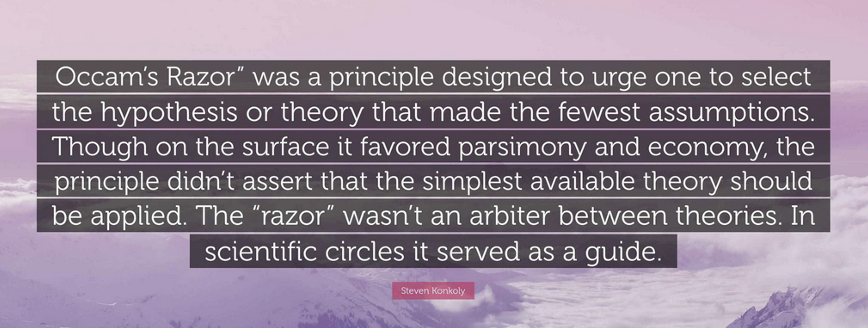
  8. The use of Occam’s razor, which says to choose the hypothesis that is simpler and requires the fewest assumptions.
  9. Ask if a given hypothesis can be falsified. Sagan tells us that if a hypothesis cannot be tested or falsified then it is not worth considering.

Sagan suggests that with the use of this “baloney detection kit” it is easier to critically think and find the truth

Logical fallacies

There is a second part to the kit. This consists of twenty logical fallacies that one must not commit when offering up a new claim.

  1. Ad hominem. An arguer attacks the opposing arguer and not the actual argument.
  2. Argument from authority. Someone expects another to immediately believe that a person of authority or higher knowledge is correct.
  3. Argument from adverse consequences. Someone says that something must be done a certain way or else there will be adverse consequences.
  4. Appeal to ignorance. One argues a claim in that whatever has not been proved false must be true, and vice versa.
  5. Special pleading. An arguer responds to a deeply complex or rhetorical question or statement by, usually, saying “oh you don’t understand how so and so works.”
  6. Begging the question. An arguer assumes the answer and makes a claim such as, this happened because of that, or, this needs to happen in order for that to happen.
  7. Observational selection. Someone talks about how great something is by explaining all of the positive aspects of it while purposely not mentioning any of the negative aspects.
  8. Statistics of small numbers. Someone argues something by giving the statistics in small numbers, which isn’t very reliable.
  9. Misunderstanding of the nature of statistics. Someone misinterprets statistics given to them.
  10. Fallacy of inconsistency. An arguer is very inconsistent in their claims.
  11. Non sequitur. This is Latin for “it doesn’t follow”. A claim is made that doesn’t make much sense, such as “Our nation will prevail because God is great.”
  12. Post hoc ergo propter hoc. Latin for “it happened after, so it was caused by”. An arguer claims that something happened because of a past event when really it probably didn’t.
  13. Meaningless question. Someone asks a question that has no real meaning or doesn’t add to the argument at all.
  14. The excluded middle. An arguer only considers or mentions the two opposite extremes of the conversation and excludes the aspects in between the two extremes.
  15. Short-term vs. long-term. A subset of the excluded middle, but so important it was pulled it out for special attention.
  16. Slippery slope, related to excluded middle (e.g., If we allow abortion in the first weeks of pregnancy, it will be impossible to prevent the killing of a full-term infant. Or, conversely: If the state prohibits…).
  17. Confusion of correlation and causation. The latter causes the former.
  18. Straw man. Caricaturing a position to make it easier to attack. This is also a short-term/long-term fallacy.
  19. Suppressed evidence, or half-truth.
  20. Weasel word. Talleyrand said: “An important art of politicians is to find new names for institutions which under old names have become odious to the public.” 

Sagan provides a skeptical analysis of several examples of what he refers to as superstition, fraud, and pseudoscience such as witches, UFOs, ESP,  faith healing and organised religion.

An alternative to The Demon-Haunted World is the equally accessible Nonsense on Stilts: How to Tell Science from Bunk, by Massimo Pigliucci (2008). One reviewer sums it it up well:

“No one—not the public intellectuals in the culture wars between defenders and detractors of science nor the believers of pseudoscience themselves—is spared Pigliucci’s incisive analysis. In the end, Nonsense on Stilts is a timely reminder of the need to maintain a line between expertise and assumption. Broad in scope and implication, it is also ultimately a captivating guide for the intelligent citizen who wishes to make up her own mind while navigating the perilous debates that will affect the future of our planet.”

Reading and absorbing these two books is possibly the best bit of education you can deliver to yourself. It is sad, but no accident methinks, that every child leaving school is not imbued with this understanding.

Carl Sagan – possibly the greatest influence on my understanding of this world and its place in the universe.

Yesterday (18/04/25), a new article was published that focussed on the last ever television interview of Carl Sagan, back in 1996.

I am always heartened to see anything that brings attention to this great man, given that he has been gone approaching 30 years now. It dawned on me yesterday that he died at the same age that I am now, and this has given me further reason to reflect on the influence that he had on me in my formative years. More on this shortly.

But first, let us look at this article on the Open Culture website yesterday.

It has the link to the interview video at the top:

The Open Culture Foundation is a nonpartisan, nonprofit organisation founded in 2014 to promote open technology as the core to securing digital rights and internet freedom. “Open technology” includes three dimensions: (1) open source software & hardware that can freely used, developed and redistributed by anyone; (2) open data that can similarly be freely used, reused and redistributed by anyone; and (3) open government that promotes transparent, participatory, inclusive and accountable governance.

Hopefully you can see why Carl Sagan’s interview (and work) resonates with them so much. Sagan was a pioneering scientist, focussing on astronomy and astro-physics during the immensely progressive period of scientific advance during and beyond the 1960s; the era of the Apollo missions to the moon and deep-space probes. In this interview and in his seminal, sadly final book, The Demon-Haunted World, he identifies a problem that continues to grow and blight the futures of us all; namely people losing respect and understanding for science and scientists.
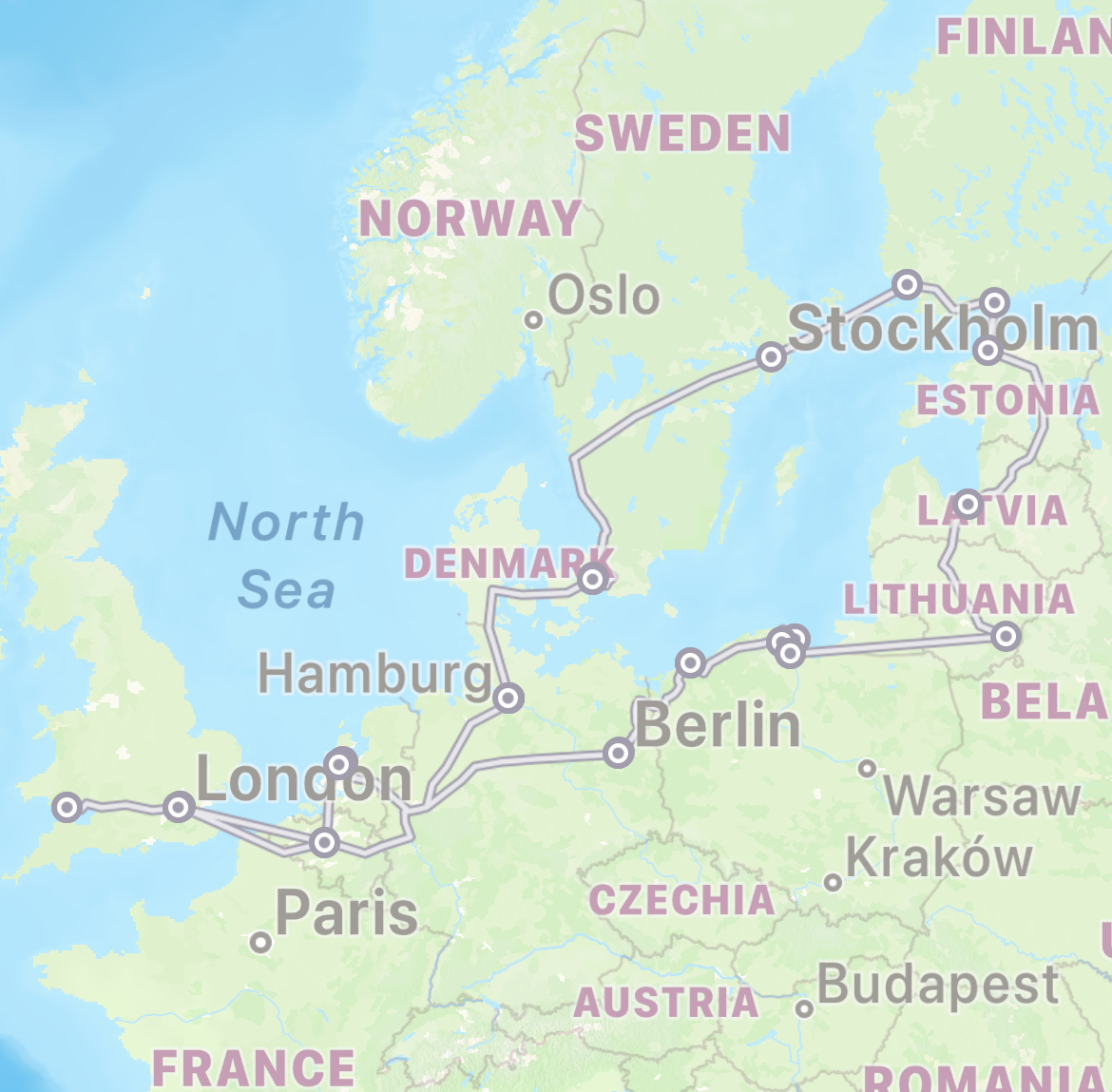
At the end of his life, Sagan cared deeply about where science stood in the public imagination. Sagan sensed that scientific thinking was losing ground in America, and especially worryingly in Congress. During his final interview, aired on May 27, 1996, Sagan issued a strong warning:

We’ve arranged a society on science and technology in which nobody understands anything about science and technology, and this combustible mixture of ignorance and power sooner or later is going to blow up in our faces. I mean, who is running the science and technology in a democracy if the people don’t know anything about it.

And he also went on to add:

And the second reason that I’m worried about this is that science is more than a body of knowledge. It’s a way of thinking. A way of skeptically interrogating the universe with a fine understanding of human fallibility. If we are not able to ask skeptical questions, to interrogate those who tell us that something is true, to be skeptical of those in authority, then we’re up for grabs for the next charlatan political or religious who comes ambling along.

This brings to my mind one of favourite Carl Sagan quotes:

The Open Culture article concludes:

“Nearly 30 years later, we have reached this point. Under the second Trump administration, DOGE has rushed to dismantle the scientific infrastructure of the US government, haphazardly cutting the National Science Foundation, the National Institutes of Health, and NASA. Next, they’re going after leading research universities, intentionally weakening the research engine that has fueled the growth of American corporations—and the overall American economy—since World War II. And they’re replacing scientific leaders with charlatans like RFK Jr. who dabble in the very pseudoscience that Sagan warned us about. Needless to say, our competitors aren’t making the same mistakes. Few serious governments are stupid enough to cut off their nose to spite their face.”

Carl Sagan was not just a brilliant scientist and a thoroughly decent human being, he was a prophet!

First and foremost, for me, he was a brilliant, inspirational communicator of difficult concepts. I first encountered him in my first year at University, when the BBC screened his exquisite series “Cosmos: A Personal Voyage (with Carl Sagan)” (13 episodes, 1980/81).

Thankfully, the whole series is still available to us all. https://archive.org/details/CosmosAPersonalVoyage/1980+Cosmos+(A+Personal+Voyage)+-+Ep+01+The+Shores+of+the+Cosmic+Ocean.mp4

If you are not inclined to watch it all, at least watch the first 10 minutes or so. I wager many of you will be drawn in by his voice and words and end up watching more. But whatever; you will get the feel for what drew me in.

At the very least, spare three and a half minutes to watch this video that presents the essence of my worldview so beautifully.

I find it even more powerful when I read it slowly to myself:

From this distant vantage point [that of ‘an alien scientist newly arrived at the

outskirts of our solar system’ where Voyager 1 took the photograph], the Earth

might not seem of any particular interest.

But for us, it’s different. Look again at that dot. That’s here. That’s home. That’s

us. On it everyone you love, everyone you know, everyone you ever heard of, every

human being who ever was, lived out their lives. The aggregate of our joy and

suffering, thousands of confident religions, ideologies, and economic doctrines,

every hunter and forager, every hero and coward, every creator and destroyer of

civilization, every king and peasant, every young couple in love, every mother and

father, hopeful child, inventor and explorer, every teacher of morals, every

corrupt politician, every ‘superstar,’ every ‘supreme leader,’ every saint and

sinner in the history of our species lived there — on a mote of dust suspended in a

sunbeam.

The Earth is a very small stage in a vast cosmic arena. Think of the rivers of

blood spilled by all those generals and emperors so that, in glory and triumph,

they could become the momentary masters of a fraction of a dot. Think of the

endless cruelties visited by the inhabitants of one corner of this pixel on the

scarcely distinguishable inhabitants of some other corner, how frequent their

misunderstandings, how eager they are to kill one another, how fervent their

hatreds.

Our posturings, our imagined self-importance, the delusion that we have some

privileged position in the Universe, are challenged by this point of pale light. Our

planet is a lonely speck in the great enveloping cosmic dark. In our obscurity, in

all this vastness, there is no hint that help will come from elsewhere to save us

from ourselves.

The Earth is the only world known so far to harbour life. There is nowhere else, at

least in the near future, to which our species could migrate. Visit, yes. Settle, not

yet. Like it or not, for the moment the Earth is where we make our stand.

It has been said that astronomy is a humbling and character-building experience.

There is perhaps no better demonstration of the folly of human conceits than this

distant image of our tiny world. To me, it underscores our responsibility to deal

more kindly with one another, and to preserve and cherish the pale blue dot, the

only home we’ve ever known.

If he were still around today, he would be appalled, but sadly not shocked. As I am. As many of you, no doubt, are too. The question is, what are we going to do about it? The very least that we can all do is take on board the last sentence of ‘The Pale Blue Dot’:

To me, it underscores our responsibility to deal more kindly with one another, and to preserve and cherish the pale blue dot, the only home we’ve ever known.

Amen.

Letter to Trump from Lech Wałęsa

As a student in the early 1980s, I remember being hugely impressed by the astonishing bravery of Lech Wałęsa, who headed up the Solidarity Union that led the Gdansk ship workers out on strike against the then communist regime in Poland. He became an icon and a hero. He, of course, went on to be President of the country.

Last week Lech Wałęsa wrote an open letter to Donald Trump. In case you didn’t see it, the full text of that letter is below.

There is so much I could say about the contempt I hold Donald Trump in, but I hope that all reading this would share that contempt so let me just share Lech Wałęsa’s words and be done, rather than risk my blood pressure.


“Your Excellency, Mr. President,

We watched your conversation with President Volodymyr Zelensky with fear and distaste. It is insulting that you expect Ukraine to show gratitude for U.S. material aid in its fight against Russia. Gratitude is owed to the heroic Ukrainian soldiers who have been shedding their blood for over 11 years to defend the free world’s values and their homeland, attacked by Putin’s Russia.

How can the leader of a country symbolizing the free world fail to recognize this?

The Oval Office atmosphere during this conversation reminded us of interrogations by the Security Services and Communist court debates. Back then, prosecutors and judges, acting on behalf of the communist political police, told us they held all the power while we had none. They demanded we stop our activities, arguing that innocent people suffered because of us. They stripped us of our freedoms for refusing to cooperate or express gratitude for our oppression. We are shocked that President Zelensky was treated similarly.

History shows that when the U.S. distanced itself from democratic values and its European allies, it ultimately endangered itself. President Wilson understood this in 1917 when the U.S. joined World War I. President Roosevelt knew it after Pearl Harbour in 1941, realizing that defending America meant fighting in both the Pacific and Europe alongside nations attacked by the Third Reich.

Without President Reagan and U.S. financial support, the Soviet empire’s collapse would not have been possible. Reagan recognized the suffering of millions in Soviet Russia and its conquered nations, including thousands of political prisoners. His greatness lay in his unwavering stance, calling the USSR an “Empire of Evil” and confronting it decisively. We won, and today, his statue stands in Warsaw, facing the U.S. Embassy.

Mr. President, military and financial aid cannot be equated with the blood shed for Ukraine’s independence and the freedom of Europe and the world. Human life is priceless. Gratitude is due to those who sacrifice their blood and freedom—something self-evident to us, former political prisoners of the communist regime under Soviet Russia.

We urge the U.S. to uphold the 1994 Budapest Memorandum, which established a direct obligation to defend Ukraine’s borders in exchange for giving up nuclear weapons. These guarantees are unconditional—nowhere do they suggest such aid is a mere economic transaction.

Signed,
Lech Wałęsa, former political prisoner, President of Poland “

From: politicalarena.org/2012/01/14/lech-walesa-unveils-reagan-statue-in-warsaw/