
Claims that it’s getting harder for scientists not to believe in God are right-wing Christian propaganda. Discuss.
As part of the research that I am undertaking into human spiritual beliefs, I have been undertaking a series of interviews with people from a range of backgrounds and perspectives.
The most recent interview I did was with a devout Christian physics teacher. These are always fascinating discussions; I have spoken to other religious scientists in the past. I’ll save the full details of these discussions for the book I hope to publish but save to say there was one particular assertion I encountered in this discussion last week that chimed with a few other things that I had heard and read recently.
This physics teacher asserted that the more he grew to learn about physics and its order, laws and patterns, the surer he was that there is a creator god behind it all.
Lo and behold, yesterday, just a few days after that discussion, I stumble across (or is it divine intervention?) an article published online from The Spectator entitled “It’s getting harder for scientists not to believe in God”.
It is essentially an advertorial by its author, Michel-Yves Bolloré, for his new book, ‘God, The Science, The Evidence’ co-authored with Olivier Bonnassies, which I have ordered. I have ordered it because I am intrigued to see if there is actually any substance behind the assertions made in the article that I will shortly dissect for you.
But first some due diligence. I regularly point out to people the importance of checking out sources and looking for hidden agenda. It is also critical to be able to evaluate evidence presented for its rigour and authenticity. And remember, as the great Carl Sagan asserts, extraordinary claims require extraordinary evidence.
First of all, The Spectator as a source. First published in 1828, it has legitimate claims to be the oldest surviving magazine in the world. It is politically conservative, avowedly Tory even, given that editorship of the magazine has often been a step on the ladder to high office in the Conservative Party in the United Kingdom; its past editors include Boris Johnson (1999–2005) and other former cabinet members Ian Gilmour (1954–1959), Iain Macleod (1963–1965), and Nigel Lawson (1966–1970). The former Conservative MP Michael Gove took over from Fraser Nelson as editor on 4 October 2024.

Right-wing populists like Gove, Johnson and Farage have all seen the value of cosying up to Christian churches, aping Trump and his MAGA followers in the USA, as it is another lever to pull in divisive identity politics and scapegoating that is the bedrock of their approaches to building support. It is also why they like to undermine scientific expertise and consensus that undermines their objectives. Climate change scepticism, anti-vaccination propaganda, abortion and fertility rights are all examples that come to mind. Let us not forget that Michael Gove famously said, “I think the people of this country have had enough of experts”.
So, let us now consider the author of this article and book that Gove has platformed in The Spectator. Who is this man asserting it’s getting harder for scientists not to believe in God, Michel-Yves Bolloré?
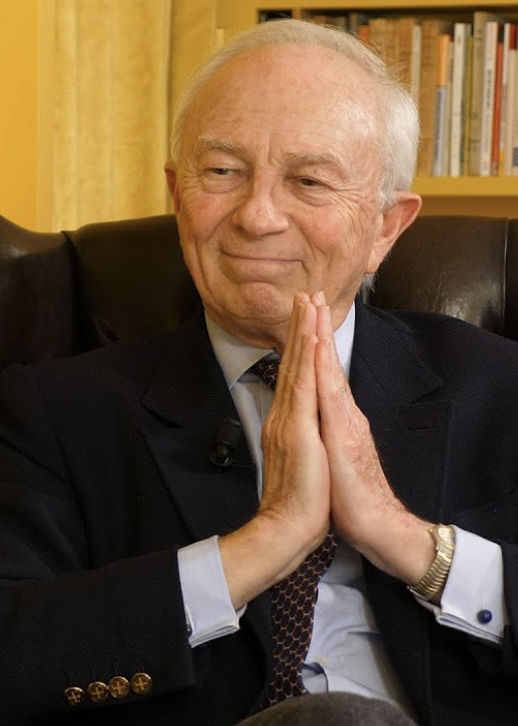
Michel-Yves Bolloré is a French engineer, entrepreneur, and author known for his work in both industrial innovation and education. He has a strong academic background, holding degrees in computer science, applied mathematics, and business management. Michel-Yves Bolloré is part of the prominent Bolloré family, known for their significant wealth and influence in France. The family’s fortune primarily stems from the Bolloré Group, a conglomerate involved in logistics, media, and telecommunications. The family’s net worth is estimated at $8 billion. Michel-Yves Bolloré’s wealth is intertwined with the family’s business ventures and his own entrepreneurial efforts, contributing to their status as one of France’s wealthiest families. He is a lifelong Catholic. He has lived in London since 2011. He sponsored several Catholic academy schools in London during Gove’s tenure as Education Secretary.
Having presented the factual background to those responsible for this article, I will leave it to you to judge the credentials of the author and publisher, and whether they may have agenda being served by it.
Time to turn to the article itself. I’ll copy a paragraph at a time, in bold italics, then give my evaluation of it.
Many Baby Boomers are sceptical about God. They think that believing in a higher power is probably incompatible with rationality. Over the last few centuries, religious belief has appeared to be in rapid decline, and materialism (the idea that the physical world is all there is to reality) has been on the rise, as the natural outcome of modern science and reason.
Baby Boomers are generally regarded as people born between about 1945 and 1965, so aged about 60 to 80 at the time of writing. Bolloré was born in 1945 and I was born in 1962. We are both Baby Boomers. What does the last census of 2021 reveal about generational differences in having “No religion” (the census wording that would cover people sceptical about God)?

On this population pyramid, Baby Boomers would be aged 56-76 for the coloured bars and 46-66 for the 2011 outline. It is patently clear that currently the generation with the greatest religious scepticism is the 20-40 age group in 2021, whereas the Baby Boomers and their elders are the least likely to report having ‘no religion’ with this being even more strongly so now than ten years previously. The ONS reports that in 2021 18.6% of the population was over aged 65, but only 8.8% of those claiming ‘no religion’ were over aged 65. Overall, 37.2% of respondents claimed ‘no religion’ (a rise 12 % points in 10 years). Meanwhile Christianity fell below 50% for the first time ever, to 46.2% (a fall of 13.1% points in 10 years).
So, it is unclear why Bolloré chooses to pick out Baby Boomers scepticism about God. The majority of younger people are sceptical, whereas the majority of Boomers and older are apparently not!
Perhaps it is something to do with so many eminent and well-known sceptics coming from our approximate generation – Sagan, Dawkins, Dennett, Hitchens, Harris et al. Certainly, I wouldn’t contest the assertion that religious belief has appeared to be in decline, most assuredly in Europe at least, over the last few centuries. That is why we called it The Age of Enlightenment, after all!

As for ‘materialism’, I’m not sure that Bolloré properly understands the term. He says it is the idea that the physical world is all there is to reality. In actual fact, it maintains that all things, including mental states and consciousness, are results of material interactions. According to philosophical materialism, mind and consciousness are caused by physical processes, such as the neurochemistry of the human brain and nervous system, without which they cannot exist.
In other words, matter is the fundamental substance of nature. It holds that the so-called spiritual realm should be knowable and understandable if it exists. It does not preclude science eventually being able to understand it. Not so long ago, quantum physics was the stuff of supernatural fantasy and fiction. Bolloré has a twisted take on such scientific breakthroughs though, as we shall see shortly.
It is not entirely clear from the article (but maybe clearer in his book) just how science informs his worldview alongside his Catholicism, but it is likely be some type of monistic idealism; a philosophical system that emphasises the primacy of a single, unified reality, often identified as the Absolute or Nature, rather than a multitude of separate entities. It asserts that all existence is fundamentally mental or spiritual in nature. In other words, it usually asserts that consciousness is the fundamental substance of nature, with God being the supreme conscious entity that controls the universe.
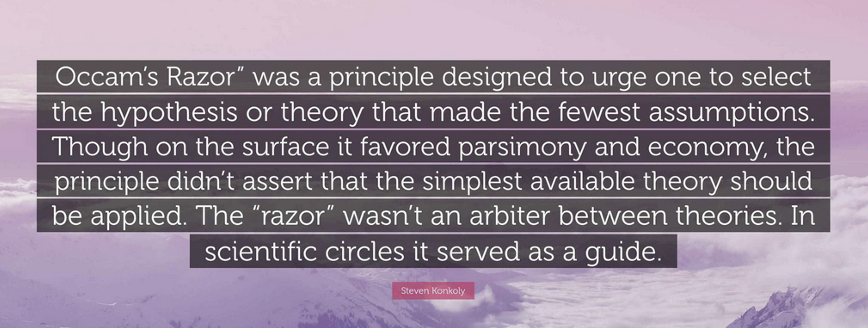
I’ll allow you to evaluate this dichotomy, while reminding you of Occam’s Razor; a philosophical principle that suggests when faced with competing explanations for the same phenomenon, the simplest one—requiring the fewest assumptions—should be preferred.
But if this scepticism is common among my older generation, times are changing. As we come to the end of the first quarter of the 21st century, the tables are turning – with scientific discoveries making people question the very things they took for granted and thought rational. Perhaps surprisingly, Gen Z are leading the way, purporting that the belief in God’s existence might not be just a trend on the rise – it’s a rationally sound conviction, in line with their attitude towards science and religion.

I think we have established that Bolloré is mistaken in his assertion that scepticism is rife among Baby Boomers and the older generations. So, what about his perceptions of Gen Z? Gen Z covers people born from about 1995 to about 2010, i.e., currently about 15-30 years old. They are the generation considered the first to grow up with the internet and digital technology as a significant part of their daily lives. Contrary to Bolloré’s assertion, the census data above shows this generation to be amongst the most likely to have ‘no religion’. This is a bit simplistic though.
Various studies, including from Humanists UK, reveal that Gen Z have distanced themselves from traditional religious affiliations, but that there is a growing interest in spirituality and the belief in some form of god. This apparent open-mindedness leads them to be open to a much wider range of ideas and influences than us Baby Boomers. This is, of course, not always a good thing as it makes them vulnerable to all manner of conspiracy theories and bad advice. This is why critical thinking skills need teaching from an early age and should be as central to the curriculum as the 3’R’s.
While the findings of Copernicus, Galileo, and Darwin created the impression that the workings of the universe could be explained without a creator God, the last century has seen what I call ‘The Great Reversal of Science’. With a number of break-through scientific discoveries – including thermodynamics, the theory of relativity, and quantum mechanics, plus the Big Bang and theories of expansion, heat death, and fine-tuning of the universe – the pendulum of science has swung back in the opposite direction.
Copernicus’s work that proposed the heliocentric model, placing the Sun at the centre of the universe rather than the Earth, was published shortly before his death in 1543, meaning he escaped retribution from the R.C. Church, but his great work ‘De Revolutionibus’ was placed on the Church’s ‘Index of Forbidden Books’.

Ninety years later, Galileo publicly advocated for the Copernican theory and this led to him being tried by the Roman Inquisition in 1633, and found “vehemently suspect of heresy”. Initially imprisoned, this was commuted to house arrest, under which he remained until his death in 1642.
As for Darwin, there has always been obvious resistance to evolutionary theory from Bible funda(mentalists) that take Bible accounts literally despite the glaringly obvious flaws. The Catholic Church has generally accepted the theory of evolution as a valid scientific explanation for the development of life and sees no intrinsic conflict between faith and science. In essence, God has always remained the fall-back position to explain what science cannot explain. Thus, we saw the emergence in the 19th century of the “God of the Gaps” concept. https://en.wikipedia.org/wiki/God_of_the_gaps This is a theological concept that emerged in the 19th century and revolves around the idea that gaps in scientific understanding are regarded as indications of the existence of God. This perspective has its origins in the observation that some individuals, often with religious inclinations, point to areas where science falls short in explaining natural phenomena as opportunities to insert the presence of a divine creator.

Every big scientific breakthrough, some listed by Bolloré, does not see any sort of ‘reversal of science’, but simply a re-assertion that God is still a relevant and an available answer to questions still out of reach of science. The phrase “reversal of science” implies a misunderstanding of scientific progress, as scientific theories evolve based on evidence rather than simply reversing previous conclusions. A non sequitur occurs when a conclusion does not logically follow from the premises, which can happen if one assumes that scientific change is merely a reversal rather than a complex process of discovery, validation and re-evaluation.
More and more convincingly, and perhaps in spite of itself, science today is pointing to the fact that, to be explained, our universe needs a creator. In the words of Robert Wilson, Nobel Prize winner for the discovery of the echo of the Big Bang in 1978, and an agnostic: ‘If all this is true [the Big Bang theory] we cannot avoid the question of creation.’
Sure, science cannot avoid the question of what created the Big Bang, but there is an enormous leap from this to any sort of conclusion that there was a creator that in any way resembles most people’s idea of God.
Bolloré is being disingenuous to suggest that science is struggling for ideas about what came before the Big Bang. Some theories propose that the universe existed in a different state prior to the Big Bang, possibly involving a cold, dark universe or a phase of cosmic inflation that preceded the hot Big Bang event. This BBC Sky at Night Magazine article presents a few more ideas currently being explored.
But I struggle to find many reputable scientists that seriously propose a creator God as the explanation. Why is that? Science does not inherently reject the idea of a creator God; rather, it focuses on explaining the natural world through empirical evidence and does not address supernatural claims. ‘Supernatural’ simply means ‘I believe this despite the lack of any verifiable evidence’. If these phenomena exist, they are natural and should be able to be evidenced eventually. The work of microbes was deemed supernatural until we could see them. ‘Alternative medicine’ that works is simply medicine.
Many scientists and religious individuals find ways to reconcile their beliefs with scientific understanding, suggesting that science and faith can coexist. Science is simply a methodology to interrogate evidence and come to reliable conclusions. Faith is simply an attitude of mind towards things that cannot be evidenced (yet). They are clearly not mutually exclusive.
It is true that the existence of God cannot be proved incontrovertibly. While absolute proofs only exist in the theoretical domains of mathematics and logic, relative proofs are what we normally deal with, and what is generally considered ‘evidence’ in everyday life. If, like Richard Dawkins, we take a rational and scientific approach to the existence or non-existence of God, then we should only be persuaded by multiple, independent, and converging pieces of evidence.
Not much to argue with here other than some semantics. I would dispute that it is true that the existence of God cannot be proved incontrovertibly. Why can’t it? But it is true that there has been no verifiable evidence of God’s existence to date.
Yet again, Bolloré misappropriates words. What is considered ‘evidence’ in everyday life simply is not the same thing as what is regarded as valid evidence in scientific enquiry. In everyday life, and indeed even in courtrooms, casual and/or distant recollections, hearsay, gossip and circumstantial guesswork may all be deemed evidence. Most would agree that such things are weak evidence, but they are relied upon in the absence of better evidence, or the ability to understand better evidence, especially when there is a motive to come to a certain judgement.
There is, of course, such a thing as bad science too, undertaken without due attention to the scientific method, often with motives to manipulate findings. Good scientists will not jump to conclusions about multiple, independent and converging pieces of evidence. They will use this evidence to construct testable hypotheses and then seek to replicate and augment the evidence that supports the hypothesis with a high (but never absolute) degree of confidence. If God exists, then it is down to the proponents of the God hypothesis to produce the evidence. That evidence can then be interrogated and either corroborated or rejected accordingly. It is an impossible, illogical task for anyone to prove that something that doesn’t exist indeed doesn’t exist, as explained eloquently by Bertrand Russell with his Cosmic Teapot analogy.

Scientists across many fields of inquiry are now coming round to the idea that the thermal death of the universe and the Big Bang are strong evidence that our cosmos had an absolute beginning, while the fine-tuning of the universe and the transition from inert matter to life imply (separately) some more extraordinary fine tuning, showing the intervention of a creator external to our world.
Scientists across which fields of enquiry? Relevant fields of enquiry? ‘Fine tuning’ is the personification of physics processes that we are only just beginning to grapple with. None of this ‘shows’ the intervention of a creator at all. The key word that undermines this assertion is “imply”. Implications, at best, suggest things. They never “show’ anything conclusive.
With sets of converging evidence from different scientific disciplines – cosmology to physics, biology to chemistry – it is increasingly difficult for materialists to hold their position. Indeed, if they deny a creator, then they must accept and uphold that the universe had no beginning, that some of the greatest laws of physics (the principle of conservation of mass-energy, for example) have been violated, and that the laws of nature have no particular reason to favour the emergence of life.
“Converging evidence” of what exactly? Maybe I need to read the book to find out what this vague assertion is getting at. Upholding that the universe had no beginning is a possibility that has not been discounted. Anything infinite is difficult for ephemeral lifeforms (all life) to grasp I guess. And let us suppose for a moment that there was a creator God; does it necessarily still exist? Who or what created that God? What was it doing for the eternity before it came up with this universe? Why did it create a single species ‘in his likeness’ on one insignificant pale blue dot in the vastness of the cosmos? It raises way more questions than it answers, and I think Occam’s Razor should come into play again.
Weighing up the evidence on each side of the scale is a matter of intellectual rigour, and the question ‘Is there a creator God?’ is one we should all be asking ourselves, with serious implication for every one of us. What’s intriguing is that it’s actually the youth, who you’d think would be more preoccupied with more mundane and practical concerns, that are leading the way. Last August, a YouGov survey revealed that belief in God has doubled among young people (aged 18-24) in the last four years, with atheism falling in the same age group from 49 per cent in August 2021 to 32 per cent. Interpreting the data, Rev Marcus Walker, rector of St Bartholomew the Great in the City of London, mentioned that young people ‘seem really interested in the intellectual and spiritual side of religion’.
Seems a bit rich for Bolloré to invoke intellectual rigour, given what we have established so far! Weighing up the evidence available on the question ‘Is there a creator God?’, however, is not that challenging. It took a while to come, but there is the typical threat of judgement by a vindictive Catholic God in the words “with serious implication for every one of us” if we dare deny his existence (it’s always a ‘him’ in the Catholic imagination). A lack of evidence becomes a call to faith; a faith in that all-powerful, omnipotent, loving creator of all things bright and beautiful (as well as childhood cancer, humans imagining thousands of different deities, and Satan), who refuses to show himself but needs his ego massaging regularly lest he condemn us to everlasting hell.
I really can’t be bothered to interrogate his data in this paragraph, save to say I used the ONS Census data, a survey of the entire adult population of the UK. He uses a YouGov survey. These usually comprise a few thousand people that have signed up to do regular surveys emailed through to them regularly.
I’m not going to disagree with Rev Walker though. It is indeed my experience that many young people are interested in the intellectual and spiritual side of religion, as I am! It is fascinating stuff. But I hope he doesn’t think that this will translate into a reversal of the decline in Christianity in the UK.
Another report from the think tank Theos revealed that Gen Z have a more balanced perspective towards the relationship between science and religion. Over one in two young people think religion has a place in the modern world, and the majority (68 per cent) of Gen Z respondents believe that you could be religious and be a good scientist.
Hmm.. Theos! Founded in 2006 with the support of the then Archbishop of Canterbury, Rowan Williams, and Archbishop of Westminster, Cormac Murphy-O’Connor, it is avowedly ecumenical but committed to traditional Christian creeds. It has strong associations with conservative Christian organisations and has been criticised for a lack of transparency in its funding. Wikipedia states that Theos is a project of, and core funded by, the British and Foreign Bible Society. This charity somehow funds translation, production and distribution of free bibles around the world, as part of the United Bible Societies network. The funding of all of this is very opaque!
And just for clarity (not offered by Bolloré), the report mentioned in this paragraph is not exactly ‘another report’, but a report on the findings of the YouGov survey mentioned in the previous paragraph, which was commissioned by none other than the British and Foreign Bible Society.
That about half of young people think religion has a place in the modern world is a classic example of question framing. You only have to watch the daily news, currently dominated by two Abrahamic religions (i.e., worshipping the same God) wanting to annihilate each other in Palestine to see that religion very much occupies a place in the world today. As in this example, it is not a pretty place much of the time. Had the question been framed as ‘should the major world religions of today have a place in the world of tomorrow?’ we might well have seen a very different response.
That 68% of Gen Z think you can be religious and a good scientist at the same time is disappointingly low if anything. I think we established earlier that these two intellectual positions are not mutually exclusive. We have all surely received great medical care from great medics that have migrated here from all corners of the world, with many patently adhering to many different creeds, superficially at least. I remember being under the orthopaedic care of Dr JPR Williams (iconic Wales rugby full-back of the 1970s) in Bridgend, and he always had a Bible handy. The only time I saw him use it though was when he used it to whack and disperse a ganglion on my ankle!

Far from painting a picture in which the number of people believing in God is dwindling (which has been the usual narrative in the last century), this research suggests we are at the dawn of a revolution – one in which belief in God is not simply supported by science, but embraced by younger generations, too.
Given what we know of Bolloré’s background and beliefs, I am led to believe that he is deluding himself into believing that young British people will flock back to the Catholic church. There has been evidence of higher attendances in Catholic Churches, with the increase being in young adults, but these have been primarily from east European migrant workers of strictly Catholic upbringings. It saw the rise of Polskie Sklepy (Polish shops) in every town too. They have largely disappeared quicker than they arrived thanks to Brexit. The claim that ‘belief in God is [now] supported by science’ is the sort of ridiculous claim we hear on a daily basis from President Trump. I’ll say no more than that.
In general, Gen Z seems to have positive and hopeful view of science’s impact on the world. According to recent figures, 49 per cent of Gen Z trust scientists and academics the most to lead global change, far ahead of politicians (8 per cent) and world leaders (6 per cent) (WaterAid, 2025). And yet, they are still spiritually curious: their trust in science doesn’t preclude them from wanting to explore spirituality and contemplating something bigger than our universe.
Hallelujah! Nothing contentious here (other than relying on data from WaterAid on such matters, not that I have anything against WaterAid). It appears that 0% thought religious leaders should lead global change. Strange that Bolloré failed to notice that.
Could they be the ones showing older generations a new way forward, one in which religion and science can coexist? And, more to the point, we now have the scientific evidence that would support a big shift in perspective. In the words of 91-year-old Carlo Rubbia, Professor of Physics at Harvard and Nobel laureate: ‘We come to God by the path of reason, others follow the irrational path.’
There is nothing new in religion and science coexisting. They have been doing it for centuries; most certainly throughout the entire lives of us Baby Boomers. The evidence that Gen Z is more curious about spirituality and matters currently beyond the scope of science is neither surprising (in this age of ready access to information) as Gen Z have the tools and the wherewithal to explore anything they are curious about in ways that were impossible to imagine (fanciful notions, erring towards being supernatural) when Bolloré and I were their age.
Thankfully, I can find no evidence that young people are flocking to the Roman Catholic Church that I left behind at 14 (after a couple of years of learning about science). I would concede that there is greater chance of such evidence being forthcoming than there is of verifiable evidence of a creator god.
As for Carlo Rubbia, he, like Michel-Yves Bolloré, is a lifelong Catholic; eleven years older than Bolloré. Culturally it would have been very difficult for Rubbia to not be a Catholic growing up in Italy, just as it was for my father growing up in Poland. I am therefore not at all surprised that this brilliant physicist still clings to his religion and cannot help falling for the ‘God of the Gaps’ fall-back. Indeed, this quote from him (in response to a magazine asking him “Do you believe in God?”) is nigh on identical to what I got from the physics teacher I interviewed recently:
“The more you observe nature, the more you perceive that there is tremendous organization in all things. It is an intelligence so great that just by observing natural phenomena I come to the conclusion that a Creator exists.”
Sounds like a hunch from an observation to me. He has no better explanation. I find the title of his book intriguing: “The Temptation to Believe” (published by Rizzoli but appears to be out of print). He has patently succumbed to the temptation.

To return to my subtitle at the top of this piece, and my assertion that the claims that scientists are finding it harder to not believe in God are little more than right-wing conservative Christian propaganda, I think we can all see evidence for this in the way the media presents debates on issues such as climate change (there is no debate on it scientific circles), abortion and reproductive rights (morality derived from the Old Testament) and ‘traditional family values’ (that seem to embrace misogyny and homophobia). This is rife in the US, but present in the UK too.
The conservative right are not people whose morality I respect. They certainly do not get it from the Jesus dude in the Bible. For example, many of Jesus’s teachings resonate with socialism: in one story —told in three variants in three books of the Bible — a rich man asks Jesus what he needs to do to be perfect. Jesus says, ‘sell all your possessions and give the money to the poor’. We can imagine the reaction of people like Trump and Rubio, Boris Johnson and Gove and other economic elites (billionaires like Bolloré) to being confronted with a message like that!

When Donald Trump was campaigning for president, he claimed he loved the Bible but then was unable to elaborate when asked about his favourite verses. His supposed love for the Bible helped him fool the masses and get him elected. Similarly, U.S. Senator Marco Rubio garners support from conservative Christians by sending out periodic Bible tweets, very cutely selected.

India’s Prime Minister Narendra Modi also regularly presents himself as a religious devotee, despite his clear economic conservatism and disdain for the poor. His image and messaging is way more prevalent all over India than any religious messaging. It was on every major throughfare and most public buildings I saw in India first hand.

Despite growing scientific evidence about consciousness and related spiritual concepts and the ongoing political relevance of religion, many intellectuals or people affiliated with progressive movements still shun concern with human spirituality. The irony of this dismissal is that it is a losing political strategy. It allows people like Trump and Modi to exploit human spirituality and manipulate people’s spiritual sensibility, gaining support from the very constituency they will inevitably go on to eviscerate. They use it to ‘persuade turkeys to vote for Xmas’, in other words.
I contest that it is not actually any harder for scientists to not believe in God, but I also contest that it is certainly getting harder for political progressives to ignore questions of human spirituality and the role that religion plays in people’s lives, for better or worse.

 Bridgend's Green Leftie