
Trump and his administration clearly think they are above and beyond both international law and the U.S. domestic law. Having got away with so much for so long, they don’t even feel the need for pretence about this anymore.
Let me present the basis for me stating this, starting with his current exploits in Venezuela.
US Incursion in Venezuela Legality
The operation in which U.S. forces entered Venezuelan territory and captured President Nicolás Maduro raises serious legal concerns under both international and U.S. domestic law.
International law
- The UN Charter prohibits the use of force against the territorial integrity or political independence of another state, except in self‑defence against an armed attack or when authorised by the UN Security Council.
- The U.S. operation was conducted without a Security Council resolution and without the consent of the Venezuelan government.
- Experts argue that the U.S. could not plausibly claim self‑defence, as there was no imminent armed attack by Venezuela against the United States.
Taken together, these points indicate that the incursion and kidnapping likely violate the prohibition on the use of force in the UN Charter.
U.S. domestic law
- The Constitution grants Congress the power to declare war and to authorize the use of military force. Historically, major overseas operations have required a formal declaration or a specific statutory authorization (e.g., the Authorization for Use of Military Force).
- In this case, the administration did not seek prior congressional approval for the operation, which legal scholars say breaches the War Powers Resolution and established precedent reuters.com.
Conclusion: Both the lack of UN Security Council authorisation and the absence of congressional approval suggest that the U.S. incursion into Venezuela and the kidnapping of its leader are illegal under prevailing international and U.S. legal frameworks. While the U.S. government may argue that Maduro was an illegitimate leader and a “narco‑terrorist,” such political rationales do not override the legal requirements for the use of force.
Previous offences
Trump’s conduct as a public figure has been the subject of extensive investigation, media scrutiny, and legal proceedings.
Credibly reported crimes and criminal accusations against former President Donald Trump (as of early 2026)
| Case / Investigation | Main criminal allegation(s) | Status (early 2026) |
| Manhattan “hush‑money” case | • Falsifying business records (34 felony counts) to conceal a $130 k payment to adult‑film actress Stormy Daniels during the 2016 campaign. | Convicted on all counts in May 2024; sentenced thereafter citizensforethics.org |
| Classified‑documents case (federal, Florida) | • Willful retention of national‑defense information (violation of the Espionage Act). • Obstruction of justice and making false statements to federal investigators. | Indicted in June 2023; trial scheduled for 2025–2026 citizensforethics.org |
| Georgia election‑interference case (state racketeering) | • Conspiracy to commit election fraud (RICO‑style charges) for pressuring state officials to “find” votes. • Solicitation of false statements and illegal procurement of voting equipment. | Indicted in August 2023; trial set for 2025 citizensforethics.org |
| Federal election‑subversion case (Washington, D.C.) | • Conspiracy to defraud the United States and obstruct an official proceeding (Jan 6, 2021 Capitol attack). • Seditious conspiracy (charges later dismissed, but the core conspiracy charge remains). | Indicted in August 2023; trial ongoing in 2025‑2026 citizensforethics.org |
| Civil defamation suits (e.g., E. Jean Carroll, Summer Zervos) | • While civil, the lawsuits allege sexual assault and harassment; they are not criminal charges, but they reflect serious accusations that have resulted in monetary judgments. | Verdicts rendered in 2024‑2025; not criminal convictions but equivalent to guilty verdicts |
Summary of the overall picture
- Across the four major criminal prosecutions, Trump faces 88 distinct criminal counts covering the four categories above (business‑record falsification, classified‑document mishandling, election‑interference, and obstruction/conspiracy) citizensforethics.org.
- These counts represent the credibly documented accusations that have led to formal indictments and, in the Manhattan case, a conviction.
Note: The list reflects only the criminal matters that have resulted in formal charges or convictions reported by reputable news outlets and official court filings. Other allegations (e.g., personal‑behaviour claims) have not led to criminal charges and therefore are not included here. Who knows what is lurking in the Epstein files?
Understanding why he has not been convicted of many of the other accusations levelled against him involves several factors that intersect law, politics, and the U.S. constitutional system:
1. Presidential Immunities and Legal Timing
- Executive‑branch immunity – While a president is in office, the Department of Justice has historically interpreted its policy to prohibit criminal prosecution of a sitting president. This doctrine, articulated in Office of Legal Counsel memos, means that any alleged wrongdoing must wait until after the term ends.
- Statutes of limitations – Some alleged offenses fall outside the time window for filing charges, especially when investigations began years after the conduct occurred.
2. Political and Institutional Checks
- Congressional oversight – The House of Representatives can launch impeachment inquiries, which are political rather than criminal processes. Trump was impeached twice (first in 2019 for abuse of power and obstruction of Congress, second in 2021 for incitement of insurrection). Both Senate trials ended in acquittal, largely because the required two‑thirds supermajority for conviction was not reached. Surprise, surprise!
- Separation of powers – The judiciary operates independently, but judges are appointed by presidents and confirmed by the Senate, creating a system where political considerations can influence the pace and direction of cases.
3. Nature of the Allegations
| Allegation | Status (as of early 2024) | Key Points |
| Financial and tax investigations (e.g., New York Attorney General, Manhattan District Attorney) | Ongoing civil and criminal probes; several subpoenas issued; some financial records sealed. | Prosecutors must prove intent to commit fraud beyond reasonable doubt; many aspects remain under investigation. |
| Election‑interference (Georgia, Washington, D.C.) | Multiple state and federal investigations; a Georgia grand jury considered charges related to phone calls to election officials. | No indictment has been filed yet; evidence is still being evaluated. |
| Sexual misconduct allegations | Civil lawsuits (e.g., E. Jean Carroll v. Trump) resulted in a jury finding Trump liable for sexual assault and defamation, awarding damages. Criminal charges have not been pursued at the federal level. | Civil verdicts do not equate to criminal convictions; criminal statutes require higher evidentiary standards. |
| International law concerns (e.g., sanctions, foreign interference) | Various reports and congressional hearings; no formal charges in international courts. | Enforcement of international law depends on diplomatic mechanisms and treaty obligations, which can be politically contested. |
4. Legal Burden of Proof
Criminal law requires proof “beyond a reasonable doubt.” Many of the allegations involve complex financial transactions, communications, or actions taken in the context of political decision‑making, making it difficult for prosecutors to meet that high standard without extensive, corroborated evidence.
5. Political Support and Public Opinion
- Base loyalty – A substantial portion of the electorate continues to view Trump favourably, which can affect the willingness of jurors, witnesses, or elected officials to pursue aggressive action.
- Partisan dynamics – Congressional committees and some prosecutorial offices are staffed by individuals appointed by politicians from both parties, leading to differing interpretations of the evidence and priorities.
6. Procedural Safeguards
The U.S. legal system includes numerous procedural protections (e.g., discovery rules, plea bargaining, appeals) that can lengthen investigations and delay outcomes. High‑profile cases often encounter additional scrutiny, which can both protect due process and create opportunities for strategic delays.
Bottom line
Trump has faced a range of investigations and civil judgments, but as of early 2024 no comprehensive criminal conviction has been secured for the most serious allegations. This outcome reflects a combination of:
- Constitutional doctrines limiting prosecution of a sitting president,
- The high evidentiary bar for criminal conviction,
- Ongoing, sometimes fragmented investigations,
- Political and institutional checks that shape how and when charges are brought, and
- Persistent partisan divisions that influence both public perception and the actions of lawmakers and prosecutors.
Because many of these matters remain unresolved, the situation could change if new evidence emerges or if legal actions progress after his presidency. But when will that be if he gets his way and manipulates a third term, as he has explicitly alluded to. It is difficult to have any faith in the U.S. judicial system given how politicised it is.
Non‑Judicial paths that could limit or remove Donald Trump from power or influence:
While the formal criminal‑justice system is the primary mechanism for holding anyone accountable for unlawful conduct, the United States also has, in theory at least, a range of political, institutional, and societal levers that can “bring down” a public figure—even in an environment where the judiciary is perceived as politicised. Below are the most realistic avenues, together with the conditions that make each effective.
1. Congressional Impeachment (or a New Impeachment Attempt)
- How it works: The House of Representatives can draft and vote on articles of impeachment. If passed, the Senate conducts a trial; a two‑thirds majority votes to convict and remove the official from office.
- Why it matters: Impeachment is a constitutional check that does not rely on a criminal court. Even if the Senate were split along partisan lines, the very act of opening an impeachment inquiry creates a powerful political narrative and can trigger further investigations.
- Practical hurdles:
- Requires a majority in the House (currently Democratic‑controlled) and a super‑majority in the Senate (currently Republican‑controlled).
- Historically, impeachment has been used sparingly against presidents; success depends on shifting Senate dynamics or extraordinary bipartisan pressure.
2. Party Discipline and Internal GOP Dynamics
- Censure or Expulsion: The Republican National Committee (RNC) or state party committees can formally censure or even expel a member for violating party rules or damaging the party’s reputation.
- Primary Challenges: Encouraging strong primary opponents who can rally anti‑Trump factions within the party can split the base and reduce his leverage.
- Funding Controls: Major donors and political action committees (PACs) can withhold financial support, limiting campaign resources.
3. Public Opinion & Media Pressure
- Polling Shifts: Sustained negative polling can erode a politician’s legitimacy. Polls that show declining approval among core supporters can prompt party leaders to distance themselves.
- Investigative Journalism: In-depth reporting that uncovers new evidence or highlights inconsistencies can sway public sentiment and increase pressure on political allies to act.
- Social‑Media Campaigns: Coordinated grassroots movements (e.g., petitions, boycotts, organized calls to representatives) can amplify demands for accountability.
4. Legislative Action Targeted at Specific Conduct
- Targeted Laws or Regulations: Congress can pass legislation that narrows loopholes exploited in alleged wrongdoing (e.g., tightening campaign‑finance rules, strengthening corporate‑ownership disclosures).
- Sanctions or Restrictions: Federal agencies can impose civil penalties, revoke licenses, or bar individuals from certain government contracts or benefits if statutory thresholds are met.
- Benefit Denial: For example, the Office of Government Ethics could block a former president from receiving certain post‑office privileges if conflicts of interest are proven.
5. State‑Level Political Mechanisms
- State Elections: Trump could be challenged in state races. State legislatures can also launch investigations or pass resolutions condemning misconduct.
- State Courts & Attorney Generals: Even if federal courts are viewed as politicised, many states have independent AG offices that can pursue civil or criminal actions under state law (e.g., fraud, tax evasion).
6. Civil Litigation and Financial Consequences
- Mass‑Tort or Class‑Action Suits: Victims of alleged wrongdoing (e.g., fraudulent business practices) can sue for damages. Large verdicts can financially cripple a political operation and deter future misconduct.
- Bankruptcy or Asset Seizure: If civil judgments are entered and not satisfied, creditors can seek liens or forced sales of assets, reducing the individual’s capacity to fund political activities.
7. International Pressure
- Foreign Governments & NGOs: While the U.S. sovereign legal system is primary, international human‑rights bodies or foreign governments can issue statements, impose travel bans, or limit diplomatic engagements, affecting reputation and mobility.
- Sanctions (rare for U.S. citizens): In extreme cases, the Treasury’s Office of Foreign Assets Control (OFAC) could target individuals for illicit activity tied to foreign jurisdictions, though this is uncommon for domestic political figures.
How These Paths Interact
| Mechanism | Typical Timeline | Key Actors | Likely Effectiveness (given current political climate) |
| Impeachment | Months–years (depends on House agenda) | House leadership, Senate leadership, Judiciary Committee | Low to moderate – requires a shift in Senate composition or extraordinary bipartisan consensus. |
| Party discipline | Immediate to months | RNC, state GOP committees, major donors | Moderate – can isolate the figure but may provoke backlash from loyalist factions. |
| Public/media pressure | Ongoing | Journalists, activists, social‑media platforms | Variable – can rapidly alter narratives, but impact depends on media reach and audience receptivity. |
| Legislative reforms | 1–2 years (bill passage) | Congress, regulatory agencies | Moderate – can close loopholes but may face partisan gridlock. |
| State‑level actions | Variable | State AGs, legislatures, courts | Moderate – often less partisan than federal arena, but limited scope. |
| Civil litigation | 1–5 years (case progression) | Plaintiffs, courts, insurers | Moderate – financial penalties can be significant, though enforcement may be protracted. |
| International pressure | Sporadic | Foreign governments, NGOs | Low – limited direct effect on domestic political standing. |
Takeaways
- Multi‑Front Approach: Relying on a single avenue is risky. Successful accountability often comes from simultaneous pressure—legal, political, and public.
- Leverage Election Cycles: Voter sentiment tends to crystallise around elections; mobilising opposition voters and encouraging strong primary challengers can be decisive.
- Focus on Institutional Integrity: Strengthening independent oversight bodies (e.g., ethics commissions, inspector generals) reduces reliance on partisan courts.
- Maintain Public Transparency: Transparent investigations and clear communication of findings help sustain momentum and prevent “political fatigue.”
- Monitor Shifts in Party Dynamics: Changes in GOP leadership, donor attitudes, or grassroots activism can quickly alter the calculus for supporting or opposing a figure like Trump.
Bottom line: The U.S. judiciary is critically politicised. There remaining constitutionally grounded mechanisms—impeachment, electoral defeat, party discipline, legislative reform, civil litigation, and sustained public pressure—that can curtail or remove a former president’s influence are weaker than ever. The effectiveness of each route depends heavily on the prevailing political landscape, the willingness of institutions to act independently, and the level of civic engagement driving demand for accountability. Trump is working hard to hobble all of these.
Given the above and given the political polarisation and geographical splits in the country, it is hard to see how Trump can be reined in other than by something close to civil war. The MAGA right-wingers are already armed to the teeth and the left are cowered. But at some point, they have to rise and resist or else they will sleepwalk into a fascist nightmare.
How the Trump administration can be interpreted as displaying fascist‑like traits:
Below is a synthesis of the most‑cited scholarly and journalistic analyses (Eco’s “Ur‑Fascism”, Paxton’s fascist checklist, Parenti’s five functions, etc.). Each point notes the evidence that scholars have highlighted, followed by a brief comment on the limits of the comparison.
1. Cult of Personality & Charismatic Leadership
- Evidence: Historians cited in the Wikipedia entry on “Donald Trump and fascism” argue that Trump’s post‑2024 assassination‑attempt rhetoric amplified a “cult of personality” that positioned him as a quasi‑mythic figure protecting the nation from an imagined enemy.
- Interpretation: Fascist movements traditionally rally around a charismatic leader who claims to embody the nation’s destiny. Trump’s self‑portrayal as the sole defender of “America” mirrors this pattern, though critics note the absence of a formal party‑wide doctrine that typically accompanies classic fascist cults.
2. Ultra‑nationalism & Exclusionary Rhetoric
- Evidence: Multiple analyses (e.g., Fair Observer, Parenti) highlight Trump’s repeated framing of immigrants, “the left,” and other groups as existential threats, urging “purity” of the nation and advocating policies that segregate or exclude those deemed outsiders fairobserver.comnewamerica.org.
- Interpretation: This aligns with fascist emphasis on a “pure” community and the vilification of “others.” The administration’s family‑separation policy and travel bans are cited as concrete policy manifestations of that rhetoric.
3. “War on Knowledge” – Undermining Independent Truth Sources
- Evidence: FactsoverFeelings’ evidence‑based analysis notes a systematic “war on knowledge,” where the administration attacked scientific agencies, academic institutions, and the press, seeking to replace expert authority with partisan narratives factsoverfeelings.org.
- Interpretation: Fascist regimes often suppress dissenting intellectual voices to consolidate power. While the U.S. retained a free press, the repeated delegitimization of mainstream media resembles this facet.
4. Reliance on Extra-legal Executive Power & Disregard for Judicial Authority
- Evidence: Rolling Stone’s “Guide to Trump’s Fascist Presidency” documents numerous instances where the administration ignored court orders (e.g., deportations to Central America, defying injunctions on immigration policy) and threatened judges who ruled against it rollingstone.com.
- Interpretation: Fascist governments typically bypass constitutional checks. The Trump administration’s pattern of flouting judicial decisions suggests an authoritarian tilt, though it never fully abolished judicial review.
5. Mobilisation of Mass Action & Encouragement of Violence
- Evidence: The January 6 Capitol attack, framed by Trump as a protest against a “stolen” election, is frequently referenced as an example of encouraging mass confrontation with democratic institutions.
- Interpretation: Fascist movements historically employ paramilitary or mass‑mobilised violence to intimidate opponents. The lack of an organized paramilitary wing distinguishes the U.S. case, but the rhetoric that incited the crowd bears resemblance.
6. Economic Nationalism & Protection of Elite Interests
- Evidence: Analyses (e.g., New America) point to “natalistic” policies combined with tax cuts favouring corporations and the wealthy, echoing fascist economic strategies that protect entrenched elites while promoting a nationalist agenda.
- Interpretation: While not a centrally planned economy, the alignment of fiscal policy with nationalist messaging parallels historic fascist economies.
It might be a stretch to call the Trump administration a fascist regime at the moment, but the direction of travel seems undeniable. This was underlined by a news article I read just yesterday, that partly prompted me to put this blog piece together, that is about experts warning that the U.S. is already preparing for a genocide against transgender Americans. It is well worth reading. https://www.importantcontext.news/p/experts-warn-us-in-early-stages-of
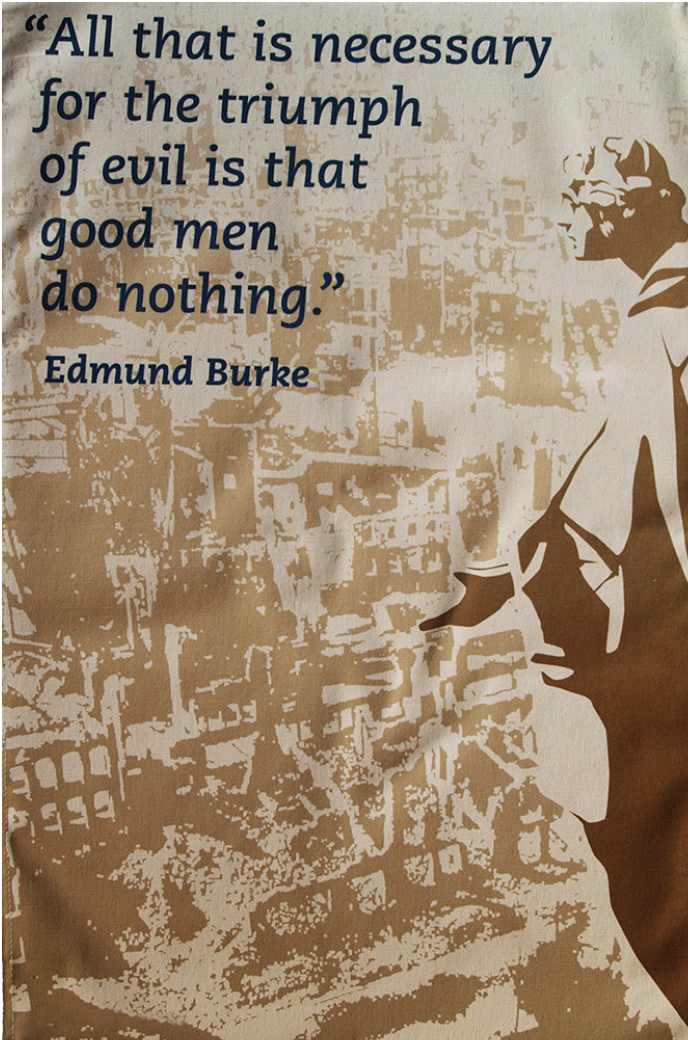
We are living through treacherous times with the world on the brink of numerous inter-connected catastrophes. As throughout history, there are a few global actors that will impact on all our lives if allowed to do so. It is a critical moment in history for global, international, and national institutions (the U.N., N.A.T.O. and western democracies in particular) and we need to realise the importance of each of us in standing up and being counted.



 Bridgend's Green Leftie