
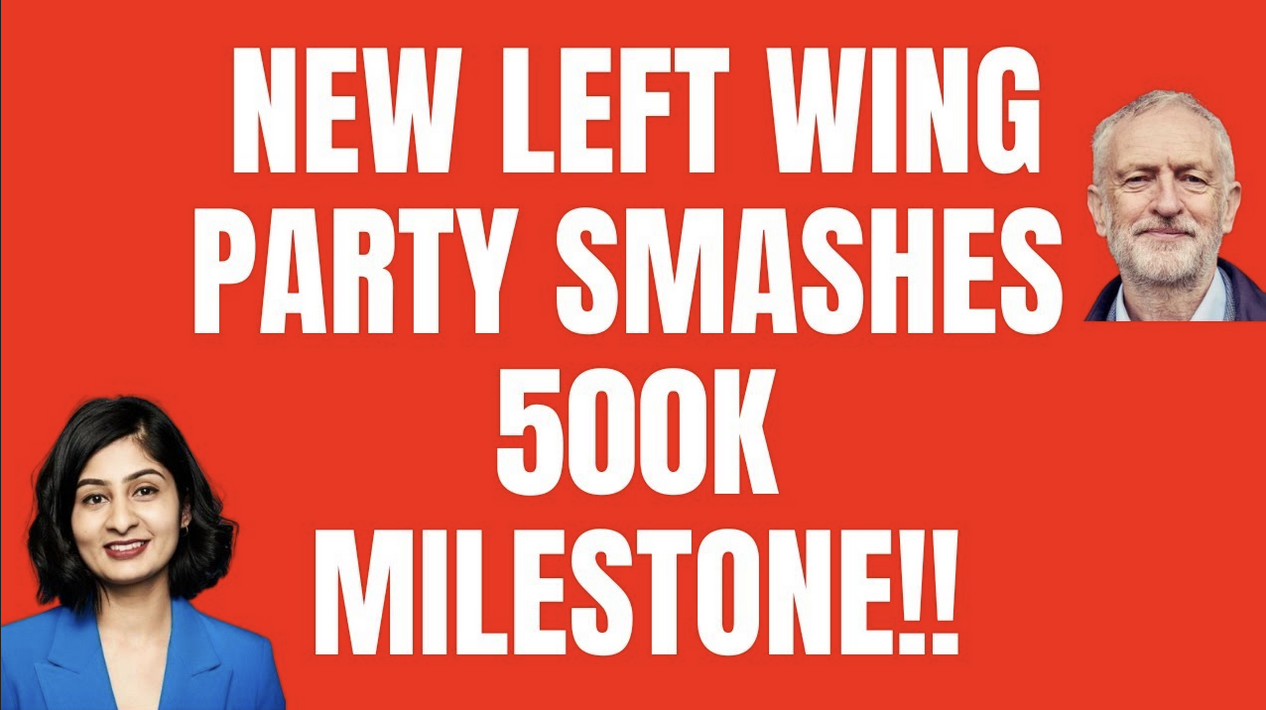
I am one of the 600,000+ people that have signed up to be kept informed of developments with the launch of Corbyn’s and Sultana’s new party of the Left. It holds out the hope of an anti-austerity, anti-war and anti-racist party that seeks to tackle the cost of living, reduce inequality, and promote public ownership. As such it certainly ticks a lot of boxes for me. However, I am struggling to get very enthusiastic or excited about it personally. But I do hope that it might just galvanise the young into seeing an opportunity to reshape their futures for the better.
In some ways I think I have never quite gotten over the orchestrated failure of the Corbyn project during his time as Labour Party leader. It was crushed by an obscene MSM campaign of libellous attacks, most notably the ridiculous antisemitic slurs, that were also used by his enemies within the Party, to their everlasting shame. The immediate consequence was the disastrous premiership of Boris Johnson, and then everything that has followed that.

Those largely-the-same Labour politicians and liberal commentators appear to have already settled on their main attack line: support for the Left Party will split the Labour vote and allow Reform to win. That they refused to get into line and support the democratically elected leadership of Corbyn, supported by a huge majority of the membership allowed ‘mini-Trump’ Johnson, seems to be a lesson at least partly learned, if way too late! Hypocrisy to the fore!

In fact, many opinion polls have already indicated potential for Reform to win the next general election, while Labour’s parliamentary representation collapses as a consequence of Starmer’s team consciously courting Reform voters and would-be voters while ignoring those who might back the left. That has failed miserably on its own terms, but it has also widened the audience for a new left party. They have only themselves to blame. Where do they think the Left can turn?
For those left-wingers who remain in the Labour Party, there are two main reasons cited for staying; essentially the same ones I was presented with when I quit the Labour Party after Starmer’s duplicitous campaign to usurp the Labour leadership. One is that recent controversies like the Welfare Bill and the recognition of Palestine illustrate how the Labour Party is not monolithic and still be shaped by pressure from the left through the winning of concessions. The other argument is that Labour retains the reluctant loyalty of many trade unions. But this can’t be taken for granted, especially with a new option, a genuinely socialist party, there to embrace them and their values.
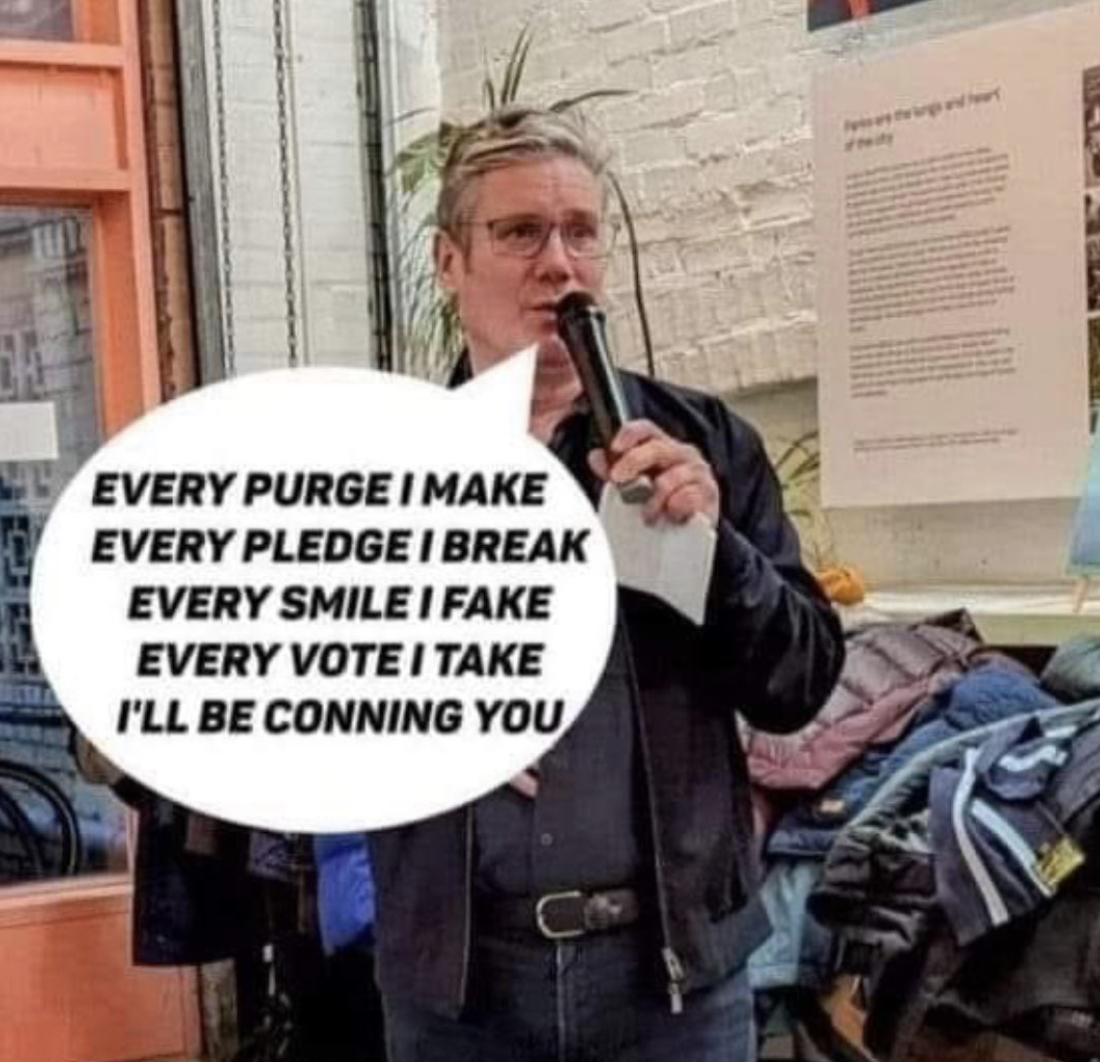
If a year or so of a Starmer government doesn’t prove that the Labour Party is no longer fit for the purpose for which it was created, well, nothing surely will. The new party will need an activist base, and I therefore sincerely hope that those activists will stop pissing in the wind that is blowing through the Labour Party and migrate to where their efforts could potentially yield great gains for those abandoned by the Labour Party and tempted by right-wing populist scumbags (like that other mini-Trump sociopath, Farage) offering simplistic, short-sighted, scapegoating solutions that appeal to those most challenged by the crises at hand.
In any case, left wing pressure is being seen to exert pressure on this right-wing Labour administration from without, way better than from within. A genuinely left-wing party can exert pressure on the Labour government over controversial issues, perhaps even more effectively than, but certainly in allegiance with social movements. The main pressure on Starmer and foreign secretary David Lammy over Gaza has come from the mass movement, finding only a faint echo among Labour MPs.
As for the Trade Unions, Ex-Unite boss Len McCluskey has hinted that trade unions might abandon Labour for Jeremy Corbyn’s new party if it proves “credible,” raising concerns on the left of a historic break in relations. McCluskey, 74, comments heap fresh pressure on Labour as internal divisions widen. Just days ago, Corbyn declared “change is coming” and praised Coventry South MP Zarah Sultana for quitting Labour to help “build a real alternative” to the party he once led. McCluskey, one of Corbyn’s staunchest allies, made clear that trade unions are weighing up their options. “If this new party demonstrates its credible, then trade unions will consider their affiliations,” he warned.
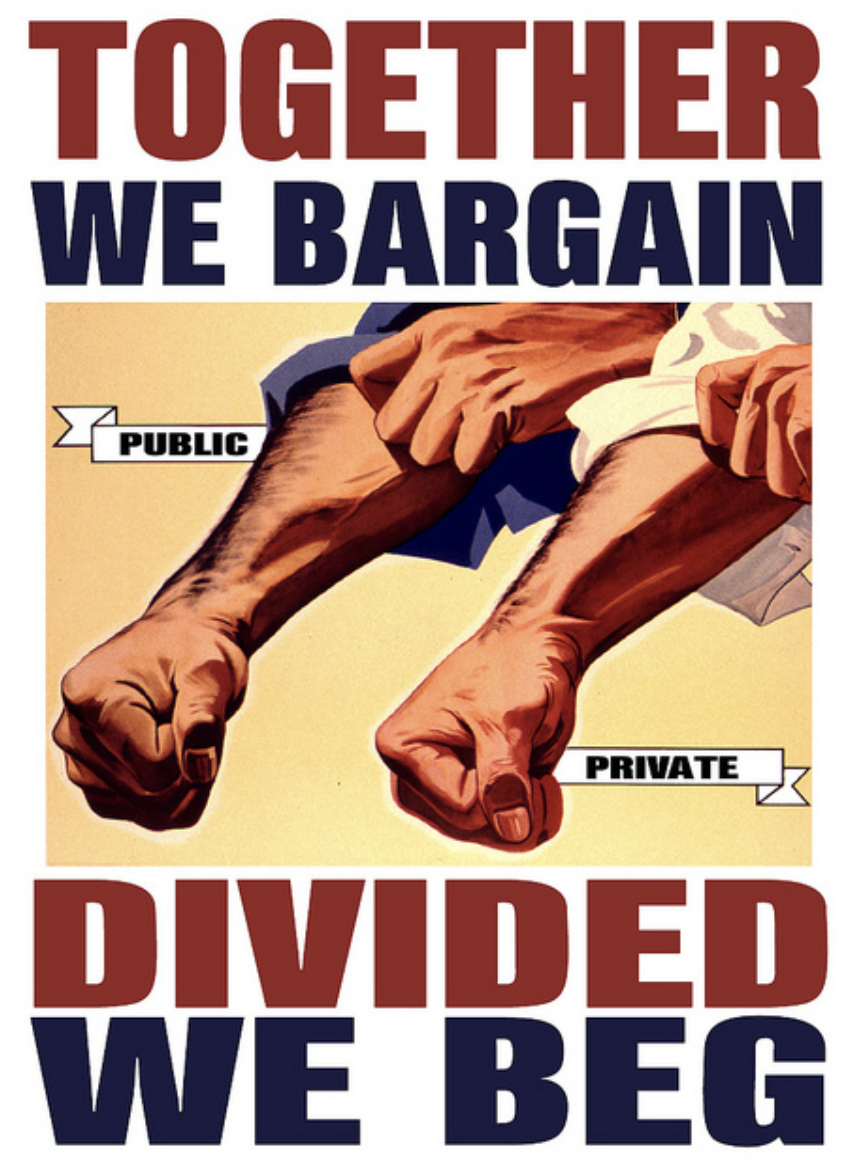
The remaining big trade unions of the working classes, such as Unite, UNISON, GMB and ASLEF are known to have had internal discussions and it is clear that, if they continue to support Labour under its current leadership, they risk becoming complicit in the erosion of worker’s and human rights, and the abandonment of progressive values. The participation of union activists can hugely enrich the new left-wing party, in every sense, giving it political substance and helping it develop roots.
I also know, of course, plenty who prefer to argue for Green Party membership, and see Zack Polanski’s leadership bid as a major opening. The Green Party has many left-wing policies but has never been a coherently or consistently left-wing party. It doesn’t ever present a political platform in class terms like Labour’s 2017 manifesto did: the many versus the few, us versus them. It veers in different directions depending on circumstances. It attracts votes from those who would otherwise vote Labour, but also from those who are more naturally Lib Dem voters. It has long had to contend with ‘Torie-on-bikes’ slurs too.
During Corbyn’s leadership of Labour, the Greens made efforts to attract those who were unhappy with Labour’s leftwards direction. For example, they supported overturning the EU referendum result of 2016. While it made some inroads into urban working-class areas, especially when Will Duckworth was around and working the West Midlands hard, the Green Party continues to have a mainly middle-class base. The kind of working-class towns where Reform poses a serious threat are places where the Green Party has little presence or profile. Nonetheless, I can certainly see value in the idea to form an alliance between the two parties to broaden their appeal and enhance their electoral prospects. This is, after all, what I wanted to do with the ecosocialist leanings in the Wales Green Party and Plaid Cymru (but failed).
This probably cannot go far beyond having loose electoral agreements at local level. Most left-wing activists will generally see the sense in avoiding standing Left and Green candidates in the same council wards. Then again, there will be areas in England where the Greens are already in office – either running a council or junior partners in a coalition – and have proved disappointing. It would be a serious mistake for socialists in those areas to align themselves with the Greens, even on the level of an electoral pact.
Pushing for a more formal alliance from the very beginning is liable to have a dampening effect. It dampens the insurgent, anti-establishment spirit that motivates and energises a new party, pulling it in a more conventional direction. The new party needs to establish its own distinctive priorities and demands. It should not be blunted by association with an established electoral vehicle, especially one of such modest success.
The new party will need to root itself in social movements and trade union battles. One of the issues during Corbyn’s leadership of the Labour Party was the inability to separate electoral and internal party politics and develop a broader strategy for social change. Momentum, the left-wing organisation established to support Corbyn, originated with much talk about social movements, but did very little about it. It became, instead, the battle line for the internal warfare within the party. Those divisions are still there, despite Starmer’s intolerant, anti-democratic purge of the Left. The formation of a new, cohesive and coherent party of the left should remove these counter-productive internal divisions and be a whole lot more democratic and representative too, at every level.
The new party will have to be politically bold and audacious if it is to be a meaningful alternative to the prevailing political zeitgeist. We live in crisis-ridden times. Unsustainable economic models, the climate catastrophe, and a resurgence of imperialist rivalries are, perhaps, the biggest factors conditioning politics today. Crises of vast numbers of displaced people (on a scale yet to be imagined, let alone seen) and wars over water and food are just around the corner.
There has been a patent collapse in trust in established institutions and politics. There is a correspondingly an appetite for anti-establishment politics that thinks big (or is it just loud?) and pitches radical (or is it just different?) and in the absence of a coherent and organised left, it is the hard-right forces that flourish.
A critical area for the new party will be international issues. Foreign policy was Corbyn-led Labour’s weakest link: Corbyn’s own anti-war, anti-militarist politics were never matched by official party policy, with major concessions on NATO, nuclear weapons and more. Anti-imperialism needs to be woven into the fabric of the new party. The ‘welfare not warfare’slogan – rallying opposition to higher military spending at the expense of welfare, public spending, and international aid – will have to be politically central. As vital as this is, it is a particularly hard sell while tyrants like Putin are on the warpath.

The new party needs to be shaped by the energy and ideas of the more than 600,000 people who have signed up for it. It will have to be a deeply democratic party with high levels of participation. This is not merely because democracy is a virtue, but because mass involvement will shape it positively and help overcome the many obstacles it will face.
I am too battle-weary to have the energy to do the hard yards anymore. But if enough of those 600,000 do have it, especially the younger generations with the most to gain from a non-violent revolution in our politics and economics, then who knows what is possible.
Here’s hoping: HERE COME THE YOUNG

 Bridgend's Green Leftie