
Organised by: Cynnal Cymru, Wildlife Trusts Wales, Hub Cymru Africa, Wales Environment Link, Christian Aid Wales, Tearfund, Love Zimbabwe, WWF Cymru, Renewable UK Cymru, Stop Climate Chaos Cymru, NUS Wales, Sub-Saharan Advisory Panel, Welsh Centre for International Affairs, Sustainable Places Research Institute: Cardiff University, Wales Council for Voluntary Action, National Federation of Women’s Institutes – Wales, Size of Wales, Fair Trade Wales, Disability in Wales and Africa, Friends of the Earth Cymru, NUS Wales, and Cardiff University People and Planet student society.
 The hustings, chaired by veteran political broadcaster Glyn Mathias, aimed to address some of the biggest long-term global issues affecting the lives of people in Wales and around the world and how the different political parties propose to address these if they were to form the next Welsh Government.
The hustings brought together representatives from the main political parties in Wales to discuss, in particular, how their party would work towards developing their vision for the implementation of the Future Generations Act in Wales.
Representatives attending:
William Powell – Welsh Liberal Democrats
Alice Hooker-Stroud – Wales Green Party
Llyr Gruffydd – Plaid Cymru
Anna McMorrin – Welsh Labour
Ross England – Welsh Conservatives
UKIP did not respond to the invitation
With the focus very much on the Future Generations Act and its implementation, this was a key hustings event from the perspective of Frack Free Wales and Egnio Cymru. My main objective was to seek out the candidates views on these group’s main objectives and try to gain their signatures for their ongoing petitions to Welsh Government. In summary:
BAN ON FRACKING IN WALES
- William Powell – LD – unequivocal support and signed the petition
- Alice Hooker-Stroud – GP – unequivocal support and signed the petition
- Llyr Gruffydd – PC – unequivocal support and signed the petition
- Ross England – Con – not in his constituency!! Refused to sign the petition
- Anna McMorrin – Lab – ‘isn’t our moratorium great?’ Refused to sign the petition
MOVING TOWARDS 100% RENEWABLES
- William Powell – LD – yes in principle – reservations over large onshore wind farms – signed the petition
- Alice Hooker-Stroud – GP – unequivocal support, including for large scale projects, and signed the petition
- Llyr Gruffydd – PC – unequivocal support and signed the petition
- Ross England – Con – yes to more renewables if cost effective and part of a mix that includes fossil fuels etc. Refused to sign the petition.
- Anna McMorrin – Lab – yes to community renewables in particular, BUT refused to sign the petition.
I’ll cover a few points in more detail below, but the basic divisions were consistent and clear:
To the left, we had Plaid Cymru, Greens and Lib Dems all largely singing from the same song sheets, but with subtle differences in emphasis, as we would all expect and indeed hope. Most importantly of all, they were all singing the songs we want and need to be hearing, if there is to be any substance to the potential for change embodied in the Future Generations Act.
To the right we also had remarkable harmony, but in terms of shallow, meaningless pap. Both Tory and Labour candidates were happy to mutter greenwash platitudes, and cite achievements that are anything but when scrutinised, but when pushed to put their names to the meaningful change embodied in our petitions, they had nothing to say but a point blank refusal.
 I have to make special mention of Llyr Gruffydd’s performance. I cannot ever recall a politician saying exactly what I wanted to say, and even in very similar manner to the way I would have wished to deliver it. It was almost as if he was my mouthpiece. He completely demolished the Labour pretence that there is a moratorium on fracking in Wales . He also demolished Labour claims to have done anything meaningful to support Community Energy to date, despite McMorrin citing it as a glorious achievement of the Labour administration. Even on other issues, he took my own position regarding the M4 relief road; that something has to be done, but that the Black Route is incompatible with the essence of the Future Generations Act, but that the Blue Route could be an acceptable compromise. When I first encountered Llyr, probably about 5 years ago he did not convince me that he could handle the Sustainable Communities, Energy and Food portfolio he was given. He has consistently grown into the role and clearly worked hard to improve his understanding and knowledge base. This in turn has made him a much more relaxed and assured performer. He helps to allay my fears (a little) that Plaid Cymru do not have enough talent to form a competent government.
 I also have to make a special mention of Alice Hooker-Stroud’s performance. I have to say that the more I see of her, the more impressed I become. She has the calm assurance of someone who actually understands what she is talking about (ain’t that a refreshing change after the PB years?!). She does however have a rather academic, almost school ma’am manner, that is fine with a educated audience but unlikely to engage the disaffected. I have no hesitation in saying that she would make an excellent Assembly Member. There is a small chance that all the stars may align and let her squeak in. That would be real bonus for all concerned. Sadly, the Greens have not done enough on a consistent enough basis to make it happen this time around. As good an AM that I think she could be, I don’t think she has what it takes to be the effective leader that the Greens in Wales desperately need in order to become an election force. Until they sort out their priorities for the use of their limited time and financial resources, they will continue to fritter both away on vanity projects that impress too few, rather than doing the hard graft needed to win elections.
Enough of personalities, to conclude, here are a few collected soundbites from the evening that give a little food for thought:
- RE says Tories voted against the Future Generations Act in part because they were concerned local authorities were being given extra responsibilities without the extra funding to enable them. (Hmm…… whose fault is that then, Ross?)
- Both AM and LG highlighted the important role that the Future Generations Commissioner will have in helping implement the Act. The first Commissioner took up her role on 1st February this year. What do we know about Sophie Howe? There appears to be a distinct lack of environmental strength in her background, which does not augur well, but she is also a former Labour councillor and Deputy Police Commissioner (for Labour), and seeing FoTEC’s response to her appointment as possibly ‘compromising’ the role, is not a good start!
- There was general consent that the survival of the Welsh steel industry was important, if for no other reason that steel has a crucial part to play in just about all major infrastructure projects, be if renewable energy generators, or railway lines. Attitudes towards protectionist tariffs however took typical party lines.
- The best idea that came from RE for the Tories (and therefore I doubt it is their actual policy!) is a proposed annual review of progress with carbon emissions to monitor and hopefully ensure the desirable direction of travel with these.
- AHS made a slightly unusual (in the sense of not a typical Green position) case for big scale renewable projects, citing figures I did not quite get about logarithmic efficiency gains.
- WP raised legitimate concerns over TAN8 guidance on renewable energy projects and its inadequacies. A review and rewriting of TANs (Technical Advice Notes) is something that LG also supported. The lack of any TAN appropriate for fracking activity will not be a problem, of course, if we get it banned.
So, for what it’s worth, my marks out of 10 for the candidates before us at this hustings:
- Llyr Gruffydd – PC 9/10
- Alice Hooker-Stroud – GP 7/10
- William Powell – LD 5/10
- Ross England – Con 4/10
- Anna McMorrin – Lab 3/10
- DNS – UKIP 0/10


 I wrote a chapter on death in my book,
 I find the concept of martyring oneself for a cause an interesting one. Belief in an afterlife must certainly make it a lot easier option to face up to. As I lack such beliefs myself, I tend to feel a sense of pity for these poor misguided fools who make the ultimate sacrifice in the hope of supposedly bettering the lives of other believers while securing themselves a place in paradise. But hang on minute. Where is the sacrifice in taking a short cut to heaven?
 • The Vikings had Valhalla – a heaven available only to those that died heroically in battle. A cool army recruitment tool, don’t you think?
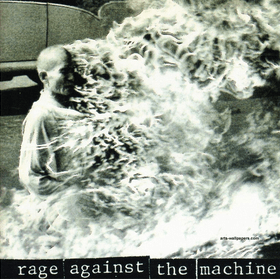 You may, possibly, recognise it as the image from the eponymous album by Rage Against the Machine. When I first saw it on this album cover, I simply had to find out what was going on. The guy is just sitting upright, perfectly still and in control as he burns to death!!
 Typically, countries that treat their citizens like mature intelligent adults (e.g. Switzerland) have civilised policies that allow people to ‘pass away’ discreetly and with dignity. Equally typically, nanny states (e.g. the U.K.) feel the need to protect their citizens from themselves and evil people who might be a bit too keen to shuffle them off this mortal coil. Obviously, there needs to be safeguards, but unlike the Swiss, the British cannot be arsed to put them in place, so it is simpler and cheaper to simply deny the option.
 It was a sad reflection on the society in which we now live that some sick people saw fit to revel in her despair. There was even a website that invited people to guess the precise moment she would take her last breath.
  everything else in the universe, and therefore, like everything else, both body and soul will disintegrate and disperse after death. He argues that our mental development tracks that of our body through infancy, maturity and senility, such that we should expect the breakdown of our mental faculties as our body begins to fall apart. He concluded that there could thus be no life after death, no reincarnation, and no punishment in Hades/Hell. He found the notion of a benevolent creator utter nonsense; as such a creator would surely have ensured that his creations would be everlasting. On top of this, he recognised that the world is hostile to human existence, in the same way that all living creatures have ongoing battles for survival. He describes (mockingly I suggest) newborn babies tears on emerging into this worldas admirably prescient considering all the troubles that lie ahead for it.

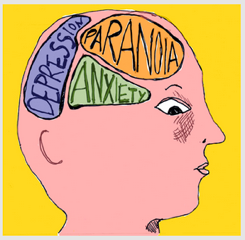
 treatment, especially an over-reliance on medications (while acknowledging that they usually have a part to play in managing some conditions), but if you are suffering from severe depression or considering harming yourself, then there really is a need to speak to someone straight away.
 Mental health facilities in schools (for both staff and pupils) are woefully lacking (although some recent attempts to introduce mindfulness to the curriculum and INSET programmes is to be welcomed). There’s generally no problem ringing in sick at work with physical ailments, but very few employers have any provision for for mental health leave. In my experience, short-term absences for mental health issues are regarded as highly suspicious – if you are going to be off with mental health problems, then at least make if a full-scale meltdown and have three months off!
 I would always encourage people to try to find someone in person if you can, and I am far from alone with that advice. Telephone helplines, medical ones and the Samaritans in particular, can be valuable too. But be careful about relying on online forums and web advice. Self-diagnosis is full of pitfalls. Self-help after professional diagnosis and initial guidance is fine – and the way I have learned to cope.
 Being realistic also means recognising that being involved in politics can bring more stress than enjoyment. We therefore also need to recognise that we, ourselves and every comrade, need to be able to take a step back from time to time. A few months off from any given group or project can help recharge the batteries, gain fresh perspective and help avoid things getting in ruts and stagnating. Similarly, we must all be wary of over-extending ourselves or expecting too much from others. It is never about people pulling their weight – it is about being comfortable with what you are contributing and being grateful for everybody else’s contribution, no matter how great or small. It is not good anarchist or socialist practice to have one person carrying too much responsibility within a group – and not conducive to good mental health either.
 In essence, it boils down to being good, kind and respectful to each other. But sadly, far too often that proves beyond us. I read an interesting short essay recently entitled: Be Good to Your Comrdaes: Why Being a Prick is Counterrevolutionary. It made the point, that any of us familiar with party politics in particular will recognise, that political activism tends to attract a bunch of egotistical pricks, at least disproportionately. Many of the nicest people I know are leftie political activists that are caring altruistic, generous and giving. But I can also real off a list of people that are harsh, condescending and sometimes downright bullies. Politics shares a tendency with religion for people to take entrenched positions, even over small matters with people supposedly on the ‘same side’. When we have our own ideas and beliefs attacked, we tend to lash out in defence of our position, even if it is an untenable one.
 seem to have a better handle on this sort of nonsense, perhaps because it truly part of the core values of everyone therein. Party politics is inherently competitive and confrontational.
 To conclude – the number one thing we can all do to advance the causes we hold so dear is to value our comrades and be good to each other. In terms of looking after each other’s mental health, let’s pledge to stop giving our comrades yet another reason to be depressed!
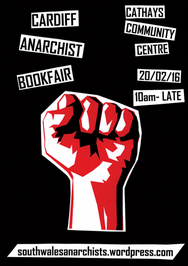 As a member of the Green Party until quite recently, with many friends and respected comrades still in the party, it was driven home to me today that, outside of the Green Left faction within the Green Party, the overall image of the Party is a pretty shocking one amongst left wing activists and anarchists operating outside of the Green Party. This came about when I attended the Cardiff Anarchist Bookfair today. Although there was some acknowledgement of some genuine ecosocialists within the Party, there was a lot of scorn poured on the records of elected Greens and especially the record of the Brighton administration.
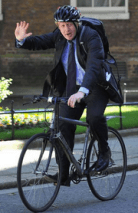 encapsulated and, perhaps, informed this attitude towards the Green Party. It was entitled “Tories on bikes”: the Green Party in power, with quote being ascribed to a striking Brighton bin worker.
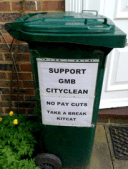 support of the council’s Tory group. The article alleges that this meant pay cuts of up to £4000 a year for some. More damning than this figure (which I suspect is an exaggeration) is the accusation of “acting like the worst kind of union-busting boss“, by threatening workers that if they refused the new terms, they would be sacked and re-employed on the new contract. In other words, acting like a bunch of Jeremy Hunts! Sadly, this is pretty accurate and the bin workers responded with a wildcat occupation of their depot.
 lines. I thought that she actually did do this at one point, but the article suggest that she never showed up. It does, however, say that
  problem is with political power itself. Notable anarchist, Noam Chomsky, points out that “the smart way to keep people passive and obedient is to strictly limit the spectrum of acceptable opinion, but allow very lively debate within that spectrum“. In this context, the article concludes that the Green’s might well be on the fringes of that spectrum, but they remain part of the party political system that has been established to keep us quiet and compliant. This, ultimately, is why I gave up on the Green Party and party politics altogether.
 The ironic thing is that it was good friends within Green Left that introduced me to people like Proudhon, Kropotkin and Bakunin – the veritable godfathers of Anarchist thought. They remain, to the best of my knowledge, committed to fighting the cause from within the Green Party. I am left wondering whether I should consider them to heroically battling to shape the Party into something truly worthy, or whether to consider them as naive fools, wasting their time and propping up an inherently flawed system. Discuss!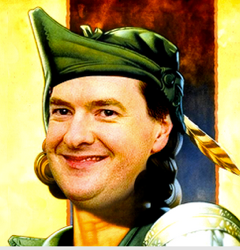
 As I have pointed out before
  Meanwhile, in the wake of the banker-induced financial crisis, I and many Greens and other lefties got involved in a campaign to introduce the prosaically named ‘Robin Hood Tax’ on financial transactions. This was designed to discourage the reckless speed with which bankers and fund managers were shifting vast, destabilising amounts of money around the globe. The campaign has resulted in 11 European countries embracing the idea, but this will not include the UK unless Corbyn becomes Prime Minister. It is an idea that Thomas Piketty would like to see taken further to become some sort of global tax on capital, with the principal objective being reducing the extreme inequalities inherent in the capitalist system. Well, I guess we all can dream.
 excessive spending, but by excessive saving. Vast sums of money (the lubricant of the economy) were syphoned away by countries like China and Saudi Arabia as they hoarded foreign currency reserves. Large corporations followed suit – hoarding cash instead of re-investing it. Wealthy individual capitalists were allowed to legally suck wealth out of firms and into their personal hoards. While the majority of us hit hard times, the mega-rich became conspicuously richer.
 Market economics meant that with such a glut of hoarded money looking for a somewhere to sit and attract interest, interest rates plummeted. So how were the bankers to attract the hoards of cash? Where was the easy money to be made? Well, look in the mirror. It was you and me, through the means of easy credit and, especially, sub-prime mortgage lending. It worked for a while. The banks grew and grew, and just like Mr Creosote, a waffer thin mint eventually caused them to go pop.
 thereby avert the crash in the first place. It really was all his fault!
  that if he had reined in the banks, it would have inevitably made it harder for ordinary voters to get mortgages and credit that they had come to expect and rely on. The Daily Mail headlines would have been full of Brown strangling the economy and killing off jobs. I guess that is the price you pay for making a pact with the devil!
 increase inequalities, no matter how hard those hard-working families without capital assets work. Returns on capital will always outstrip the rate of economic growth as a whole. The only time when this was not the case was those years of big investment in public services and high tax rates on the rich in the mid-20th century.
 This leaves us, on the left especially, with an enormous challenge, as James Meek puts it at the very end of his article:
 The knee jerk reactions from Labour and Tories tell you all you need to know about these two parties that have grown ever closer, especially since Blair’s red toryism so beloved of Welsh Labour, on the back of the inbuilt injustice of our electoral systems.
 If Labour gets 50 % of the vote it still cannot be beaten, but a system that allows them to constantly clean up with 30 to 40% the vote – that is a system that shows contempt for the electorate. But it is a system that suits the big two – as they can regularly have all-powerful absolute majorities with a third of the vote – which given the typical turnout figures can mean less than 25% of the electorate. (Don’t forget, the Labour hegemony in the Welsh Assembly, with all those careers it has provided for the likes of Carwyn RT Jones, owes itself to that initial 50.1% of a 49.9% turnout in the referendum that created the Assembly in the first place!)
 SYRIZA alliance of more than a dozen anti-austerity parties, that otherwise would have never have been heard at all. The Party of Wales, with the interests of the people ahead of its own interests, needs therefore to become the driving force for the Welsh Ecosocialist Alliance that will contest every constituency on that basis. (An idea I put forward in
  the Lib Dems ran away from the idea. While once upon a time they may have been convincing as libertarian (mild) lefties, they have no credibility for such a description these days, since Clegg’s neoliberal Orange Book. In fact, I am a bit surprised that PC even saw fit to try and include them. However,
  As for the Greens, it is a huge relief that post-Bartolotti, Wales Green Party is back in the real world. Even before the ‘love in’ between Leanne Wood, Natalie Bennett and Nicola Sturgeon, in the run up to the General Election, I was sounding out the prospects of developing working relationships between PC and Greens at all levels. There was considerable potential at one time, scuppered by Bartolotti’s ego and and some unseemly sectarianism. It is encouraging to see the new leader off the Welsh Greens, Alice Hooker-Stroud, talking more pragmatically:
 “Our electoral system in Wales needs a good shake up. Progressive voters regularly have to hold their nose and vote for another term of a Welsh Labour government that has run out of ideas and has nothing left to offer but more excuses. Representatives of the Wales Green Party were approached to explore whether we could form an alliance as an alternative to our tired, inert one party state. People want real change, and we were looking to form alliances with parties who share common ground with the Wales Green Party to see if we could offer them a chance to vote for it.”
 Last week also saw publication of the draft “snooper’s charter”, which asks for some powers that are nonsensical, because they bear little relation to how digital communications actually work, and others that are draconian. And it saw the release of the “evidence base” behind the drive for a seven-day National Health Service, though this provides scant justification for the proposed reforms, as the medical profession has explained.


 Upton village had never seen anything like it. It is a sleepy little suburb of Chester, but it was not asleep on this day. The fractivists assembled in the car park of Upton Park which was awash with colourful characters, banners, placards and even 10 feet tall dinosaurs! The park’s pavilion was open to provide toilet facilities and a tuck shop, while a range of stalls were set up to provide hot veggie food, pasties, cakes and hot drinks, along with a collection point for clothing donations for the camp residents that had lost their belongings in the camp eviction a few days earlier, more of which later.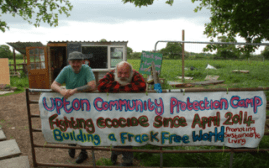


 Bridgend's Green Leftie