
I’ve just re-read the chapter of my book, The Asylum of the Universe, on homosexuality and it still does its job of helping to understand homosexuality and railing against homophobia. Its closing paragraph is, however, more pertinent than ever.  It was written in 2010, at the time of the Ugandan Anti-Homosexuality Bill going through its parliament. (I’ll post the chapter at the end of this article).
That bill proposed the death penalty for “aggravated” and/or “serial” homosexuality. Aggravated homosexuality was defined as gay sex involving under 18s or disabled people, or by anyone with HIV, irrespective of condom use. Serial homosexuality was having same sex relations more than once. Life imprisonment used to be the more lenient punishment for same-sex intercourse, but that was to become the fate for anyone caught indulging in any form of homosexual behaviour, such as kissing or holding hands, or even living together in a same-sex (but possibly sexless) marriage. Condoning or promoting homosexuality will get you five to seven years.
 I ended by suggesting that this was all just a short step away from the sort of ‘final solution’ (genocide) policies we have seen elsewhere to eradicate perceived menaces. And now we see ‘concentration camps’ and the rounding up of people in Chechnya.
As with so many spheres of life, we are clearly making no progress and the waves of fascist intent sweeping around the globe are taking us backwards alarmingly fast. It is time, I would suggest, to try and change societies mindset on theses issues.
For too long homosexuality itself has been thought of as ‘the problem’. In fact, the real problem is not homosexuality, but homophobia. Any phobia is an extreme, unjustified and/or irrational fear; it is a psychological problem that needs to be overcome and in so doing enhances the lives of all concerned.
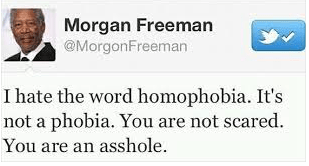
An alternative view
Homophobia is a pervasive, irrational fear of homosexuality. Homophobia includes the fear heterosexuals have of any homosexual feelings within themselves, any overt mannerisms or actions that would suggest homosexuality, and the resulting desire to suppress or stamp out homosexuality. And it also includes the self-hatred and self-denial of homosexuals who know what they are but have been taught all their lives by a heterosexual society that people like themselves are sick, sinful and criminal.
As I describe in my book, homosexuality is as valid a lifestyle as any other and found throughout the animal kingdom.  Homosexuality has been practiced in all societies throughout history and has been openly accepted in many cultures. The taboo on homosexuality in so many parts of the world has largely been the result of the widespread dominance of the Abrahamic religions, with their inbred repression of any form of sexuality unrelated to childbearing.
Thus, we need to alter the discourse and stop asking questions like:
- What are the causes of homosexuality?
- Can you tell if you are a homosexual?
- Can homosexuality be cured?
The questions that really need to be asked are:
- What are the causes of homophobia?
- How can you tell if you are a homophobe?
- Can homophobia be cured?
In tackling these questions, we really need to look at them in different contexts. At the scale of us as individuals, the answers can be fairly obvious. But at the scale of the nation state, where things get enshrined in law, a whole set of other issues has to be involved. But a common denominator is invariably religiosity, as this piece of research shows:

The 40 or so countries examined show a statistically significant correlation that has three main exceptions: Philippines (a lot more tolerant than may be expected in a strongly Catholic country) and China and Russia (both a lot less tolerant than may be expected in supposedly atheistic states). I want to focus on Russia as it is very much in the forefront current homophobic atrocities – especially in its federated republic of Chechnya.
Russia started following a similar path to Uganda in 2011. The Russian Duma unanimously approved a law that prohibited the distribution of homosexual “propaganda” to minors. Holding gay pride events, speaking in defense of gay rights, or equating gay and heterosexual relationships can now result in massive fines. 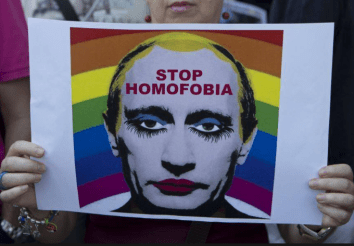 Before the vote, gay rights activists who attempted to hold a “kiss-in” outside the Duma were pelted with eggs by Orthodox Christian and pro-Kremlin activists. Anti-gay protesters also gathered, with one holding a sign that read: “Lawmakers, protect the people from perverts!”
The argument that a young person can be “propagandised” into turning gay may seem outdated, but it’s actually not out of place in modern Russia. In the Soviet Union, homosexuality was a crime punishable by prison and hard labour, and Stalinist 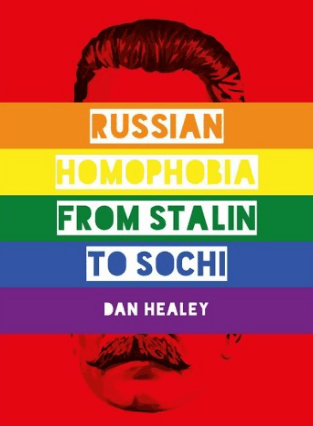 anti-gay policies persisted throughout the 60s and 70s. Gays were considered “outsiders” and homosexuality was thought to be the domain of pedophiles and fascists. Reports child sex scandals amongst the churches and right wing elites of the West in recent times can only have reinforced these prejudices. Measures like the propaganda ban show that many Russians still haven’t shed these views, even decades after the fall of the regime that kept homophobia in place.
Since the 90s, Russians have faced incredible economic turmoil, a loss of public services in many areas, and widespread corruption — all factors that combine to reinforce negative stereotypes. “To the degree that a given society that is insecure about its political, social, economic, and uniting cultural identity, it will mask that insecurity with a swaggering show of gendered strength,” said Yvonne Howell, a Russian professor at the University of Richmond. We can relate to the propensity for hard times (austerity) to lead to an increase in scapegoating (immigrants) in what we have seen in the UK in recent times. Homophobic hate crimes in the UK have dramatically increased simultaneously.
But let me return to the apparent fact that Russians buck another major trend in modern homophobia: more religious countries are far more likely to be less accepting of homosexuality. As pointed out, the data suggests that Russia and China seem to reject both God and gays. Russia ranks as one of the least devout countries on earth, with only 33 percent of Russians saying religion was very important in their daily life in 2009. But this hides the reality of the people’s religiosity. Even though Russians aren’t churchgoers in the traditional sense, most (80-90%) are still incredibly supportive of the Orthodox Church, which wields power both politically, as an ally of the Putin government, and as a symbol of national pride in much of the population. In satellite republics like Chechnya, the same role is played by Islam. In 2010, a poll revealed 95% of the population were muslim adherents, predominantly of the more the more homophobic Sunni Islam.
Indeed, many Russians/Chechens today view Church affiliation as a way to reaffirm their national identity. In a 2007 (Russian) poll on the subject, the majority of respondents said religion for them was a “national tradition” and “an adherence to moral and ethical standards,” while only 16 percent said it was about personal salvation. The two great ills of the world, religion and nationalism, reinforcing and supporting each other!
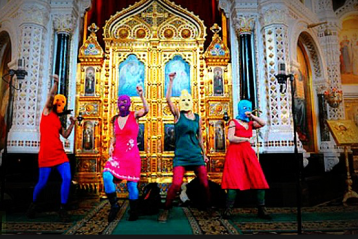 It’s no coincidence that the punk band Pussy Riot was sent to jail for performing in an Orthodox church, specifically. Orthodox Church elders have also served as occasional Putin campaigners, issuing bizarre declarations that mash together Christianity and the longevity of United Russia. One said that “liberalism will lead to legal collapse and then the Apocalypse” and referred to Putin’s presidency as “a miracle.” Archpriest Dmitry Smirnov warned once that “one needs to remember that the first revolutionary was Satan.”
In some countries, homophobic laws might seem like a sign of religious influence run amok. But in Russia, it’s part of a broader anti-opposition push and a crackdown on a wide array of civil liberties. Homophobia, more often than not, derives not just from one’s faith, but from being anti-liberal. Russia is an illiberal country, and Putin’s government capitalises on the illiberal sentiments expressed by the church. Chechnya may be a different context, but the same forces are at work.
 We can all, fortunately, challenge individual homophobes we encounter and help them to enlightenment. But when it gets embedded in politics and law, reinforced by religion, it is hard to envision any painless solutions. The pain in Chechnya right now, is however, intolerable.
I am not a huge fan of petitions, but we are limited in what we can do to affect things in Chechnya. Voicing our disgust and abhorrence, through any and all of the many petitions that have emerged on this issue, is therefore important. Amnesty International are consistently at the forefront of these campaigns, so I commend this one to you in particular (and please join them, if you haven’t already).
TRANSCRIPT OF ‘HOMOSEXUALITY’ CHAPTER FROM ‘THE ASYLUM OF THE UNIVERSE’ (apologies for issues with page formatting). Click the link:
HOMOSEXUALITY pdf









 The forecast the day before was pretty abysmal and that, to my certain knowledge, put quite a few people off turning out (for justifiable health reasons in some cases), but as it turned out, the weather was actually about as good as it gets for hanging around Aberthaw beach in January. So a turn out of somewhere between 150 and 200 hardy souls was pretty good I would say. Considering that many had come from Aberystwyth, Bristol and Gloucestershire, with some from as far away as London and Lancashire, it is always possible to be disappointed in the numbers from more locally, but hey!
 I am never sure whether to be disappointed or pleased at relative lack of familiar faces at such events. There are always some familiar faces from among the organisers of the respective groups, but today there were a lot of new faces, who if they had anything in common at all, from what I learned from talking with them, was that they came from downwind of Aberthaw (Cardiff, Newport, Bristol), i.e. in the firing line for many of its worst impacts. This throws up the thought NIMBYism always plays a big role in such protests. The big problem for the climate change campaign has been in creating that NIMBY mindset for a global problem.
 events, was the ridiculously over-the-top policing. I anything give the lie to the Tory austerity agenda it is the criminal waste of public money that routinely seems to accompany these events. I counted in excess of 50 officers on the ground, 2 on horseback, and a relatively short-lived overhead helicopter presence (which costs around £2000 an hour in itself). When I quipped to one officer that it seemed like that there was almost as many coppers as protestors about, he laughingly agreed and said there were even more on standby ‘in case they were needed’! Welcome to Police State Britain.
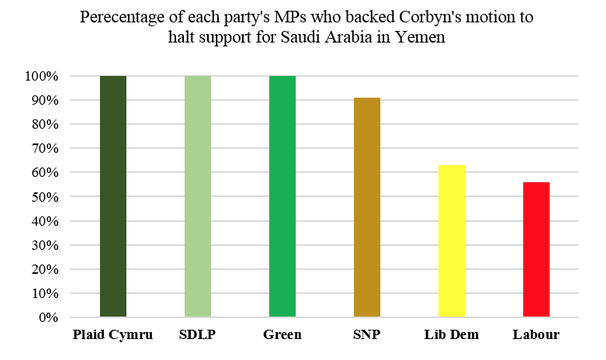

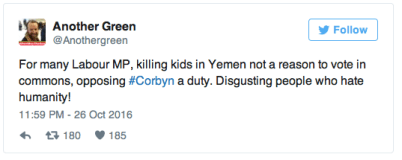
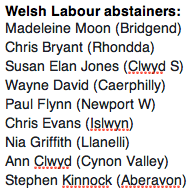 but just like with Tories, we really could not have expected anything else. Her track record of cosying up to arms manufacturers goes before her these days. She will probably be the guest of Lockheed Martin UK at the next big arms traders’ banquet. She would certainly welcome them bringing jobs to Bridgend were it ever an option. Imagine her pride at having Bridgend made cluster bombs slaughtering civilians in Yemen, like their British made BL-755 bombs that have been

 Corbyn holds majority support in every significant section of the party now, bar the PLP. Yet it is the PLP that is the principle face of the party to the general public. Plummeting polls are bad news, of course, but history tells us that nothing discourages voters more than parties washing their dirty linen in public.
 (i.e. Trident and as many jollies as she can extract from the arms industry it seems) and any appreciation of what socialism actually means. Her vicious disdain for Momentum, in particular, suggests there is nothing to build on. She clearly has no idea who Momentum members actually are. That she exhibits such derision and hostility for
  That Momentum is independent, but supportive of, the Labour Party and Labour leadership is, of course, the problem. It cannot be controlled directly by the diehard controlling Blairites/centrists refusing to accept the new reality. They would love to outlaw Momentum members but wouldn’t have a leg to stand on in court unless they treated their chums in the Blairite
 12 months ago, when Corbyn swept all before him to take the helm of the UK Labour Party, I was excited at seeing socialist ideas in the spotlight and gaining support from the grass roots – those that understand what life is really like in Tory Britain, unlike the detached and privileged senior figures of the unpalatable Blairite New Labour project. Almost immediately I was being questioned, and even pressured, by those that know my commitment to socialist ideas about whether I would join the returning flood of socialists into the Labour Party to support the Corbyn re-invigoration of the party. At that stage I just couldn’t do it and wrote this piece to explain why:
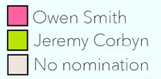
  28th June saw the infamous vote of no confidence by the 172 (wide range of adjectives possible – I’ll settle for:) mischievous MPs, closely followed by Angela Eagle‘s pathetic leadership bid, who was then usurped by fall-guy par excellence, Owen Smith. Oh what a Summer it has been!
 Welsh Grassroots/Momentum, and I quickly came to realise that Corbyn has much greater support in Wales than I had previously realised. Realising I was not alone has been an important step in giving me renewed strength of purpose. Finding some longstanding local Labour members that were beginning to smell the coffee, and relish the new direction of the party, further heartened me.

 grade C, at best, for effort and for attainment. Attainment in some areas can only really be given a E grade. For the complacent and unambitious, that is often accepted as good enough. But Wales deserves at least grade ‘A’ effort, accepting that if you do your very best, top level attainment can still be elusive due to extraneous factors
 He is proposing to throw some more money at it. An extra £100m to drive up standards – but why are those standards the lowest in the UK and amongst the worst in Europe after 17 years of Welsh Labour controlling it (and getting worse if anything)?
  £2bn on refurbishing our schools – but why have they been allowed to become so appallingly and shamefully dilapidated after 17 years of Welsh Labour looking after them? Student support better than in England (where it is amongst the worst in Europe so setting the bar very low). Where is the ambition to do everything possible to boost the higher educational attainment of Welsh Students?


 Thus the support for an ever-increasing diversity of ideologically driven schools, often overtly religious and fundamentalist in character. Organisations such as the British Humanist Association (BHA) have done crucial work in attempting to ensure some balance, and especially in terms of getting non-relgious world views considered alongside the religious. But this is now under direct threat and and we are seeing disturbing trends in the very essence of education in this country.
 The British Humanist Association (BHA) has expressed its shock at the decision. In addition, the Religious Education Council of England and Wales (REC), which until a few months ago provided the secretariat for the group, and National Association of Teachers of RE (NATRE),
 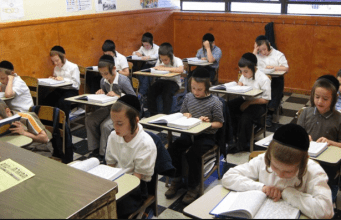 Newsnight, earlier this year, found that a number of illegal strictly orthodox
 What does it mean to be a humanist? Is humanism a new idea? How do people live their lives without religious beliefs? The first of its kind aimed at a new curriculum for upper primary and lower secondary school children, this book will examine how humanists respond to fundamental questions about morals and ethics, the origins of life, religion and the state. It will look at how humanists mark the milestones of birth, marriage and death. How do people without belief in God live moral and fulfilled lives, with respect for humankind and the universe? A thought-provoking approach will encourage readers to think about the big questions for themselves.




 Bridgend's Green Leftie