
Outline:
- The difference between extractive and inclusive institutions of government and the economy.
- The significance of the English Civil War as a precursor to England leading the world into the Industrial Revolution.
- The impact of colonialism and post-colonial institutions in explaining the global inequalities of today.
- How authoritarianism, communism, neoliberalism and capitalism lead to extractive government and institutions and their own inequalities.
- Why inequalities have worsened in the UK and USA since Thatcher and Reagan.
- Why a market economy promotes inclusivity.
- Why social democratic countries, especially those adopting the Nordic model, are amongst the wealthiest, most egalitarian, and happiest countries in the world.
- Why independence offers Wales the opportunity to take a more inclusive path if it is set up right from the outset.
- Independence brings the scope to be radical – liquid democracy etc.
INTRODUCTION
This essay is prompted and informed by ideas developed from reading ‘Why Nations Fail: the origins of power, prosperity and poverty’ by Daron Acemoglu and James A. Robinson. They are intellectual heavyweights; they were awarded the 2024 Nobel Prize, alongside Simon Johnson, for their work on comparative studies in prosperity between nations. Throughout this essay I will be referring to it as ‘the book’.

It is a surprisingly accessible and enjoyable read; a romp through about 400 years of history that builds a compelling case that dismantles a lot of the conventional ‘wisdom’ I was indoctrinated with as a geography student in the 70s and 80s. This was refreshing as I had never been totally convinced by some of the geographical hypotheses for inequality I was sold. The book also dismisses the patently crass cultural hypotheses built around racist tropes, such as the ‘lazy black man’ nonsense, that was also far too common in the 70s and 80s but has been revived by the right-wing populists of more recent times. Indeed, I am writing this just a few days after Trump swept back into the (aptly named) White House in no small part by successfully peddling such tropes.
So, if it is not cultural, nor climate or geography, that determines prosperity and destiny, what does determine it? Why has Botswana become one of the fastest growing countries in the world, while other African nations, such as Zimbabwe, the Congo, and Sierra Leone, are mired in poverty and violence? Can China continue to grow at such high speed and overwhelm the West? Are America’s best days behind it? What is the most effective way to help move billions of people from the rut of poverty to prosperity? The book endeavours to answer all these questions. But I want to focus on two questions implicit in the title of this essay, that are not dealt with directly by the book:
- Why has the U.K. begun to look ever more like a failing state given its successes in the past?
- Can Wales successfully divorce itself from this failure to become an independent nation that delivers greater prosperity for its people?
The dragging of the Overton window (of public discourse over economics and social policy) to a substantial degree right of centre in the last 45 years (yes, since Thatcher and Reagan) is why this book is important. I believe it is imperative that we all understand what is going on around us and how it will impact our collective prosperity and well-being. Thankfully, it would appear to be simpler (conceptually) than I have tended to believe up until now. If its premise is correct, it should mean it could be much simpler to put right, just requiring that we set things up correctly. Which is also why independence for Wales (and many other such aspiring nations such as Scotland, Catalonia, Zanzibar, Tibet, Texas etc.) provides a unique opportunity to reset the institutions that, as we shall see, are the main determinant of how political power delivers prosperity (or poverty) to the nation.
- THE DIFFERENCE BETWEEN EXTRACTIVE AND INCLUSIVE INSTITUTIONS OF GOVERNMENT AND THE ECONOMY
One of the small challenges in reading the book was the way they use a few key terms in an unfamiliar context. To me, with my geography/geology background, ‘extractive’ means extracting raw materials from the environment, which was a key driver of colonialism in supplying raw materials to the burgeoning industrial revolution that started in Europe. Whilst very relevant, this is not the context that the book uses the word ‘extractive’. It uses the word alongside ‘intrusive’, as opposites in the context of political and economic institutions (whereas to me, the opposite of ‘extractive’ is ‘intrusive’, and the opposite of ‘inclusive’ is ‘exclusive’). So let me try and clarify this dichotomy as it is fundamental to what I am talking about.
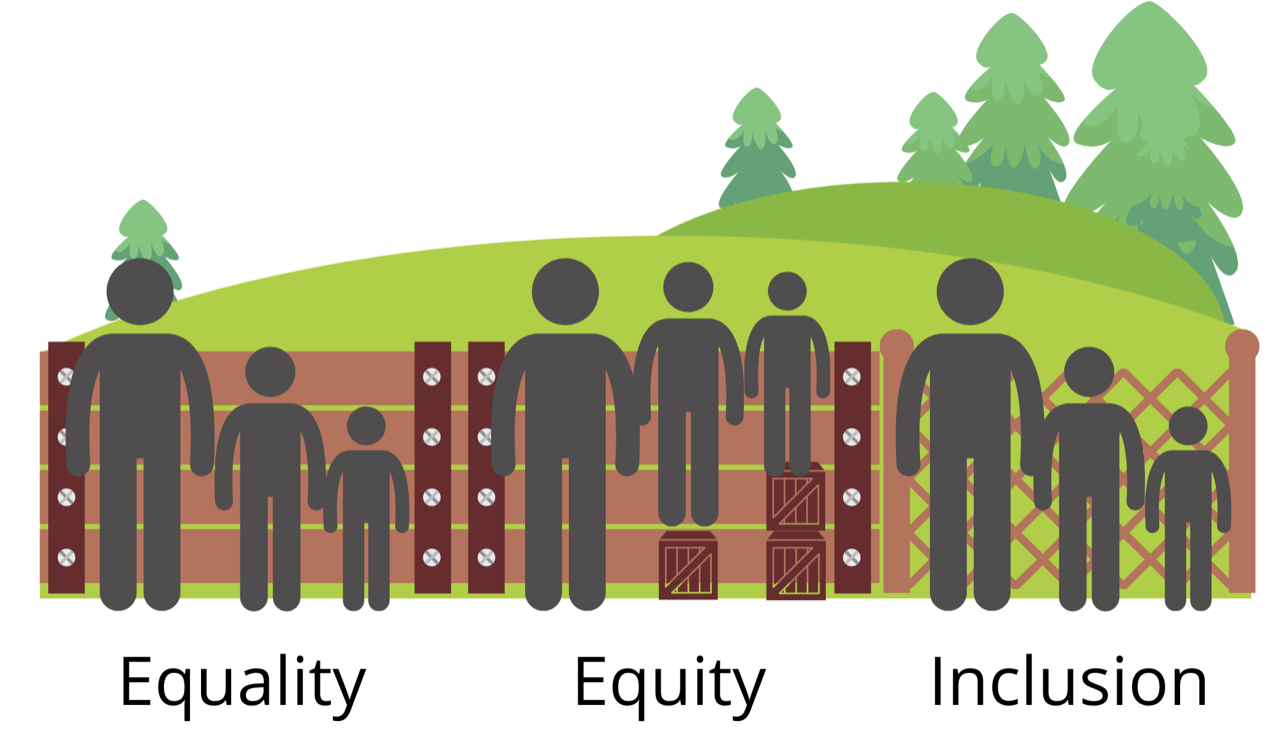
Inclusive economic institutions support the material aspirations of most of the population. They feature secure property rights, an unbiased system of law, and a provision of public services that provides a level playing field in which people can exchange and contract. These institutions ensure that people realise most of the gains from their own efforts. The knowledge that they will do so encourages them to choose the careers that make the best use of their own skills, to develop those skills through education, and if necessary, to start their own businesses and invest in plant and equipment.
Extractive economic institutions are the opposite of inclusive ones: their purpose is to steer the economic rewards toward a relatively small elite. Extractive institutions either discourage people from taking economic initiatives (because they know that little of the gain will accrue to themselves) or narrow their opportunities to do so.
Inclusive political institutions are both pluralistic and sufficiently centralised. Pluralism empowers most of the population by distributing power broadly in society and subjects government to constraints. Instead of being vested in a single individual or a narrow group, political power rests with a broad coalition or a plurality of groups. However, pluralism is consistent with sectarianism or tribalism that leads groups to work against each other rather than with each other. Centralised government that clearly works for everybody is therefore required.
Extractive political institutions violate either or both requirements for inclusiveness; in essence if they seek to serve the interests of only certain favoured elites. (You can probably see where I am coming from already!)
I hope everybody reading this will agree with me that the spectrum from inclusive to extractive government is essentially the same thing as the spectrum from good to bad government. It is the essence of the theory being presented as to why some nations are seen to fail and some can be seen to be successful.
I also hope we will largely agree that extractive policies are what we would associate with right-wing, neoliberal, capitalist government; whereas inclusive policies are what we might expect from socialist and social democratic government. It is hard to imagine, looking at the sorry state of government in the UK today, that England was a pioneer in the development of both inclusive politics AND inclusive economics at certain points in history. This therefore merits a brief look at that history.
- THE SIGNIFICANCE OF THE ENGLISH CIVIL WAR AS A PRECURSOR TO ENGLAND LEADING THE WORLD INTO THE INDUSTRIAL REVOLUTION
Have you ever wondered why it was England that made the breakthrough to sustained economic growth in the seventeenth century, ahead of anywhere else? The book posits that it was only made possible by the political revolution that preceded it. These changes didn’t come about through consensus as there was no mechanism in place at the time to even know what consensus would look like. It took intense conflict between different groups competing for power, culminating in the English Civil War of 1642-1651, and compounded by the Glorious Revolution of 1688.
These events gave rise to the birth of inclusive government by limiting the power of the monarchy and gave Parliament the power to determine economic institutions. At the same time, the political system started to be not only be opened up to a broader cross-section of society, but to be controlled by them, giving unprecedented influence over the functioning of the nation. In initiating pluralism and democratically controlled centralised government, the Glorious Revolution in England can be seen to have created the world’s first set of inclusive political institutions (although still a long way from fully inclusive).

Once established, these more inclusive political institutions started to make economic institutions more inclusive too. Feudalism was finally abolished by the Tenures Abolition Act of 1660, for example. After the Glorious Revolution, parliament then set about breaking up monopolies, rationalising the tax system, creating an independent judiciary, protecting law and order and reforming property rights, including intellectual property rights through the patent system. Crucially, and for the first time, English Law applied to all citizens.
As a direct consequence of these hugely progressive reforms, there came together a huge stimulus to innovation, allied to the removal of barriers to industrial development. The rationalisation of property rights enabled the construction of crucial infrastructure, especially roads, canals and, later, railways, that were crucial to industrial growth and trade. Thus, the Industrial Revolution was facilitated.
Of course, the booming prosperity created by this ‘revolution’ did not immediately remove the scourge of poverty from the masses, but it was quickly realised that mass production required mass consumption, so enabling disposable income became important for everybody. The inclusivity of the political institutions was slowly improved as suffrage was extended, trade unions were allowed and domestic infrastructure like sewerage, water and electricity were rolled out.
Quite quickly, issues of feeding industries’ voracious appetite for raw materials and the need to tap into overseas markets to sell stuff reignited colonialism. So, progression for some meant regression for others!
- THE IMPACT OF COLONIALISM AND POST-COLONIAL INSTITUTIONS IN EXPLAINING THE GLOBAL INEQUALITIES OF TODAY
Colonialism has always had a particular mindset. It’s a mindset that I have always struggled to relate to. From a young age I was taught it was wrong to bully people, wrong to take what belongs to other people, to respect that people from other places are different and do things differently. Then I learned of the glorious British Empire!! Is it any wonder that I felt confused, conflicted, and started questioning everything I was taught? (Well, yes, I do wonder why I had these thoughts while I struggled to find anybody else bothered by such things, but hey!)
I digress. The salient point here is that despite moves towards more inclusive institutions in the U.K., such progressive attitudes had to be put aside if we were to live with ourselves while we pillaged and plundered our colonies for the raw materials needed to fuel our wealth creation for all at home. It was the ultimate extractive enterprise, in every sense of the word. There is no shortage of history books on this period of history, with wide-ranging slants depending on the perspective of the historian.
I want to move onto the post-colonial era that occurred after WW2, specifically in the U.K., but also for what became former colonies.
After two world wars within a few decades, the world, but especially Europe, was fully aware of the dangers of fascism and was in the mood to turn towards a fairer, more inclusive world. Social democracy flourished alongside labour movements and the world went through another period of transformation.
For the colonies, this meant independence, and between Egypt in 1922 and Brunei in 1984, just about all of the British Empire (and the colonies of other European empires) achieved independence. All that is left is a few scattered islands (mostly retained for strategic significance but amounting collectively to less than 300,000 people – much less than the population of Cardiff). We don’t call them colonies, of course; they are ‘British Overseas Territories’. Carefully worded, is that! It’s the significance of the location of that scrap of land that matters. The people there are too few to be of much consequence. But as strategic military outposts and the basis to possible mineral rights in vast tracts of surrounding ocean, they are very much worth hanging on to. If you believe that the Falklands War was about the self-determination of the few hundred people living there, you need to wake up.

But I digress again. What happened to the newly independent countries in terms taking advantage of the opportunity to reset their political and economic institutions? Not all colonies were created equally, of course. Some had special designations, such as dominions and protectorates. They each have different stories to tell.
Dominions were pretty much self-governing from the outset, and their institutions largely mirrored those of the England. See if you can spot what they have in common: Canada, Australia, New Zealand, South Africa, Ireland. They were, of course, colonies of mass resettlement. Taken by force (from the indigenous people) for, and entrusted to, the white European settlers.
A protectorate is a state that is under protection by another state for defence against aggression and other violations of law. It is a dependent territory that enjoys autonomy over most of its internal affairs, while still recognizing the suzerainty of a more powerful sovereign state without being a possession. The histories of protectorates and how they came to need protection (from whom and by whom) are many and varied, and often relatively short-lived.
But your common-or-garden colony was generally ruled directly by the colonial power in the most extractive ways possible. Thus, when granted independence, they had no institutions of their own design in place, just the example of the existent extractive institutions that their colonial exploiters left behind. In many cases there was a power vacuum created and everything was up for grabs.
It might seem obvious that everyone would want to choose institutions that would make bring prosperity. But the understanding of what those institutions looked like wasn’t there. They saw the way rich powerful European powers did things to them, and perhaps didn’t realise how different they did things back home in Europe.
Thus, is it surprising that the same types of extractive institutions reproduced themselves after independence? But instead of remote colonial powers benefitting from the extraction, the newly unleashed political elites within the countries fought for control and the benefits to be extracted. Thus, we witnessed a succession of brutal and ruthless dictators across Africa:
- Robert Mugabe (Zimbabwe: 1987-November 21, 2017)
- Idi Amin Dada (Uganda: 1971-1979)
- Colonel Muammar Gaddafi (Libya: 1969-2011)
- Paul Kagame (Rwanda: 1994-present)
- Gnassingbé Eyadéma (Togo: 1967–2005)
- Hastings Kamuzu Banda (Malawi: 1963–1994)
- Gaafar Nimeiry (Sudan: 1969–1985)
- Omar Al-Bashir (Sudan: 1989-2019)
- Siad Barre (Somalia: 1969-1991)
- Charles Taylor (Liberia: 1997-2003)
- Yahya Jammeh (Gambia: 1994-2017)
- Hissene Habre (Chad: 1982-1990)
- Idriss Deby (Chad: 1990-2021)
- Francisco Macías Nguema (Equatorial Guinea: 1968-1979)
- Obiang Mbasogo (Equatorial Guinea: 1979-Present)
- Paul Biya (Cameroon: 1982-Present)
- Jose Eduardo Dos Santos (Angola: 1979-2017)
- Sekou Toure (Guinea: 1958-1984)
- General Sani Abacha (Nigeria: 1993-1998)
- Zine El Abidine Ben Ali (Tunisia: 1987–2011)
And I am sure I’ve missed a fair few. It’s a sorry litany. These are just the worst examples. That few have heard of all but the first three or four listed illustrates that once we let them go, we really couldn’t care less. They wanted to be independent, it’s their problem now!
Back in the U.K. meanwhile, the post-war era was something of a halcyon period for inclusive institutions. The reaction to WW1included Britain’s first Labour Government in January 1924. It didn’t last long, as Ramsay MacDonald’s recognition of the Soviet Union led to a backlash that forced them out of office by the October of the same year, but it had changed the political landscape of Britain permanently.
Thus, with a similar need for reconstruction after WW2, the Overton window was well and truly shunted leftwards and the Clement Attlee Labour ministry swept into power in July 1945. It created a comprehensive welfare state; the most inclusive political and economic institutions the world had arguably ever seen. Nye Bevan oversaw the creation of the NHS and reforms to benefits. The Bank of England was nationalised along with key infrastructure (e.g., railways) and vital heavy industries (e.g., coal and steel). And the tide of decolonisation began with India, Pakistan, Burma, and Ceylon. Now a strong anti-Soviet voice, Atlee’s administration helped found NATO.

Put this story alongside the stories of post-colonial Africa’s and it is easy to understand why global inequalities have grown wider and wider.
Many historians describe this era as the “post-war consensus“, emphasising how both the Labour and Conservative Parties until the 1970s tolerated or encouraged nationalisation, strong trade unions, heavy regulation, high taxes, and generous welfare state. By the end of the 1970s, the Overton window had shifted right again, and the erosion of inclusivity began, alongside the restoration of extractive politics and economics. More on this later.
- HOW AUTHORITARIANISM, COMMUNISM, NEOLIBERALISM AND CAPITALISM LEAD TO EXTRACTIVE GOVERNMENT AND INSTITUTIONS AND THEIR OWN INEQUALITIES
There was a different type of response to the post-war challenges to the east of Europe – in both Russia and China especially. I don’t won’t to dwell on their stories too long, but they do serve to further underline that at key junctures in history, very different paths can be taken leading to very different outcomes, irrespective of geography. Therefore, gaining independence guarantees nothing for Wales other than an opportunity to reshape its institutions.
Russia and China show how economic growth can be achieved under highly extractive political regimes, but that it cannot be sustained indefinitely.
The policies of Stalin and subsequent Soviet leaders produced rapid economic growth that, for a while truly impressed western observers. The influential journalist Lincoln Steffens (of ‘muckrakers’ fame) accompanied US State Department official, William Bullitt, on a fact-finding mission, including interviewing Lenin, and went down in history for coining the adage: “I’ve seen the future, and it works.” Many westerners continued to see the future in Russia and believed it was working right up until the 1980s. But the reality was that growth had all but stopped during the 1970s. It was failing to keep up with the rapid technological innovations seen in the west.
The book suggest that extractive institutions cannot generate sustained technological change for two reasons:
- The lack of economic incentives
- The resistance of the elites.
In response to number one, Stalin did introduce some wage structures and bonuses for achieving state-imposed targets. The bonuses were often as much as 35% of wages for key mangers and senior engineers. But perversely, such targets can be seen to have discouraged innovation, as innovation would take up resources that were being fully utilised to try and achieve the demanding output targets and thereby risked losing those life enhancing bonuses.
Alongside bonuses for success were punitive punishments for perceived shirking. Absenteeism, defined as being of the job for more than 20 minutes without authorisation, was a criminal offence punished by six months hard labour and a 25% wage cut. Repeat offenders were imprisoned or shot. It never had the desired impact on productivity due to the lack of technological innovation. You can, perhaps force people to labour, but you cannot force people to have innovative ideas.

The solution, according to the book, would have been to abandon extractive economic institutions, but such a move would have jeopardised their political power. Indeed, when Mikhail Gorbachev started to move away from extractive economic institutions in 1987, the power of the Communist Party collapsed, and with it, the Soviet Union. Russia today, however, is under the extractive power of very different extractive rulers in the shape of Putin and his cabal of complicit oligarchs.
China took a similar path of extractive political and economic institutions, but with arguably less economic success in part due to economic growth struggling to keep pace with population growth. It’s turning point came with the death of Mao Tse-tung (aka Mao Zedong) in late 1976. A coup removed the remaining ‘Gang of Four’ and the great reformist Deng Xiaoping took over and transformed the economy into a socialist market economy (alongside strict population growth control policies such as the one child policy).
The essential change to China’s fortunes was the move away from one of the most extractive sets of economic institutions and towards more inclusive ones. Market incentives alongside allowing in foreign investment and technology facilitated very rapid economic growth. Yet the political institutions remain steadfastly extractive, although not as repressive as they had been. Time will tell how long China can follow this path successfully.
Meanwhile, back in the west – once the post-war austerity was lifted, the political elites started reclaiming power
- WHY INEQUALITIES HAVE WORSENED IN THE UK AND USA SINCE THATCHER AND REAGAN
The book doesn’t look at latter day Britain/U.K. or the rise of right-wing populism around the world much at all, which is a pity, but it was published in 2013. The authors do address it in a Project Syndicate opinion piece entitled ‘How Do Populists Win?’. Written in May 2019, halfway through Trump’s first presidency, and between the Brexit vote and the U.K. finally leaving the E.U.
They point out that in the United Kingdom, the Brexit Party leader, Nigel Frottage, promised that a vote for “Leave” in 2016 would be a victory for the “real people.” As Donald Trump told a campaign rally the same year, “the other people don’t mean anything.” Likewise, former Colombian President Álvaro Uribe often speaks of the “gente de bien” (the “good people”).

There are two obvious reasons why such populism is bad. First, its anti-pluralistic and exclusionary elements undermine basic democratic institutions and rights; second, it favours an excessive concentration of political power and de-institutionalisation, leading to poor provision of public goods and sub-par economic performance. Extractive politics producing extractive economics.
Nonetheless, populism can become an attractive political strategy when three conditions obtain. First, claims about elite dominance must be plausible enough that people believe them. Second, for people to support radical alternatives, existing institutions need to have lost their legitimacy or failed to cope with some new challenge. And third, a populist strategy must seem feasible, despite its exclusionary nature.
All three conditions can be found in today’s world. The increase in inequality over the past 30 years means that economic growth has disproportionately benefited a small elite. But the problem is not just inequality of income and wealth: there is also a growing suspicion that the social distance between the elite and everyone else has widened.
Thatcher transformed not just the economy (to a monetarist neoliberal model) but society too. She famously said: “There is no such thing as society: there are individual men and women, and there are families.” This statement encapsulated her belief in the primary significance of individuals and families in society, emphasising personal responsibility and self-reliance. She backed it up with “Greed is Good”. Very soon we had we saw our first UK billionaire (there are now close to 200 of them) and the first UK foodbank (there are now more than 2,500 of them). Remember Harry Enfield’s Loadsamoney? He summed up the 1979-92 Tory era perfectly at 1993’s Comic Relief (which was another sadly needed response to Thatcher, founded in 1985).

One might have hoped that the end of that Tory era would see another period of Labour inclusivity as embodied by previous Labour administrations. But no. When asked in 2002 what her greatest achievement was, Thatcher replied: “Tony Blair and New Labour”. The rest is history.
- WHY A MARKET ECONOMY PROMOTES INCLUSIVITY
I studied ‘A’ level economics and economic geography at university and was only ever taught market economics. As time went by, I became aware of alternatives such as the centrally planned economics of the Soviet Union and P.R. China. We’ve seen how and why they ultimately failed. I also became increasingly aware that market economies can take many forms, ranging from minimally regulated free market or laissez-faire systems to interventionist forms where government plays an active role in correcting market failures and promoting social welfare, sometimes referred to as a ‘mixed economy’. So, what is it about the market economy that is so important to creating economic success and inclusivity?
I remember being taught (from day one of ‘A’ level) that economics is the science that studies human behaviour as a relationship between ends and scarce means that have alternative uses. Therefore, economics ought to be focussed on the best use of scarce resources to satisfy social ends. In other words, it is about the trade-off (price) dictated by what is available (supply) and what is required (demand). A market economy can achieve this by allowing everyone (inclusively) to freely produce, buy, and sell as they see fit. But this also can produce a wide range of problems too (market failures), ranging from environmental issues, waste, inefficiencies, pointless consumerism and the like. Addressing these failures is the role of government. But essentially, markets incentivise innovation, creativity, and technological progress.
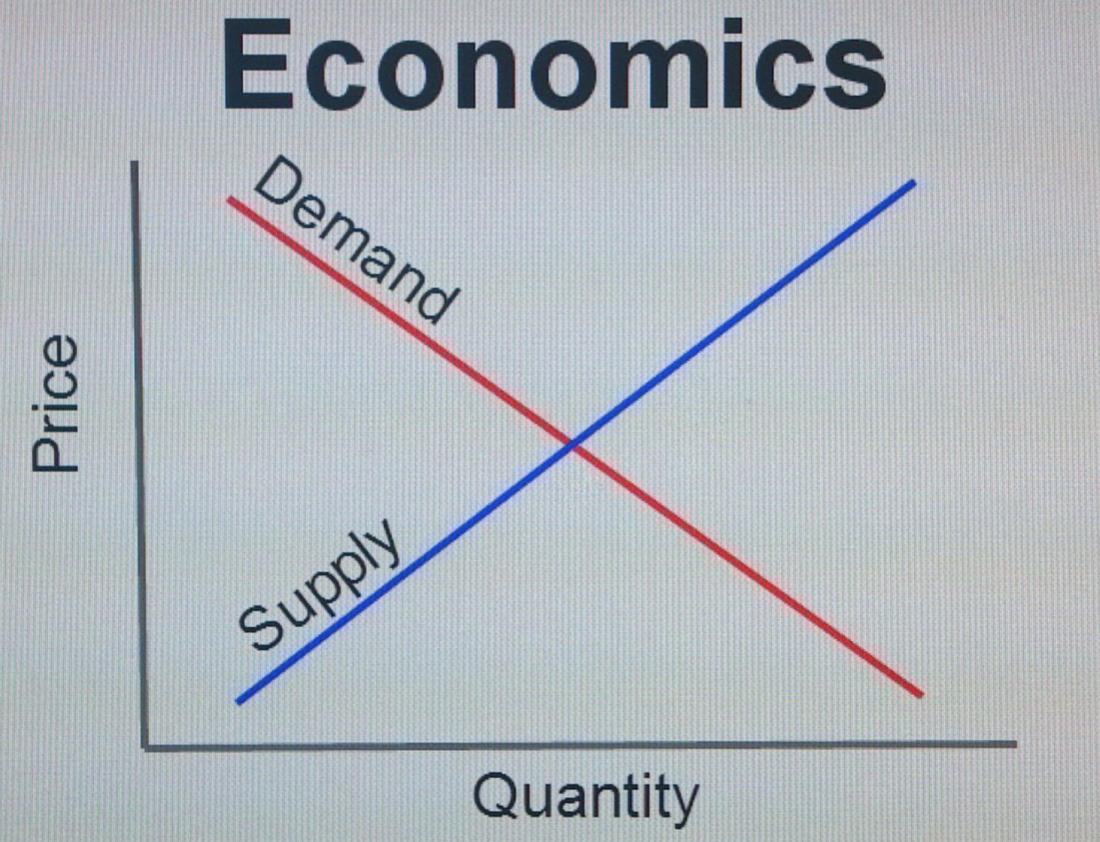
The inclusivity of this is illustrated by the ability of a dyslexic and ADHD, low school achiever like Richard Branson, and a poor lad from Norfolk like James Dyson to go on to create huge industrial and commercial success (although both had incredible strokes of good fortune along the way, but that is true of just about every extraordinary success story). Anyone with a great idea, has the potential to develop and share it with everyone, if they get the right breaks. Ensuring everyone can get the breaks they need to fulfil potential is also the role of government. Inclusive politics (left wing) does this; extractive politics (right wing) doesn’t.
The importance of market forces is therefore difficult to refute. The challenge for lefties like me is to reconcile just how far to allow markets free rein.
- WHY SOCIAL DEMOCRATIC COUNTRIES, ESPECIALLY THOSE ADOPTING THE NORDIC MODEL, ARE AMONGST THE WEALTHIEST, MOST EGALITARIAN, AND HAPPIEST COUNTRIES IN THE WORLD.
Trying to reconcile social and economic policy is the great challenge of politics, made even more challenging in a time of growing environmental crises. It is complicated, but if I were to nominate just the one key indicator that is most significant to achieving a happy balance, it would be income inequality.
Income inequality is where there is a significant disparity in the distribution of income between individuals, groups, populations, social classes, or countries. Income inequality is a major dimension of social stratification and social class. It affects and is affected by many other forms of inequality, such as inequalities of wealth, political power, and social status. Income is a major determinant of quality of life, affecting the health and well-being of individuals and families, and varies by social factors such as sex, age, and race or ethnicity. Reducing all these inequalities produces a more cohesive, happier society; affords everyone with the opportunity to achieve their potential; drastically reduces the cost burdens of welfare; increases productivity; produces greater disposable income for a greater number of people; and I could go on. Just about everybody benefits, except perhaps rich sociopaths. Fuck them!
Reducing inequality can be achieved by making everybody poorer, so to be a successful strategy is contingent on having a successful wealth generating inclusive economy.
If you look around the world for countries that have it all (wealth, low inequalities, happy citizens), you quickly land upon the Scandinavians. No one is pretending they are perfect, nor that they don’t have both social and economic problems, but all the evidence points to them achieving perhaps the best balance of social and economic policies in the world to date. It is commonly referred to as the ’Nordic Model’.

The Nordic model was originally developed in the 1930s under the leadership of social democrats, although centrist and right-wing political parties, as well as labour unions, also contributed to the Nordic model’s development. The Nordic model began to gain attention after World War II but has been transformed in some ways over the last few decades, including increased deregulation and expanding privatisation of public services (the Thatcherite repositioning of the Overton window). However, it is still distinguished from other models by the relatively strong emphasis on public services and social investment. But the dilution of the model’s inclusivity in response to the drift right across the whole of Europe can be seen in the increase of racist, xenophobic and religious intolerance. To my mind, this all goes to prove the importance of ensuring inclusivity as the surest way of keeping it all together.
These are the lessons that an independent Wales would need to take on board on the road to independence.
- WHY INDEPENDENCE OFFERS WALES THE OPPORTUNITY TO TAKE A MORE INCLUSIVE PATH IF IT IS SET UP RIGHT FROM THE OUTSET.
As a longstanding member of Yes Cymru, I am very conscious of its internal debate as to what extent we should be presenting any particular vision of what an Independent Wales should look like. It describes itself as “The non-party-political campaign for an independent Wales”; which is a very different thing to being a non-political campaign of course.
On its website landing page, it makes three fundamental statements:
1. YesCymru is dedicated to the goal of an independent Wales.
2. Only a Wales, with its own government and institutions, elected and created by the people of Wales can truly be trusted to govern in the best interests of its people.
3. We believe in a future independent Wales, which embraces and celebrates the full diversity of everyone who chooses to make Wales their home.
No. 1 is the simplest and most straightforward and makes no allusions to any vision for that independent Wales.
No.2 references the key importance of having our own institutions that can shape the country to the best interests of its people. But this is essentially subjective. No system serves the best interests of everyone in a country, but as we have seen, some do it much better than others for the for different demographics. It specifies the importance of inclusivity in the democratic process, but that leaves a wide range of possibilities in terms of electoral systems. And as we have seen in the USA very recently, we cannot stop turkeys voting for Thanksgiving and/or Christmas.
No.3 presents a vision that is overtly left leaning and patently not what Conservative and Reform voters would share as a vision.
The essential point about achieving independence is that it only creates an opportunity to do things significantly different. However, that must be the point independence, surely. To become independent but carry on with similar institutions and systems of government is pointless. Nothing would change. That was the experience repeated across Africa; many replaced one set of extractive institutions and self-serving elites (European imperialists), with another (corrupt and ruthless dictators).
Thus, independence is even more than just an opportunity; it is a critical juncture that will set the course of history for the people of Wales for many generations. That course will largely be determined by some of the very first acts of a newly independent in setting up its constitution; creating the political, social, and economic institutions that are the very framework of the nation. Get it right and we can create a virtuous circle that brings prosperity to everyone. Get it wrong and we can end up with a vicious circle that can actually make things a whole lot worse for nearly everyone.
I therefore contend that it is critical to have this work done before taking the question of independence to the people of Wales. The last Scottish independence referendum was simply “Should Scotland be an independent country?” Unless people have a clear idea what this independent country would look like, it is understandable that they might be hesitant about jumping into the unknown. Would you like to be an independent country like Uganda or an independent country like Iceland? Other options are, of course, available too!
The groundwork has to be done first. Independence creates a vacuum that will be filled very quickly by those most prepared to grasp the opportunities it presents. That is the moment of critical juncture; not the independence referendum itself.
- INDEPENDENCE BRINGS THE SCOPE TO BE RADICAL
Many, most even, will see the independence referendum as a radical thing in itself, so that persuading the population to opt for hugely radical institutions and policies on top of this might be overly ambitious. The key thing will be to ensure that the institutions, systems, and democratic processes created at the outset will allow for progressive development of those institutions, systems and processes going forward. That is far from a given.
I am no constitutional expert, but I do believe that we need radical solutions if we want to see things radically better. This is always a challenge to achieve democratically, especially given how conservative (small ‘c’) people tend to be about change.
One guy that I know loves looking at constitutional issues and has plenty of radical ideas and visions for an independent Wales is Owen Donovan. I highly commend his ‘State of Wales’ blog for a well-researched look at the range of options we might be able to consider and pursue. For example, he recently looked at something called ‘Liquid Democracy’, which was new to me. It sounds great! Check it out here.

The point is that nothing should be off the table in a newly independent country. Getting anything remotely radical onto the table is currently nigh on impossible. The current constitutional arrangement has delivered nothing.
- CONCLUSIONS
So, returning to the two questions I posed near the beginning:
- Why has the U.K. begun to look ever more like a failing state given its successes in the past?
- Can Wales successfully divorce itself from this failure to become an independent nation that delivers greater prosperity for its people?
Re. the first one, it really boils down to the incremental erosion of inclusive institutions brought about by the dragging of the Overton window to the right ever since the Thatcher/Reagan era. There is absolutely no sign of that changing any time soon with Sir Blair Starmer at the helm. The hopes that Labour might get us back to the halcyon days of inclusive politics and inclusive economics disappeared the day Jeremy Corbyn was crucified by the right-wing media and the Blairite cabal running the party.
Re. the second one, I am convinced that it is only a matter of time and the right people emerging to orchestrate it. When I moved to Wales in the early 90s, support for independence was at less than 5%. Over the last 10 years it has reached 40% at times, and the top reasons given include:
- Wales has different social attitudes to England
- Wales is a historically separate nation
- Wales will fare better if independent
- The UK feels divided
The direction of travel feels irreversible, and it follows a trend that has been seen across Europe since the fall of the Berlin Wall in 1989. Since then, not only has the Soviet Union dissolved into 15 independent nations; Yugoslavia dissolved into seven; Czechoslovakia dissolved into two and numerous other independence campaigns have gathered momentum, most notably:
- Catalonia and the Basque country from Spain
- Flanders and Wallonia from Belgium
- Sicily and Padania from Italy
- Brittany and Corsica from France
- Bavaria from Germany
- South Tyrol from Austria
- and of course, Scotland from the (not so) United Kingdom.
So, can Wales do it? Of course it can; it is a nonsense to think otherwise. Would it deliver greater prosperity? This is a much more valid question and there are no guarantees. But it is unquestionable that independence provides the opportunity to do exactly that if it gets set off on the right foot.
Nothing ventured nothing gained. I think most reflective people in Wales would recognise that Wales has not fulfilled, is not fulfilling and will not fulfil its potential under the current constitutional arrangements. The task for those of us that passionately want to see Wales create the opportunity to fulfil that potential, by going independent, is to sell the vision of a politically, socially, and economically inclusive nation, constituted with that vision front and centre, and encapsulated in its founding constitution.
That work has begun, and we will be ready to make it so when the time comes.
 Bridgend's Green Leftie