
After I built Noddfa, my cabin in the woods at Coed Hills, in 2020, I wanted to ensure it was well used and also wanted to earn back some of the cost of building it. AirBnB was the obvious way to go, although I had no idea how popular the cabin would prove to be.
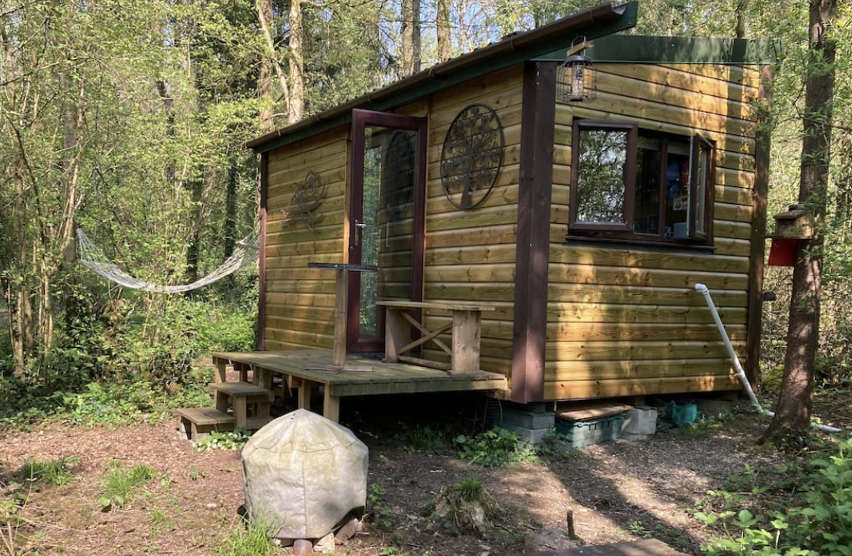
The AirBnB platform proved very easy to use and brought a steady stream of visitors to Noddfa and Coed Hills. Everybody was happy.
It’s funny, isn’t it, that when something makes our lives easier and/or puts money in our pockets, it makes us happy, and to maintain that happiness we turn a blind eye to things that we know are not right.
I was vaguely aware that in 2018 AirBnB had taken a strong ethical stance by delisting about 200 Israeli properties located in the occupied Palestinian West Bank territories. I was therefore happy that I was working with an ethical company prepared to take a stand. No need, I told myself, to do any further due diligence.
What I wasn’t aware of was that AirBnB had subsequently been sued in a class action (on behalf of the delisted property owners) by a law firm in Jerusalem, with the backing of the Israeli government. The essence of the case was that it accused AirBnB of “grave and outrageous” discrimination against Israelis because it still lists homes in some other geopolitical hotspots, such as Tibet and Northern Cyprus.
AirBnB appears to have crumbled under the pressure and reversed its decision to de-list these properties in April 2019. Its attempted compromise was to say that it would now donate all proceeds from rentals in the West Bank to humanitarian organisations. Airbnb released a statement that said:
“We understand the complexity of the issue that was addressed in our previous policy announcement. Airbnb has never boycotted Israel, Israeli businesses, or the more than 20,000 Israeli hosts who are active on the Airbnb platform. We have always sought to bring people together and will continue to work with our community to achieve this goal.”
Less than 6 months earlier it had said it had removed 200 listings because the settlements were at the “core of the dispute between Israelis and Palestinians“. It further stated:
“US law permits companies like Airbnb to engage in business in these territories. At the same time, many in the global community have stated that companies should not do business here because they believe companies should not profit on lands where people have been displaced.”
So, why the decision to backtrack on the ban?
Israeli lawyers filed a class action suit that sought 15,000 shekels (about £3,200) for each host of the 200-ish homes that were due to be deleted from Airbnb’s listings.
Airbnb said that under the terms of a settlement it would “not move forward with implementing the removal of listings in the West Bank from the platform“.
The San Francisco-based company said it would allow listings throughout the West Bank but donate any profit it generated to “organisations dedicated to humanitarian aid that serve people in different parts of the world“.
Airbnb said the same approach would be implemented in the disputed regions of South Ossetia and Abkhazia in the Caucasus.
The announcement was made days after Israel’s Prime Minister, Benjamin Netanyahu, promised to annex West Bank settlements, if he was re-elected. He was.
Credit to AirBnB for its initial stance, I suppose, but it had shown itself to have insufficient backbone to resist the pressure. Meanwhile I continued to profit very nicely from AirBnB, blissfully unaware of what I was tacitly supporting, even while attending numerous pro-Palestine demos and rallies in Cardiff and London, and welcoming guests wearing my West Bank-made keffiyeh and considering joining the now-proscribed Palestine Action group.
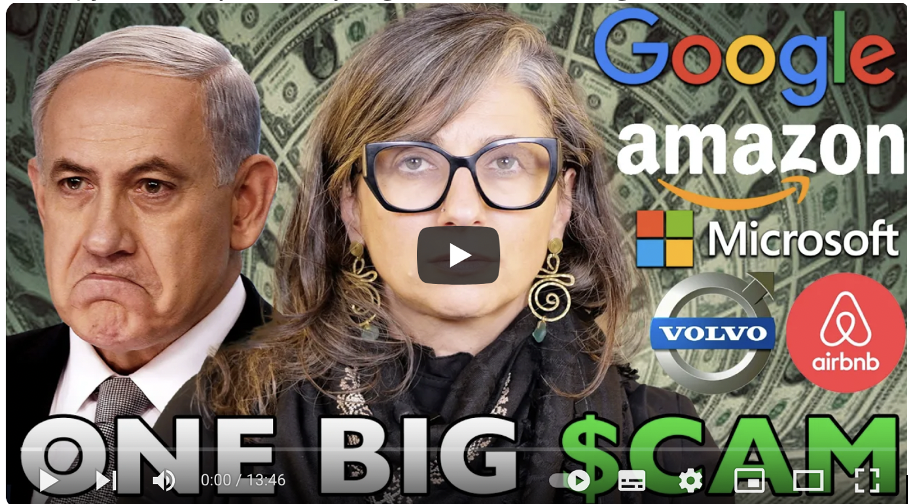
It was not until somebody that had booked Noddfa a while ago for later this summer contacted me that I was prompted to wake up. She was asking if she could preserve her booking with me once she deleted her AirBnB account as a result of becoming aware of its complicity in Israeli-occupied West Bank territories. This was because of seeing details of the recent report by Francesca Albanese, UN Special Rapporteur on human rights in Palestine. Click here to read that report.
And here is Frances Albanese talking about it on DDN (Double Down News) just a couple of days ago from me writing this. Click on the image.
It is absolutely appalling that our governments are not holding Israel to account for this blatant genocide being enacted before our eyes. So, it falls to all of us to do what we can, lest we are all complicit too. In a capitalist, neoliberal world with little effective democracy left, our only real way of exerting pressure is in how we choose to spend (and earn) our money.
I try to support the BDS (Boycott Divestment Sanctions) movement as best I can, and have a long list of companies I avoid dealing with lodged in my mind, and do take heed of priority targets when publicised.

Thus, I have now unlisted Noddfa and listed it on Vrbo instead. I’ll get it on FairBnB too once their website stops messing me around! I wasn’t even aware of these alternative platforms until I started actively looking for AirBnB alternatives. I doubt they will generate as much business, but hey, time will tell. They will catch up if AirBnB don’t get their house in order, I hope.

I’ve also tried to use BDS apps like ‘No Thanks’ and ‘No Thank You’ but it sure slows down shopping and it is quite shocking just how vast the connections to Israel are in the business world. I have given up on this to be honest, but my list of big companies to avoid has certainly grown substantially.

The aim of this post is not to preach, not to shame, not to bully anyone into supporting BDS or any other ‘boycotting of companies’ campaign. All I want to highlight is that it is down to all of us to realise that just about every purchase we ever make is a political decision in some way. We support and endorse one choice, at the expense of all the other alternatives, every time we buy anything. That is just as political as choosing who to vote for.
We vote in ignorance and we, of course, buy things in ignorance of all the implications. And then we pretend there was nothing we could do to alleviate the problems and misery in the world. I am as guilty of this and guilty of my consequent hypocrisy. I fully acknowledge this.
But my conscience does get pricked and I do then do some due diligence from time to time. It is a lot better than doing nothing. I’m especially fortunate in that I can afford to make some ethical choices that cost more money. I understand that not everybody can in these ideologically austere times (I did try to warn everybody about Starmer, but Labour members voted for him and the public duly elected him).
Thus, for the foreseeable future, it is no more AirBnB! They have promised me a response to my concerns and passed it up to someone ‘trained to deal with such issues’. Watch this space!
P.S. With the shameful suggestion that Trump could be nominated for the Nobel Peace Prize, there is growing momentum behind the nomination of Francesca Albanese, including from previous winners of the prize. (Meanwhile Trump sanctions her!).
You can back this nomination by adding your name to this Avaaz petition.
 Bridgend's Green Leftie