I have just returned from a trip to New Zealand with one of my sons that was extended by a few days by having our return flights cancelled. Here is the relevant timeline:
July 2025 book return flights to Auckland, via Dubai, with Emirates airline, through FlightOffice.co.uk (part of Travelopedia Ltd.), for February into March 2026.
February 28th, 2026, USA and Israel start war with Iran.
March 1st sees Emirates suspend operations as regional airspace closures are put in place.
Emirates immediately cancel the daily flights from Auckland to Dubai up until, and including, March 4th. My flight remains scheduled on the 5th.
March 3rd Emirates cancel my flight on the 5th.
Rip-off merchants – to be avoided
Having booked through an agency rather than direct (something I will try to avoid in the future!), Emirates gave me two options:
Allow them to rebook me onto one of their flights once available (but unlikely to be before 20th March!)
Accept a paltry refund (c.£600) and get my agent to rebook an alternative route home.
The first option really wasn’t an option, so it had to be the second one. Before speaking to the agency, I had a quick look at what was showing as available options on Skyscanner and Google Flights. This showed multiple options via Singapore, China and USA at prices around the £800 each mark for departures on the 5th.
Armed with this information I ring FlightOffice and get through to one of their ‘senior travel consultants’ called Jimmy Stokes. He sounds like a very nice guy, empathetic with my plight and seemingly keen to help me as best he could.
He suggests that my best option is a departure on the 5th that goes via Honolulu and US mainland city (I forget which) at a cost of around £1200 each. I ask him about the fact that I’ve seen multiple options advertised at around £800 and he advises me that he doubts that they will prove available and/or will be at hugely inflated prices once you get to the checkout point. I’m feeling a bit sceptical, so tell Jimmy I’ll have a go at securing a cheaper deal and get back to him if he is right. He’s fine with that.
Sure enough, he proves right. Already, in the space of about 10-15 minutes, all the Singapore options have gone. Wary of going via remote Chinese airports, I try a route via USA at around £800 each that seems to be ok, but as I get to checkout it informs me that it has just sold out. I try a route via China showing at £850 each and as I get to the checkout the price rockets to about £6850!!
So, I quickly get back to Jimmy via his direct line. He tells me that the £1200 option on the 5th has now gone too. He now tells me that the best he can secure right now is an option via Los Angeles that departs on the 8th for £1050 each. Starting to feel a sense of rising desperation, I agree, and with emails exchanged, the deal is secured. I thank Jimmy and feel a sense of relief more than anything, despite having just forked out £2100!
This new route home means I will be circumnavigating the world and will have enough time in LA to go and check out Santa Monica and Venis Beach. Every cloud …
The flights are with Virgin Atlantic (LAX-LHR) and their partner airline, Delta (AKL-LAX), and having used them before and having their app, I log in to choose seats, and then relax into 3 ‘bonus’ days in Auckland. I didn’t take any real notice of the email from Virgin Atlantic that arrived on 6th March confirming my seat reservations.
A day or two after finally getting home I set about seeing if there is any chance of our travel insurances coughing up. I’m not optimistic, given general exclusions around war disruptions, but the websites suggest it is worth putting in a claim in this particular case.
It’s a labourious task but the salient point is that I get to the point of wanting to list the modest fee I paid directly to Virgin Atlantic for the privilege of choosing seats (£34 each) and I dig out the email they sent me on the 6th. I am gobsmacked as I scroll down to find not just the amount I paid for selecting seats buy a full breakdown of the fares for the flight ……
The price of the flights was not the £2100 I had been charged by Jimmy at FlightOffice, but a fraction under £1200!!!
The feckers had ripped me off to the tune of just over £900!!!
Virgin fare of c.£1200 vs FlightOffice charge of £2100
Had I not separately purchased seat selection direct with Virgin Atlantic I do not think I would have had any direct communication from them at all and I would have never become aware of this huge rip-off.
I email, message and call Jimmy to ask for an explanation and what he proposes to do about it but get absolutely no response despite seeing ‘read’ against the messages. I send further messages stating that if I don’t get a response and some recourse, I will go public with this blatant rip-off of desperate customers. No response so here goes.
I am emailing this article to Simon Calder, Martin Lewis and a around 300 news desks of TV, radio and press (both national and regional), courtesy of ChatGPT. It will be interesting to see if any want to run with this story. Failing that, I hope my regular blog followers will learn the lessons of this story.
Ukrainian skeleton pilot Vladyslav Heraskevych has been banned from competing at the Winter Olympics for continuing to wear a helmet which features images of athletes killed during Russia’s invasion of his home country.
Heraskevych, who wore the helmet in all of his training runs before the competition began on Thursday, was told by the International Olympic Committee (IOC) on Tuesday it “does not comply” with the Olympic charter and said he was not allowed to wear it.
But on Wednesday he again wore the helmet to official training and told BBC Sport he believed he “has all the rights” to wear it.
My response to this:
Long has been the mantra that politics should stay out of sport, but:
This has always been a nonsensical deceit
It is highly debatable whether this case is especially political.
My first point is that just about every decision we make has a political dimension to it. Every time we spend money, we are making choices about where our money goes. This is a political decision. This is why I consciously try to avoid products from countries with dodgy regimes (like the USA and Israel), or dodgy environmental records (like BP and Nestlé), and Tory donors (like Warburtons and Sainsbury’s). Choosing renewable energy over fossil fuels is a political decision. I’m a hypocrite at times as sometimes it is just too awkward or inconvenient to make the right choice, but not worrying or caring about such provenance at all is the political choice of people who care little for other people or the planet (like Reform voters and Tories).
Second point, international sport is essentially political by using national entities to organise teams. Using national flags and anthems is political. Banning countries, like Russia and Belarus, is political. Allocating Olympic and World Cup hosts is political. Wearing three lions on the England football shirt is political. Wearing three feathers on the Wales rugby shirt is political. Choosing sponsors (like the abominable Coca-Cola and Proctor & Gamble at these Olympics) is political.
In a competition where skeleton riders appear to be having an informal competition to have the most unique helmet designs, Vladyslav Heraskevych chose to honour fellow athletes, some of whom were friends and would likely have been at these Olympics had they not been killed in the current war with Russia.
This can be construed as a touching gesture to give these unfortunate victims of the war a presence at an event they might otherwise have been present at. This is not dissimilar to other athletes that have openly acknowledged missing loved ones already in these games.
Choosing to ban Heraskevych is therefore more of a political act that him wearing this helmet. The IOC have wilfully chosen to construe this act as contravening Rule 50 of their charter which says:
“No kind of demonstration or political, religious or racial propaganda is permitted in any Olympic sites, venues or other areas.”
“All competitors, team officials or other team personnel in the Olympic Games shall enjoy freedom of expression in keeping with the Olympic values and the fundamental principles of Olympism, and in accordance with the guidelines determined by the IOC Executive Board.”
And yet they are allowing Trump’s fascist foot-soldiers, his notorious, trigger-happy ICE agents into Olympic sites, venues and other areas. And while every event is marked by ceremonies of overt national flag waving and the playing of often offensive anthems (like the U.S.A.’s and, you never know, maybe the British one). Thankfully they just play the tunes and save us the offensive lyrics.
In conclusion, I am appalled (but not surprised) at the IOC’s decision to bar this athlete from competing. Like all athletes present, he would have put countless hours into achieving a dream of competing at an Olympic Games. He was a medal contender too, by all accounts. (His ejection heightens the prospects of the leading Italian making the podium, something the IOC always likes to see. Just saying.)
The only good thing about this situation is that, like whenever anything is banned, it actually shines the spotlight on things even more. So let me finish by honouring the athletes that featured on Vladyslav’s helmet:
Dmytro Sharpar – figure‑skater (Heraskevych’s 2016 Youth Olympic Games teammate)
Let me start by confessing that the nearest I come to being racist is in hating the U.S.A, and about half of its people. Please note I say ‘half’, as the other half are amongst the most welcoming, intelligent, and generous people I have met anywhere, but the obnoxious half …, don’t get me started. Anyway, I am not proud of it and wish it weren’t so …, more than ever!
But having said that, I think I am in one of the biggest growing clubs in the world this week. I think that Trump’s appearances in Davos, Switzerland, over the last two days may go down in the history books as the moment that just about the whole of Europe, if not most of the world decided that enough is enough. I am sure you will have heard all about it, but here it is in its entirety:
Watching it is more than 90 minutes of your life that you will never get back, but while it boring and tedious on the one hand, it is fascinating, bewildering and disturbing on the other. Simultaneously!
Let me fact check a few of his most outrageous and pernicious lies:
“Inflation is defeated”
In December it was 2.7%, on an admittedly slowly reducing trend, as seen worldwide since the sharp price rises seen in the Covid pandemic, but still way above the Federal Reserve target of 2%, and higher than 9 out 10 of the years preceding the pandemic. As far as I am aware the cost-of-living crisis is just as real in the U.S. as it is in the U.K.
“Foreign Investment in the U.S. is surging”
He cited a figure of “$18trillion, maybe $20trillion”. To say these figures are fanciful would be an understatement and a half. In 2025, we have known figures for the first three quarters. These add up to less than a quarter of one trillion at $244billion. Estimates for the full year range from $300 billion to $350 billion at best. Predictions for 2026 range from a fallback to around $250billion (based on worries about geopolitical tensions, mostly created by Trump) to a more optimistic $450 billion or thereabouts. So, a 60-to-80-fold exaggeration by the great gibberer.
It is reasonably safe to assume that the entirety of the economic data he cited is similarly accurate. I do not deny that the U.S. economy is holding up well, with growth greater than the rest of the G7 and inflation and unemployment roughly in line with them. But the longer Trump is in office, the harder it is to get reliable data, as is the case with, for example, rogue states. Just saying!
Once he finished self-fellating himself over his prodigious growth, etc. for half an hour or so, he turned his attention to destroying the NATO alliance and what is left of the special relationship between the USA and Europe.
You will all know about his naked colonialist intent towards Greenland (or was it Iceland?) along with Venezuela, Colombia, Panama, Mexico, Cuba and Canada, but again I feel compelled to clarify a couple of points that may have escaped you regarding his ridiculous suggestion that the U.S. was ‘stupid’ (one of his favourite words) for handing it back to Denmark after WW2.
“We gave Greenland back to Denmark after World II – how stupid were we?”
Firstly, Greenland has been a Danish sovereign territory since 1721, a full 55 years before the U.S.A. Declaration of Independence. In other words, throughout the history of the U.S.A. Greenland has always been Danish. His assertion that just because some Danes landed a ship on it 500 years ago doesn’t give them the right to own it has to be one of the greatest self-owns in history. His lack of self-awareness is staggering.
Secondly, during WW2, once Denmark was invaded and occupied by Germany, the U.S. struck a defence agreement with the Danish ambassador in Washington that allowed the U.S. to station troops and establish military bases and airfields etc. to protect it frompotential German control. This had obvious mutual benefits to all parties.
This agreement was ratified and extended post-war and was renegotiated in 1951 in line with Cold War strategic concerns. The U.S. presence peaked in the 1960s, when there were tens of thousands of personnel scattered around dozens of installations; 10,000 at the Thule Air Base alone at one time. The numbers dwindled after the end of the Cold War because the U.S. decided to withdraw them. Today, only the Pituffik Space Base with a couple of hundred personnel remains. There appears to be no issue with re-instating the U.S. presence to at least its 1960s peak levels.
So, just like most of his bluster about ‘peace’ and ‘security’, you always have to look for the money-making opportunity with Trump. His eyes light up at getting his hands on Gaza, for example, so he can fund its redevelopment and profit from his vision. Hot off the press today, presented by son-in-law Jared Kushner, this!
Just like his Venezuela coup, installing himself as de-facto President, is patently all about stealing oil, Greenland is all about stealing valuable mineral resources. Fuck the Venezuelan people (he’s working with Maduro’s henchmen after all, so it was never about regime change or democracy) and fuck the Greenlanders, a miserable bunch of 50,000 losers in Trump’s eyes.
He may have backed down for the moment, after the rest of NATO finally reined him in and pointed out that his security concerns can easily be addressed by re-instating U.S. bases and presence around Greenland. They’ve called his bluff on this one, so he is having to retreat momentarily while he finds a new angle of attack.
NATO was set up in 1949, at the behest of Clement Attlee’s Labour government, as a way of aligning the efforts of the US and the western European powers at the start of the cold war. In reality it was always a means to ensure US dominance of Europe. It served a number of complementary purposes for the big winner of the second world war. In the words of the British Lord Ismay, its first secretary-general, it was a means “to keep Russia out, the Americans in and Germany down.” Global geopolitics look very different today than they did in 1949.
Russia may have a dangerous sociopathic leader, but it is no longer, if it ever was, an economic powerhouse. It’s economic output (GDP) is only the 9th biggest in the world, less than Germany, U.K., France and Italy, and less than corporations like Apple, Nvidia, Microsoft and Google. It cannot tolerate NATO at its borders only because that brings a malevolent U.S.A. to its borders. Kick NATO into touch and get rid of Putin and the Russian people would love to reap the benefits to living standards seen in the old soviet bloc countries that are now in the E.U. and prospering.
Germany is no longer the pariah state of Europe but the glue that sticks it together. I trust and respect Germany and Germans a lot more than I trust the U.S.A. and Americans.
It is the U.S.A. that has all the hallmarks of a rogue state these days. A “rogue state” is generally understood as one that regularly breaks international rules, destabilises others, represses its own population and media, and resists global accountability. Tell me that this isn’t the U.S.A. today.
Furthermore, don’t let Trump’s absurd rhetoric fool you into thinking it is only American money that funds NATO and ‘protects’ Europe. It is barely the biggest contributor to the NATO budget, despite Trump bleating that the US pays too much, gets little in return and that Europe doesn’t pull its weight. All total nonsense as the data below shows:
If we were to remove the U.S. contribution of €521million and share that out between the remaining population of 639 million people, if works out at €0.80 per person extra. The fact of the matter is that only Turks, Bulgarians and North Macedonians pay less than Americans per head towards the NATO budget.
And would we need this much of a budget if we weren’t supporting U.S. led conflicts all over the planet, especially if the threat from Russia was removed? I don’t think so. NATO has evolved from a defence pact to an imperialist war machine, as Sweta Choudhury eloquently portrays in her article “We need to talk about Nato: an imperialist war machine” in 2019.
This is a key point: Trump may have brought these issues to a head this week, but they are nothing new. The problem isn’t Trump. The problem is the U.S.A. I came across this from a Danish economist, Lars Christensen, this week:
“The problem isn’t Trump. The problem is the U.S. When the outside world observes Trump’s insane behavior and his threats against allies, and we at the same time observe that there is no real action from the U.S. public, Congress, the U.S. Supreme Court, or the U.S. media about this insanity, we will all have to conclude that the U.S. accepts this behavior.”
They voted him twice, FFS! They have taken no meaningful steps to remove him. Before re-electing him, he was found guilty/liable in court of (a) 34 counts of first-degree falsification of business accounts to cover-up hush money paid to Stormy Daniels, (b) sexual assault and defamation of his victim, along with various cases of sexual impropriety, defamation, business malpractice and anti-SLAPP lawsuits that have either been settled out of court or are still mired in the system (probably indefinitely). And who knows what is still lurking in those Epstein files. You are or become what you elect and tolerate. How many times have I invoked the quote: “All that is necessary for evil to prevail is for good people to do nothing”?
So, it is well beyond the time when we should have disbanded NATO and distanced ourselves from the U.S.A. Their influence across Europe (the world even), in the last few decades especially, has been mostly negative. They have led us in the wrong direction not just militarily (Iraq, Israel, Afghanistan, Kosovo, Ukraine) but economically (rampant capitalism allied to protectionism), environmentally (‘drill baby drill’) and socio-politically (fuelling the rise of fascistic right-wing populism around the globe).
We don’t need them. They are a menace. Get lost Trump. Get lost U.S.A.
Just to underline what Trump is all about, we had the launch of his shabby cabal of petro-states and dodgy governments this week in Davos:
Trump has extended invitations to dozens of nations, hinting at a future role as a wider conflict mediator, akin to a pseudo-UN Security Council.
Countries joining the board: Argentina, Albania, Armenia, Azerbaijan, Bahrain, Belarus, Bulgaria, Egypt, Hungary, Indonesia, Jordan, Kazakhstan, Kosovo, Morocco, Mongolia, Pakistan, Qatar, Saudi Arabia, Turkey, United Arab Emirates, Uzbekistan, Vietnam.
Countries that have been invited but remain noncommittal: Cambodia, China, Croatia, Cyprus, Germany, Greece, India, Italy, The European Union’s executive arm, Paraguay, Russia, Singapore, Thailand, Ukraine.
Countries that will not join the board, for now: France, Norway, Slovenia, Sweden, UK (a rare piece of backbone from Starmer).
The ulterior motives of this initiative are barely disguised. The first goal was Trump’s real estate venture in Gaza that I’ve already highlighted. Those first signatories all clearly see an opportunity to suck up to Trump and will no doubt hope to gain contracts for other ventures or some other favours.
Trump is the self-appointed chair for life of this club with a membership fee of a cool $1 billion. I wonder who has stumped that up so far. That it is ‘Trump/U.S.-centric’ is emphasised by its awfully tacky logo:
It is not remotely global. In fact, it brought to mind this map of Trump’s imagined empire doing the rounds recently:
Trump said, in Davos: “Once this board is completely formed, we can do pretty much whatever we want to do, and we’ll do it in conjunction with the United Nations.” He also hinted the board could eventually make the UN “obsolete.” The UN is far from perfect but given the choice of it or this abomination …. !!!
In conclusion, I am hoping that this week’s events in Davos will prove to be a watershed moment in the history of international relations, with the U.S.A. finally reaping what it has sown over many decades. It has all culminated in the monstrous farce embodied in the ludicrous form of the most dangerous clown to walk the Earth. The emperor’s new clothes have finally, it seems, been seen for what they are: nothing but grotesque.
Below is an article published today in Labour List by Luke Akehurst and Graham Jones. It deals with questions I had about the U.S. incursion in Venezuela. I think it is a perceptive and valid perspective.
The problem, of course, is that Trump is involved who has no qualms about revealing his underlying motives. Having removed an illegitimate President, the U.S. now needs to quickly facilitate free and fair elections and support the resultant regime. It won’t. Trump has already openly declared that he envisions the U.S. ‘running’ Venezuela for the foreseeable future, while they facilitate the plunder of Venezuelan oil reserves.
The other problem is his declared intentions towards other territories in the Western Hemisphere: Columbia, Panama, Cuba, Canada and, probably imminently, Greenland.
Thus, as much as I welcome and agree with Luke and Graham’s analysis below, it offers no relief to the discomforting and disturbing feelings that arseholes like Trump and Putin are leading us into the most volatile and dangerous era of my lifetime.
Here is the article:
There is much commentary on the legality of the US action in Venezuela which confuses many issues.
The rules are clear. You cannot invade another country. You can be invited in. The UK is in Ukraine legally not because of the UN, but because the Ukrainian sovereign government has invited us in. Putin may say it’s illegal, but it isn’t.
Only a sovereign nation can determine an intervention as to whether it is by friend or foe. In this case, the government of Venezuela.
This is the point where it all gets confused and where it pivots to the question of who is the sovereign body for Venezuela under the legal principle of ‘One Voice?’. Who runs Venezuela?
Too many don’t realise or don’t want to realise what this legal framework means.
Venezuela is an odd case. 65 countries recognise the opposition as the winners of the 2024 election and legitimate (legal) sovereign body.
This UK government, like previous governments, has repeatedly stated that Maduro is not the President and refuse to refer to him as such, instead referring to him as illegitimate.
Broadly speaking, those with the opposite view, countries who recognise Maduro, are led by those with democratic deficits: Moscow, Beijing, Tehran, Pyongyang.
And you know where this is going. The Venezuelan opposition (and election winners) call it a liberation and the Maduro regime (losers) an invasion.
Here in the UK, we are bound by law and we recognise the sovereign government as being the opposition. We have a robust legal framework here. There is opportunity to challenge the government and challenge this assertion in parliament and in the courts. But this recognition has been the policy of the last five prime ministers and crucially has already, for rare reasons, been tested in UK courts.
This is because the Bank of England holds vast quantities of Venezuelan gold bars in its vaults and both sides contested their sovereignty.
Maduro wanted it returned, the opposition wanted it to remain stored in the vaults. The court had to decide the principle of who represents Venezuela and held up the UK Government’s position that the Venezuelan opposition won the election and the gold must therefore stay in the UK.
The legal principle established here was who is the sovereign body in Venezuela to which the courts decided it was the opposition and not the Maduro government. In short, the UK government’s clear position as determined by the courts is that it can only take instruction from the Venezuelan opposition. The UK has therefore abided by the law and the gold bars remain in the BoE. This principle is at the crux of legality.
The UK government has and continues to uphold this legal judgement. The alternative would be to recognise the Maduro regime as legitimate.
It’s a factor in the US too where Maduro’s defence rests on whether he has sovereign immunity as head of state, or, as indited, an alleged drug trafficker involved in corruption facing the same laws as everyone else.
And the Venezuelan opposition has been quite clear on the US. They do not see the US action as an illegal incursion into their sovereignty. Not before, not during and not now. They have colluded with US authorities and described the action as “liberation”.
The pragmatic reality of this is straightforward.
The democratic representatives of the Venezuelan people decide, they are sovereign on this issue, not UK politicians. And that should be the election winners for that is the fundamental principle we hold.
Furthermore, should Maria Marchado win the next election, she’s more than likely to be on the White House lawn thanking the US leadership before going to the UN to celebrate liberation.
The Venezuelans are unlikely to pursue Maduro’s claims of invasion, or an illegal incursion on sovereign Venuzeula.
Trump and his administration clearly think they are above and beyond both international law and the U.S. domestic law. Having got away with so much for so long, they don’t even feel the need for pretence about this anymore.
Let me present the basis for me stating this, starting with his current exploits in Venezuela.
US Incursion in Venezuela Legality
The operation in which U.S. forces entered Venezuelan territory and captured President Nicolás Maduro raises serious legal concerns under both international and U.S. domestic law.
International law
The UN Charter prohibits the use of force against the territorial integrity or political independence of another state, except in self‑defence against an armed attack or when authorised by the UN Security Council.
The U.S. operation was conducted without a Security Council resolution and without the consent of the Venezuelan government.
Experts argue that the U.S. could not plausibly claim self‑defence, as there was no imminent armed attack by Venezuela against the United States.
Taken together, these points indicate that the incursion and kidnapping likely violate the prohibition on the use of force in the UN Charter.
U.S. domestic law
The Constitution grants Congress the power to declare war and to authorize the use of military force. Historically, major overseas operations have required a formal declaration or a specific statutory authorization (e.g., the Authorization for Use of Military Force).
In this case, the administration did not seek prior congressional approval for the operation, which legal scholars say breaches the War Powers Resolution and established precedent reuters.com.
Conclusion: Both the lack of UN Security Council authorisation and the absence of congressional approval suggest that the U.S. incursion into Venezuela and the kidnapping of its leader are illegal under prevailing international and U.S. legal frameworks. While the U.S. government may argue that Maduro was an illegitimate leader and a “narco‑terrorist,” such political rationales do not override the legal requirements for the use of force.
Previous offences
Trump’s conduct as a public figure has been the subject of extensive investigation, media scrutiny, and legal proceedings.
Credibly reported crimes and criminal accusations against former President Donald Trump (as of early 2026)
Case / Investigation
Main criminal allegation(s)
Status (early 2026)
Manhattan “hush‑money” case
• Falsifying business records (34 felony counts) to conceal a $130 k payment to adult‑film actress Stormy Daniels during the 2016 campaign.
• Willful retention of national‑defense information (violation of the Espionage Act). • Obstruction of justice and making false statements to federal investigators.
Georgia election‑interference case (state racketeering)
• Conspiracy to commit election fraud (RICO‑style charges) for pressuring state officials to “find” votes. • Solicitation of false statements and illegal procurement of voting equipment.
Federal election‑subversion case (Washington, D.C.)
• Conspiracy to defraud the United States and obstruct an official proceeding (Jan 6, 2021 Capitol attack). • Seditious conspiracy (charges later dismissed, but the core conspiracy charge remains).
Civil defamation suits (e.g., E. Jean Carroll, Summer Zervos)
• While civil, the lawsuits allege sexual assault and harassment; they are not criminal charges, but they reflect serious accusations that have resulted in monetary judgments.
Verdicts rendered in 2024‑2025; not criminal convictions but equivalent to guilty verdicts
Summary of the overall picture
Across the four major criminal prosecutions, Trump faces 88 distinct criminal counts covering the four categories above (business‑record falsification, classified‑document mishandling, election‑interference, and obstruction/conspiracy) citizensforethics.org.
These counts represent the credibly documented accusations that have led to formal indictments and, in the Manhattan case, a conviction.
Note: The list reflects only the criminal matters that have resulted in formal charges or convictions reported by reputable news outlets and official court filings. Other allegations (e.g., personal‑behaviour claims) have not led to criminal charges and therefore are not included here. Who knows what is lurking in the Epstein files?
Understanding why he has not been convicted of many of the other accusations levelled against him involves several factors that intersect law, politics, and the U.S. constitutional system:
1. Presidential Immunities and Legal Timing
Executive‑branch immunity – While a president is in office, the Department of Justice has historically interpreted its policy to prohibit criminal prosecution of a sitting president. This doctrine, articulated in Office of Legal Counsel memos, means that any alleged wrongdoing must wait until after the term ends.
Statutes of limitations – Some alleged offenses fall outside the time window for filing charges, especially when investigations began years after the conduct occurred.
2. Political and Institutional Checks
Congressional oversight – The House of Representatives can launch impeachment inquiries, which are political rather than criminal processes. Trump was impeached twice (first in 2019 for abuse of power and obstruction of Congress, second in 2021 for incitement of insurrection). Both Senate trials ended in acquittal, largely because the required two‑thirds supermajority for conviction was not reached. Surprise, surprise!
Separation of powers – The judiciary operates independently, but judges are appointed by presidents and confirmed by the Senate, creating a system where political considerations can influence the pace and direction of cases.
3. Nature of the Allegations
Allegation
Status (as of early 2024)
Key Points
Financial and tax investigations (e.g., New York Attorney General, Manhattan District Attorney)
Ongoing civil and criminal probes; several subpoenas issued; some financial records sealed.
Prosecutors must prove intent to commit fraud beyond reasonable doubt; many aspects remain under investigation.
Election‑interference (Georgia, Washington, D.C.)
Multiple state and federal investigations; a Georgia grand jury considered charges related to phone calls to election officials.
No indictment has been filed yet; evidence is still being evaluated.
Sexual misconduct allegations
Civil lawsuits (e.g., E. Jean Carroll v. Trump) resulted in a jury finding Trump liable for sexual assault and defamation, awarding damages. Criminal charges have not been pursued at the federal level.
Civil verdicts do not equate to criminal convictions; criminal statutes require higher evidentiary standards.
International law concerns (e.g., sanctions, foreign interference)
Various reports and congressional hearings; no formal charges in international courts.
Enforcement of international law depends on diplomatic mechanisms and treaty obligations, which can be politically contested.
4. Legal Burden of Proof
Criminal law requires proof “beyond a reasonable doubt.” Many of the allegations involve complex financial transactions, communications, or actions taken in the context of political decision‑making, making it difficult for prosecutors to meet that high standard without extensive, corroborated evidence.
5. Political Support and Public Opinion
Base loyalty – A substantial portion of the electorate continues to view Trump favourably, which can affect the willingness of jurors, witnesses, or elected officials to pursue aggressive action.
Partisan dynamics – Congressional committees and some prosecutorial offices are staffed by individuals appointed by politicians from both parties, leading to differing interpretations of the evidence and priorities.
6. Procedural Safeguards
The U.S. legal system includes numerous procedural protections (e.g., discovery rules, plea bargaining, appeals) that can lengthen investigations and delay outcomes. High‑profile cases often encounter additional scrutiny, which can both protect due process and create opportunities for strategic delays.
Bottom line
Trump has faced a range of investigations and civil judgments, but as of early 2024 no comprehensive criminal conviction has been secured for the most serious allegations. This outcome reflects a combination of:
Constitutional doctrines limiting prosecution of a sitting president,
The high evidentiary bar for criminal conviction,
Ongoing, sometimes fragmented investigations,
Political and institutional checks that shape how and when charges are brought, and
Persistent partisan divisions that influence both public perception and the actions of lawmakers and prosecutors.
Because many of these matters remain unresolved, the situation could change if new evidence emerges or if legal actions progress after his presidency. But when will that be if he gets his way and manipulates a third term, as he has explicitly alluded to. It is difficult to have any faith in the U.S. judicial system given how politicised it is.
Non‑Judicial paths that could limit or remove Donald Trump from power or influence:
While the formal criminal‑justice system is the primary mechanism for holding anyone accountable for unlawful conduct, the United States also has, in theory at least, a range of political, institutional, and societal levers that can “bring down” a public figure—even in an environment where the judiciary is perceived as politicised. Below are the most realistic avenues, together with the conditions that make each effective.
1. Congressional Impeachment (or a New Impeachment Attempt)
How it works: The House of Representatives can draft and vote on articles of impeachment. If passed, the Senate conducts a trial; a two‑thirds majority votes to convict and remove the official from office.
Why it matters: Impeachment is a constitutional check that does not rely on a criminal court. Even if the Senate were split along partisan lines, the very act of opening an impeachment inquiry creates a powerful political narrative and can trigger further investigations.
Practical hurdles:
Requires a majority in the House (currently Democratic‑controlled) and a super‑majority in the Senate (currently Republican‑controlled).
Historically, impeachment has been used sparingly against presidents; success depends on shifting Senate dynamics or extraordinary bipartisan pressure.
2. Party Discipline and Internal GOP Dynamics
Censure or Expulsion: The Republican National Committee (RNC) or state party committees can formally censure or even expel a member for violating party rules or damaging the party’s reputation.
Primary Challenges: Encouraging strong primary opponents who can rally anti‑Trump factions within the party can split the base and reduce his leverage.
Funding Controls: Major donors and political action committees (PACs) can withhold financial support, limiting campaign resources.
3. Public Opinion & Media Pressure
Polling Shifts: Sustained negative polling can erode a politician’s legitimacy. Polls that show declining approval among core supporters can prompt party leaders to distance themselves.
Investigative Journalism: In-depth reporting that uncovers new evidence or highlights inconsistencies can sway public sentiment and increase pressure on political allies to act.
Social‑Media Campaigns: Coordinated grassroots movements (e.g., petitions, boycotts, organized calls to representatives) can amplify demands for accountability.
4. Legislative Action Targeted at Specific Conduct
Targeted Laws or Regulations: Congress can pass legislation that narrows loopholes exploited in alleged wrongdoing (e.g., tightening campaign‑finance rules, strengthening corporate‑ownership disclosures).
Sanctions or Restrictions: Federal agencies can impose civil penalties, revoke licenses, or bar individuals from certain government contracts or benefits if statutory thresholds are met.
Benefit Denial: For example, the Office of Government Ethics could block a former president from receiving certain post‑office privileges if conflicts of interest are proven.
5. State‑Level Political Mechanisms
State Elections: Trump could be challenged in state races. State legislatures can also launch investigations or pass resolutions condemning misconduct.
State Courts & Attorney Generals: Even if federal courts are viewed as politicised, many states have independent AG offices that can pursue civil or criminal actions under state law (e.g., fraud, tax evasion).
6. Civil Litigation and Financial Consequences
Mass‑Tort or Class‑Action Suits: Victims of alleged wrongdoing (e.g., fraudulent business practices) can sue for damages. Large verdicts can financially cripple a political operation and deter future misconduct.
Bankruptcy or Asset Seizure: If civil judgments are entered and not satisfied, creditors can seek liens or forced sales of assets, reducing the individual’s capacity to fund political activities.
7. International Pressure
Foreign Governments & NGOs: While the U.S. sovereign legal system is primary, international human‑rights bodies or foreign governments can issue statements, impose travel bans, or limit diplomatic engagements, affecting reputation and mobility.
Sanctions (rare for U.S. citizens): In extreme cases, the Treasury’s Office of Foreign Assets Control (OFAC) could target individuals for illicit activity tied to foreign jurisdictions, though this is uncommon for domestic political figures.
How These Paths Interact
Mechanism
Typical Timeline
Key Actors
Likely Effectiveness (given current political climate)
Impeachment
Months–years (depends on House agenda)
House leadership, Senate leadership, Judiciary Committee
Low to moderate – requires a shift in Senate composition or extraordinary bipartisan consensus.
Party discipline
Immediate to months
RNC, state GOP committees, major donors
Moderate – can isolate the figure but may provoke backlash from loyalist factions.
Public/media pressure
Ongoing
Journalists, activists, social‑media platforms
Variable – can rapidly alter narratives, but impact depends on media reach and audience receptivity.
Legislative reforms
1–2 years (bill passage)
Congress, regulatory agencies
Moderate – can close loopholes but may face partisan gridlock.
State‑level actions
Variable
State AGs, legislatures, courts
Moderate – often less partisan than federal arena, but limited scope.
Civil litigation
1–5 years (case progression)
Plaintiffs, courts, insurers
Moderate – financial penalties can be significant, though enforcement may be protracted.
International pressure
Sporadic
Foreign governments, NGOs
Low – limited direct effect on domestic political standing.
Takeaways
Multi‑Front Approach: Relying on a single avenue is risky. Successful accountability often comes from simultaneous pressure—legal, political, and public.
Leverage Election Cycles: Voter sentiment tends to crystallise around elections; mobilising opposition voters and encouraging strong primary challengers can be decisive.
Focus on Institutional Integrity: Strengthening independent oversight bodies (e.g., ethics commissions, inspector generals) reduces reliance on partisan courts.
Maintain Public Transparency: Transparent investigations and clear communication of findings help sustain momentum and prevent “political fatigue.”
Monitor Shifts in Party Dynamics: Changes in GOP leadership, donor attitudes, or grassroots activism can quickly alter the calculus for supporting or opposing a figure like Trump.
Bottom line: The U.S. judiciary is critically politicised. There remaining constitutionally grounded mechanisms—impeachment, electoral defeat, party discipline, legislative reform, civil litigation, and sustained public pressure—that can curtail or remove a former president’s influence are weaker than ever. The effectiveness of each route depends heavily on the prevailing political landscape, the willingness of institutions to act independently, and the level of civic engagement driving demand for accountability. Trump is working hard to hobble all of these.
Given the above and given the political polarisation and geographical splits in the country, it is hard to see how Trump can be reined in other than by something close to civil war. The MAGA right-wingers are already armed to the teeth and the left are cowered. But at some point, they have to rise and resist or else they will sleepwalk into a fascist nightmare.
How the Trump administration can be interpreted as displaying fascist‑like traits:
Below is a synthesis of the most‑cited scholarly and journalistic analyses (Eco’s “Ur‑Fascism”, Paxton’s fascist checklist, Parenti’s five functions, etc.). Each point notes the evidence that scholars have highlighted, followed by a brief comment on the limits of the comparison.
1. Cult of Personality & Charismatic Leadership
Evidence: Historians cited in the Wikipedia entry on “Donald Trump and fascism” argue that Trump’s post‑2024 assassination‑attempt rhetoric amplified a “cult of personality” that positioned him as a quasi‑mythic figure protecting the nation from an imagined enemy.
Interpretation: Fascist movements traditionally rally around a charismatic leader who claims to embody the nation’s destiny. Trump’s self‑portrayal as the sole defender of “America” mirrors this pattern, though critics note the absence of a formal party‑wide doctrine that typically accompanies classic fascist cults.
2. Ultra‑nationalism & Exclusionary Rhetoric
Evidence: Multiple analyses (e.g., Fair Observer, Parenti) highlight Trump’s repeated framing of immigrants, “the left,” and other groups as existential threats, urging “purity” of the nation and advocating policies that segregate or exclude those deemed outsiders fairobserver.comnewamerica.org.
Interpretation: This aligns with fascist emphasis on a “pure” community and the vilification of “others.” The administration’s family‑separation policy and travel bans are cited as concrete policy manifestations of that rhetoric.
3. “War on Knowledge” – Undermining Independent Truth Sources
Evidence: FactsoverFeelings’ evidence‑based analysis notes a systematic “war on knowledge,” where the administration attacked scientific agencies, academic institutions, and the press, seeking to replace expert authority with partisan narratives factsoverfeelings.org.
Interpretation: Fascist regimes often suppress dissenting intellectual voices to consolidate power. While the U.S. retained a free press, the repeated delegitimization of mainstream media resembles this facet.
4. Reliance on Extra-legal Executive Power & Disregard for Judicial Authority
Evidence: Rolling Stone’s “Guide to Trump’s Fascist Presidency” documents numerous instances where the administration ignored court orders (e.g., deportations to Central America, defying injunctions on immigration policy) and threatened judges who ruled against it rollingstone.com.
Interpretation: Fascist governments typically bypass constitutional checks. The Trump administration’s pattern of flouting judicial decisions suggests an authoritarian tilt, though it never fully abolished judicial review.
5. Mobilisation of Mass Action & Encouragement of Violence
Evidence: The January 6 Capitol attack, framed by Trump as a protest against a “stolen” election, is frequently referenced as an example of encouraging mass confrontation with democratic institutions.
Interpretation: Fascist movements historically employ paramilitary or mass‑mobilised violence to intimidate opponents. The lack of an organized paramilitary wing distinguishes the U.S. case, but the rhetoric that incited the crowd bears resemblance.
6. Economic Nationalism & Protection of Elite Interests
Evidence: Analyses (e.g., New America) point to “natalistic” policies combined with tax cuts favouring corporations and the wealthy, echoing fascist economic strategies that protect entrenched elites while promoting a nationalist agenda.
Interpretation: While not a centrally planned economy, the alignment of fiscal policy with nationalist messaging parallels historic fascist economies.
It might be a stretch to call the Trump administration a fascist regime at the moment, but the direction of travel seems undeniable. This was underlined by a news article I read just yesterday, that partly prompted me to put this blog piece together, that is about experts warning that the U.S. is already preparing for a genocide against transgender Americans. It is well worth reading. https://www.importantcontext.news/p/experts-warn-us-in-early-stages-of
We are living through treacherous times with the world on the brink of numerous inter-connected catastrophes. As throughout history, there are a few global actors that will impact on all our lives if allowed to do so. It is a critical moment in history for global, international, and national institutions (the U.N., N.A.T.O. and western democracies in particular) and we need to realise the importance of each of us in standing up and being counted.
Image inspired by Peter May’s photograph of a statue representing “Die Gute” (Goodness) on Dresden Town Hall which was left overlooking the ruins of the town in 1946. http://www.radicalteatowel.com
Of course, not all Brits hate Donald Trump. I suspect quite a few Reform voters and Farage fans hold him in quite high esteem as he represents all the values they hold dear. There is a huge irony in this because Trump is an affront to many true British values; values you would expect Reform’s faux Christian nationalism (a contradiction in terms as it is) to respect rather than parody.
I’ve been reminded recently of the brilliant profile of Trump written by a British guy, named Nate White, to this question on Twitter/X:
“Why do many British people not like Donald Trump?”
His response is way better than anything I could have come up with:
A few things spring to mind. Trump lacks certain qualities which the British traditionally esteem. For instance, he has no class, no charm, no coolness, no credibility, no compassion, no wit, no warmth, no wisdom, no subtlety, no sensitivity, no self-awareness, no humility, no honour and no grace – all qualities, funnily enough, with which his predecessor Mr. Obama was generously blessed. So for us, the stark contrast does rather throw Trump’s limitations into embarrassingly sharp relief.
Plus, we like a laugh. And while Trump may be laughable, he has never once said anything wry, witty or even faintly amusing – not once, ever. I don’t say that rhetorically, I mean it quite literally: not once, not ever. And that fact is particularly disturbing to the British sensibility – for us, to lack humour is almost inhuman. But with Trump, it’s a fact. He doesn’t even seem to understand what a joke is – his idea of a joke is a crass comment, an illiterate insult, a casual act of cruelty.
Trump is a troll. And like all trolls, he is never funny and he never laughs; he only crows or jeers. And scarily, he doesn’t just talk in crude, witless insults – he actually thinks in them. His mind is a simple bot-like algorithm of petty prejudices and knee-jerk nastiness.
There is never any under-layer of irony, complexity, nuance or depth. It’s all surface. Some Americans might see this as refreshingly upfront. Well, we don’t. We see it as having no inner world, no soul. And in Britain we traditionally side with David, not Goliath. All our heroes are plucky underdogs: Robin Hood, Dick Whittington, Oliver Twist. Trump is neither plucky, nor an underdog. He is the exact opposite of that. He’s not even a spoiled rich-boy, or a greedy fat-cat. He’s more a fat white slug. A Jabba the Hutt of privilege.
And worse, he is that most unforgivable of all things to the British: a bully. That is, except when he is among bullies; then he suddenly transforms into a snivelling sidekick instead. There are unspoken rules to this stuff – the Queensberry rules of basic decency – and he breaks them all. He punches downwards – which a gentleman should, would, could never do – and every blow he aims is below the belt. He particularly likes to kick the vulnerable or voiceless – and he kicks them when they are down.
So the fact that a significant minority – perhaps a third – of Americans look at what he does, listen to what he says, and then think ‘Yeah, he seems like my kind of guy’ is a matter of some confusion and no little distress to British people, given that:
• Americans are supposed to be nicer than us, and mostly are.
• You don’t need a particularly keen eye for detail to spot a few flaws in the man.
This last point is what especially confuses and dismays British people, and many other people too; his faults seem pretty bloody hard to miss. After all, it’s impossible to read a single tweet, or hear him speak a sentence or two, without staring deep into the abyss. He turns being artless into an art form; he is a Picasso of pettiness; a Shakespeare of shit. His faults are fractal: even his flaws have flaws, and so on ad infinitum. God knows there have always been stupid people in the world, and plenty of nasty people too. But rarely has stupidity been so nasty, or nastiness so stupid. He makes Nixon look trustworthy and George W look smart. In fact, if Frankenstein decided to make a monster assembled entirely from human flaws – he would make a Trump.
And a remorseful Doctor Frankenstein would clutch out big clumpfuls of hair and scream in anguish: ‘My God… what… have… I… created?’ If being a twat was a TV show, Trump would be the boxed set.
Bravo!
Most of our right-wing scumbags, as much as they aspire to Trump’s position of power and largely share his values and agenda, are not quite as bad as Trump. Farage is more articulate, Johnson is better read, Truss is no sexual predator, Yaxley-Lennon shows no signs of dementia, Badenoch is not (quite) a white supremacist.
These disgusting people all play the populist tunes. Right‑wing populism is a broad, trans‑national phenomenon, but scholars and observers consistently identify several recurring “threads” that shape its discourse and appeal. While the exact mix varies from country to country, the following elements tend to appear together in most right‑wing populist movements:
1. Anti‑elitist / “People vs. Establishment” Narrative
Core claim: A morally pure, homogeneous “people” is being betrayed by corrupt, out‑of‑touch elites (politicians, bureaucrats, mainstream media, academia, global institutions).
Rhetorical function: Positions the movement as the authentic voice of ordinary citizens, justifying a demand for “real” representation and often for sweeping institutional reforms.
2. Nativism and Cultural Identity
Emphasis on national/ethnic homogeneity: Populists stress a historic, cultural, or linguistic identity that they argue is under threat.
Us‑vs‑them framing: Immigrants, minorities, or culturally distinct groups are portrayed as outsiders who dilute or endanger the nation’s character.
Cultural conservatism: Defence of traditional values (family, religion, language) against perceived liberal or progressive erosion.
3. Opposition to Immigration and Multiculturalism
Security and economic arguments: Migrants are framed as competitors for jobs, welfare resources, or as security risks.
Symbolic dimension: Immigration becomes a proxy for broader anxieties about change, loss of control, and the perceived “globalist” agenda.
4. Scepticism of Globalization and International Institutions
Economic protectionism: Calls for tariffs, trade barriers, or “fair‑trade” policies to protect domestic industries and workers.
Political sovereignty: Critique of supranational bodies (EU, UN, WTO) as eroding national decision‑making power.
Narrative of “global elite”: Global financial or technocratic elites are blamed for economic dislocation and social unrest.
5. Law‑and‑Order Emphasis
Strong‑hand governance: Advocacy for tougher policing, stricter criminal penalties, and decisive executive authority.
Security framing: Links crime, terrorism, or social disorder to immigration or multicultural policies, reinforcing a “protect the people” stance.
6. Charismatic Leadership and Direct Communication
Personalist style: Leaders present themselves as outsiders who bypass traditional party structures and speak directly to the public (often via social media).
Simplified messaging: Slogans, catchphrases, and emotionally charged language replace nuanced policy debate, making the narrative easy to spread.
7. Economic Populism Coupled with Cultural Conservatism
“Left‑right blend”: While socially conservative, many right‑wing populists adopt economically redistributive rhetoric (e.g., “the rich are exploiting the common folk”) to broaden appeal.
Welfare chauvinism: Support for social benefits is conditioned on national belonging—welfare for “the people,” not for immigrants or foreigners.
Hidden agendas: Allegations that hidden forces (global financiers, secret cabals, foreign powers) manipulate events behind the scenes.
Media distrust: Mainstream outlets are dismissed as part of the conspiracy, reinforcing reliance on alternative information channels.
9. Reaction to Perceived Moral Decline
Cultural backlash: Opposition to progressive social changes (e.g., LGBTQ+ rights, gender equality measures) framed as defending “traditional morals.”
Nostalgia for a “golden age”: Idealizing a past era when the nation was supposedly more cohesive, prosperous, and morally upright.
How These Threads Interact
Synergy: Anti‑elitism fuels distrust of both domestic institutions and international bodies, while nativist sentiment provides a clear “other” to blame for societal problems.
Regional variation: In Europe, the immigration/nativist component is often dominant; in Latin America, anti‑globalization and anti‑establishment rhetoric may take precedence; in the United States, a mix of cultural conservatism, law‑and‑order, and economic populism is typical.
Policy outcomes: The combination often leads to proposals for stricter border controls, reduced influence of supranational entities, deregulation of certain economic sectors, and expanded executive powers.
Takeaway
Right‑wing populism is not monolithic, but its most common threads revolve around a people‑versus‑elite narrative, defense of a homogeneous national identity, opposition to immigration and globalization, law‑and‑order emphasis, and charismatic, direct leadership. Understanding these recurring themes helps explain why such movements can adapt to diverse political contexts while maintaining a recognizable ideological core.
And what does this all translate into when they get into power? Taking a closer look at Trump, Orban, Meloni, Modi, Erdogan, Milei, et al, shows us what to expect when they get into power.
Populist Thread
How It Shows Up in Government Action
Illustrative Examples (generic)
Anti‑elitist “people vs establishment”
• Frequent attacks on civil servants, judges, and independent agencies as “out‑of‑touch elites”. • Attempts to centralise decision‑making in the executive or in a charismatic leader’s office. • Use of referenda or “direct democracy” mechanisms to bypass parliamentary debate.
A prime‑minister appoints loyalists to key ministries, dismisses senior career officials, and calls a national vote on a flagship policy.
Nativism & cultural identity
• Tightening citizenship, language, and integration requirements. • Symbolic legislation that foregrounds national symbols (flags, anthems, holidays). • Policies that privilege “native” cultural practices in education and public broadcasting.
Laws mandating that school curricula teach a “national heritage” module and that public broadcasters allocate a minimum percentage of airtime to locally produced content.
Opposition to immigration & multiculturalism
• Rapidly enacted border‑control measures (e.g., visa bans, asylum‑procedure shortcuts). • Reduction or elimination of pathways for family reunification. • Public‑funded campaigns that frame migrants as security/economic threats.
Introduction of a “fast‑track” deportation procedure for undocumented arrivals and a law restricting the number of work permits issued annually.
Scepticism of globalization & supranational bodies
• Withdrawal from or renegotiation of trade agreements, EU‑style treaties, or multinational accords. • Promotion of “economic sovereignty” through tariffs, subsidies for domestic producers, or state‑owned enterprises. • Creation of parallel national regulatory frameworks that override international standards.
Imposing import duties on foreign agricultural products while subsidising local farmers and filing a formal objection to a regional trade bloc’s environmental directive.
Law‑and‑order emphasis
• Expansion of police powers, longer detention periods, and harsher sentencing guidelines. • Creation of special courts or tribunals for “national security” or “public order” cases. • Public‑security rhetoric used to justify emergency decrees.
Passing a law that allows police to conduct searches without a warrant in designated “high‑risk” zones and establishing a “national security court” with expedited procedures.
Charismatic leadership & direct communication
• Centralised decision‑making around a single figure; frequent use of social media, rallies, and televised addresses to set the agenda. • Bypassing traditional party structures or legislative committees in favour of “executive orders”. • Personal loyalty becomes a key criterion for appointments.
The head of state issues a series of executive decrees on economic reform, each announced via a live broadcast rather than parliamentary debate.
Economic populism paired with cultural conservatism
• Welfare programmes targeted specifically at native citizens (“welfare chauvinism”). • Protectionist fiscal policies combined with tax cuts for small‑business owners seen as “the backbone of the nation”. • Subsidies for industries tied to national identity (e.g., agriculture, mining).
Introducing a “citizen benefit” that grants a cash allowance to families with three or more children who are citizens, while cutting benefits for non‑citizen residents.
Conspiracy‑oriented worldview
• Legislative inquiries or investigations aimed at “foreign influence” networks, often lacking transparent evidence. • Restrictions on NGOs, foreign‑funded media, or academic institutions labelled as “agents of the global elite”. • Use of secrecy or classified briefings to reinforce the narrative of hidden threats.
Enacting a law that requires NGOs receiving foreign funding to disclose donors publicly and subjects them to quarterly audits.
Moral‑decline backlash
• Policies that restrict abortion, same‑sex marriage, or gender‑affirming care, framed as protecting “family values”. • Education reforms that limit sex‑education curricula or promote “traditional morality” lessons. • Funding cuts to cultural projects deemed “degenerate” or “non‑national”.
Passing a bill that bans gender‑neutral bathrooms in public buildings and revises school textbooks to remove references to LGBTQ+ histories.
Common Governance Patterns
Centralisation of Power – Decision‑making is concentrated in the executive or in the leader’s inner circle, often justified by the need to act swiftly for the “people”.
Legislative Bypass – Frequent use of referenda, executive orders, or emergency decrees to sidestep parliamentary opposition.
Targeted Welfare – Social safety nets are reshaped to favor native citizens, reinforcing the “us vs. them” narrative.
Regulatory Roll‑backs – Environmental, consumer‑protection, or labor regulations are loosened under the banner of protecting national industry and reducing “bureaucratic overreach”.
Symbolic Nationalism – High‑visibility actions (renaming streets, erecting monuments, emphasizing national holidays) serve to cement a shared identity and signal the government’s commitment to cultural preservation.
Media Control & Narrative Shaping – State‑run outlets receive preferential treatment; independent or foreign media are labeled as “fake news” or “propaganda”, limiting dissenting viewpoints.
Polarising Rhetoric – Policy announcements are framed in stark moral terms (“protect our children”, “defend our sovereignty”), which consolidates the base but can deepen societal divisions.
Why These Behaviours Matter
Policy Stability: Rapid, top‑down changes can create legal uncertainty for businesses and civil society.
Institutional Trust: Persistent attacks on the judiciary, media, and bureaucracy can erode long‑term confidence in democratic institutions.
Social Cohesion: Targeted welfare and anti‑immigration measures may exacerbate ethnic or cultural tensions.
International Relations: Withdrawal from multilateral agreements can strain diplomatic ties and affect trade, security cooperation, and investment flows.
Understanding these patterns helps anticipate how right‑wing populist parties will translate their campaign themes into concrete governmental actions, and it highlights the areas where checks and balances become especially crucial.
It also needs to be understood how such measures are a stepping-stone to outright fascism. Right‑wing populism shares manytraits with fascism—especially the emphasis on a strong, charismatic leader, a “people versus elite” narrative, and a defensive stance toward national identity. However, most contemporary right‑wing populist movements lack the core ideological and structural components that define classical fascism, such as an explicit totalitarian vision, a revolutionary myth of rebirth, systematic suppression of all dissent, and a corporatist economic model directed by the state. But there are clear signs that these are on the future agenda of right-wing populist and/or are being introduced stealthily in small increments.
Core defining elements of fascism:
Feature
What it means in classic fascism (e.g., Mussolini, Nazi Germany)
Ideological myth
A belief in a historic or racial “rebirth” that requires a radical break with the current hegemony.
Totalitarian ambition
The aim to control politics, economics, culture, and private life through a single party/state apparatus.
Cult of the leader
The leader is portrayed as the embodiment of the nation’s destiny, often with quasi‑religious reverence.
Corporatist economy
The state organizes society into corporate groups (industry, labour, etc.) that are subordinated to the regime’s goals.
Militarism & expansionism
Aggressive foreign policy, glorification of war, and territorial conquest are central.
Systematic repression
All opposition—political parties, independent media, civil society—is outlawed or violently crushed.
Mass mobilization
Organized paramilitary squads, mass rallies, and propaganda are used to forge a unified, obedient populace.
All of these are patently evident in Trump’s MAGA America.
MAGA literally embodies the myth that 50’s America was great.
Trump talks openly of dismantling the constitution to give him a third term, along with his threats to manipulate the electoral system.
He fosters his brand image and cult status with followers at every opportunity, even producing his “God Bless the USA Bible”.
The Trump Corporation has grown in reach and wealth substantially during his tenure as President. (More below.)
Far from the being the “Peace President”, he has negotiated deals that benefit him and the USA rather than brokered peace settlements that can endure. He is effectively waging war on Venezuela and has designs on taking over Greenland, Canada and the Panama Canal.
His pressure on and repression of the media and any voices of opposition get bolder and more disturbing.
He has sent troops into numerous USA states controlled by Democrats already and has long used mass rallies and propaganda to cement his support.
That right-wing populist leaders succeed in conning ordinary working people that they have their best interests at heart is one of their most bewildering but undeniable achievements. Witness the vast Tory corruption during Covid as one of the most blatant examples. But it is historically much more discreet in this country. Trump, of course, has no concept of discretion.
Trump appointed one of his real-estate developer mates, Steve Witkoff as Middle-East envoy and a special envoy in the Ukraine War negotiations. They are rubbing their hands with glee at thoughts of re-developing Gaza into the “Middle-East’s Riviera”; Trump’s ‘Project Sunrise’. And Witkoff caused a bit of a stir when it was leaked that he was briefing Russian officials that one of the best ways to get what they want out of Trump is to effectively ‘grease his palms’. Trump’s reaction to this revelation was simply that it was “what a dealmaker does”!
Such abuse of power for personal gain is nothing new of course (witness the personal fortunes accrued by relative lefties like Blair and Kinnock for example), but the sheer scale of Trump’s brazenness is hard to grasp.
Every US president since the 1970s has voluntarily adhered to rules designed to prevent conflicts of interest, typically by placing their businesses into blind trusts and stepping away from direct management. But things have been astonishingly different with Trump, who argues that he is not directly involved with his business because his children manage the Trump Organization. This argument persists even though profits from the family business obviously flow straight back to him.
Respected Lebanese-USA journalist, Mohamad Bazzi, has done a lot of work investigating the Trump families’ dealings in the Middle East. Talking to Aamna Mohdin in the Guardian’s First Edition newsletter, published on 29/12/2025, Bazzi said:
“It’s difficult to keep up with all the ways that Trump and his family have been profiting from the presidency,” Bazzi says. “A lot of the deals that have emerged are with international players – whether they’re companies, billionaires, governments – that want to make nice with the US president. They’ve seen that one quick way to please Donald Trump is by enriching his family business.”
Bazzi pointed to the Trump Organization’s increasing number of real estate deals with companies in Arab countries, including Saudi Arabia, Qatar and the UAE. These companies, he says, have connections to their respective countries’ sovereign wealth funds or, in some cases, to their royal families. Bazzi says that these partnerships involve billions of dollars’ worth of real estate transactions and new golf course developments.
“In many of those cases, the Trump Organization isn’t putting up its own capital. They are branding deals where the Trump Organization leases the Trump name to these developers and they put in all the capital and investment to create these developments. The Trump family gets a licensing fee as well as a 20- or 30-year operating licence to manage these sites,” he adds.
Recent disclosures showed Dar Al Arkan, a publicly traded Saudi real estate developer, paid the Trump Organization $21.9m (£16.4m) in license fees in 2024 for projects in Dubai and Oman.
The Trump family business also ventured into crypto, launching a dollar-sign Trump meme coin days before his second inauguration. According to Bazzi, this coin’s value is purely speculative, but has still proved to be profitable for the family. “Ultimately, Trump and his family are raking in millions of dollars in fees as the coin is being traded back and forth. And so the crypto ventures provided the Trump family with new ways to profit from being in office,” he says.
It goes on and on. Trump rolled out the red carpet for Saudi Arabia’s Crown Prince Mohammed bin Salman (MBS) when the latter visited the White House in November. Shortly after Trump’s re-election, the prince pledged to invest $600bn (£449bn) in the US economy over the next four years. A year later at the White House, he promised to increase that investment to $1tn.
When asked what countries such as Saudi Arabia and other Gulf nations were receiving in return for the eye-watering sums of money they had pledged to the US economy or to the Trump family, Bazzi replied:
“In Saudi Arabia’s case, it’s been this guaranteed defence pact that Trump announced when MBS visited him at the White House. He announced something similar, through executive order, for Qatar last October. Trump has promised the US will come to their defence if attacked, and promised to sell advanced US weaponry,” he says.
Working out exactly how much Trump has profited from the Presidency is very difficult. Forbes estimate his pre-presidency personal net worth at $3.7 billion and his current (December 2025) net worth at around $7 billion. But his greed seems insatiable and he no doubt aspires to achieving dictatorship as that is a means to accumulating much greater wealth. He would start off at number 10 in this historical list of the wealthiest dictators, adjusted to approximate modern USD equivalents where possible (as compiled by ChatGPT):
Profited from oil smuggling and corruption under sanctions.
We need to fear anybody that thinks they can seize control of our government and undermine our hard-won rights and freedoms.
Currently, these are most directly threatened by the right-wing populists gaining traction by the tried and tested strategy of scapegoating vulnerable minorities and suppressing rights to protest. This is the thin edge of a very dangerous wedge that is being driven into our societies to create division and chaos from which they can profit. We need to voice our opposition and take on the misguided fools seduced by these snake oil salesmen. The consequences otherwise are dire and clear enough from history.
As Edmund Burke is paraphrased as saying: “The only thing necessary for the triumph of evil is for good men to do nothing.”
I could equally have cited the famous Niemöller quote, but I think it might need updating in light of the current wave of right-wing authoritarian populism:
First, they attacked the truth, and I did not speak out— because it was confusing, and I trusted authority.
Then they singled out outsiders and dissenters, and I did not speak out— because I was told they were dangerous.
Then they attacked the press, and I did not speak out— because I did not trust the media.
Then they weakened independent institutions, and I did not speak out— because it was done in the name of order.
Then they concentrated power and dismissed accountability, and I did not speak out— because I believed it would never turn on me.
Then they erased ourpersonal freedoms— and there was no one left who was allowed to speak.
The first point to make is that this deal is a carve up between Trump and Putin. It puts Ukraine in an invidious position and makes it hard to accept for its failure to include Ukraine in the negotiations.
With Trump threatening to hang Ukraine out to dry if it doesn’t accept the deal by Thanksgiving (perverse as that is, but what should we expect from a pervert), it is no wonder that Zelensky and European leaders are in a spin.
As details emerge of this deal, we can see Trump’s fingerprints all over it. The key points appear to be:
Territorial concessions: Ukraine would formally recognise Russian control of Crimea and the occupied parts of Donetsk, Luhansk, Zaporizhzhia and Kherson, while Russia would retain de‑facto authority over those regions.
NATO status: Ukraine would be barred from joining NATO, though it would receive “unspecified security guarantees” from the West.
Sanctions and economic ties: Existing sanctions on Russia would be lifted, and the United States would resume cooperation with Russia on energy and other industrial sectors.
Energy arrangement: The United States would take operational control of the Zaporizhzhia nuclear power plant and supply electricity to both Ukraine and Russia.
Security guarantees: Western countries would provide security assurances to Ukraine despite the loss of NATO membership, aiming to prevent further aggression.
Frozen Russian assets: These assets are to be used to help rebuild Ukraine, with the USA overseeing this and taking 50% of any profits made.
This smacks of the same sort of approach as Trump has exhibited towards Gaza. It takes no account of the views of the innocent civilians living in the areas being carved up. It treats the areas as little more than real estate and business opportunities, driven as ever by the greed and profit-motive that seems to be the only thing that motivates Trump to get involved in anything.
Of course, the citizens of Ukraine and Russia will naturally be relieved at the end of a war that has had such dire consequences in terms of loss of lives and damage to property, but it seems they will get very little from this deal.
The causalities to date are truly horrific. I have seen estimates ranging from 800,000 to 1 million dead on the Russian side, with 400,000 to 700,000 dead on the Ukraine side. There are tens of thousands missing and unaccounted for too. Add to this the injuries and long-term disabilities, the displacement of people from their homes leading to a mass exodus of refugees mostly into EU countries and the mental health impacts of all this and conscription, and the human costs are staggering.
And then there is the huge damage to infrastructure, homes, and the environment to consider. And all for what? Answers on a postcard please! It is easy to understand why the majority of Ukrainian and Russian civilians want a negotiated peace desperately.
But Starmer and the EU leaders are opposed. The official line is that this is because they are concerned for the Ukrainian people who should be involved in negotiations and who can’t be allowed to have sacrificed so much in vain. It is nothing to do with (officially) the massive rearmament programme and the convenient excuse to increase military spending while continuing to inflict austerity on their people. European leaders are now committed to getting themselves on a war footing and to continuing the expansion and strengthening of NATO. Ukraine is now the victim of a proxy war between Western Europe and Russia, to all intents and purposes. And Trump is lapping up all involved sucking up to him, metaphorically fellating him even, as he relishes effectively franchising out USA military operations in Europe while extracting great economic and political leverage. If he is to keep USA committed to NATO, it is going to be on his extortionate terms. Otherwise, he’s quite willing and capable of standing by as Europe crashes and burns.
Thus, for the time being at least, it is in the interests of Zelensky, the EU leaders and Starmer to keep the war going. Zelensky is in deep shit when the conflict ends. He has been haemorrhaging popularity across the country and faces a huge corruption scandal. He needs to win the war to survive and can only do that with NATO backing. The European members of NATO are more than happy to provide assistance and weaponry but are rightly wary of allowing it to escalate into full-blown war between them and Russia, mainly for fear of near inevitable nuclear escalation.
Things have reached something of a stalemate and Trump, ever the opportunist, sees now as a time to force the hands of Zelensky and Putin. That it will likely look similar to the terms on the table four years, rendering the immense losses since pointless, is just another layer of tragedy.
There had been violent conflict over the Donbas for years, with legitimate concerns in the Russian speaking population over rights and language. Russian long-standing opposition to the expansion of NATO was never properly acknowledged either. There is no evidence that NATO poses any sort of existential threat to Russia, but independent analyses (e.g., the Quincy Institute) note that NATO’s combined conventional forces, especially airpower and advanced missile systems, far exceed Russia’s current operational capacity. In a hypothetical full‑scale NATO‑Russia war, Russia would likely suffer decisive losses, which underpins its “existential” rhetoric. But it also underlines the USA’s critical role in determining the balance of power. Trump seems intent on maximising the leverage this gives him on both sides for his own benefit and what he perceives as the USA’s benefit.
Zelenskyy addressed the nation, saying Ukraine was faced with a choice of “losing our dignity or the risk of losing our key partner”. He spoke of an extremely difficult week ahead, and of unbearable pressure being put on Kyiv.
Trump, for his part, is in a hurry, reportedly keen to get a deal done before Thanksgiving next Thursday, and perhaps with one eye on the “Fifa peace prize”, apparently created solely as a gift to his ego, which he is expected to be given at the World Cup draw in Washington DC on 5 December.
As the Grauniad’s Shaun Walker put it a few days ago:
“For all the public bravado, there has been a private admission in some parts of the Ukrainian elite that a deal may need to be done sooner rather than later, even if everyone sees Moscow as a bad-faith negotiating partner.”
Thus, this may well prove to be Trump’s crowning achievement, not that he has any interest in the suffering born by the people on the ground or their futures ahead. Given that the region is now awash with weaponry, real long-lasting peace is highly unlikely. And given that the tensions and paranoia across Europe have been cranked up so high, we will continue to welfare budgets sacrificed for warfare spending.
As ever, it is the military-industrial complex and its doyens that are the only ones to gain anything from such conflicts.
This was great news on so many levels. First and foremost, with most polls I saw having Deform UK slightly ahead, there is the huge relief in seeing them comfortably pushed back into second place in the end.
The poll also supports the growing evidence that the Conservative Party is a ‘dead man walking’; well, just about staggering. As far as Wales is concerned, it may finally collapse into its final resting place in next year’s Senedd elections. Fingers crossed!
Leanne Wood established Plaid Cymru as a left of centre eco-socialist leaning party, but one that still harboured some right-wing nationalists. It has taken a long time for it to gain credibility as a genuine, trustworthy, left of centre party. When Leanne stepped away it lost momentum for a while. But now, as Welsh Labour’s treachery and role in undermining the Corbyn project, that had the overwhelming support of socialists across Wales, and their consequent support for the disgusting knight of the realm, Starmer, who actively purged true socialists from the Labour Party, it is now clear that the Welsh public have had enough.
And Labour look destined to receive a mighty, long-overdue comeuppance next year too. This is a hugely emblematic result that signifies, I believe, that the people of Wales now have the courage to re-assert themselves as pioneers of progressive change. Remember that the Chartist movement took root in South Wales; that the Merthyr Rising was a key staging post in the establishment of Trade Unions; and, that the NHS was born in Wales. This is why the Labour Party was for such a long time the party of Wales. And it is why ever since Welshman Neil Kinnock scrapped Clause 4 and laid the groundwork for the shift right that became entrenched by Blair (and now re-inforced by Blair v.2.0 Starmer) it has slowly drifted away from serving the interests of the Welsh people.
Thus, this by-election was always a two horse race between Plaid Cymru and Reform UK. The full Senedd elections next year look set to be the same, although Labour will not go down without a fight, and that may well let Reform UK in, in quite a few places at least.
Reform UK are a problem that is not going away any time soon. They are riding the wave of right-wing populism that has swept vast parts of the globe by offering the tried and tested formula of simplistic scape-goating of vulnerable minorities allied with MAGA (Make Anywhere Great Again) mentalities of bringing back the ‘good old days’, without pointing out just who benefitted most in those ‘good old days’ before free health care for all, before ‘women’s liberation’, before strong trade unions, before environmental protection measures.
The turn out in this by-election was encouraging, although scraping 50% is hardly impressive. But is double that of many by-elections. And it brought out enough thinking people to repel Reform. Farage said that they had a target of getting 12,000 votes, believing that would be enough to win. They did indeed get 12,000 votes but the higher than anticipated turnout saw PC surge from a projected 11,000 votes to a resounding 16,000 votes in the end. Fear of the prospect of Reform winning would seem the likely prompt that 5,000 people needed.
Seeing some to the BBC interviews with Caerphilly residents today (the day after the election) who didn’t vote offers a bit more cause for optimism. All the ones I saw were pleased that Reform didn’t win. One was a guy his 60s who had always voted Labour, had given up on them, but couldn’t bring himself to vote for anybody else. Another was a 16 year old school lad who said he didn’t feel able to vote because he didn’t know enough. He said most of his mates were the same, and that he felt the voting age should still be 18, but did also say that those he knew that had voted had voted for Plaid Cymru. This anecdotal evidence suggests to me that PC do have scope to focus on these key demographics to generate more support next year. I hope they are taking note.
Finally, let me say how pleased I was for Lindsay Whittle, the winning candidate. The 72-year-old candidate, has been involved in electoral politics in Caerphilly for decades. He has stood in council elections 18 times, for Westminster 10 times, and for every Senedd election in the last 26 years. He previously sat as a regional MS from 2011 to 2016. He may not exactly be the future of Welsh politics, but he is living proof that commitment and dedication can pay off. I am sure that Caerphilly have themselves a wonderful advocate for the town who will repay their faith in him.
I had the pleasure of attending a talk by Brian Klaas at the Humanist UK Convention in Cardiff in 2024, so when his new book, Fluke: chance, chaos, and why everything we do matters, came out a few months ago, I got a copy and have just started reading it. Within a few pages I am inspired to write this blog.
He opens with a story I first came across when I visited Japan in 2003. The story starts in October 1926 (a month before my father was born) when Mr H.L. Stimson, a lawyer from New York, took his wife on a romantic vacation to Japan, where they fell in love with Kyoto’s pristine gardens, magnificent historic temples, and rich heritage, just as I did.
Fast forward nnnnnineteen [sic] years and Stimson, a lifelong Republican, had become Secretary of War under Franklin D. Roosevelt, and then under Harry S. Truman when FDR died in April 1945.
Four weeks after FDR died saw the Nazis surrender and the end of the war in Europe. The focus now shifted to the Pacific and the pressure was on to bring the war of attrition there to an end. An opportunity was glimpsed to bring the Japanese to their knees by deploying ‘The Gadget’ that scientists and the military had been working on in a remote outpost in the deserts of New Mexico.
Despite no successful testing having taken placed, it was concluded that they might as well determine which of the two prototypes is most effective by dropping one of each Japan. The Target Committee therefore needed to come up with the two target cities. Kyoto came out as by far the militarists’ number one target as it was the home of Japan’s most modern warplane factories, was an intellectual centre at the forefront of pioneering technology and a cultural centre and former capital city. The second target was to be Kokura, housing the country’s largest military arsenal. The reserve targets were Yokohama and Hiroshima.
This list of four targets was passed from the Target Committee to Truman’s cabinet for ratification, at which point War Secretary Stimson vetoed the bombing of Kyoto altogether. After much toing and froing, it was agreed that Hiroshima would replace Kyoto as target number 1, while Kokura remained target number 2, with Nagasaki creeping onto the reserve list alongside Yokohama.
And so, on August 6, 1945, Little Boy fell from the Enola Gay, not on Kyoto, but on Hiroshima, killing 140,000 people, mostly civilians going about their daily lives. Meanwhile the civilians of Kyoto escaped this fate because Stimson had had a lovely time there 19 years previous.
Three days later, on August 9, Bockscar dropped Fat Man, not on Kokura, but on Nagasaki because of unexpected cloud cover in the area that did not quite extend as far as Nagasaki. Such small details determined which 80,000 ordinary Japanese folk died that day. Those clouds saved Kokura’s residents and condemned those of Nagasaki to death. To this day, the Japanese refer to “Kokura’s luck” whenever someone unknowingly escapes a disaster.
Of course, although minor details and chance events influenced which city’s populations would be annihilated, the decision to use these weapons of mass destruction at all was the culmination of a near-infinite array of arbitrary factors that lead to the rise of Emperor Hirohito, the education of Einstein, the creation of uranium by geological processes millions of years ago, etcetera, etcetera.
Whenever we explore anybody’s personal and family histories, we are likely to find numerous examples of Kokura’s luck. We all owe an inordinate amount to luck in ever being born at all, let alone to all the good (and bad fortune) in our lives.
Klaas puts it like this:
“When we consider the what-if moments, it’s obvious that arbitrary, tiny changes and seemingly random, happenstance events can divert our career paths, re-arrange our relationships, and transform how we see the world. To explain how we came to be who we are, we recognise pivot points that were often out of our control. But what we ignore are the invisible pivots, the moments that we will never realise were consequential, the near misses and near hits that are unknown to us because we have never seen, and will never see, our alternative possible lives.”
Klaas goes on to make the following logical and pretty darn obvious point, that really got me sitting up and taking notice:
“There’s a strange disconnect in how we think about the past compared to our present. When we imagine being able to travel back in time, the warning is the same: make sure you don’t touch anything. A microscopic change to the past could fundamentally alter the world. You could even accidentally delete yourself from the future. But when it comes to the present, we never think like that…. Few panic about an irrevocably changed future after missing the bus. Instead, we imagine the little stuff doesn’t matter much because everything just gets washed out in the end. But if every detail of the past created our present, then every moment of our present is creating our future too.”
That’s a pretty sobering thought, isn’t it? I don’t think Klaas is suggesting we should get paranoid about the implications of every moment of the day (that way madness surely lies) but it does mean that much smaller things than we can imagine can have significant consequences and following this line of thinking through it means that the deliberate actions we take almost certainly will have knock-on consequences way beyond what we imagine they do. That is a very encouraging thought, isn’t it? Especially for activists that hope to change the world but struggle to see the impacts they are making in perhaps a wider perspective or longer term than we look for.
“I am backing myself to be of a rare generation that suffers no major calamity in my lifetime. I hope to avoid direct involvement in war; to avoid being forcibly relocated; to avoid having to source my own food and collect my own water; and to avoid witnessing the breakdown of society around me. I have a sporting chance, I reckon.”
The odds have lengthened considerably in the intervening years. In this time, we have seen multiple genocides, such as in Myanmar, Sudan, Syria, Central Africa and, of course, Palestine. We have seen negligible progress in averting climate catastrophe. We have seen war in Europe. We have seen a groundswell of right-wing populism around the world with fascism raising its ugly head again in Europe and other continents, including in the USA. And Putin has his hand hovering over the big red button. Sadly, technology has moved on such that the frequent cloud over South Wales cannot save us this time.
I am writing to demand immediate action is taken to ensure that Aston Villa’s match with Maccabi Tel Aviv on 6 November does not go ahead. The FA and UEFA must work to cancel the match and expel Israel from membership from international footballing bodies. If this does not happen, Aston Villa FC must refuse to host and play the match.
Israel’s genocide against Palestinians in Gaza has killed many tens, if not hundreds of thousands of Palestinians, including many hundreds of Palestinian footballers. It has annihilated Gaza’s footballing infrastructure such as stadiums, training facilities and pitches.
In the occupied West Bank, Israel has systematically targeted Palestinian sports infrastructure, while its military invasions of towns and refugee camps have killed scores of Palestinian footballers. Last year, Israeli forces deliberately destroyed Jenin Municipal Football Stadium during their military offensive on the city.
Allowing Israeli football teams to compete in international competitions sanitises this horrific violence and allows Israel to cynically present itself as a normal country, obscuring the truth that it is carrying out a genocide in Gaza, and imposing a regime of settler-colonialism, military occupation and apartheid against Palestinians.
The Israel Football Association directly participates in Israel’s crimes against Palestinians. It contains at least six football clubs based in illegal Israeli settlements on stolen Palestinian land in the occupied West Bank. These football teams are part of the infrastructure of Israel’s military occupation, ruled illegal by the International Court of Justice.
Maccabi Tel Aviv has itself been directly involved in Israel’s atrocities. The club has sent “care packages” to Israeli soldiers committing genocide in Gaza and organised videos of club employees serving as Israeli soldiers as motivation ahead of matches.
Moreover, the club’s fans have a long history of anti-Palestinian racism and violence. This was exemplified in Amsterdam last year, when its fans marauded through the streets, attacking residents while chanting genocidal slogans. If the match goes ahead these fans will descend on Birmingham, putting local residents at risk of racist violence.
I am sending this letter to the FA, UEFA and Aston Villa FC to ask that each takes action respectively to ensure that the match does not go ahead. The FA and UEFA must work to cancel the match and ensure Israel is expelled from international footballing bodies. While Aston Villa FC must refuse to host and play the match.8 Min-y-Coed Brackla Brackla

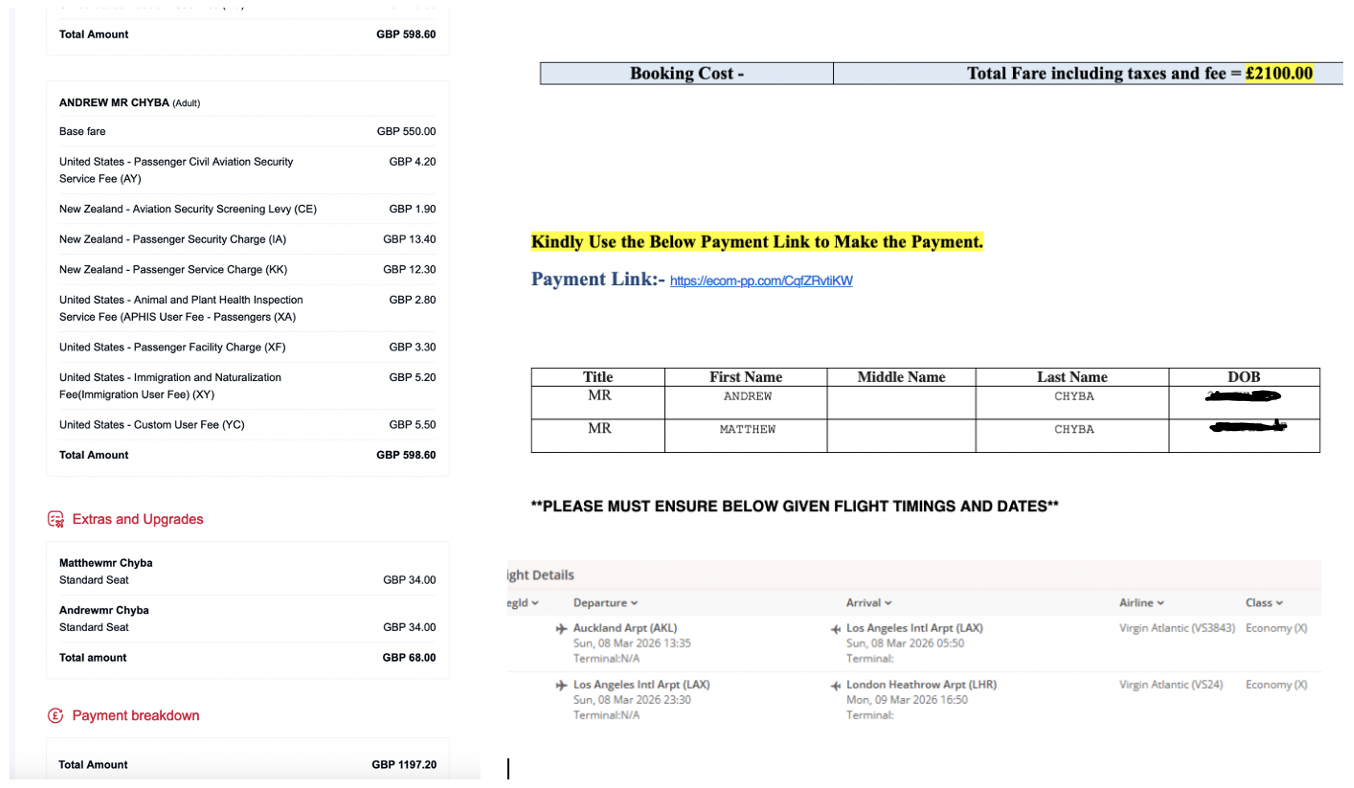
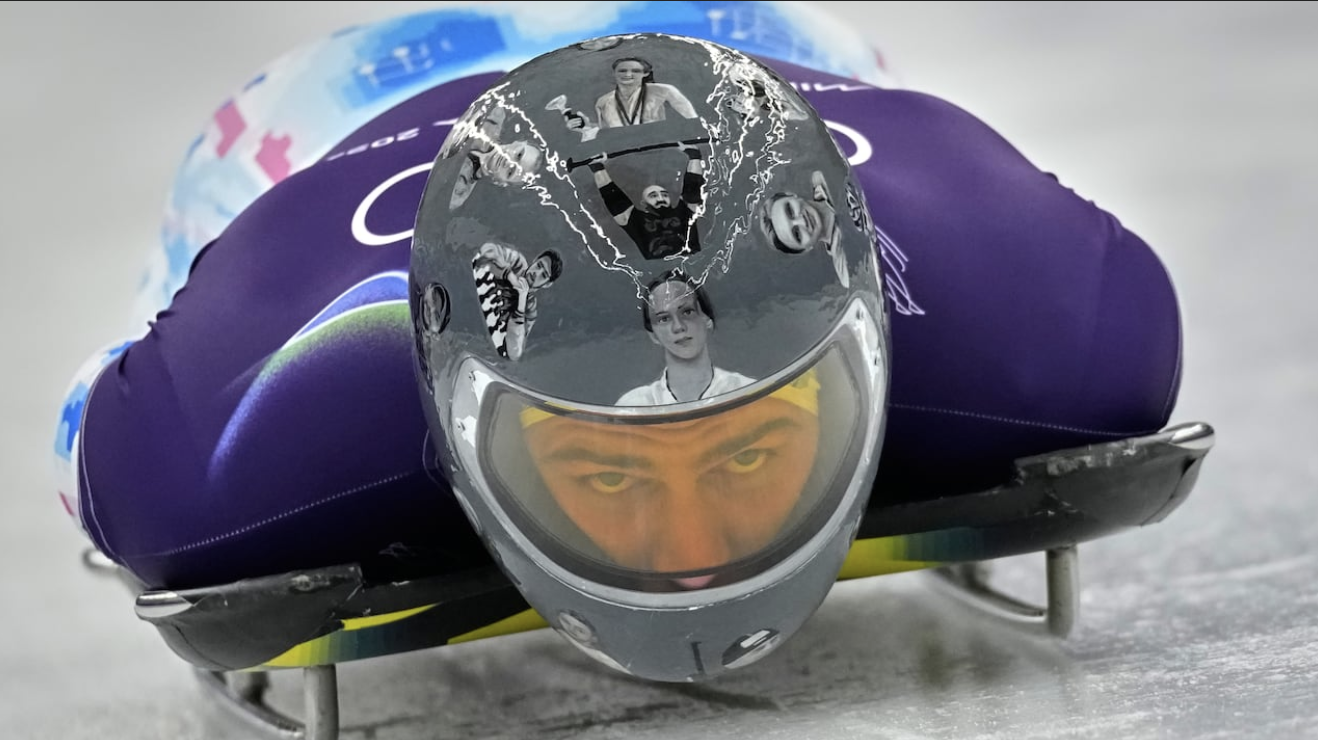
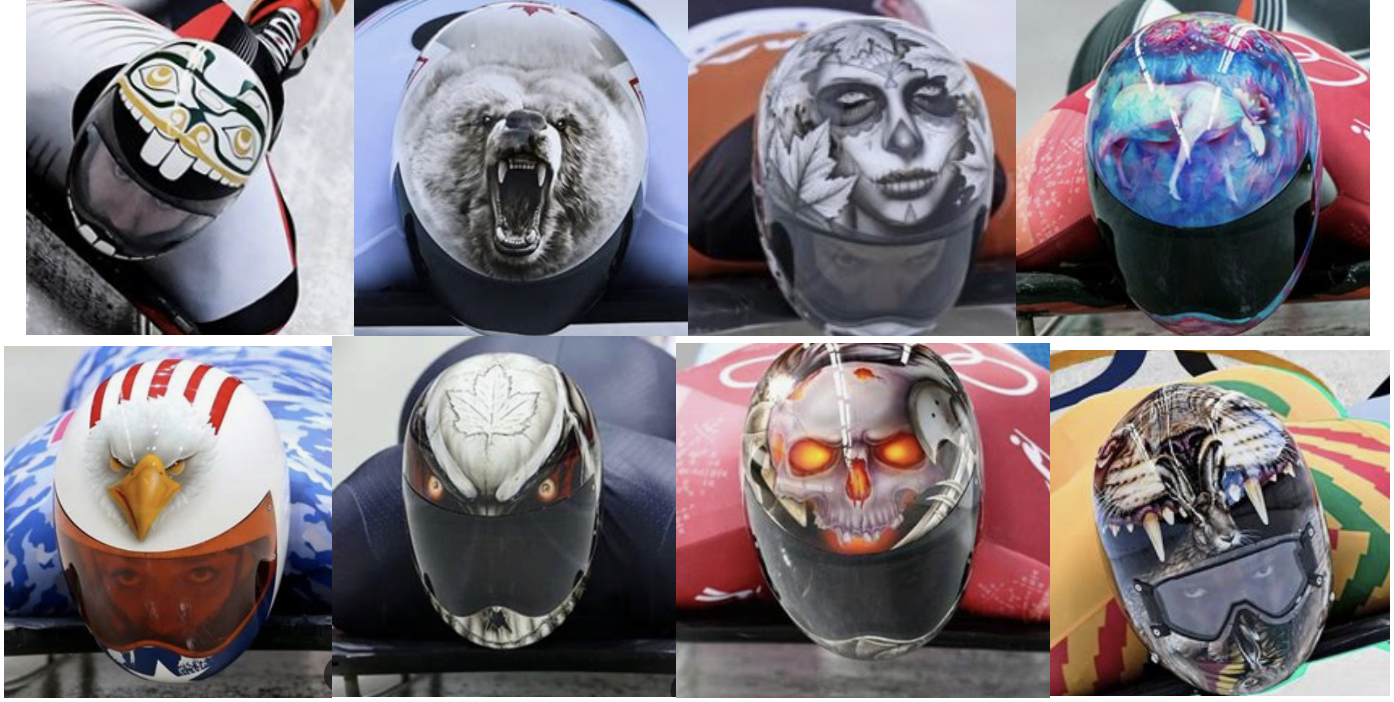
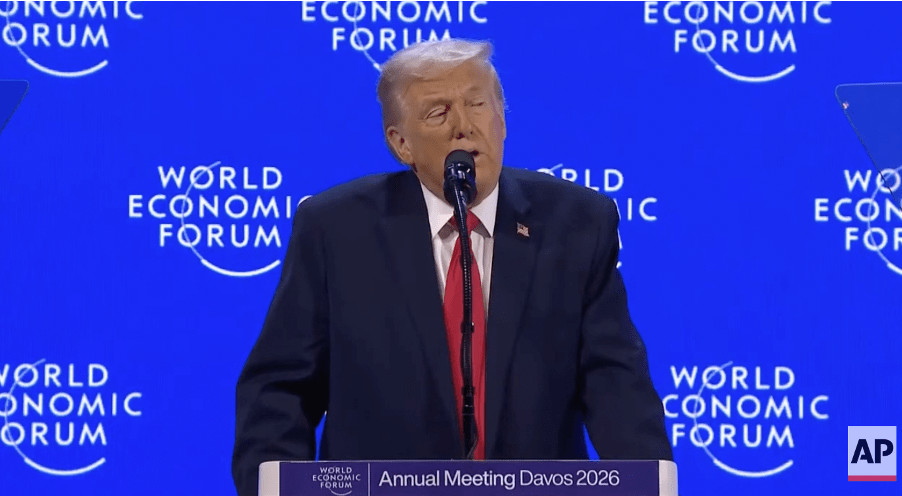
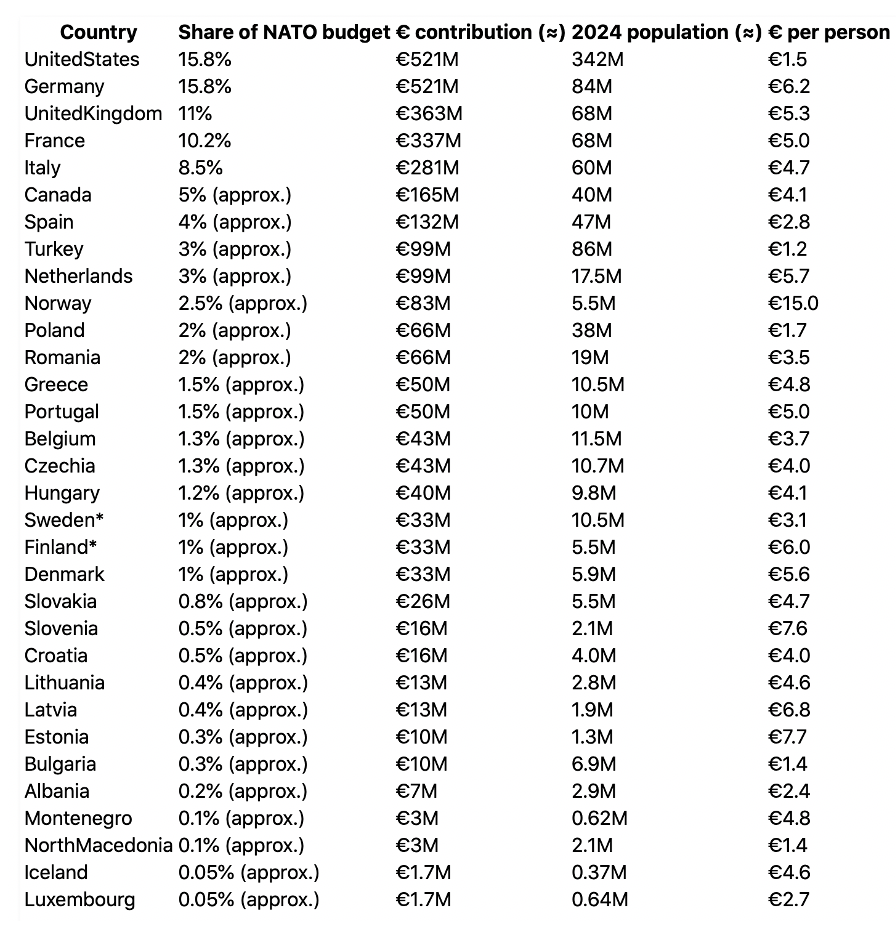
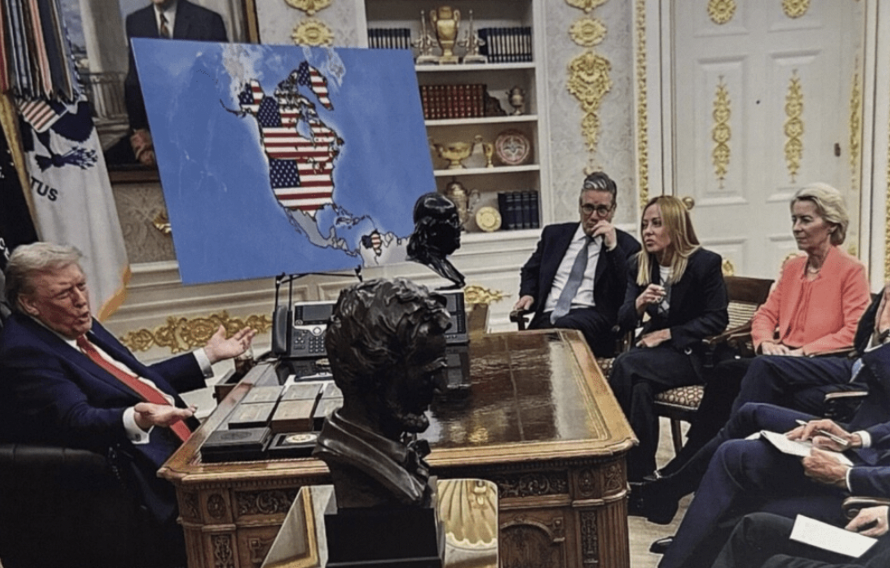
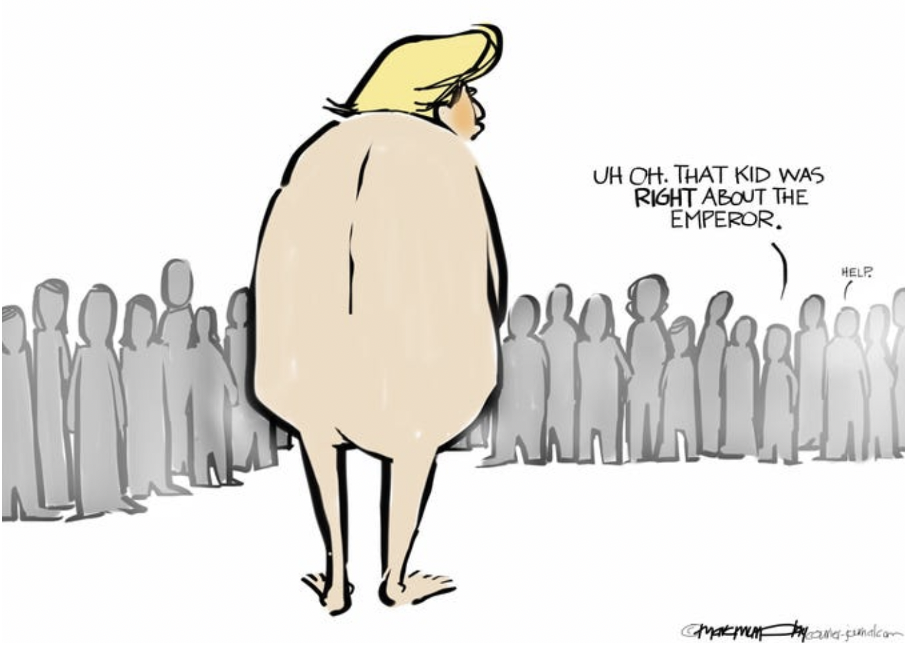
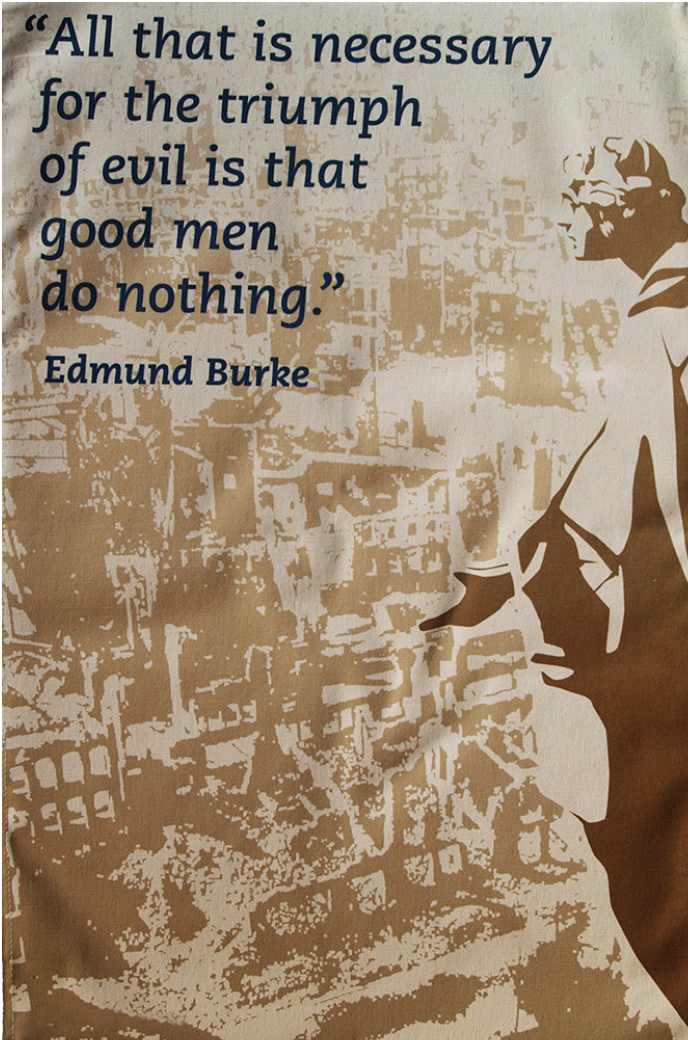


 Bridgend's Green Leftie