I’m a gay Jewish man, but how would you know that unless I had told you?
I’m a young black lad from South London, but I can’t hide my black skin from you, can I?
Pointing this out has ridiculously gotten Diane Abbott suspended from Keir Starmer’s Labour Party. It is hard to adequately express the contempt I have for Keir Starmer, who is so far up the alimentary tract of Zionist interests that he deliberately conflates such comments with anti-semitism. This is not only a gross insult to a lifelong equalities campaigner who fights racism in all its guises, but also an insult to Jewish people that suffer genuine anti-semitism and value the support of campaigners like Diane Abbott and Jeremy Corbyn. I would go so far as to suggest that the act of suspending Diane Abbott for differentiating different forms of racism is in itself more ant-semitic than anything Diane Abbott has ever said and done.
The scapegoating of black MP Diane Abbott was another low point last week. As it happens, I listened to her interview with the BBC’s James Naughtie on Thursday morning before she was suspended. I was totally taken aback a few hours later when Labour decided she had been anti-Semitic in her comments. She was nothing of the sort. She did not repeat her claims of two years ago, which got her suspended for the first time. Instead, she clearly said that anti-Semitism and anti-Traveller racism were real but talked about the differences between those and anti-black racism. She did so in terms of visibility. There should be no doubt about this: stop and search for example is targeted at black and to a lesser extent Asian kids. Black and Asian people suffer abuse on public transport, on the streets and from the police because they are visibly black.
I would go further than this important point: you cannot understand anti-black and Asian racism in this country without looking at the racial division of labour at work and the history of slavery and imperialism to which Britain was central. This brings us on to wider definitions of racism where of course many people on the left differ. But we should understand racism as a material reality which is not simply about moral imperatives. Of course racism is morally wrong and should be opposed in all circumstances. But the arguments of Marxists go further: it is deliberately created and recreated in order to divide working-class people and to dehumanise its victims. It is therefore anathema to any idea of collective action or socialism – and why it tends to break down where people do take collective action to change the world, for example on the Palestine demos.
Our rulers are happy to place opposition to racism under the general rubric of diversity. That in itself doesn’t address the bigger questions: why racism is also connected to class, why some racism is much more pervasive and damaging. Any racism is terrible for those who experience it. But the institutional anti-black racism and Islamophobia in Britain go to the heart of education, policing, employment, and much else. Diane has been attacked for daring to imply there is a hierarchy of racism. But in reality the daily oppression of working-class black and Asian people is much more far-reaching, and deliberately so, throughout society than other racial oppressions.
Diane Abbott is right to point to that. As a working-class black woman who has experienced racism all her life she should be supported not sanctioned. And it’s about time we had a serious discussion about racism and how it works in society – not least within the Labour Party – rather than outbursts of moral outrage which end up attacking an MP who has received more racist abuse than any other.
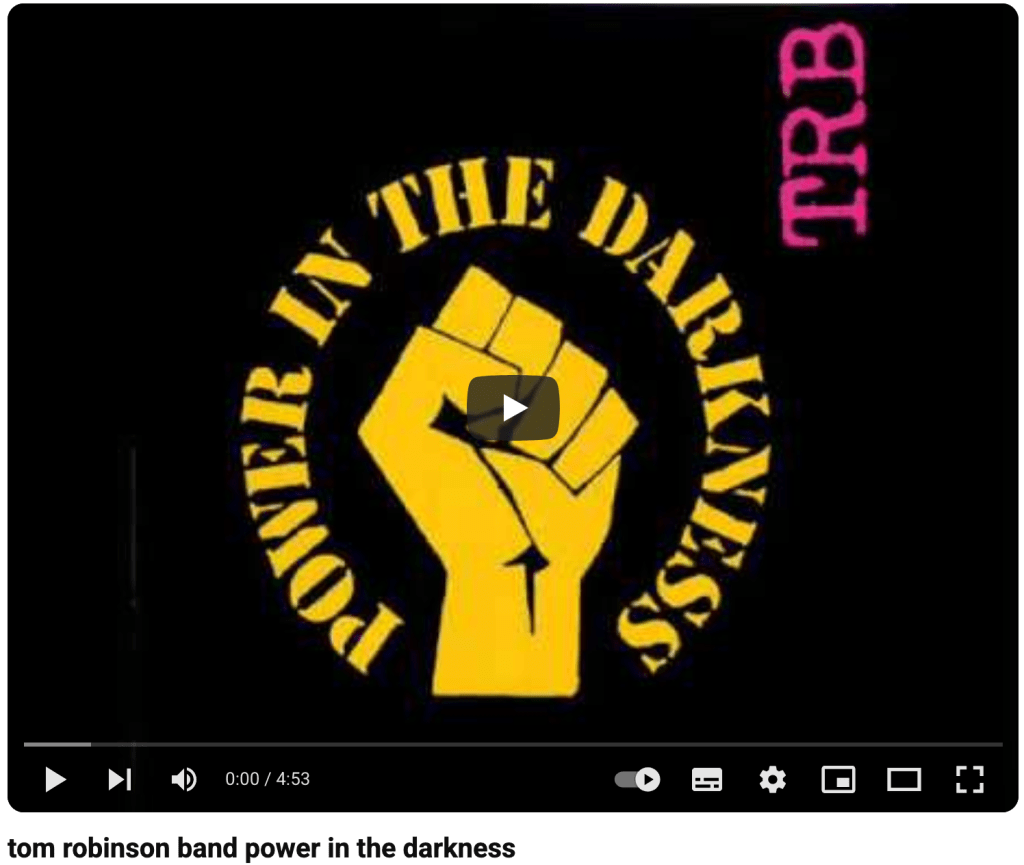
We are living in dark times, but through solidarity and courage we still have Power in the Darkness!
It is hard to believe that this was released in early 1978. I was just 15. The intervening years have seen some progress at times, but we have seen that progress steadily eroded again, and most damningly by this current Labour government!!
Power in the darkness Frightening lies from the other side Power in the darkness Stand up and fight for your rights
Freedom, we’re talking bout your freedom Freedom to choose what you do with your body Freedom to believe what you like Freedom for brothers to love one another Freedom for black and white Freedom from harassment, intimidation Freedom for the mother and wife Freedom from Big Brother’s interrogation Freedom to live your own life, I’m talking ’bout
Power in the darkness Frightening lies from the other side Power in the darkness Stand up and fight for your rights
“Today, institutions fundamental to the British system of Government are under attack the public schools, the house of Lords, the Church of England, the holy institution of Marriage, even our magnificent police force are no longer safe from those who would undermine our society, and it’s about time we said ‘enough is enough’ and saw a return to the traditional British values of discipline, obedience, morality and freedom. What we want is
Freedom from the reds and the blacks and the criminals Prostitutes, pansies and punks Football hooligans, juvenile delinquents Lesbians and left wing scum Freedom from the niggers and the Pakis and the unions Freedom from the Gipsies and the Jews Freedom from leftwing layabouts and liberals Freedom from the likes of you”
Power in the darkness Frightening lies from the other side Power in the darkness Stand up and fight for your rights
First they came for the Communists And I did not speak out Because I was not a Communist Then they came for the Socialists And I did not speak out Because I was not a Socialist Then they came for the trade unionists And I did not speak out Because I was not a trade unionist Then they came for the Jews And I did not speak out Because I was not a Jew Then they came for me And there was no one left To speak out for me
How many of you learned the history of WWII in history at school and wondered how the people of Germany could be fooled into voting for a genocidal maniac like Hitler and then stand by as the biggest genocide in history was perpetrated under their noses?
I know I did, and it probably explains why I have always taken an interest in what our politicians are up to and why I am prepared to take to the streets when they do things I cannot support. But we are living in very dark times again and most of us are simply not doing enough. Most of us are simply doing what most of the German people did in the 1930s and are just getting on with our very comfortable lives while bleating about the ‘cost of living’ and saying nothing about the cost of other people dying and truly suffering.
Evil is a subjective thing, but if we open our eyes and truly witness what is going on around us, all too often in our names, then we will be forced to do something, even if that is a conscious and deliberate choice to do nothing and thereby condone what is going on.
Many people excuse themselves by saying they have ‘democratically’ elected representatives that they are happy to deal with these issues on their behalf. That’s what the German people in the 1930s did. Things have changed very little. We still allow ourselves to tolerate our politicians’ blatant propaganda, lies, corruption and hypocrisy.
Take our duly elected PM Sir Keir Starmer, for example.
Starmer was knighted in 2014 ostensibly for his work as a human rights lawyer.
In the Fairford Five case, in 2003, his client had intended greater damage than Palestine Action did at RAF Brize Norton: Josh Richards was apparently planning to burn the wheels of American bombers slated to fly from an RAF base to Iraq. Keir argued while his client’s acts were illegal, they were morally justified, and the jury rightly – in my view, and presumably his – refused to convict.
The day that Starmer decided to proscribe Palestine Action was the day I first thought to join them. It’s counterproductive as well as disgraceful! But in theory at least, this would make me a terrorist and could get me 14 years in prison. As it happens, their website appears disabled. I would defy our democratically elected PM in order to support a group of people trying their damnedest to stop a genocide, a genocide being acted out in front of our eyes and with the support of that same democratically elected PM, i.e., in your name!
Thankfully, we have decent people, including lawyers with more moral fibre than Starmer, doing their best to hold government and power to account. This is why I am a supporter of Amnesty International and the Good Law Project. If and when I’m arrested, I’ll be contacting them both! (Please join them both if you haven’t already, before it is too late for you too!)
A recent newsletter from the Good Law Project contained these words from civil rights lawyer, Clive Stafford Smith (who worked on behalf of Guantanamo Bay detainees, many of whom had been sold to the US for bounties by a corrupt – but ‘democratically-elected’ Pakistani government):
“Hypocrisy is sometimes spelled with a capital H. Hypocrisy breeds hatred, as it did when the US set up a law-free prison in Guantánamo Bay, purportedly established to protect Democracy and the rule of law. If you are a Labour government, committed to the Human Rights Act, you cannot expect to win votes away from Reform UK or even Suella Braverman by playing the hate card yourself. The Act is designed to protect people – including the children of Palestine – from vilification and even murder. I’d like my colleagues to remember why they became politicians and judges in the first place. As human rights advocates, we should be proud to stand up for those who most need us. It’s our job.”
As humans, we all need to be human rights advocates. They are our rights. But I suspect many of us don’t actually value them enough until ours are tangibly threatened. But we can sit back and watch while others have theirs stripped away, and worse.
And so, to that “must watch” video I promised you. I guess that if you have read this far, there is a chance that you might just watch it. But I am also guessing some of you won’t or will give up on it quickly as it makes you uncomfortable.
One last quote for the benefit of those still ‘uncomfortable’ with criticising Israel for fear of being accused of being antisemitic (as has been done to lifelong campaigners against any form of of discrimination, like Jeremy Corbyn and Diane Abbott). This comes from the son of holocaust survivors, Norman Finkelstein:
“The biggest insult to the memory of the Holocaust is not denying it, but using it as an excuse to justify the genocide of the Palestinian people.”
I’ll leave you with these links (click on the logos). I hope to see some of you on the streets some time soon, but supporting those fighting on our behalf is the least we can do, isn’t it?
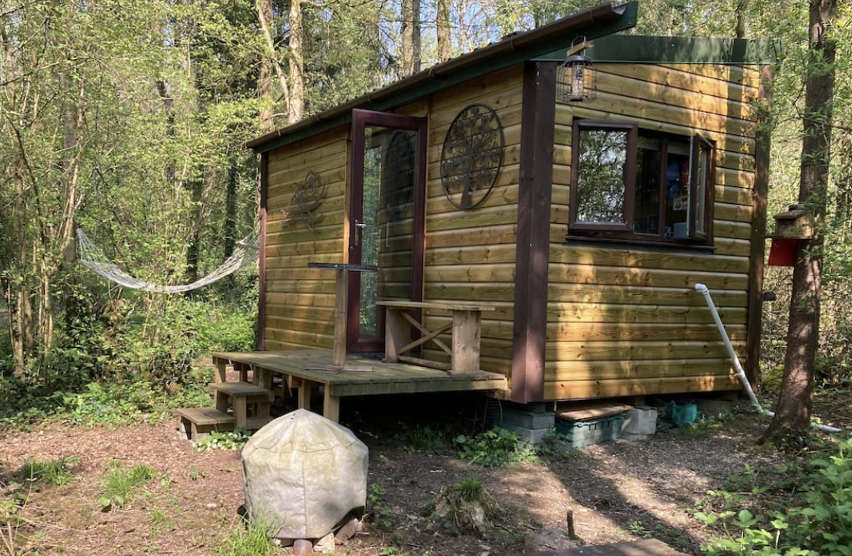
After I built Noddfa, my cabin in the woods at Coed Hills, in 2020, I wanted to ensure it was well used and also wanted to earn back some of the cost of building it. AirBnB was the obvious way to go, although I had no idea how popular the cabin would prove to be.
The AirBnB platform proved very easy to use and brought a steady stream of visitors to Noddfa and Coed Hills. Everybody was happy.
It’s funny, isn’t it, that when something makes our lives easier and/or puts money in our pockets, it makes us happy, and to maintain that happiness we turn a blind eye to things that we know are not right.
I was vaguely aware that in 2018 AirBnB had taken a strong ethical stance by delisting about 200 Israeli properties located in the occupied Palestinian West Bank territories. I was therefore happy that I was working with an ethical company prepared to take a stand. No need, I told myself, to do any further due diligence.
What I wasn’t aware of was that AirBnB had subsequently been sued in a class action (on behalf of the delisted property owners) by a law firm in Jerusalem, with the backing of the Israeli government. The essence of the case was that it accused AirBnB of “grave and outrageous” discrimination against Israelis because it still lists homes in some other geopolitical hotspots, such as Tibet and Northern Cyprus.
AirBnB appears to have crumbled under the pressure and reversed its decision to de-list these properties in April 2019. Its attempted compromise was to say that it would now donate all proceeds from rentals in the West Bank to humanitarian organisations. Airbnb released a statement that said:
“We understand the complexity of the issue that was addressed in our previous policy announcement. Airbnb has never boycotted Israel, Israeli businesses, or the more than 20,000 Israeli hosts who are active on the Airbnb platform. We have always sought to bring people together and will continue to work with our community to achieve this goal.”
Less than 6 months earlier it had said it had removed 200 listings because the settlements were at the “core of the dispute between Israelis and Palestinians“. It further stated:
“US law permits companies like Airbnb to engage in business in these territories. At the same time, many in the global community have stated that companies should not do business here because they believe companies should not profit on lands where people have been displaced.”
So, why the decision to backtrack on the ban?
Israeli lawyers filed a class action suit that sought 15,000 shekels (about £3,200) for each host of the 200-ish homes that were due to be deleted from Airbnb’s listings.
Airbnb said that under the terms of a settlement it would “not move forward with implementing the removal of listings in the West Bank from the platform“.
The San Francisco-based company said it would allow listings throughout the West Bank but donate any profit it generated to “organisations dedicated to humanitarian aid that serve people in different parts of the world“.
Airbnb said the same approach would be implemented in the disputed regions of South Ossetia and Abkhazia in the Caucasus.
The announcement was made days after Israel’s Prime Minister, Benjamin Netanyahu, promised to annex West Bank settlements, if he was re-elected. He was.
Credit to AirBnB for its initial stance, I suppose, but it had shown itself to have insufficient backbone to resist the pressure. Meanwhile I continued to profit very nicely from AirBnB, blissfully unaware of what I was tacitly supporting, even while attending numerous pro-Palestine demos and rallies in Cardiff and London, and welcoming guests wearing my West Bank-made keffiyeh and considering joining the now-proscribed Palestine Action group.
It was not until somebody that had booked Noddfa a while ago for later this summer contacted me that I was prompted to wake up. She was asking if she could preserve her booking with me once she deleted her AirBnB account as a result of becoming aware of its complicity in Israeli-occupied West Bank territories. This was because of seeing details of the recent report by Francesca Albanese, UN Special Rapporteur on human rights in Palestine. Click here to read that report.
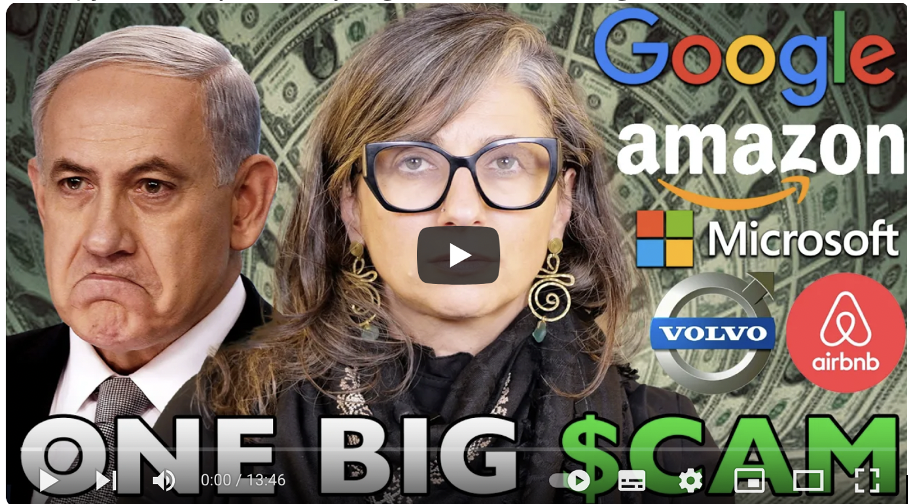
And here is Frances Albanese talking about it on DDN (Double Down News) just a couple of days ago from me writing this. Click on the image.
It is absolutely appalling that our governments are not holding Israel to account for this blatant genocide being enacted before our eyes. So, it falls to all of us to do what we can, lest we are all complicit too. In a capitalist, neoliberal world with little effective democracy left, our only real way of exerting pressure is in how we choose to spend (and earn) our money.
I try to support the BDS (Boycott Divestment Sanctions) movement as best I can, and have a long list of companies I avoid dealing with lodged in my mind, and do take heed of priority targets when publicised.
Thus, I have now unlisted Noddfa and listed it on Vrbo instead. I’ll get it on FairBnB too once their website stops messing me around! I wasn’t even aware of these alternative platforms until I started actively looking for AirBnB alternatives. I doubt they will generate as much business, but hey, time will tell. They will catch up if AirBnB don’t get their house in order, I hope.
I’ve also tried to use BDS apps like ‘No Thanks’ and ‘No Thank You’ but it sure slows down shopping and it is quite shocking just how vast the connections to Israel are in the business world. I have given up on this to be honest, but my list of big companies to avoid has certainly grown substantially.
The aim of this post is not to preach, not to shame, not to bully anyone into supporting BDS or any other ‘boycotting of companies’ campaign. All I want to highlight is that it is down to all of us to realise that just about every purchase we ever make is a political decision in some way. We support and endorse one choice, at the expense of all the other alternatives, every time we buy anything. That is just as political as choosing who to vote for.
We vote in ignorance and we, of course, buy things in ignorance of all the implications. And then we pretend there was nothing we could do to alleviate the problems and misery in the world. I am as guilty of this and guilty of my consequent hypocrisy. I fully acknowledge this.
But my conscience does get pricked and I do then do some due diligence from time to time. It is a lot better than doing nothing. I’m especially fortunate in that I can afford to make some ethical choices that cost more money. I understand that not everybody can in these ideologically austere times (I did try to warn everybody about Starmer, but Labour members voted for him and the public duly elected him).
Thus, for the foreseeable future, it is no more AirBnB! They have promised me a response to my concerns and passed it up to someone ‘trained to deal with such issues’. Watch this space!
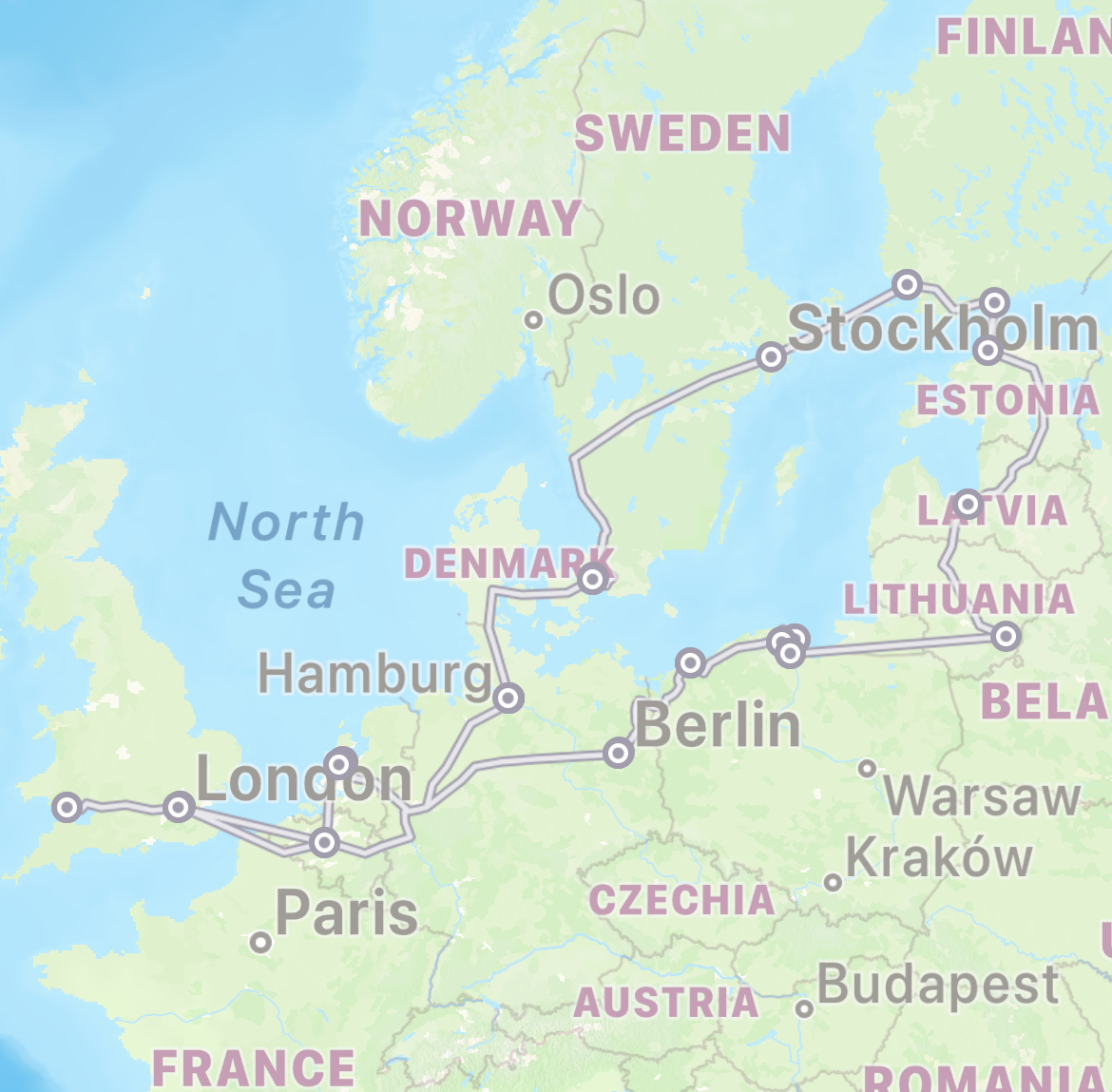
I have recently returned from a lap of the countries surrounding the Baltic Sea; the Scandinavian countries of Denmark, Sweden, Åland Islands and Finland, plus the former USSR Baltic States of Estonia, Latvia and Lithuania (and the Baltic coast of Poland, for good measure).
Perhaps surprisingly, most of these countries I had never visited before, but I had learned quite a bit about them in various contexts over the years. I had developed the impression that these were countries we could, indeed should all learn more from, but was keen to visit and witness life there to challenge my views and see how valid they are.
The lessons to be learned are many and varied, so I am dividing them into 2 blog pieces; the first one was on socioeconomic lessons, especially those pertinent to the Welsh Independence campaign, and this one is on the historical and political lessons especially pertinent to the political situation we are all living in right now.
I will focus this one primarily on the Baltic States of Estonia, Latvia and Lithuania, although their stories are intertwined with those of their Scandinavian/Nordic neighbours.
A BRIEF HISTORICAL SYNOPSIS
As with most nations today, the emergence of their identity goes back to the Middle Ages when tribal groups began to coalesce and settle down in recognisable territories. Thus, the Finno-Ugrians settled in what would become Finland and Estonia; The Livs settled in what is now northern Latvia; and the Samogitians and Aukstaiciai settled in what is most of present-day Lithuania.
They all shared a collection of Pagan beliefs, worshipping the forces of nature personified as divinities. Their religious and cultural life centred on a large body of folk song, known as the dainos, many of which have survived. They encompass the whole of human life’s connectedness with nature and incorporate a strong sense of ethics.
From the 9th century, the area saw a series of Scandinavian Viking incursions, along with Slavic incursions from the south and east that saw the first attempts to bring Roman Christianity into the region. Around the turn of the 13th Century, the Danes conquered much of Estonia while Germans took the rest along with Latvia and Lithuanian.
Lithuania re-asserted itself successfully in the latter-13th and 14th centuries and became something of an imperial power itself, rejecting Christianity in the process, and taking land that is now Belarus and north-western Ukraine, and reached east as far as Moscow, under Great Prince Algirdas (whose name is prominent around Vilnius and beyond to this day).
One of the consequences of this expansion was the strategic intermarrying with neighbouring nobility that led to the reassertion of Christianity across the region. It led eventually to political union between Lithuania and Poland in the 16th century. Meanwhile Latvia and southern Estonia succumbed to Russian tsar Ivan IV (‘the Terrible’ one) and Sweden took northern Estonia and Finland.
The 17th century saw the region succumb to Russian expansionism, taking Estonia, Finland, Latvia and eating into the Polish-Lithuanian commonwealth, which saw itself partitioned between Russia and Germany and disappearing off the map completely as the result of three partitions in the 18th century.
This situation persisted throughout the 19th century, with attempted Polish and Lithuanian uprisings quashed and met with the intense russification of all the Baltic lands.
The Russian Revolution of 1905 and the arrival of Marxist values led to the peoples of the Baltics regaining confidence to reassert themselves. The three nations started by demanding national autonomy and Lithuania went so far as to demanding an autonomous Lithuanian state based on ethnic boundaries. Russia conceded that Baltic peoples could elect their representatives to the imperial parliament (the Duma) and allowed the consolidation of the national societies and use of the indigenous language in public life and schools again.
The collapse of the German and Russian empires during WWI allowed the Baltic peoples to finally establish independent states in 1918. It was far from plain sailing though. There was a power vacuum that led to fractured politics, the rise of extremism and political violence. Within 10 years all three countries had developed authoritarian systems. Lithuania saw a violently repressive nationalist regime, led by Smetona, eliminate all opposition to become a one-party state. Estonia and Latvia meanwhile were destabilised by exactly the opposite; a multiplicity of parties forming a ceaselessly changing series of weak coalitions.
Thus, when the Russian occupation arrived in 1940, the countries were in no shape to resist at all. There was probably some initial relief in Lithuania when Smetona fled to Germany. But any such relief would soon disappear as the region found itself in the violent grip of Stalin’s sovietisation of the three countries. The Soviet regime imposed manipulated elections that ensured the countries ‘voted’ to join the U.S.S.R.
By the 1970s the Baltic area had emerged as a hotbed of anti-Soviet dissent, with demonstrations and riots beginning to occur. The writing was on the wall (literally at times) and Mikhail Gorbachev understood the zeitgeist. He allowed increasing autonomy, which was especially relished in the Baltic states as they had never reconciled themselves to the loss of their independence, even though it had been politically difficult. It was driven by the strong sense of cultural identity among the indigenous populations. Diplomatic pressure was strong too, as virtually no country in ‘the West’ had ever recognised the incorporation of Estonia, Latvia and Lithuania into the U.S.S.R.
Elections in early 1990 clearly established pro-independence majorities in all three countries. Lithuania declared U.D.I. in March, followed by Estonia in April and Latvia in May. Moscow declared these illegal and asserted pressure in terms of economic sanctions designed to weaken the resolve of the people. There were sporadic outbreaks of violence where Soviet military tried to interfere with or control infrastructure. However, tensions within the corridors of power in Moscow culminated in the disintegration of the U.S.S.R in August 1991, facilitating the acknowledged implementation of the independence of the three Baltic States. By November, the Russians acknowledged the illegality of Stalin’s incorporation of the Baltic states in 1940.
Thus, we enter the short history of these proud nation’s growth as independent nations in the modern world. The 1990s saw the development of new constitutions, new currencies, and new foreign markets for each of the Baltic states. The immediate post-Soviet period, however, was marked by economic instability, and in 1998 a financial crisis in Russia had repercussions throughout the region. Nevertheless, at the beginning of the 21st century, the Baltic states experienced sustained economic growth and closer integration with the nations of the European Union and the North Atlantic Treaty Organization—two groups that all three countries joined in 2004. Their socio-economic success in this period is examined in Part 1 of this two-part blog.
The success of these newly independent nations
Compared to the chaotic nations that had independence in the 1920s and 30s, the Baltic states of today have been shining examples of what can be achieved by small nations gaining freedom and complete independence from much bigger oppressive neighbours. They should inspire and give confidence to nations like Wales, Scotland, Catalonia etc.
One of the keys to their current and ongoing success has been them learning lessons from their Nordic neighbours from the outset of gaining their independence. They set up their constitutions and legislatures along similar lines to them to try and ensure a strong and stable democracy and an economy that could develop mutually beneficial trade links with them and the rest of Western Europe, facilitating entry into the EU and the Eurozone.
There was therefore a strong desire to foster and build upon strategic links between the Nordic and Baltic states, both economically and politically. It has become known as the NB8 and is, in effect, a pact of co-operation between the Baltic Council, that was created by the three Baltic countries in the immediate aftermath of gaining independence on 1990, and the Nordic Council that has existed since 1952. A similar confederation was proposed in the 1920s during the previous period of independence for the three Baltic states, but political instability prevented it happening then. Lithuania was a prime mover for this new pact in the 1990s, recognising the importance of strength in numbers before securing membership of the EU and NATO.
As tensions within the EU (the U.K. has left and others may well follow) and NATO (with Trumpian USA not committed and many others, including me, unhappy with its destabilising expansionism and interventionist approach), it makes sense for nations to foster even greater co-operation, trade and sharing of resources and expertise elsewhere and closer to home.
Thus, the NB8 has developed and become a stronger entity since its inception in 1992. Indeed, a meeting of all the Ministers of Foreign Affairs met in Middelfart in 2000 to reassert the strength of the co-operation programmes (as well as formally adopting the NB8 moniker). A programme of regular conferences for a range of ministers was put in place:
This is backed up with a comprehensive and cohesive network of cooperation activities in political, military, economic, environmental, cultural, and other aspects. Landmark achievements include the 2004 establishment of the ‘NB8 Task Force Against Trafficking in Human Beings’, the 2010 ‘Cross-border Financial Stability Agreement’, and the 2012 ‘NB8 Wise Men Report’ that strengthened co-operation in foreign policy, cyber security, joint energy ventures, and defence.
Were it not for the spectre of Putin’s growing imperialism, the future would look secure and bright for all these countries. But however this pans out, there is a lot of inspiration to be had for other small nations aspiring to independence.
WHAT CAN WALES LEARN?
First and foremost, small nations can and do thrive when achieving independence.
Once achieved, independence becomes precious and worth fighting to retain. Indeed, countries that achieve independence very rarely ever want to reverse it.
On gaining independence, ensure you set up your constitution and legislature properly in order to preserve democracy and maintain stability.
It is important to have good friends and neighbours, preferably that you have things in common with.
The dissolution of the U.K. should not be acrimonious and there should be no reason for friendship and co-operation with England to not continue in most things. The Baltic States didn’t have this; it was gaining independence from a violently oppressive entity. It should therefore be easier for Wales and Scotland to make a success of independence.
Even if relations with England were to deteriorate, there is plenty of scope for other alliances, akin to the Nordic Council and Baltic Assembly.
The Celtic League already exists (founded in 1961) to promote and foster a modern Celtic identity and culture across the 6 Celtic Nations of Wales, Ireland, Scotland, Isle of Man, Cornwall, and Brittany. It is primarily focussed on promoting the Celtic languages, buy does also advocate for further self-governance in these nations and ultimately for each to become an independent state it its own right.
The common design features of the Orkney and Shetland flags serves to illustrate the overlapping histories they share with the Nordic countries. Given the fact that Orcadians and Shetlanders are fully aware of this history and have even been agitating about seeing a brighter future in realigning themselves with their Nordic neighbours (Lerwick is much nearer Oslo (@425 miles) than London (@600 miles) after all), it is entirely possible that we could see further overlaps develop in the diagram above.
The overwhelmingly strong message that I have received from both studying and visiting these nations is that there is so much potential to improve our lives in Wales by pursuing independence than from sticking with the status quo. Nothing ventured, nothing gained. Doing the same thing repeatedly and expecting a different outcome is madness (are you still voting Labour in the Assembly elections?).
I may have only spent a very short time in each country on my recent trip, but the places and the people all presented a sense of calm assurance and self-confidence that, despite the challenges of the modern world, they are on the right track.
I saw nobody homeless on the streets, no mindless vandalism, very little litter (other than that created by seagulls), no fly-tipping. You can’t say any of that around our cities, especially Cardiff. I spoke to people paying high taxes but not moaning about it because they feel they are getting good services for their money. Paying a lot doesn’t guarantee quality, but you can’t get quality in the bargain basement.
I spoke to polite, articulate, confident, multi-lingual young people everywhere I went. They are few and far between in Bridgend.
The people of these nations are proudly independent people in proudly independent nations, working together for a better future for everyone.
I have recently returned from a lap of the countries surrounding the Baltic Sea; the Scandinavian countries of Denmark, Sweden, Åland Islands and Finland (and Norway recently too), plus the former USSR Baltic States of Estonia, Latvia, and Lithuania (and the Baltic coast of Poland, for good measure).
Perhaps surprisingly, most of these countries I had never visited before, but I had learned quite a bit about them in various contexts over the years. I had developed the impression that these were countries we could, indeed should all learn more from, but was keen to visit and witness life there to challenge my views and see how valid they are.
The lessons to be learned are many and varied, so I am dividing them into 2 blog pieces: this one on socioeconomic lessons, especially those pertinent to the Welsh Independence campaign, and another on the historical and political lessons of small European nations gaining independence.
I am going to divide these nations into two groups:
The Nordic Group = Denmark, Norway, Sweden, Finland (to which can be added Iceland, which I visited not so long ago too)
The Baltic Group = Estonia, Latvia, and Lithuania.
Let me start by presenting some data to give some evidence-based context.
Firstly, let us just acknowledge that these are all small countries in terms of population. The Nordic countries are mostly about twice the size of Wales (Sweden x3, Iceland the size of Cardiff), while the Baltic states are all significantly smaller, with Estonia less than half the size of Wales. The oft heard claims that Wales is too small to thrive as an independent country is patent, nay ridiculous nonsense. (Altogether, there are more than 20 European countries smaller than Wales’ population.)
Right from my earliest days as a geography student, I have always been fascinated by the Nordic countries consistently impressive scores across all sorts of metrics, be it wealth, equality, health, education, happiness etc. Stretching from the same latitudes as Scotland, up into the Arctic Circle and with no major resource advantages over the U.K., I was intrigued as to how they achieved so much. The answer is very straightforward, as it turns out. It is the ‘Nordic Model’.
The Nordic model comprises the economic and social policies as well as typical cultural practices common in the Nordiccountries (Denmark, Finland, Iceland, Norway, and Sweden). This includes a comprehensive welfare state and multi-level collective bargainingbased on the economic foundations of social corporatism, and a commitment to private ownership within a market-based economy.
Norway is a partial exception due to it sharing a huge resource advantage with the U.K. in the shape of North Sea oil and gas. Unlike the U.K. though, it hasn’t allowed capitalists to largely piss it up the wall but has nurtured it by creating the world’s largest sovereign wealth fund that secures the country’s wealth and well-being indefinitely. It underpins the large number of state-owned enterprises and state ownership in publicly listed firms.
Although there are significant differences among the Nordic countries, they all have some common traits. All the Nordic countries are highly democratic and all have single chamber legislature and use proportional representation in their electoral systems. They all support a universalist welfare state aimed specifically at enhancing individual autonomy and promoting social mobility, with a sizable percentage of the population employed by the public sector (roughly 30% of the work force in areas such as healthcare, education, and government), and a corporatist system with a high percentage of the workforce unionised and involving a tripartite arrangement, where representatives of labour and employers negotiate wages and labour market policy is mediated by the government. As of 2020, all of the Nordic countries rank highly on the inequality-adjusted Human Development Index, the Global Peace Index, as well as being ranked in the top 10 on the World Happiness Report.
Doesn’t it sound wonderful? Yet we have suffered and endured 45 years of unremitting neoliberal capitalism selling off our public assets and services, hollowing out remaining public services and non-stop ‘austerity’ for the poor while the rich accumulate obscene wealth. Is it any wonder that the Shetland and Orkney Islands have considered abandoning the U.K. and returning to Norway (they were gifted to Scotland by King Christian of Norway in 1472). An independent Wales could never join Norway, but it could certainly adopt the Nordic Model if it elected the right people.
The Nordic model was originally developed in the 1930s under the leadership of social democrats, although centrist and right-wing political parties, as well as labour unions, also contributed to the Nordic model’s development. The neoliberal zeitgeist across Europe and beyond in the last 45 years has impacted the Nordic countries to an extent, with increased deregulation and expanding privatisation of public services. However, it remains a distinctive approach retaining strong emphasis on public services and social investment.
The Baltic Nations have a very different history, of course. As any Pole knows, the boundaries of countries in central Europe have been fluid throughout much of history, but the underlying nations have survived and, debatably, the current borders match the national identities of the peoples of Europe as well now as ever. (There remain some nations subsumed into larger states, of course, such as Wales and Catalonia.) The Baltic nations achieved independence from tsarist Russia as part of the violent fall-out of the Russian Revolution around 1917-18. They remained independent until the German occupation in 1940, followed by the Soviet occupation up until 1991.
With the dissolution of the Soviet Union in 1991, the Baltic states looked primarily towards their Nordic neighbours for inspiration as to how to set up their legislatures. They also warmly embraced a Scandinavian initiative to create a Council of Baltic Sea States (CBSS) in 1992. This consisted of all the Nordic group countries (once Iceland joined in 1995), all the Baltic group countries, plus Poland, Germany, and Russia (until it was kicked out after its invasion of Ukraine). There is scope for the largely cultural focus of the Celtic League of Celtic nations to evolve similarly with Welsh and Scottish independence.
Integration with the rest of Western Europe became a major strategic goal for the newly-indepndent Baltic states and all three were in NATO and the EU by 2004.
The statistics reveal that the Baltic states have made rapid progress across most metrics, but still have quite a way to go to emulate the Nordic states. But they seem to remain focussed on achieving this, and surely will if Putin doesn’t throw an enormous spanner in the works.
The Baltic countries have built their economies on innovation and trade. Small and highly connected to global markets, they have developed industries that excel in technology, manufacturing, and services. This focus has allowed them to remain competitive in an ever-changing economic landscape.
Investment in education and infrastructure has played a key part in their growth. Skilled workforces and modern transport systems attract businesses and encourage local entrepreneurship. Governments in the region have supported these efforts through policies that promote transparency and efficiency.
Tourism also contributes to the economic success of the Baltics. Visitors are drawn to the region’s cultural heritage, natural beauty, and vibrant cities. This steady flow of international visitors supports local businesses and boosts national revenues, helping to strengthen their economies further.
The Baltic countries are expected to continue their economic growth in the coming years. According to the European Commission, Estonia’s GDP is projected to grow by 3.5% in 2024, while Latvia and Lithuania are forecasted to grow by 3.3% and 3.8%, respectively. These figures are driven by a combination of export growth and domestic consumption.
Renewable energy is a key area of focus for future development. Lithuania aims to generate 50% of its electricity from renewable sources by 2030, compared to 38% in 2022. Estonia is also expanding its wind energy capacity, with plans to install over 1,000 megawatts of new wind farms by 2025. Investments in green energy are expected to attract funding and create jobs, boosting regional economies.
Technology and innovation are also driving forward-looking initiatives. Latvia’s IT sector grew by 10% in 2022, with exports of IT services reaching €2 billion. Estonia’s start-ups are thriving, with over 1,300 start-ups contributing €1.4 billion to the economy in 2022. These sectors are seen as key to maintaining competitiveness and ensuring steady growth in a rapidly changing global market.
There is nothing here that Wales could not emulate, given the freedom to fully capitalise on its natural and human resources. Independence is not a silver bullet that ensures any sort of success in and of itself. But it is a golden opportunity; a golden opportunity to fulfil a people’s potential that is rarely afforded when subservient to a dominant paymaster.









 Bridgend's Green Leftie